
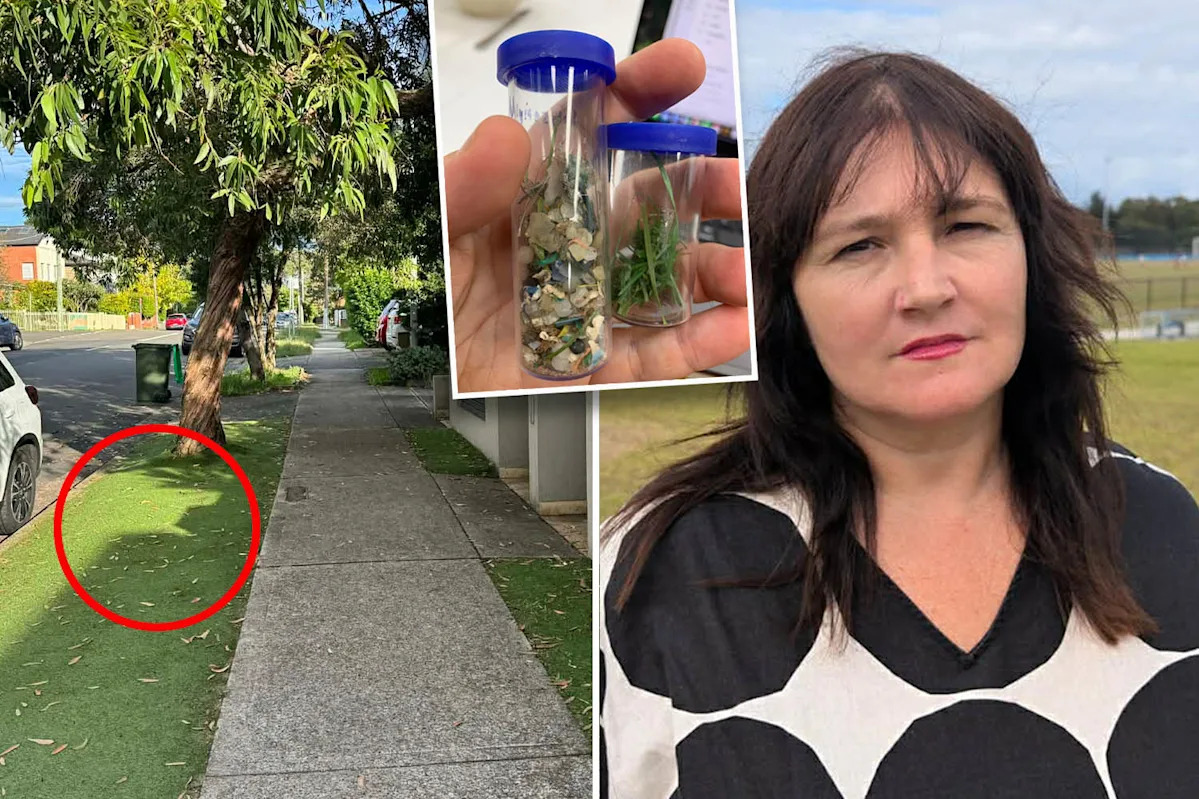
Fake grass has become a contentious issue across Australia, with some councils banning the controversial product and others embracing it.
On the positive side, plastic alternatives are easier to maintain than a real lawn as they require less water and don’t need to be mowed, but they can have a damaging effect on human health and the environment.
Public concern around this divisive trend has been reignited after a Sydney council announced plans to build new sports grounds with synthetic turf rather than traditional grass.
While they allow play to occur after wet weather, they have the downside of shedding small, harmful, fibres into the environment.
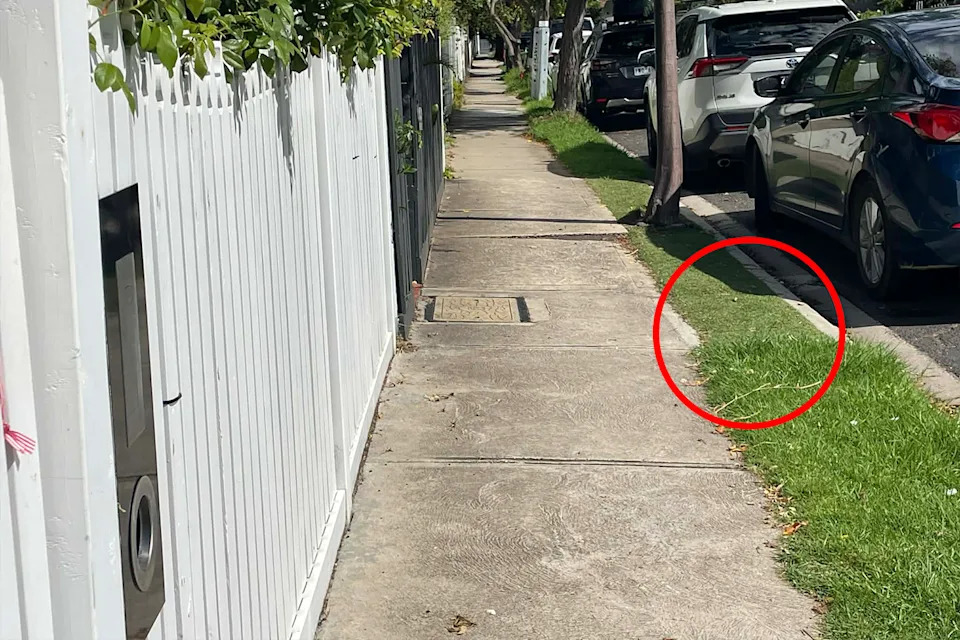
Some Aussies have even replaced their nature strips with fake grass. Source: Yahoo News Australia
Several synthetic fields have already been built around Sydney, and now Bayside Council in the city’s south is considering building four of its own.
Its deputy mayor, Heidi Lee Douglas, is opposing the plan, warning that recent EPA testing revealed the area’s rivers are already heavily polluted with microplastics, including blades of artificial grass.
Speaking in her role as the founder of community action group Peaceful Bayside, she told Yahoo News the level of contamination is already “quite terrifying”.
Cooks River was the worst-polluted coastal waterway in the state; nearby Muddy Creek was the third-worst, while Botany Bay also showed signs of heavy pollution.
With research into microplastics and their impact on fish, water, land, food, and human health ongoing, she wants the council to take a precautionary approach.
“My community — my constituents and my neighbours — fish in our rivers regularly,” she said.
“They eat the fish. We’ve got kids and dogs swimming in the river and beaches right next to the river mouth.”
Should the grounds be built, she’s worried the council could be exposed to future litigation.
Is the environmental cost of synthetic turf acceptable?
Public concern about the impact of plastic on the human body is surging, but the scientific community has yet to fully agree on the best way to measure its impact.
Professor Mark Patrick Taylor, the Executive Director of Science and Insights at the NSW Department of Environment (DCCEEW), told Yahoo News there “is a cost” to using plastics, but they’re also very useful.
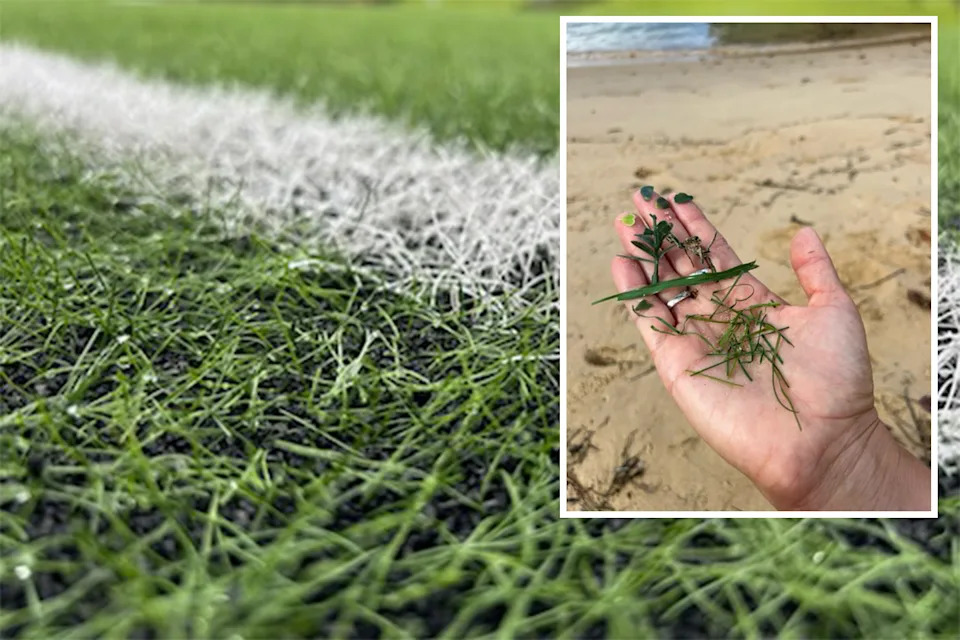
Synthetic turf breaks down with use and sheds microplastics into the environment. Source: TEC
He compares plastics to cars, which we know are damaging to the environment and human health, or even cooking with non-stick pans, which can contain PFAS, a group of synthetic substances that have leached into drinking water systems.
“We know there’s a cost, but it’s acceptable,” he said.
His work now is focused on measuring the impact of plastics, determining what level of risk society deems acceptable, and how we then mitigate the problem.
DCCEEW is working with the EPA to determine the best way to intervene.
“The questions are, how do we manage it, how do we measure it, and in terms of leakage into the environment, what are the best practices we should implement?” he said.
When it comes to synthetic soccer pitches, it could mean installing specialist filtration systems to reduce the amount they shed into waterways after rain.
Will Bayside Council build the synthetic fields?
Last week, Bayside councillors attended a workshop featuring a DCCEEW expert and members of a sustainability group to hear about research into microplastics.
One of the speakers, the Total Environment Centre’s (TEC) Mark Zihrul, later told Yahoo News he was “deeply concerned” about the ongoing creation of synthetic sports fields.
“Particularly because they constantly leach and then pollute waterways,” he said.
TEC believes the impact on the environment can be mitigated if synthetic sports fields are built indoors.
But it remains concerned about their impact on human health.
“The more you use these fields, the more they break down into microplastics and then smaller nanoplastics,” Zihrul said.
Bayside Council told Yahoo News the planned grounds were “still under consideration”.
“All factors will be taken into consideration, including environmental impact,” it said.
Do you have a story tip? Email: newsroomau@yahoonews.com.
You can also follow us on Facebook, Instagram, TikTok, Twitter and YouTube.