

April 23, 2026 — 5:49am
Save
You have reached your maximum number of saved items.
Remove items from your saved list to add more.
Save this article for later
Add articles to your saved list and come back to them anytime.
Got it
AAA
Australia’s arts and culture sector is facing a systemic funding crisis, with federal investment falling to a record low as the nation lags countries such as Chile, Turkey and Mexico.
A new analysis by the think tank, A New Approach, chaired by philanthropist Rupert Myer, reveals that while total government investment reached a record $8.6 billion in 2023-24, spending is failing to keep pace with rapid population growth.
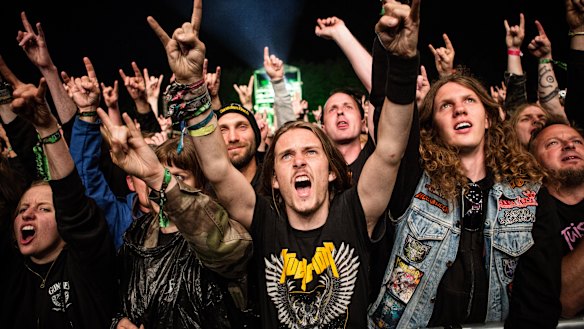 A cultural pass for young fans has been proposed. Alamy
The stagnation has seen Australia ranked 25th out of 31 OECD countries for spending on recreation, culture, and religion – trailing all major European countries as it spends a quarter less than its peers, but ahead of the United States, Colombia, Ireland, the United Kingdom, Japan and Italy.
The findings come amid the Albanese government’s review of its hallmark national cultural policy, Revive, and warnings that Australia risks losing the next generation of “Kylie Minogues” and young music fans.
In one finalised submission, the Save Our Arts lobby sets out 25 priorities for music, visual arts screen, stage and writing – most notably backing the introduction of a $180 million Culture Pass scheme.
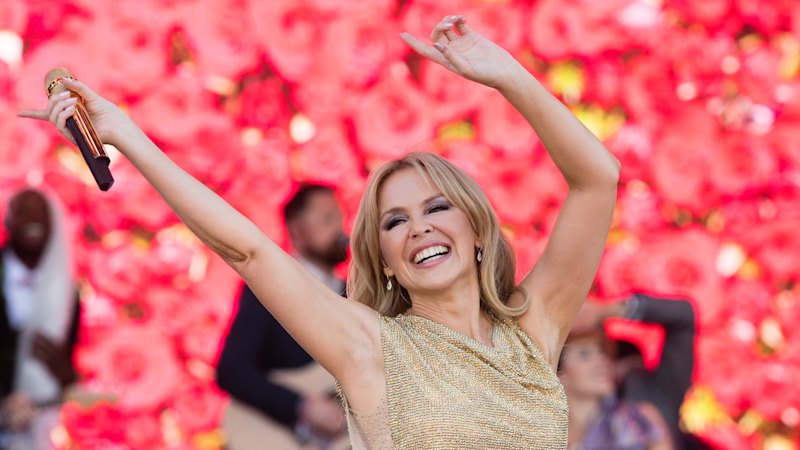
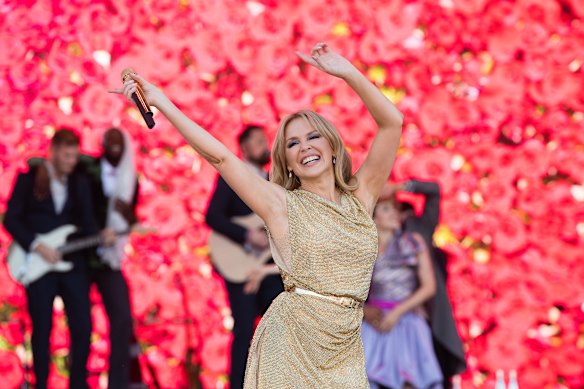 Kylie Minogue is one of Australia’s most successful music acts. “In the next 10 to 30 years, will we have the next Kylie Minogue to perform for us?” asks academic Guy Morrow.Samir Hussein/WireImage
This would provide $100 vouchers to all 16-to-21-year-olds to spend on Australian books, music, and performances, aiming to rebuild young audiences lost during the COVID-19 pandemic. Modelled on successful programs in France and Italy, the vouchers would be redeemable via Services Australia for registered cultural providers.
Save Our Arts – a coalition of academics and advocates that runs marginal seat information campaigns – has also proposed a 5 per cent levy on Australian subscribers of Spotify, Amazon and Apple to fund new local acts that have become nearly invisible on these platforms.
A further 3 per cent levy on tickets for large-scale concert venues of 3000 or more seats could raise $100 million to be reinvested in grassroots music venues. Lobby spokesperson David Latham says: “We really want to keep some of that money that is being Hoovered up by streamers and big tech overseas, and keep that in Australia.”
Guy Morrow, Associate Professor of Arts and Cultural Management at the University of Melbourne, says the levies aim to create a sustainable “top-to-bottom” funding model.
“Kylie Minogue has been selected to play the grand final for the AFL,” Morrow said, “but in the next 10 to 30 years, will we have the next Kylie Minogue to perform for us?”
Morrow, who co-authored a report for the Victorian Music Development Office, notes that streaming algorithms and AI recommendations often reproduce US tastes as global “norms”, creating a feedback loop that disadvantages emerging local artists.
Variations of these taxes were recommended by a federal parliamentary inquiry last year but are yet to be adopted. Morrow says the levies should be framed as a way of safeguarding Australian stories in an era where American culture risks swamping local expression.
The report by A New Approach confirms state and territory governments are now doing the heavy lifting for the nation’s cultural identity.
For the first time, state investment (39 per cent of total spend) has outpaced federal investment (36 per cent).
Federal expenditure in 2023-24 fell to $114 per Australian – the lowest on record – while state and territory spending hit a high of $123.
Related Article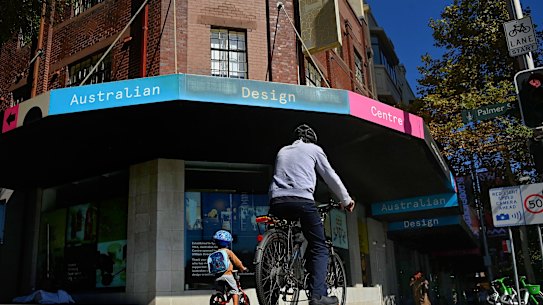
Critically, the report highlights changes in how these limited funds are used. In 2023-24, 18 per cent of arts expenditure was swallowed by capital expenditure –funding for buildings and infrastructure – up from 11 per cent in 2009. Meanwhile, government recurrent expenditure – for artists and their work – fell by $551 million in 2023-24 compared to 2021-22.
The closure of the Australian Design Centre in Sydney, which lost multi-year operational funding, is one of the highest-profile casualties of this shift.
To this end, Save Our Arts proposes doubling funding to small-to-medium organisations — the sector’s “bread and butter” – to $90 million a year starting in 2028.
A New Approach chair Rupert Myer says sticking with the status quo is a “lost opportunity” to drive a productive economy. He urged the government use its data to ensure Australian stories remained available in every postcode.
“If we don’t improve how governments, industry, philanthropy and business work together, Australians’ access to cultural and creative opportunities will be adversely affected,” Myer said.
A spokesperson for Burke said expert panels would inform the minister on key issues and themes raised through public consultation.
Editor’s pick
“Australians should be able to watch our shows on screen and stage, hear our music through their speakers, see Australian art on the walls, and read our stories on the bookshelves,” the minister has said previously.
The Booklist is a weekly newsletter for book lovers from Jason Steger. Get it delivered every Friday.
Save
You have reached your maximum number of saved items.
Remove items from your saved list to add more.
From our partners