
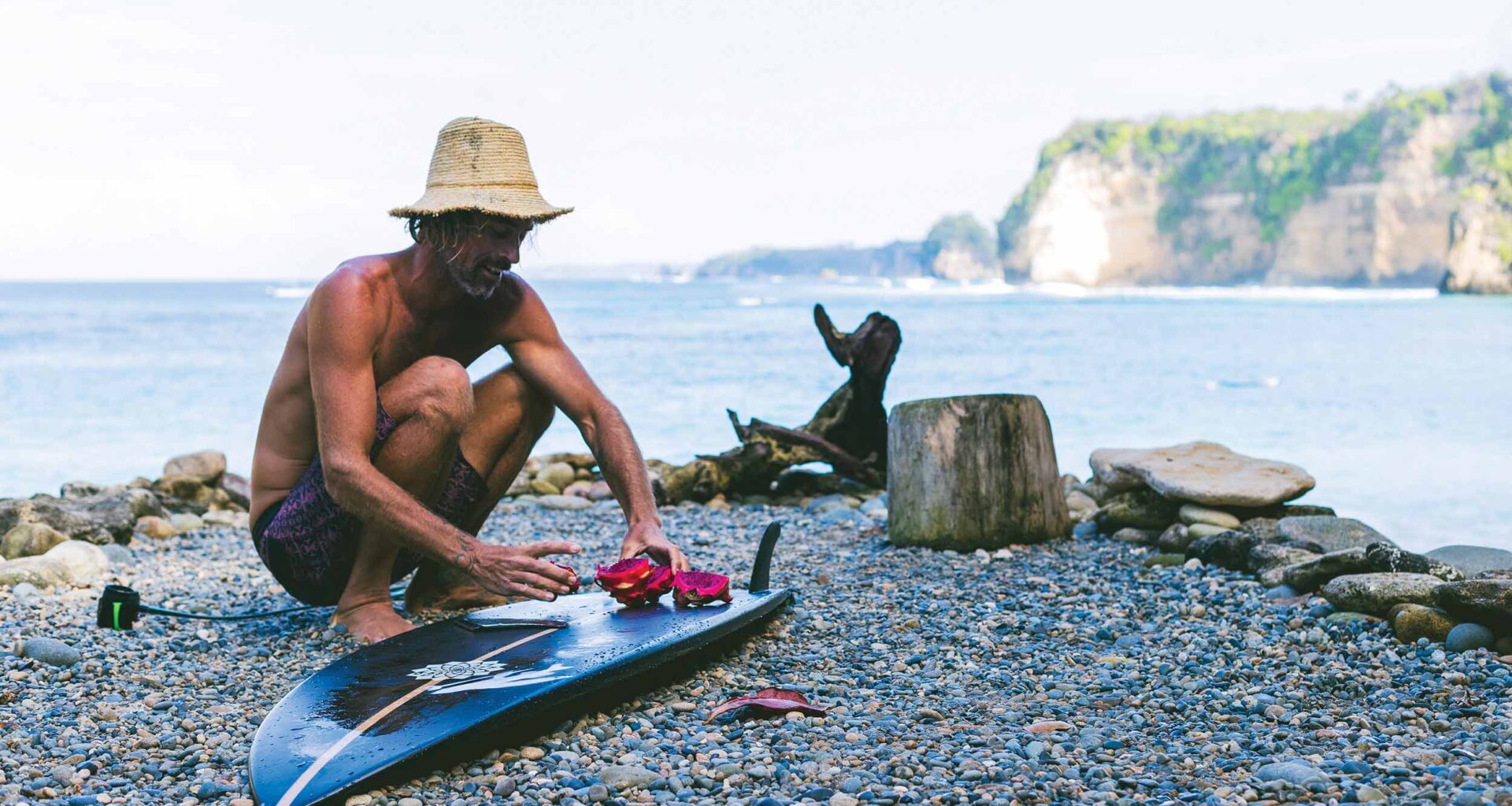
Dave Rastovich reckons we’ve started outsourcing something essential. Not just directions or forecasts, but instinct itself.
“There’s a big conversation to be had about whether we have handed our skills over to the convenience of technology,” he said. “I like to think of it like towing and paddling. Everyone was head over heels for jet skis when they came out because of their convenience, but we quickly found their place, for certain waves and safety, and then the pendulum swung back to an appreciation for paddling in big waves. I look at our life in the same way and look at our phones in the same way. They’re convenient, but they diminish our skills.”
Rasta, who spent over a month at sea travelling from Yamba to the Great Barrier Reef last year, believes sailing taps into something far more fundamental.
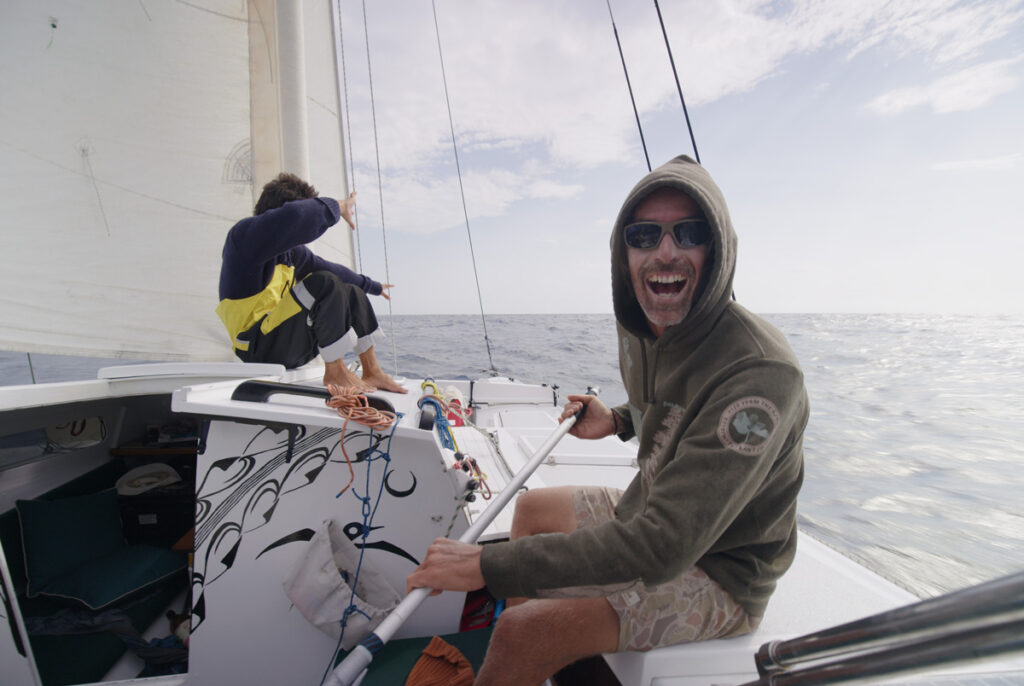 The expressions says it all. Rasta learning the ropes aboard a 32-foot Wharram catamaran. Photo: Milo Inglis.
“We’d look at forecasts to give us an idea but then we would put the technology away and use our senses to navigate.”
Dave was joined on the trip by Chris Miyashiro, a Hawaiian waterman whose resume includes a 23 day voyage from San Diego to Kaneohe Bay on Oahu in a traditional sailing canoe.
The pair’s journey through Northern NSW and into Queensland forms the basis of Patagonia’s new film ‘Sensing Home’ which begins its East Coast tour this weekend. Dave said the inspiration for the project, which was produced by Milo Inglis, came in the wake of Cyclone Alfred.
“Alfed left us with a full water table and then it didn’t stop raining for four months. All of the rivers in the region were filled with this disgusting brown water which a lot of people got sick from. I ended up in hospital with a nasty staph infection after some foam got into a cut and I’d even heard of someone losing a leg.
“That’s what pushed me to start looking north – to learn how other communities treat their rivers and how they’re working to heal them.”
The curiosity happened to coincide with an going project to build a 32-foot Wharram catamaran – an ideal vehicle for slow travel and open ended exploration.
“The thing costs you less than a Ute to buy and you can just start wondering the ocean and meeting people,” he said.
“It was amazing to move at such a slow place and really spend time with people, having a yarn and getting to properly know each area. From Angourie to the Great Barrier Reef you have unbelievable points and beach breaks. The trip became a celebration of the coastline and the communities along it.”
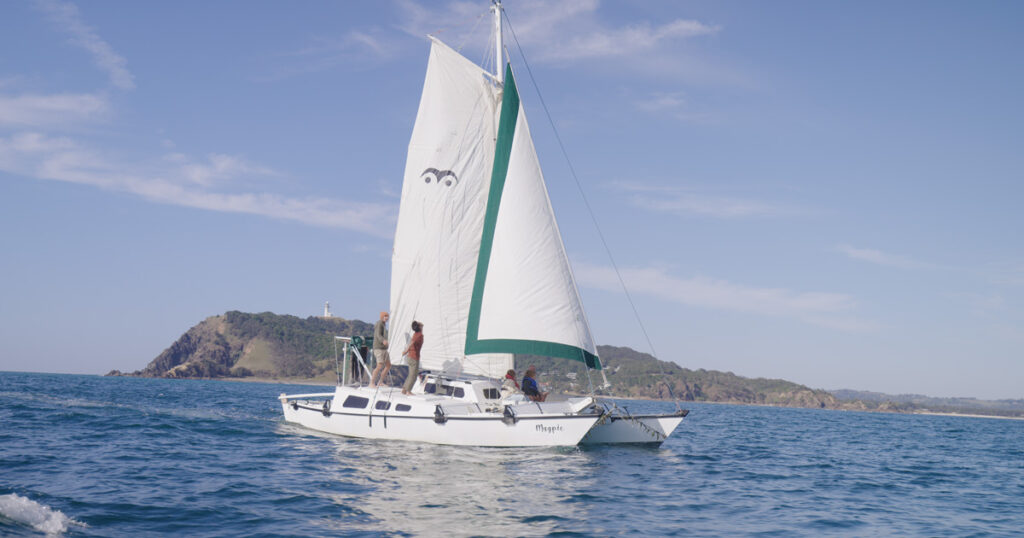 A slower pace offering a different perspective. Photo: Milo Inglis.
While much of that stretch is familiar territory for Rasta, seeing it from the water offered a different perspective.
“I’ve done that trip by road so many times. But looking at it from the ocean, you realise how much open space is still out there – even along one of the busiest surf coastlines in the world. Outside the Gold Coast and Brisbane, it’s miles of empty beach.
“Even offshore, there’s barely any traffic. So few boats. So much room to move. At one point we fell in with the whale migration – those kinds of experiences stay with you.”
Though the mission centered on connecting with people on land and wildlife at sea, there was no shortage of waves along the way.
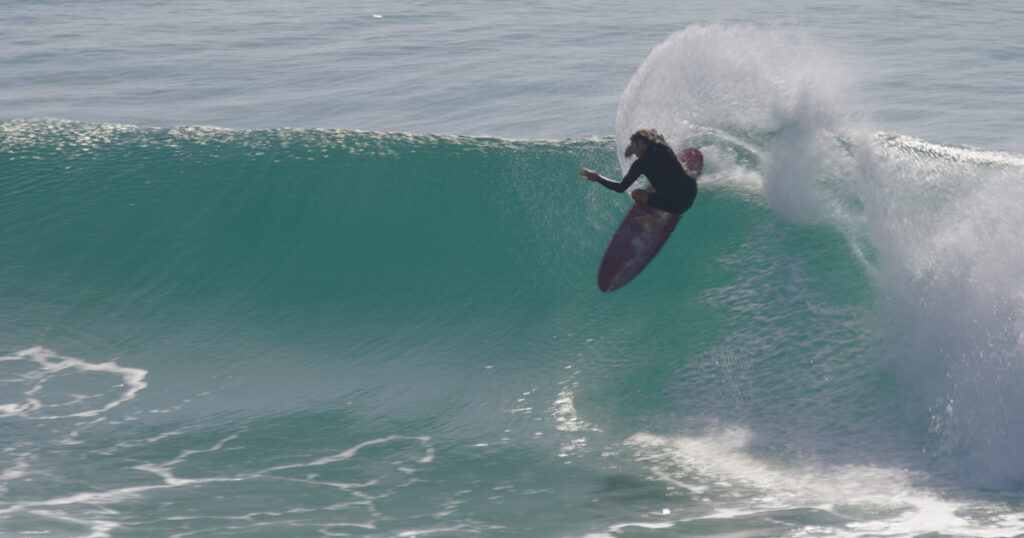 Rasta speed check down the line. Photo: Milo Inglis.
“Chris had never seen Australia like this before. It was so much fun showing him the different setups and watching him light up at the different types of waves on offer,” said Dave. “We scored so many different back beaches where we find little banks to ourselves and then when the winds would switch we’d get a surf in at one of the points.”
Rasta said he’d been inspired by John John Florence who has been sailing the globe in search of new waves.
“It’s the most amazing form of travel that people have come up with. There’s no sounds, no engine, just your steering and knowledge. Riding swells on a hull is just an extension of how we ride waves,” he said.
“John has gone to a different dimension with his boat and skills. It’s really great to see what he is doing. Just like myself, I think John is inspired by what his elders have done. For generations surfers have explored new waves through the ocean. Sailing has always been a part of our story. That’s where my love for it came from and I’m sure it’s the same for him.”
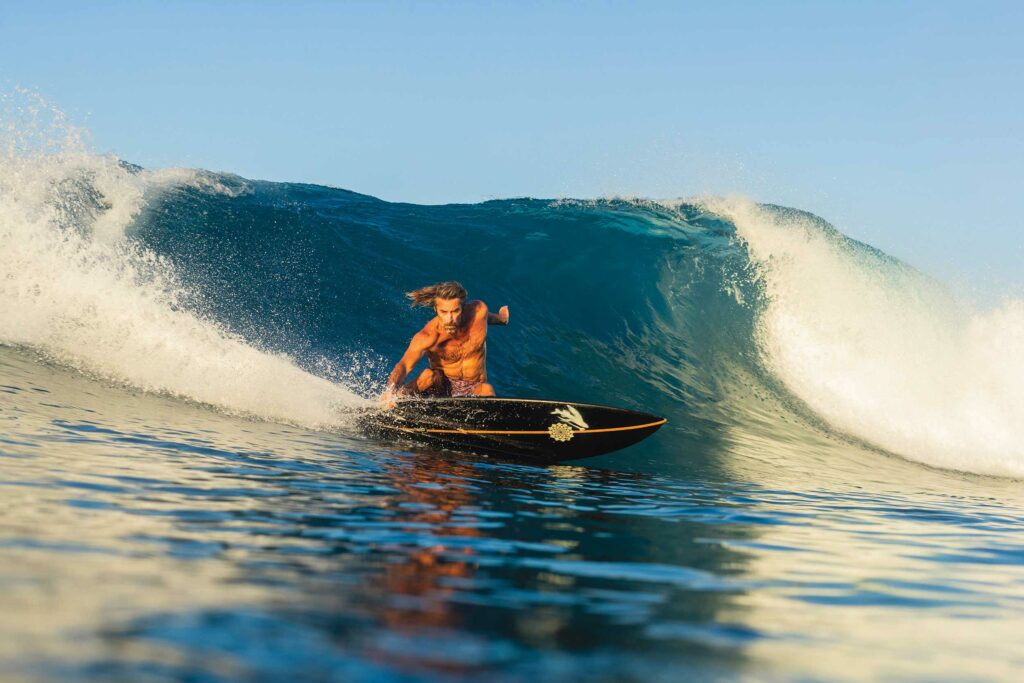 Dave’s freedom of expression has always translated into his surfing. Photo: Nathan Oldfield.
Rasta is already planning his next voyage, with a trip to Hervey Bay later this year to spend time among the thousands of whales that pass through the region.
Before then, he’ll join the Patagonia crew on the East Coast tour of Sensing Home, alongside screenings of Miyashiro’s film A’a, which documents his journey from San Diego to Hawaii, followed by live Q&As.
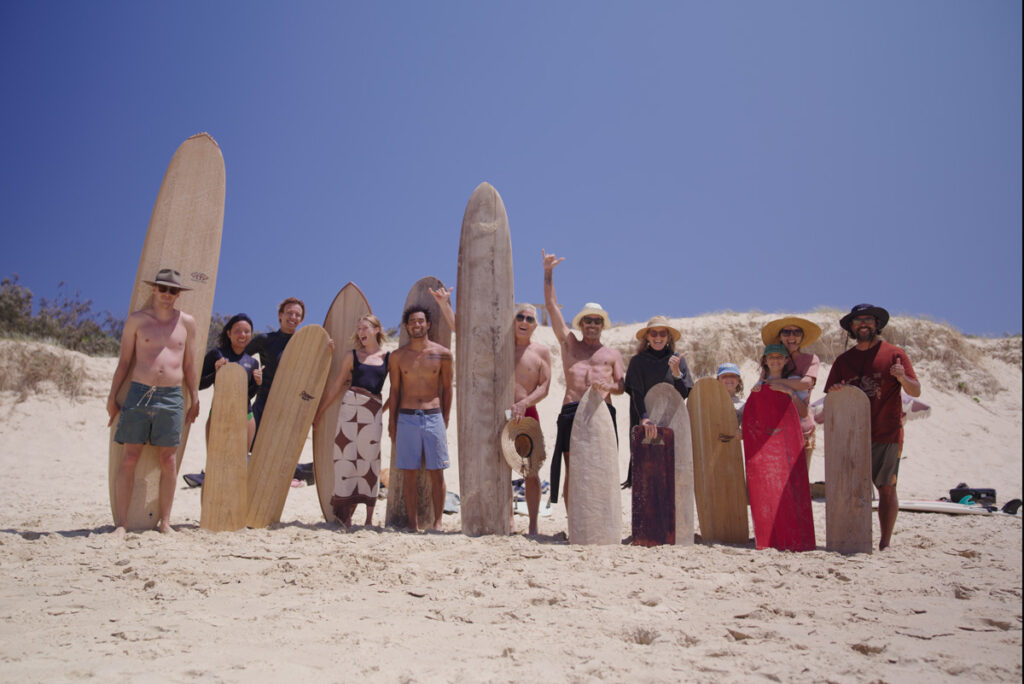 Dave and Chris link up with local communities throughout their journey. Photo: Milo Inglis.
“I want people to walk away wondering where the adventure is in their own life,” said Rasta. “How well they really know the place they live, and how they can find a bit more purpose in it.
“Because that’s what the film is about – deepening our understanding of home while showing your mate a fun time.”
More information on screening locations and times can be found here.