
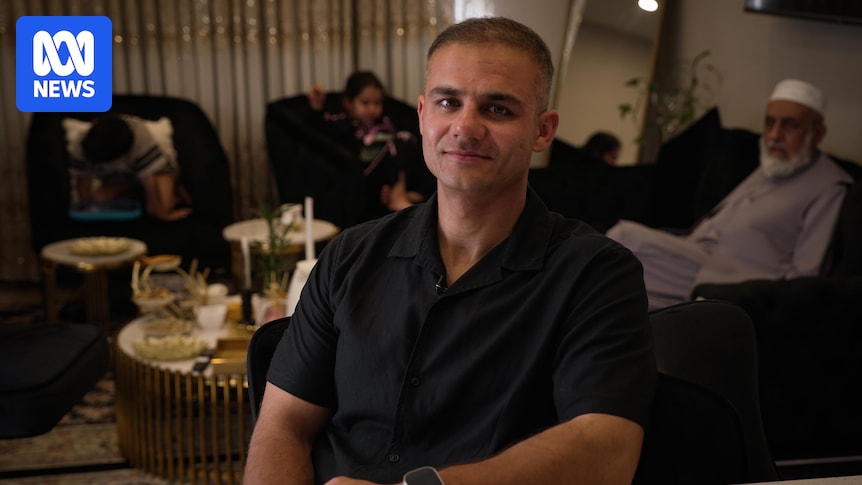
In the quiet moments, the memories of Afghanistan come flooding back to Melbourne roof plumber Sheraz Ahmadi.
A childhood interrupted by war; his older brother killed by an improvised explosive device (IED); his father-in-law shot in the neck during an ambush that targeted Sheraz; deadly missions with US special forces.
“I always think about it,” Sheraz tells 7.30.
“But when I think about those things, I suddenly change my thinking to good things that I have now. For example, I’m living in a safe country [and] I’m living peacefully.
“I have two kids and my daughter can go to school.”
From 2016 to 2019 Sheraz worked as a translator for Australian forces in Kabul. Now, in 2026 he has been given a key role in the RSL Victoria Anzac Day march.
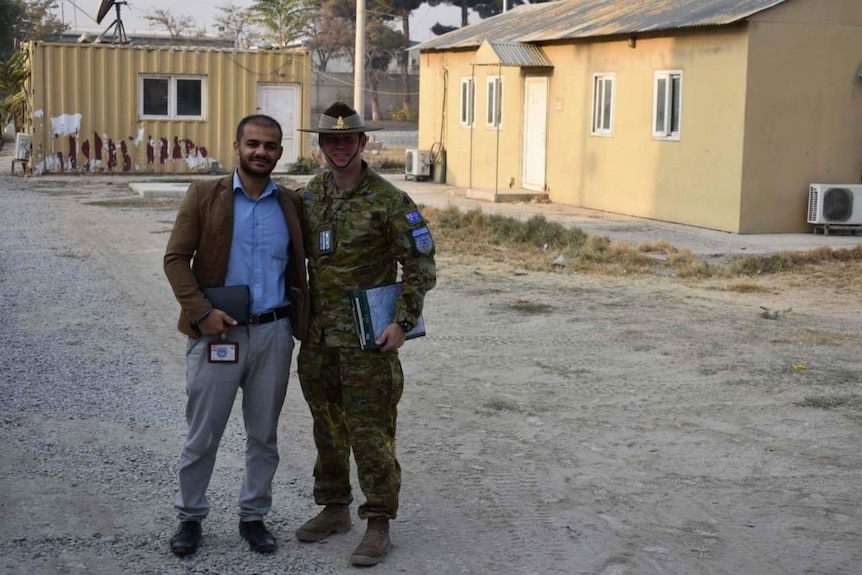
Sheraz pictured at an Australian base in Kabul. (Supplied)
He will be an ambassador at the head of the march, representing all locally-employed workers, like translators, who worked with Australians in Afghanistan.
Locally-employed staff experienced all the risks of their foreign colleagues based in Afghanistan, without the protection of sleeping in a heavily-guarded base at night.
“They often take a great deal of risk in the work that they do,” says Dr Mark Schroffel, the RSL Victoria state president.
“Not only are they on the front line providing support, especially commanders, situational awareness, cultural advice and the like, but they’re also taking a risk in their own communities as well.”
Dangerous missions
In 2016, while Sheraz was working for Australian forces, he went off-base to visit his father-in-law.
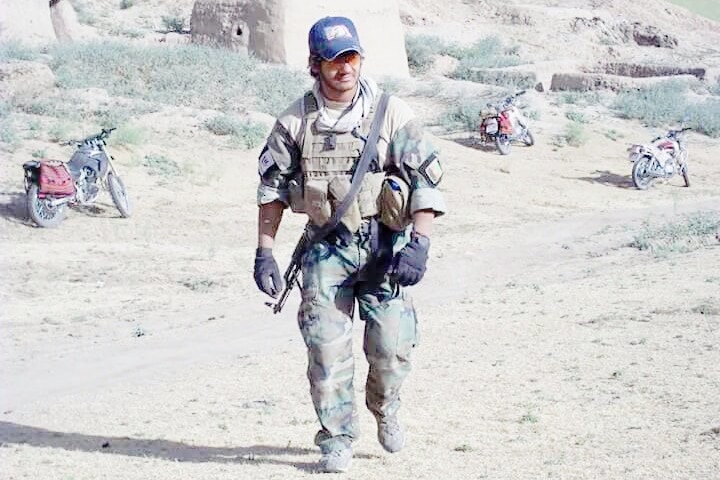
Some of the missions Sheraz took part in were high-risk. (Supplied)
“I went to his shop to meet him, and as soon as we stepped out of the shop, I heard a bullet sound and suddenly my father-in-law dropped to the ground. And it was a lot of people, so everyone started running,” Sheraz says.
When he dusted himself off, he realised his father-in-law had been shot in the neck. He was lucky to survive.
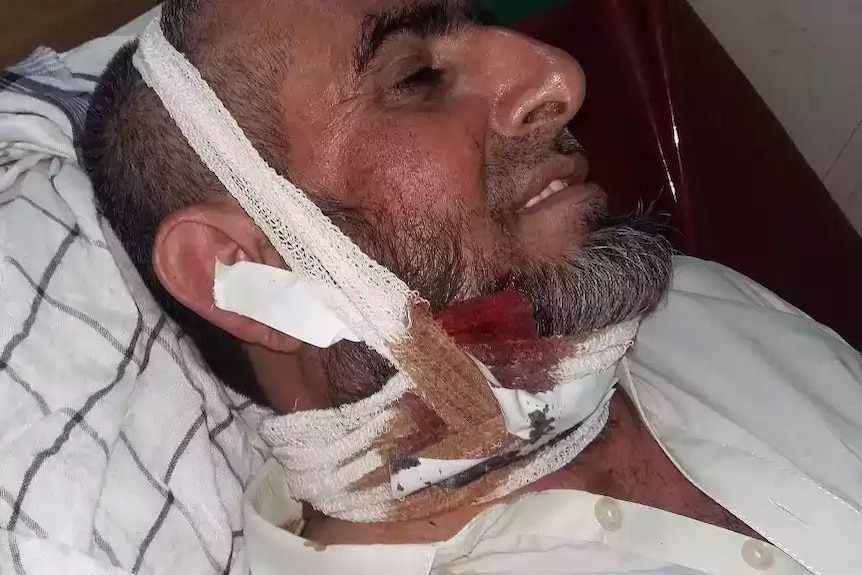
In 2016, Sheraz was targeted in an ambush that badly injured his father-in-law. (Supplied)
Sheraz worked closely in Kabul with Australian army officer Gus McFarlane.
“The contrast of security arrangements for what I experienced, living on a protected base compared to what he had to do every day, was stark,” says McFarlane, who is now a Lieutenant Colonel.
“It really highlighted to me the commitment he had to his community, to Afghanistan, how much he passionately believed in what he was doing over there.”
Lieutenant Colonel McFarlane says Sheraz provided much more than translation.
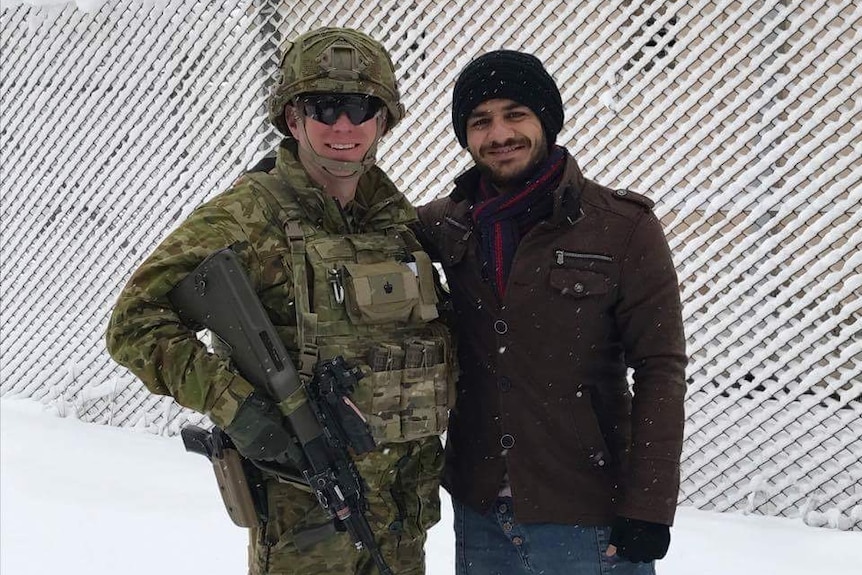
Lieutenant Colonel Gus McFarlane (left) says Sheraz contributed to the safety of Australian soldiers in Afghanistan through his work. (Supplied)
“There were several instances where the Taliban had infiltrated our bases and caused casualties,” he says.
“I was able to have somebody that I could trust to not just interpret the conversation that was going on, but to read the room, read what was going on, provide commentary on what was happening outside of the Kabul Garrison Command headquarters itself.”
Sheraz was a child when the US invaded Afghanistan in 2001, but he and his brother Ferdows realised there were job opportunities for those who could speak English.
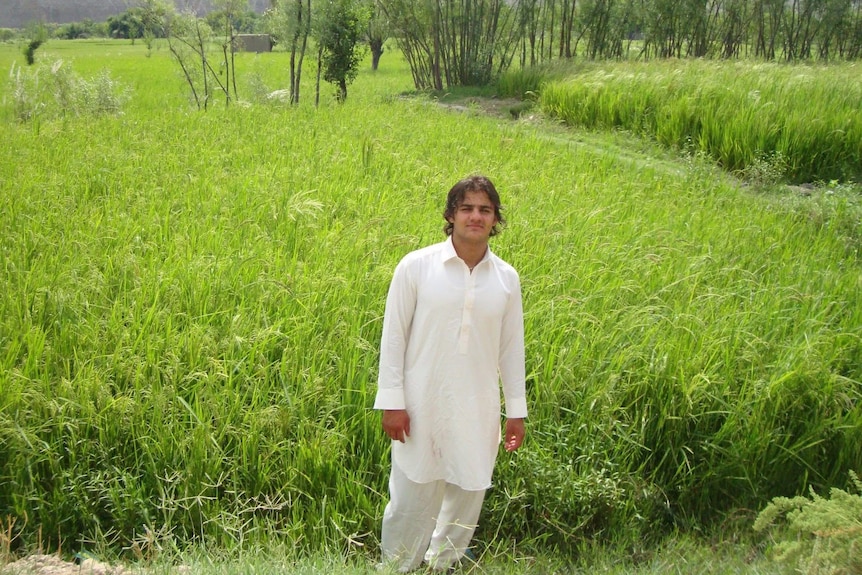
Sheraz Ahmadi chose to learn English so he could get a job. (Supplied)
They studied English, and in 2010, when Sheraz was 18, he began working as a translator.
He told his parents he had a safe job, working inside a base in a “safe” province.
What he was actually doing was going out on operations with US special forces.
The missions were exceptionally dangerous. In one operation, two soldiers were killed and six were wounded.
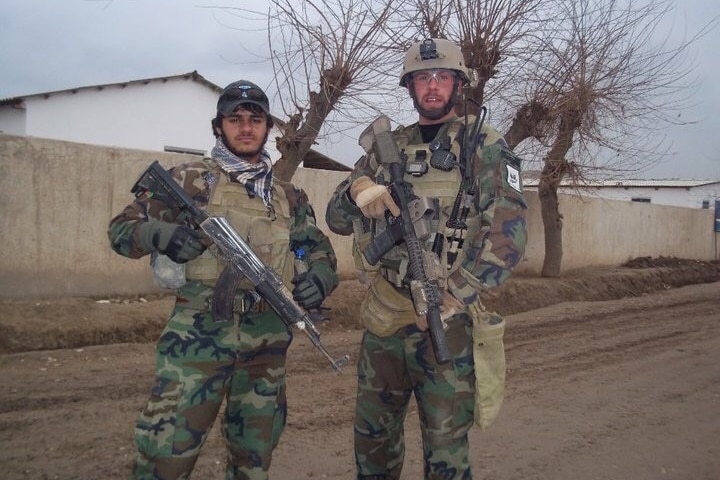
Sheraz had told his parents he was working a safe job inside a base, but the reality was far different. (Supplied)
“That mission was planned for two days, but it was extended for 15 days,” Sheraz recalls.
“It was the most difficult mission that we had. The aeroplane was dropping food for us by the parachute because there was no route to drive the food for us.”
He still keeps a photo of himself with a group of special forces soldiers. Sheraz says three of those soldiers were subsequently killed.
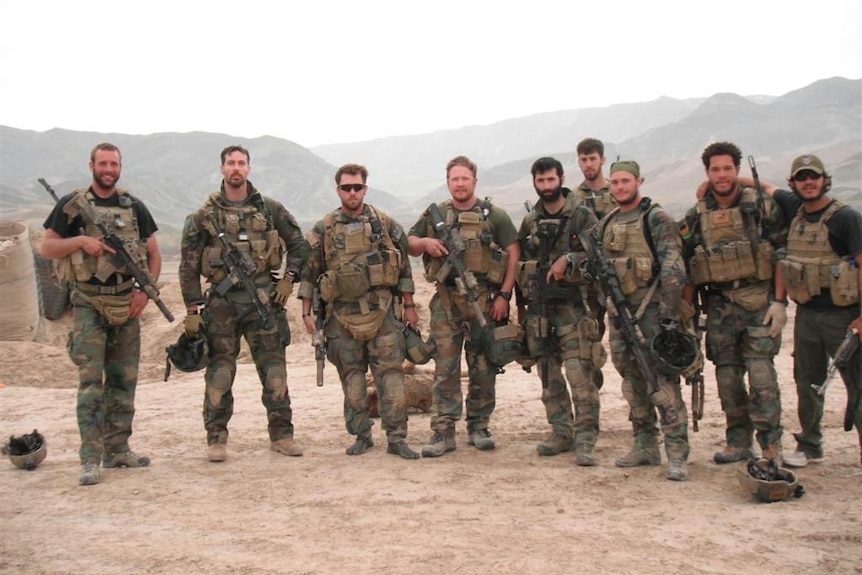
Sheraz (far right) patrolled some of the most dangerous parts of Afghanistan alongside US special forces. (Supplied)
His role was to act as a liaison between the US forces and the Afghan national army and police officers they worked alongside. He provided translation and cultural advice.
“The Americans did not know which one is the mosque, which one is the normal house. But we would know; we would see books, we would see praying rugs,” he says.
“So if you see an American walking inside a mosque with their boots on and with their canine dogs, it would trigger the civilians right away.”
Targeted by his own countrymen
Many Afghan civilians resented the Americans, but they also detested the translators, like Sheraz, who worked with them.
“They didn’t like interpreters at all. They would treat them as an infidel, who doesn’t believe in God,” Sheraz says.
Sheraz’s brother Ferdows was killed by an IED in 2017, and later, his family home was targeted in a bomb attack that severely injured his father and younger brother.
Sheraz believes the attacks were in revenge for his work.
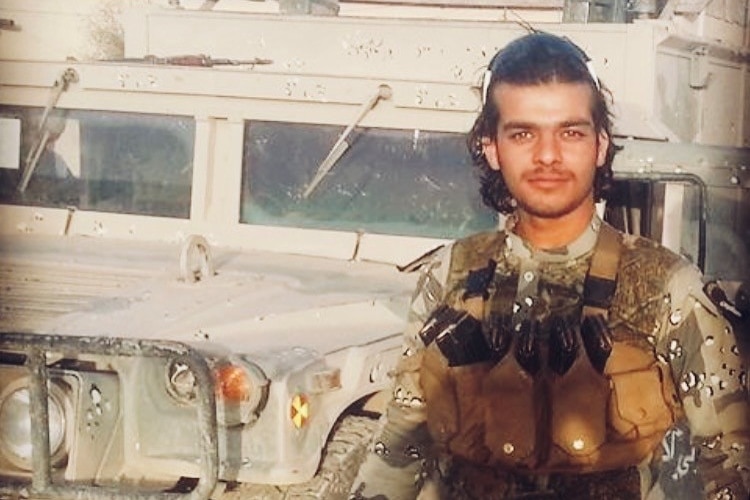
Sheraz Ahmadi’s brother Ferdows was killed by an IED in 2017. (Supplied)
“His hands, his feet were burned … when the explosion happened, they ran away,” Sheraz tells 7.30.
“But as soon as they remembered that my dad is inside, he just went back to the fire and grabbed him and pulled him out. So they got burned while they were taking my dad out of the fire.”
By that time it had become clear that Afghanistan was no longer safe for Sheraz, or his family.
In 2019, he along with his wife and son were granted visas to Australia as part of a government scheme to help those who had worked with Australian troops.
Gus McFarlane had written supporting letters to help the family come to Australia.
“He, in my opinion, directly contributed to my safety and the safety of other Australian soldiers that were deployed in Afghanistan,” says Lieutenant Colonel McFarlane.
Sheraz’s parents and younger brother have subsequently been granted visas.
On the eve of Anzac Day he told 7.30 that he doesn’t have lingering trauma from the years of conflict in Afghanistan.
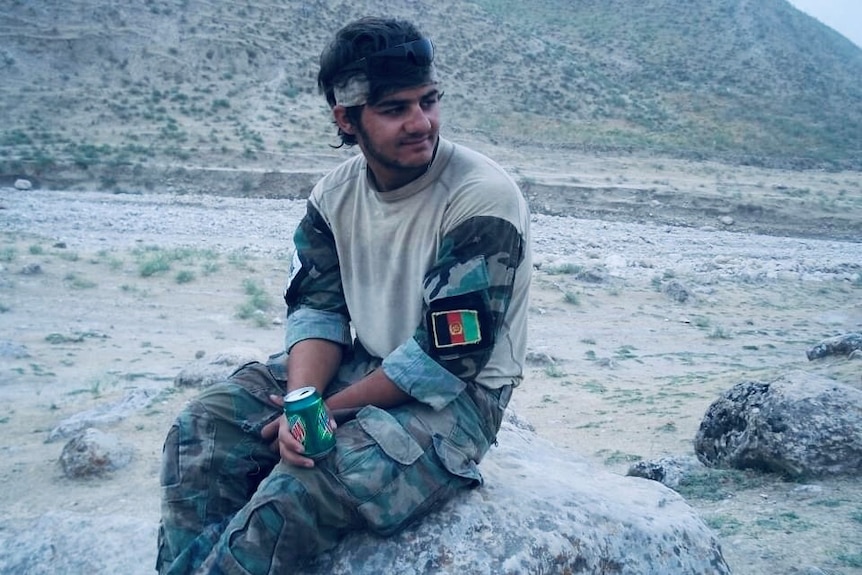
Sheraz says he has no lingering trauma from the war, but the memories are never too far away. (Supplied)
“Maybe Afghans are tough,” he says.
“They face war for more than 50 years now. Maybe that’s another reason, because since we were kids, we hear firearms … we’re talking about war, about losing family members, losing relatives, and they see bombs, they see people get blown up, they see vehicles blown up.”
As he is explaining the impact of war on Afghanistan’s people, his children Sultan and Sophia come barrelling into the lounge room.
“What if I was stuck in Afghanistan still, so my daughter wouldn’t be able to go to school and my family and I wouldn’t be safe,” Sheraz says.
“I think about the positives that I have in my life now.”
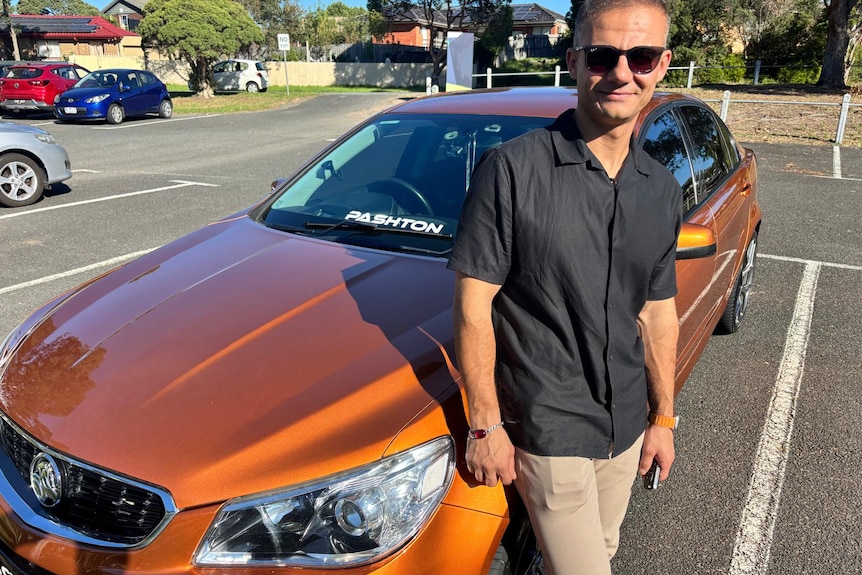
Sheraz and his family are happy with their new life in Australia. (ABC News: Adam Harvey)
Lieutenant Colonel McFarlane says he’s proud that the RSL is recognising Sheraz, and all the locally-engaged staff this Anzac Day.
“It is sometimes easy to lose sight of the fact that it’s just not just those people in uniform and it’s not just Australians that are going over there,” he tells 7.30.
“The involvement of the Afghan people in driving their future was immense.
“The risk that was presented to them to be able to go and do that was very real. And absolutely they should be recognised on days such as Anzac Day.”
Watch 7.30, Mondays to Thursdays 7:30pm on ABC iview and ABC TV
Contact 7.30
Do you know more about this story? Get in touch with 7.30 here.