
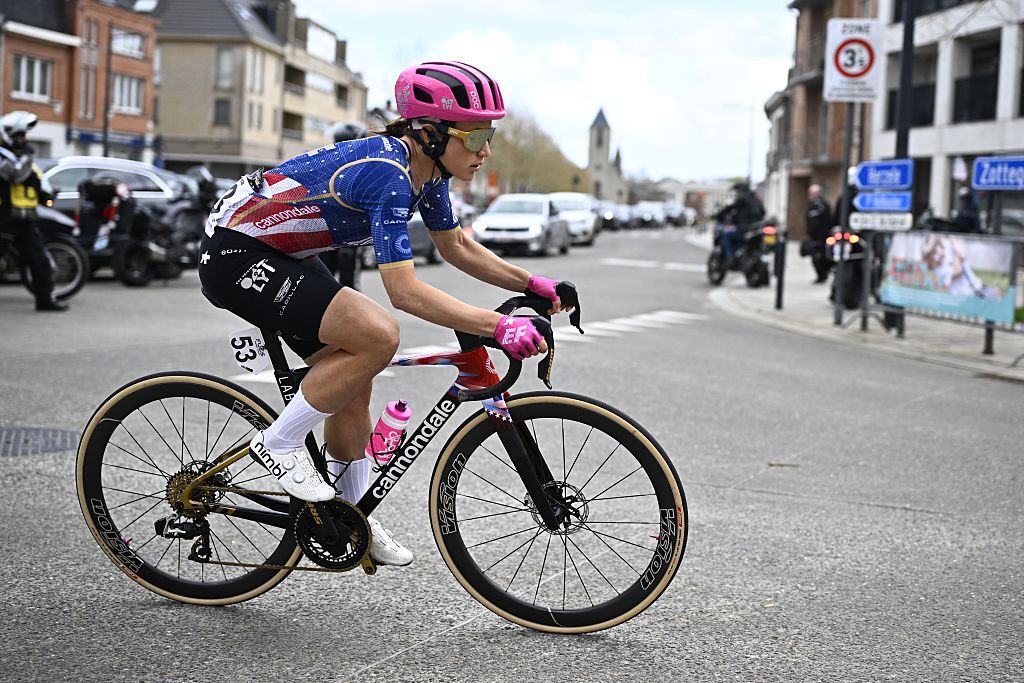
There is nothing artificial about Faulkner’s talents. Olympic champion on the track, Olympic champion on the road, Grand Tour stage winner, gold medals at Pan American and US National Championships, what else can Kristen Faulkner do on a bike?
With help from Artificial Intelligence, Faulkner is now confident that her computer science background from Harvard University will lead to more racing success.
Article continues below
You may like
The Alaska native won her first Grand Tour stages in 2022 at the Giro d’Italia Donne, wearing the leader’s jersey after the prologue and then taking the mountain classification title after winning stage 8. On a Continental team in 2024, she had her big breakout season, winning a stage at Vuelta España, the first of two USPro road titles and then double golds at the Paris Games, one in Team Pursuit and one in the elite women’s road race.
What to read next
“AI is going to change women’s performance research from the bottom up, and I want to be a part of it.”
It’s not just training numbers which Faulkner scrutinises. She has also been attentive and vocal about health issues, especially racing weight for expectations for energy output, watts per kilogram. She shared last year on a new Instagram account, @f.e.e.d_powr (Fuelling for Endurance, Energy, and Durability), set up by her teammate Cédrine Kerbaol, that she won a pair of gold medals at the Paris Olympic Games “by not changing her body, but by working with it”. Now she’s digging deeper for optimal performance.
“I worked in venture capital. I actively invest in AI companies. I race on the Women’s WorldTour. I am training to defend Olympic gold on home soil in LA 2028. I’ve applied all of that knowledge to building this.