
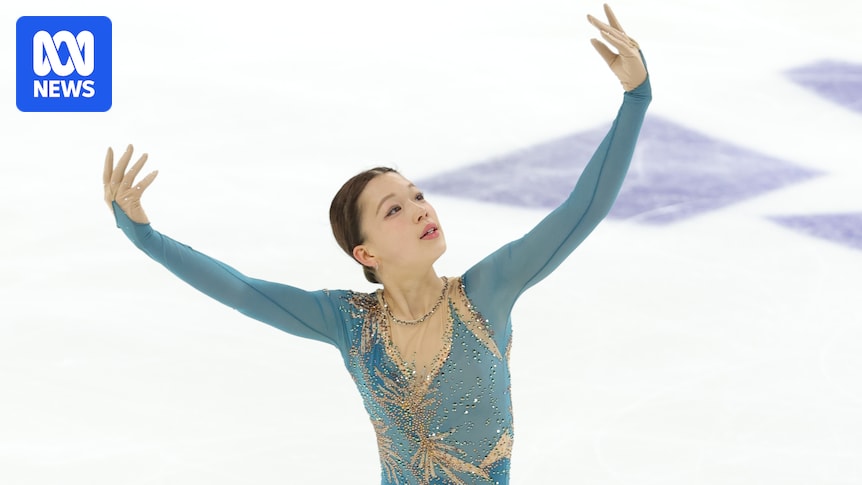
The triple axel jump is a move few figure skaters have mastered but at just 15, Hana Bath became the first Australian female to ever land one in a competition.
“I was working on it roughly every day,” said Hana, who first landed the manoeuvre at the Junior Grand Prix event in Abu Dhabi last year.
She said it took her almost five years to consistently land the jump.
“She would fall a lot on it, but she would keep going,” Hana’s father Adam Bath said.
“And it was times when we thought maybe that jump was too difficult.”
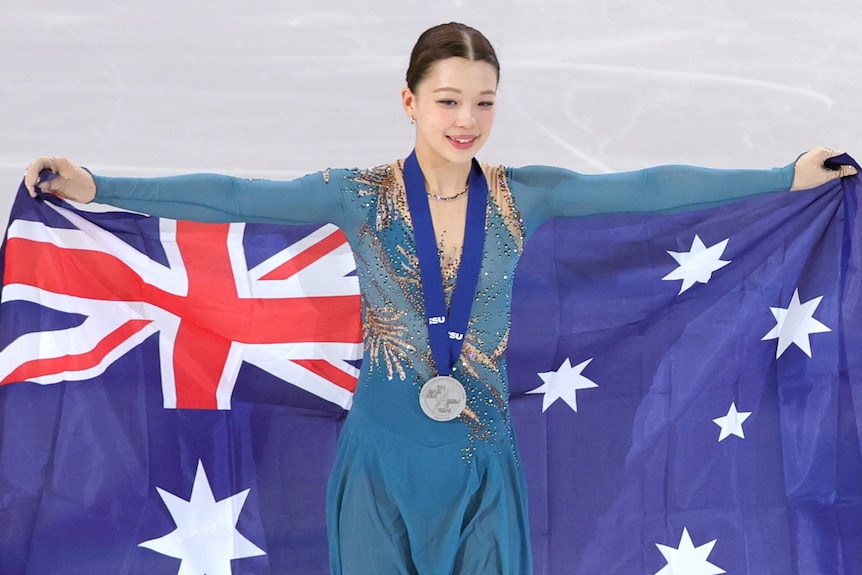
Hana Bath won silver at the ISU Figure Skating Junior World Championships in Tallinn, Estonia. (Supplied: Wilma Alberti )
In last year’s Grand Prix event, Hana also made history by becoming the first Australian female to land the triple axel toe loop combination.
Clad in turquoise, the talented youngster nailed the combination again at the ISU Figure Skating Junior World Championships last month.
Making Australian history
The effort helped earn her a silver medal at the competition in Estonia, becoming the first Australian junior in history to ever win an individual medal at the world event.
This result also saw Hana move to fourth in the Junior Women’s ISU Season’s World Ranking.
“When the scores came out, I was really shocked and surprised,” she said.
“I was super happy that I was able to medal at such a big event.”
Turning sweet 16 during the competition, Hana said it was the “biggest present she could receive” and that she never expected she could reach such a high level of success.
“I always did hope that I could reach a level like this, and I hope I can achieve more,” Hana said.
A beacon on the Australian stage, the two-time senior national champion won her first aged just 13.
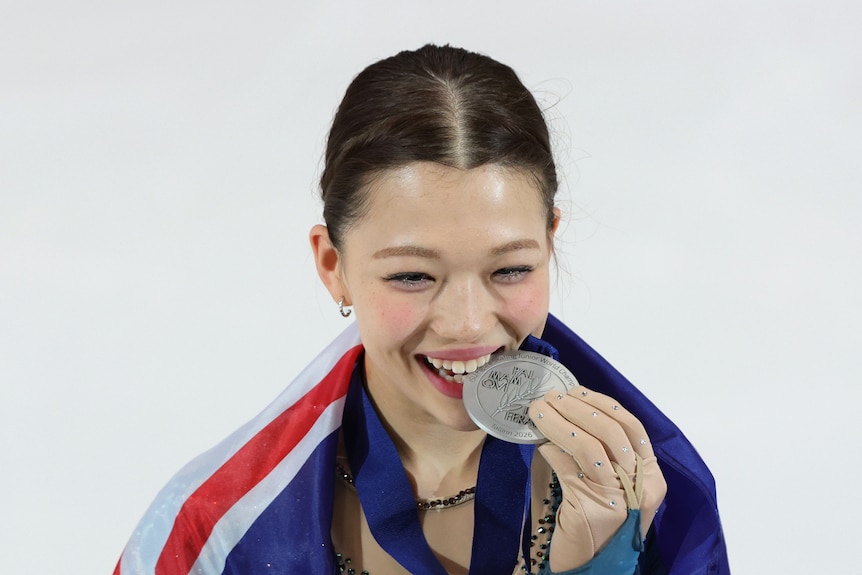
Hana Bath’s goal is to represent Australia at the 2030 Winter Olympics. (Supplied: Wilma Alberti )
From Perth to Japan
Hana has been training since she was five years old, starting at her local rink in Cockburn, Western Australia.
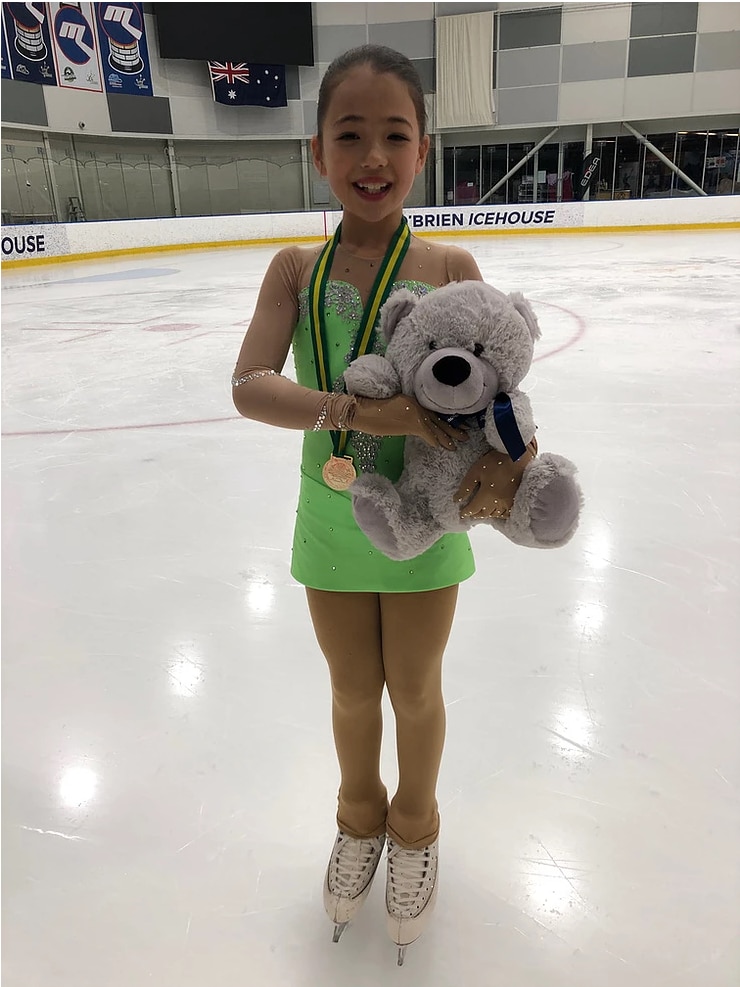
Hana Bath winning basic novice at Nationals in 2019. (Supplied)
“I feel like starting in Western Australia was really good for me,” said Hana.
She said starting in a small community surrounded by lots of support meant she fell in love with the sport without early pressure of elite competitions.
“We lived only 10 minutes away from there and I was with my family and I had lots of friends there which was a really fun way to start,” she said.
Every year during the school holidays, she would trade beach towels for the Japanese winter, visiting her mothers’ family.
Never missing a beat, she continued to put her skates on and trained while over there.
Whilst figure skating isn’t a hugely popular sport in Australia, Japan is a powerhouse in the sport.
In late 2024, Hana and her mum packed their bags and made the move north.
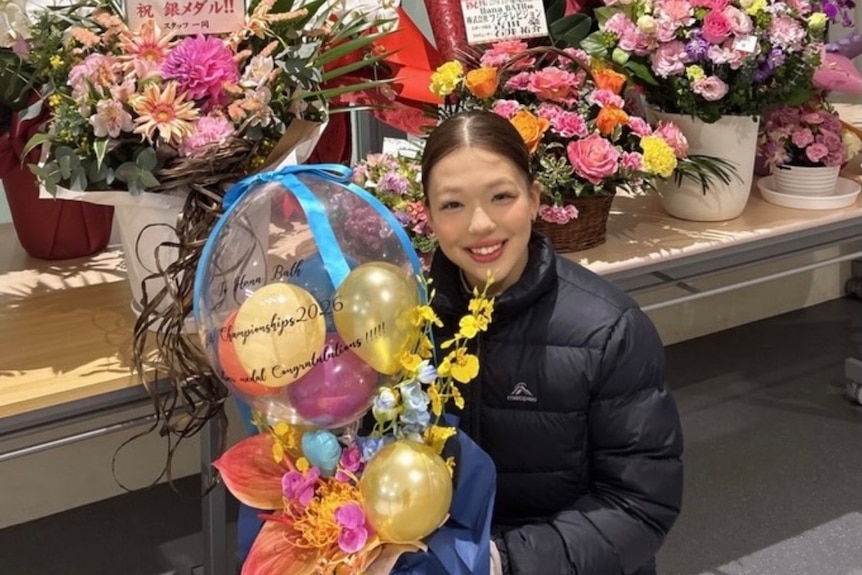
Hana Bath received flowers from her fans after the ISU Junior World Championships (Supplied)
“She saw Japan as a stepping stone towards her dream,” Mr Bath said.
Now based in Tokyo, Hana trains alongside some of the best in the world.
“I’m training around a lot of high-level skaters that I can watch, and I can learn a lot from them,” she said.
Hana juggles online schooling in Western Australia during the day with training in the afternoon.
This move has meant sacrifices for her family, with her brother and father remaining in Perth.
“I think in her DNA that she wants to be a figure skater and she dreams big and it’s hard not to really want to embrace that,” Mr Bath said.
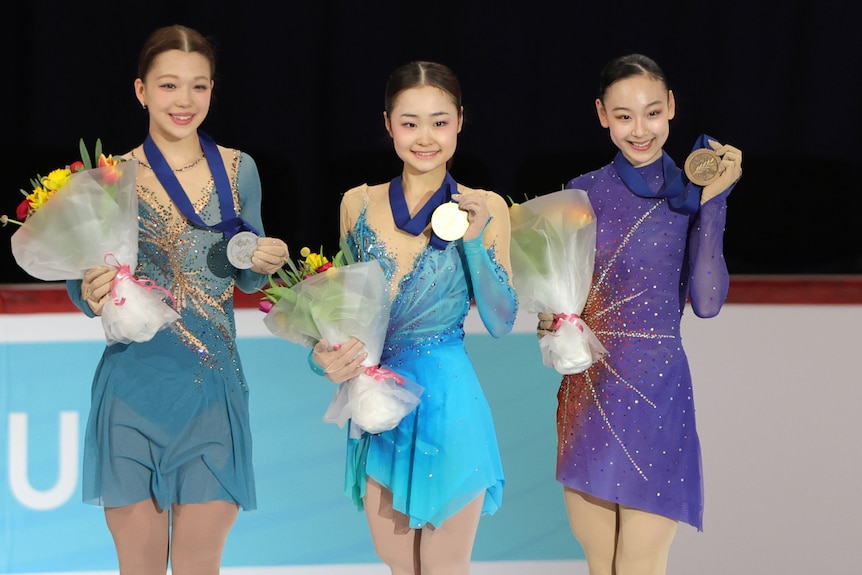
Hana Bath left, finished just four points behind decorated junior figure skater Mao Shimado, centre, while Mayuko Oka claimed bronze. (Supplied: Wilma Alberti )
Hana said she could not be at the level she is now without them and is grateful for the opportunity — one she never thought was possible.
“My brother is living without his mum right now, and so I’m really grateful that my brother and everyone in my family has supported me,” she said.
Cultural Influence
The Japanese culture centres itself around calmness and tranquilly.
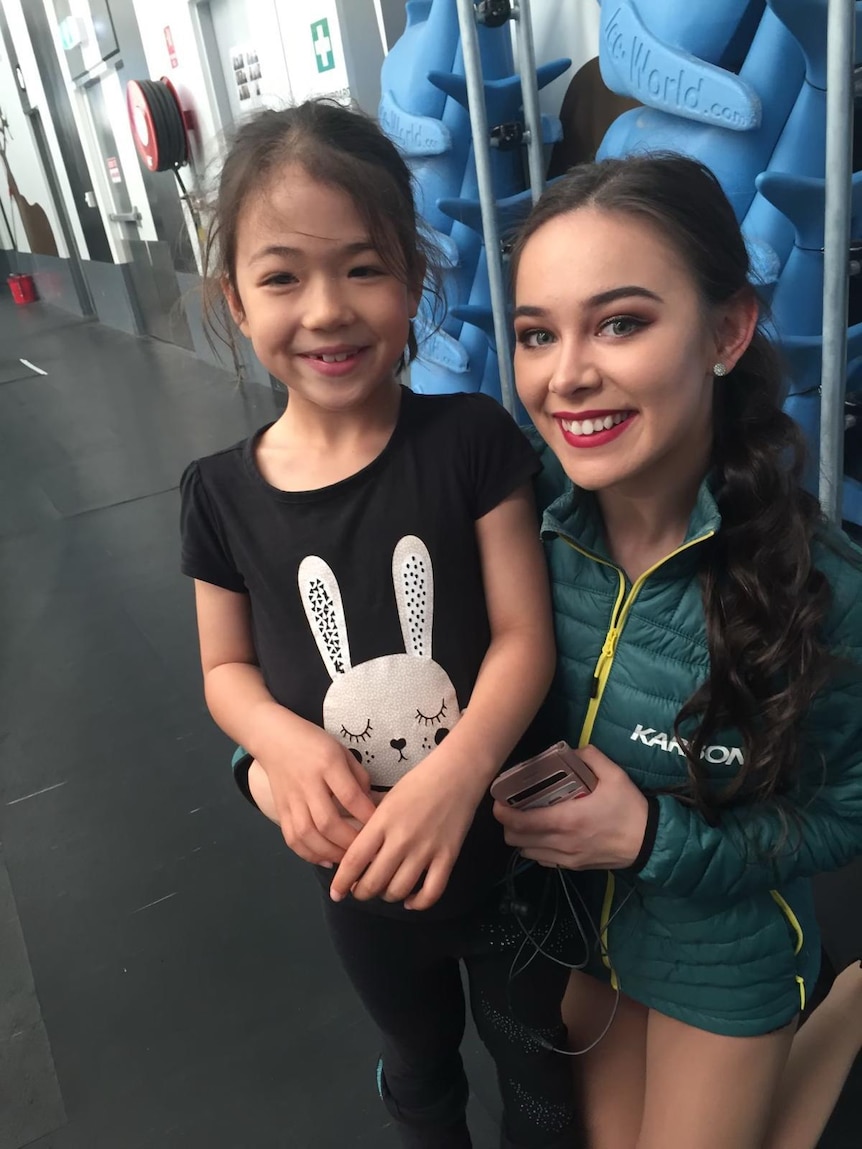
Hana Bath with her Australian figure skating idol Kelani Crane. (Supplied)
“That calmness is reinforced by the coaches and [is a] really important part of helping build that culture, not load the pressure,” said Mr Bath, who believes this has helped keep Hana calm on the rink.
Since the move, Hana’s scores have improved by nearly 150 points at the Junior World Championships.
Mr Bath said a big part of this success was going back to basics and drilling the fundamentals of stroking, edge work and artistry.
But, Hana said she still misses home.
“There’s some moments that have been really hard for me. I always do miss my brother and my dad, and I’ve also got a cat there that I miss,” she said.
“I really miss the Australian beaches.”
She hopes to keep pushing herself and has her eye on competing at the next Winter Olympics.