
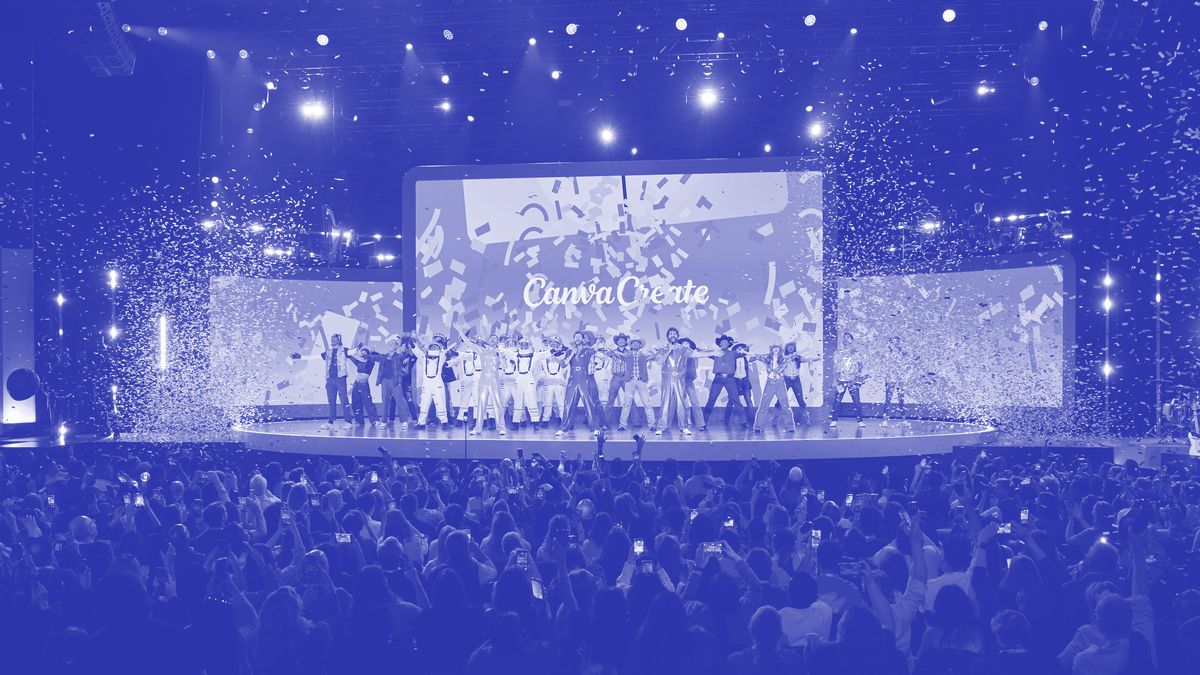
Last week was Canva’s party.
Giant screens, a ballerina on stage, an orchestra, a dude with a mohawk, confetti, the works. It was a production that managed to look distinct from most Silicon Valley launches, while still delivering the same modern software theatre: bold claims and the suggestion that the future had arrived slightly ahead of schedule.
At Canva Create, the message was that Canva is not merely adapting to artificial intelligence. It intends to define what design software looks like in the age of AI.

Get Sweat Equity in your inbox
Signed up to Sweat Equity
A weekly newsletter that tracks the pulse of startups, VC and tech.
Update and view your newsletter preferences in your account.
A weekly newsletter that tracks the pulse of startups, VC and tech.
Update and view your newsletter preferences in your account.
This week is the hangover.
The confetti has been swept away and we’re left with the harder question. What has actually changed for Canva, and what hasn’t?
Beneath the spectacle, Canva remains in a peculiar strategic position: strong enough to matter in the AI transition, yet exposed enough that none of its advantages can be treated as permanent.