
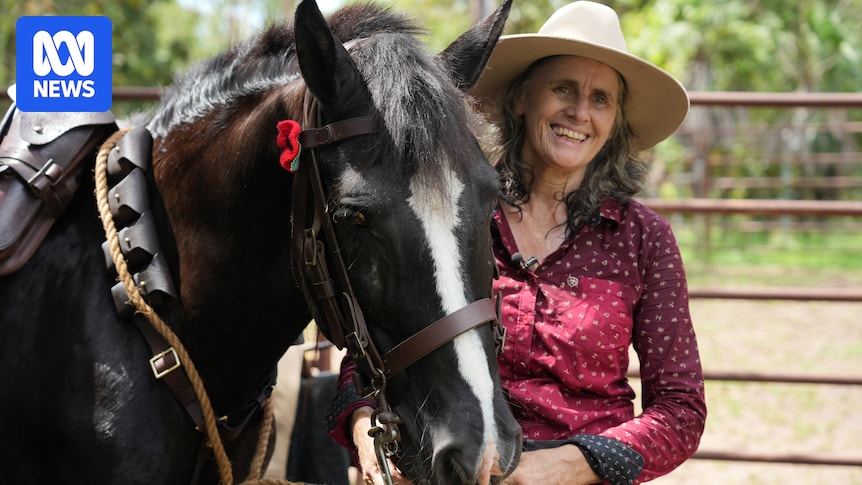
Janette Wilson refuses to sleep the evening of April 24, just in case her pre-dawn alarm doesn’t work and she misses the local Anzac Day commemorations.
The Top End horse trainer is fully committed to the “huge honour” of leading Darwin’s Anzac march each year, when she walks at the front of the pack, a bugle slung over her shoulder and a dressed-up Waler horse by her side, through the city centre.
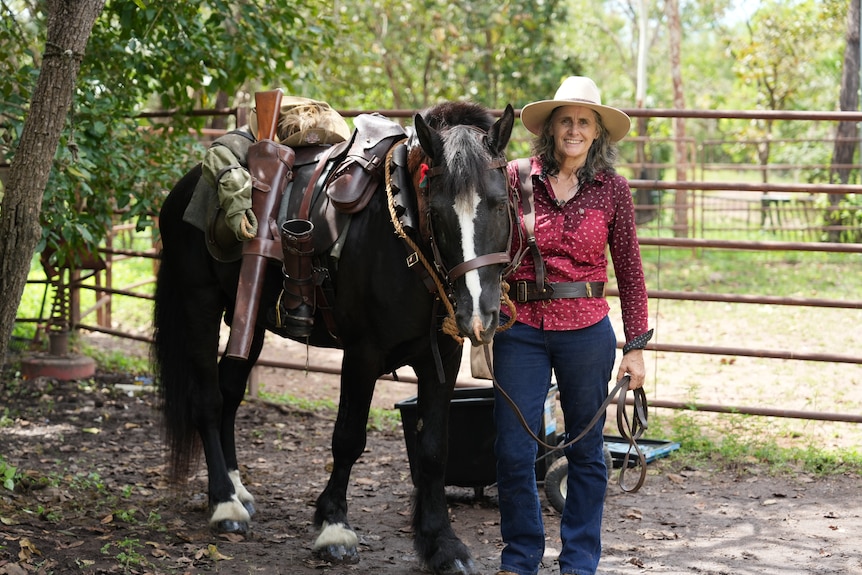
Janette Wilson and her horse Willing Noble Reveille are preparing to lead the Darwin march again on Saturday. (ABC News: Dane Hirst)
As they walk, her horse, Willing Noble Reveille, proudly wears a number of war relics donated by the families of Australian servicemen and women, some of which are more than 110 years old.
It’s a tradition Janette and her Waler horses have been part of every Anzac march in Darwin since 2004.
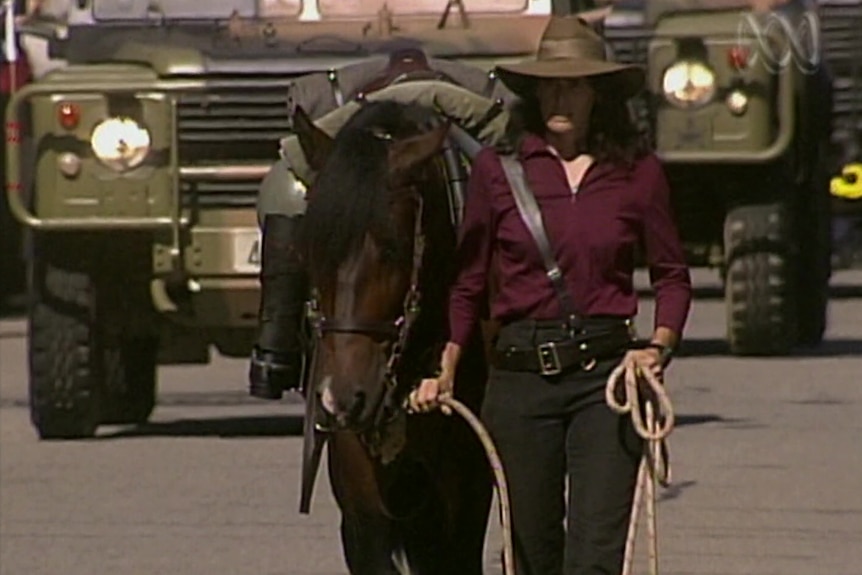
Janette Wilson, pictured leading Darwin’s Anzac Day march for the first time in 2004. (ABC file)
“It takes me about an hour to get ready, each time I unsaddle and saddle back up again,” Janette says.
“It’s kind of a week-long exercise to get the horse ready and the truck ready for Anzac Day every year.
“It’s a huge honour to be escorting past and present diggers, especially as a civilian, it’s pretty amazing.”
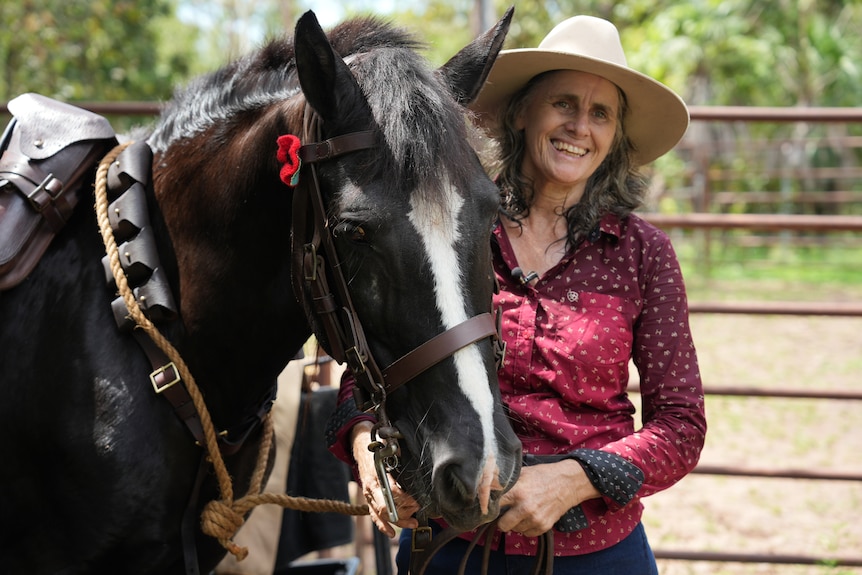
Waler horses were historically used by Australia’s light horsemen overseas. (ABC News: Dane Hirst)
The Waler breed was used by Australia’s light horsemen in World War I, with the horses selected for their hardy nature and ability to travel great distances in warm conditions with little water.
Walers were originally named for New South Wales, the state they were primarily once sold from. But the horses living on Janette’s rural NT property are more accustomed to life up north.
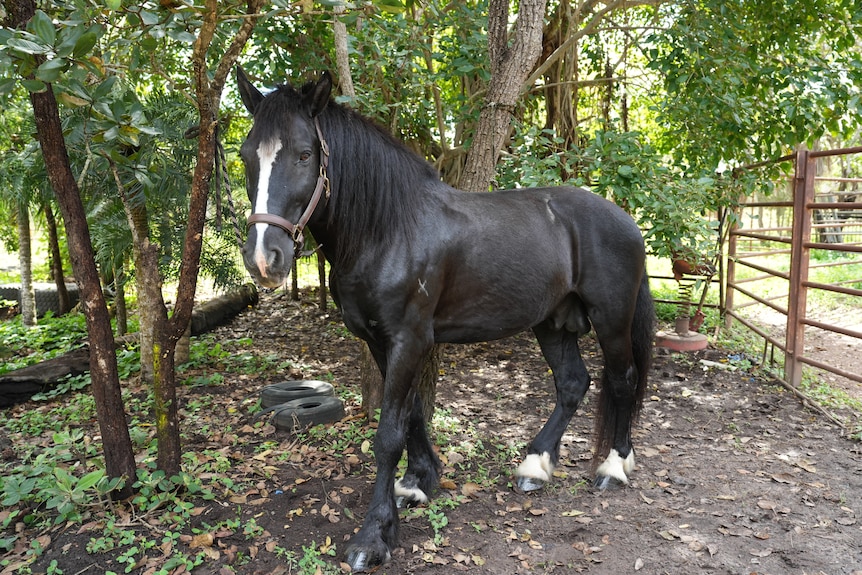
Waler horses were considered well-suited for wartime service. (ABC News: Dane Hirst)
Wear and tear has taken a toll on the original pieces Janette uses to decorate Reveille. But what has stood the test of time are the stories and people connected to each artefact.
Reveille will wear a saddle from 1915, first purchased by a veteran after he served in the mounted infantry, along with a number of military-issue blankets, boots, tins, pouches and an original World War I helmet.
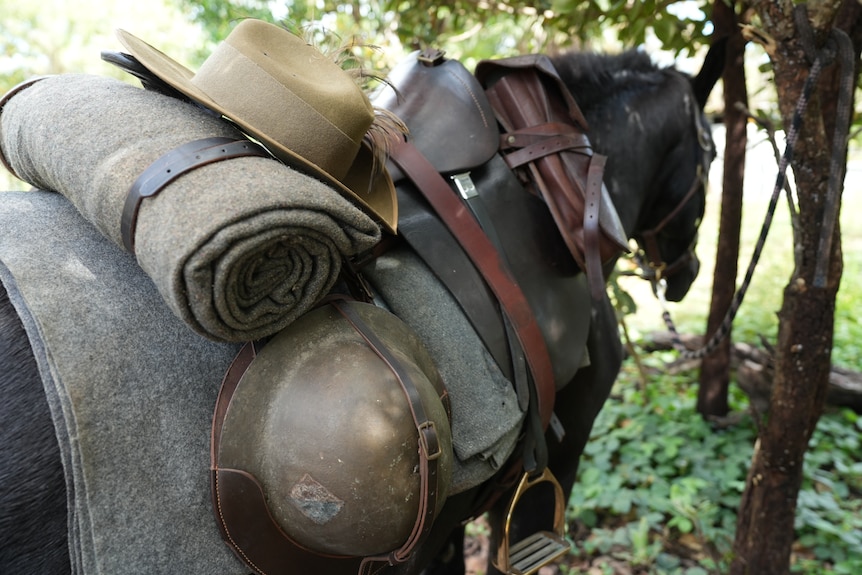
Willing Noble Reveille will carry a number of items during this weekend’s Anzac Day march, many of which were either donated or sold to Janette Wilson at a discount. (ABC News: Dane Hirst)
Stirrups, bridles, canteens, various weapons and a rifle bucket have also made their way into the display over the years.
Janette herself will don a Sam Browne belt, a strap designed for special officers carrying weapons on ceremonial occasions, which was donated by the family of World War II veteran who wore the piece while serving in Kokoda.
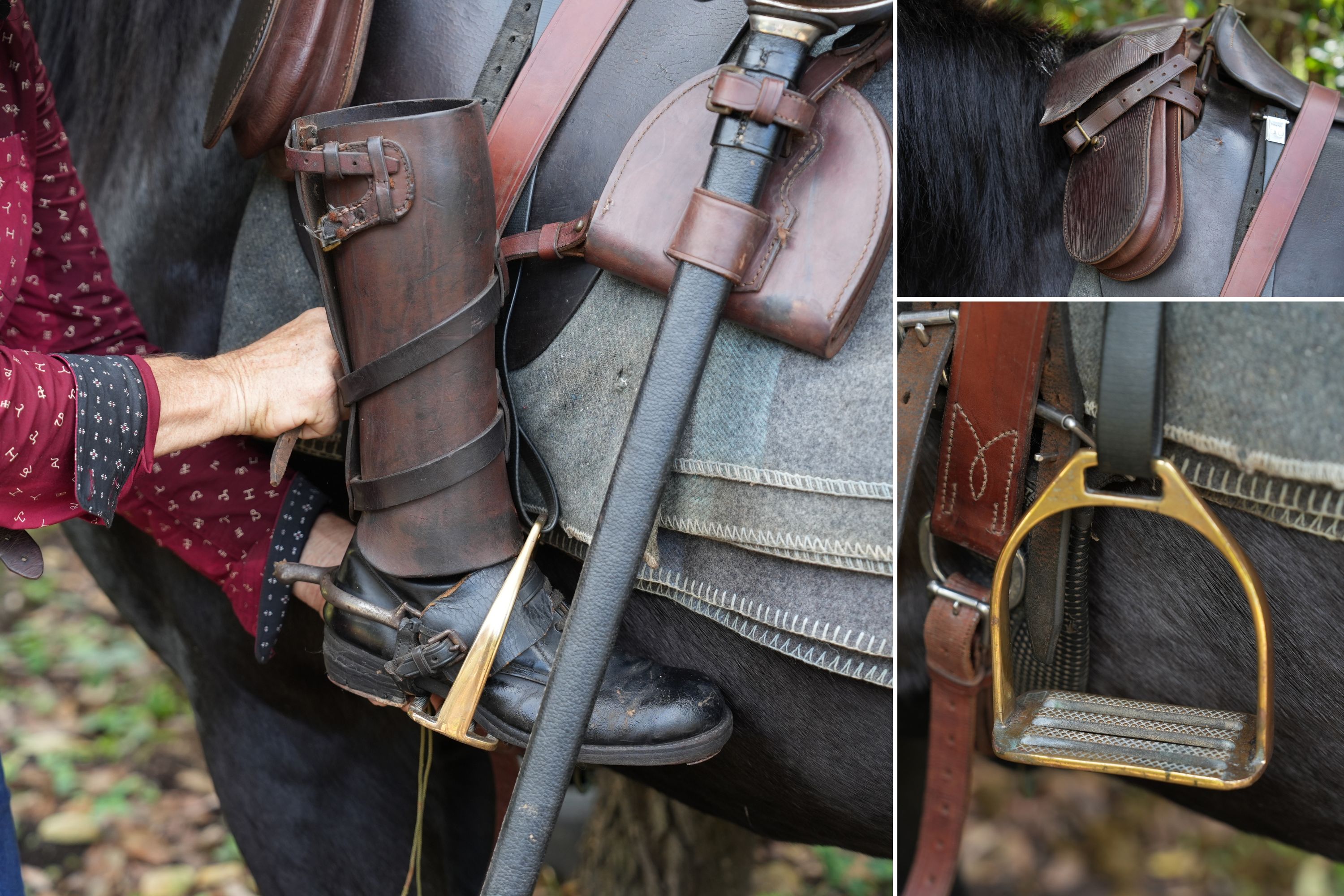
Placed in the stirrup backwards, the boot on display pays tribute to Australia’s fallen soldiers. (ABC News: Dane Hirst)
She says in preparation for the big day, Reveille will undergo a makeover including hoof painting and a good shampoo “to get him nice and shiny and soft”.
It’s a tradition he inherited after his father Noble Comrade — a horse Janette rehomed years ago — retired from the march in 2016.
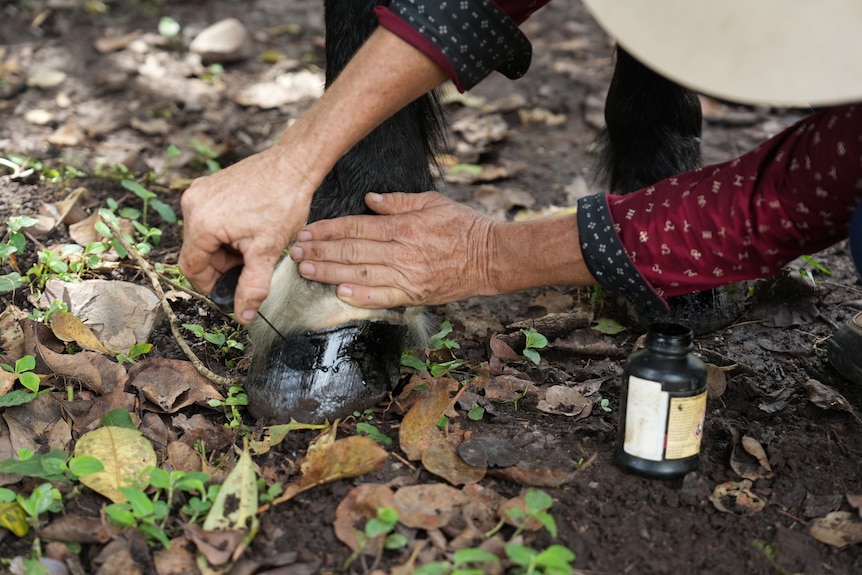
Janette Wilson polishes Willing Noble Reveille’s hooves in preparation for this weekend. (ABC News: Dane Hirst)
“Choosing to take on that wild mature stallion was the best decision of my life,” the horse trainer reflects now.
‘Very important’ to keep history alive
Janette says she marches on Anzac Day to pay respect to the lives laid down by Australian soldiers and their “amazing” animal companions “in such horrific circumstances”.
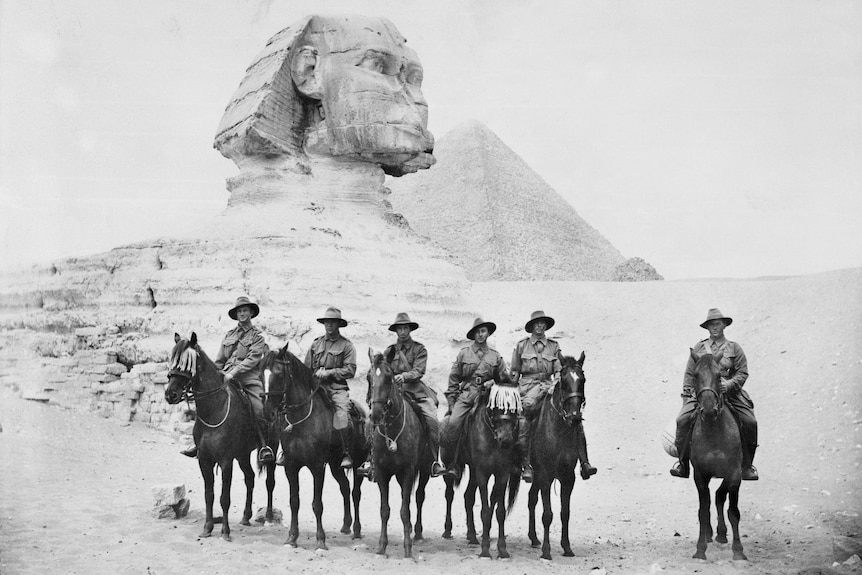
Janette Wilson says about 140,000 horses were sent overseas during World War I. (Supplied: Australian War Memorial)
“We sent something like 140,000 horses overseas for the First World War, only one horse officially returned,” she says.
“I’ve actually got to try not to think why I’m actually there on Anzac Day because I get too emotional.
“A lot of people don’t understand that the light horsemen were issued helmets because they were actually mounted artillery.
“They weren’t cavalry, they were mounted artillery, so they’d dismount and go into battle traditionally.”
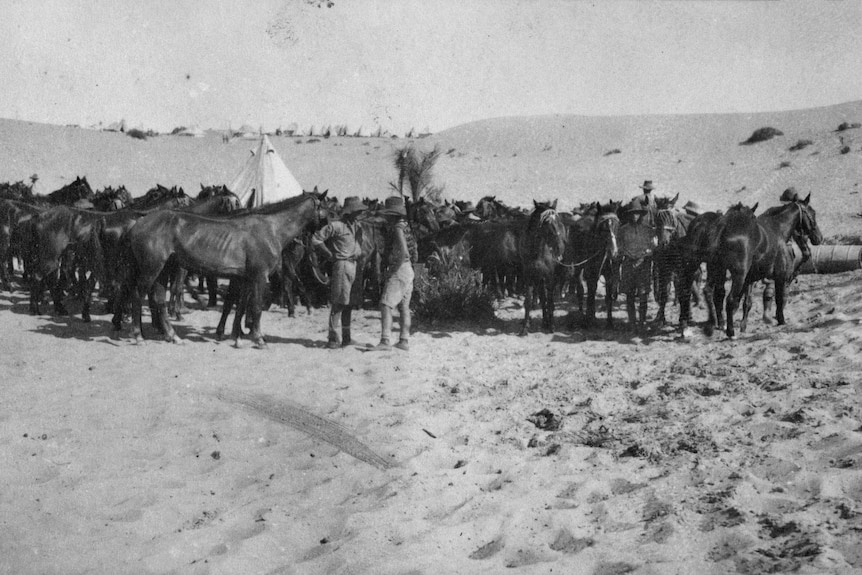
Australia’s light horsemen served as mounted artillery in the war. (Supplied: Australian War Memorial)
Janette says the Waler breed is “famous” for its links to the victorious Battle of Beersheba, in which Australia “came up with the great idea of not dismounting and tricked the enemy”.
She says sharing that history feels patriotic, and “it’s very important for us to try and preserve the old artefacts” tied to Australia’s national history.
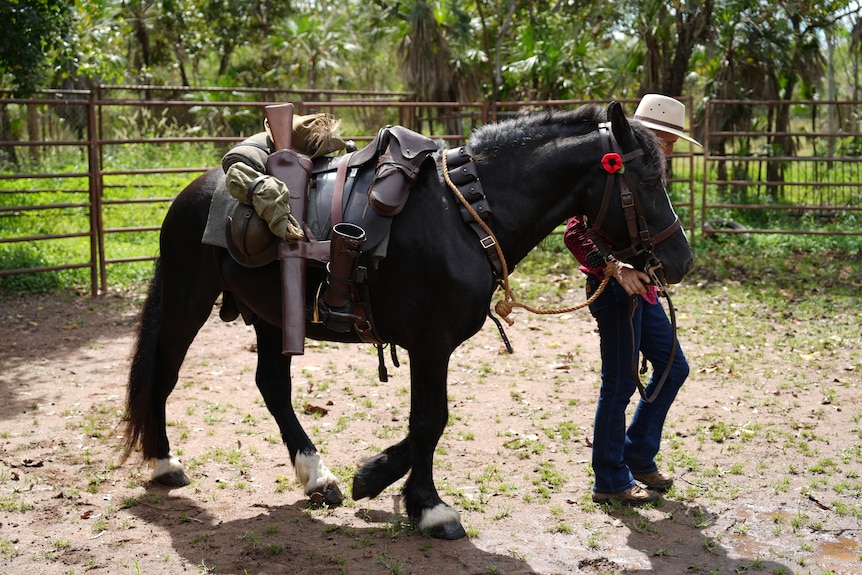
Janette Wilson says taking in her first Waler horse was “the best decision of [her] life”. (ABC News: Dane Hirst)
“I feel very privileged that I can publicly express my profound gratitude for the soldiers, for the sacrifices they made for the great country that we have today,” she says.
“The crowd’s amazing — the beautiful warm applause that they give us, just to acknowledge the appreciation.”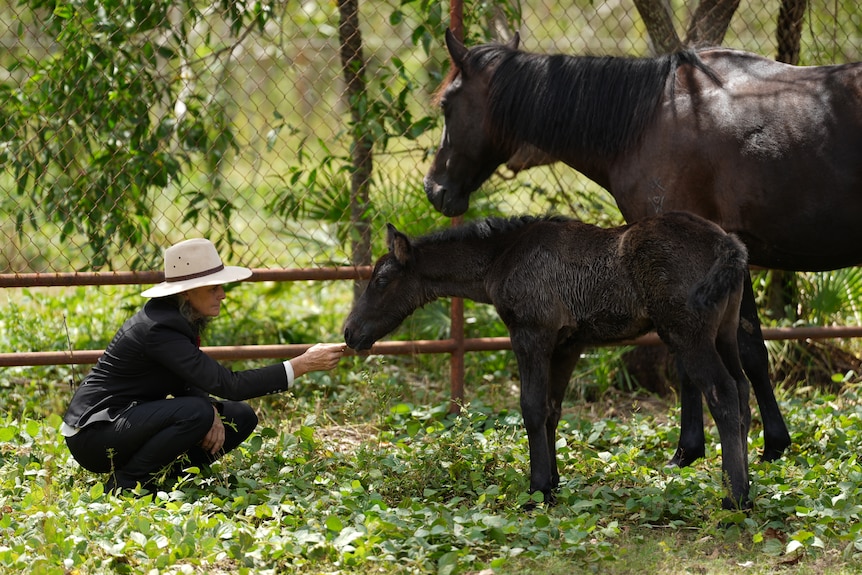
Janette Wilson is passionate about helping the public understand the vital role horses played in Anzac history. (ABC News: Dane Hirst)