
The 1967 film The Graduate ends with a wedding of spectacular violence. Benjamin (Dustin Hoffman) storms a church at the end of a ceremony, begging the bride, Elaine (Katharine Ross), to leave her new husband at the altar and run away with him. Benjamin is wrestled, his clothes torn as he tries to stop the wedding. Elaine’s arms are yanked by the congregation, and she’s slapped by her mother as she tries to flee. After Benjamin fends off the roaring wedding guests with a crucifix, he uses it to block the door as they pound against the glass. Benjamin and Elaine have escaped their families, escaped convention, and, as they settle into the back of the bus that takes them away from the church, they have the bruises and scratches to prove it. Weddings hurt, they break the skin.
In Kristoffer Borgli’s The Drama, there’s another wedding that descends into savagery. But the violence begins way before that. Soon-to-be-married couple Charlie (Robert Pattinson) and Emma (Zendaya) are having a serious conversation in their tastefully decorated townhouse. They want to get married, all is well. Sort of. Amid the Scandi lighting fixtures and mid-century furniture, Charlie is moving gingerly as they talk, training himself to walk in his stiff leather shoes before the big day. It’s a sacrifice, he’s in physical and emotional pain, but as the groom there are just certain things you need to do. As the film progresses, we get the sense he’s trying to break himself in.
The Drama follows Charlie and Emma’s happy engagement, which is challenged when Emma reveals something about herself that spins Charlie’s perception of her, and their entire relationship, off its axis. Afterwards, they both sleepwalk through selecting flowers and tasting skin-contact wine for the reception, horrified that they’re making a big mistake while still needing to participate in the expected theatrics. (The film is produced by Hereditary and Midsommar director Ari Aster, if you need a sense of the tension.) Thematically it’s consistent with Borgli’s previous work, in that it explores the ugly parts of us, and what happens when our loved ones discover those parts. How much do we need to hide the weird bits to be worthy of love?
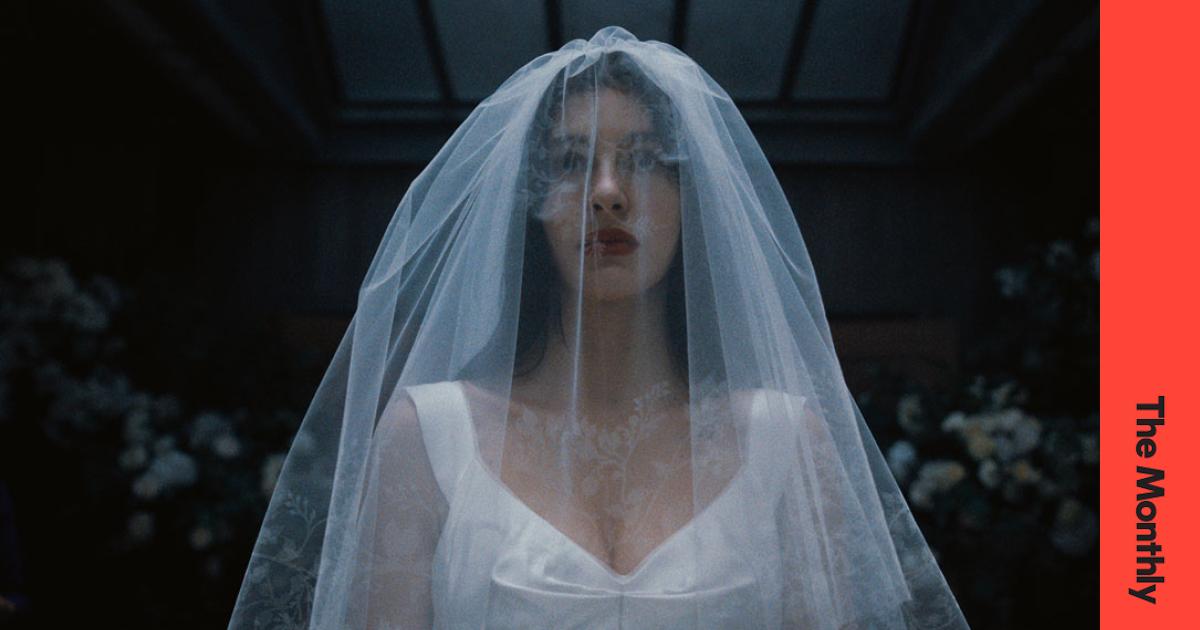
It’s a sentiment shared by the Netflix horror miniseries Something Very Bad Is Going To Happen, created by Hayley Z. Boston, in which Rachel (Camila Morrone) and Nicky (Adam DiMarco) are getting married in a week at Nicky’s remote family estate. This is Rachel’s first time meeting Nicky’s family and she can’t quite explain the aching dread she feels the closer they get to the big day. It’s not just that she’s unsure if she wants to join this creepy family, who snipe at each other, believe in murderous monsters and appear obsessed with their own mythology, it’s also that the universe keeps giving her increasingly terrifying signs that Nicky might not be the one. Rachel is confident about so much in her life – her purpose, her boundaries with her own family – but can’t figure out if she has the full measure of him.

Robert Pattinson and Zendaya in ‘The Drama’
“Are you sure he’s your soulmate?” a stranger asks at the dive bar Rachel stops at on the way to the estate. The question plagues her, along with the fear that Nicky’s unsettling family and her own generational trauma might (literally) be the death of her.
In both The Drama and Something Very Bad Is Going To Happen, participating in your wedding is akin to constructing a self-serve guillotine. Both productions equate weddings with murder: blood-splattered white dresses, hallucinations of massacres, a room full of loved ones slaughtered by candlelight. Something borrowed, something blew-your-brains-out. The wedding does not represent the beginning of something, but the end. The marriage certificate is a death warrant.
The Drama made almost US$30 million at the box office worldwide (production company A24’s third largest opening) and Something Very Bad Is Going To Happen hit number one on Netflix’s Top 10 after just four days. It’s curious that two wedding panic stories were released at once, both with the same central anxiety: can you ever truly know your partner, and, if you can, what does that entail? Instagram therapy has encouraged us to diagnose our trauma, but revealing all our neuroses complicates matters. All things considered, should you know another person completely? Is it in your best interests, or even of your relationship? Is knowing their entire personal history, unlocking the barred-up closets of their brain, a condition of walking down the aisle?
The most famous wedding of recent years probably turned your stomach more than a lukewarm entree of gloopy chicken piccata. In 2025, billionaire Jeff Bezos and Lauren Sánchez married over a multi-day celebration at several historical sites in Venice, a pantomime of excess including 27 costume changes from the bride, a $3 million ring and a Great Gatsby–themed party for guests who never made it to the end of the book. Venetians protested, Greenpeace protested and celebrity guests hid their faces as the paparazzi swarmed, scared for their brand to be associated with this brand.
Weddings are considered as a real litmus test of values, for better or worse. They’re easy targets for judgement (see what I just did above). The phrase “it’s just an excuse for a party” is often invoked by couples when they fear that their wedding will appear self-indulgent or frivolous. The fire under this bubbling pot of anxiety is whether or not you can enter something traditional in a non-traditional way, be part of an industry without losing your personhood. Will we be different? Can we escape the pitfalls? Will we be the ones to get it right?
The Drama and Something Very Bad Is Going To Happen are both set in the present day, but we’re now in an age where the tools of modernity have been used to promote the sort of antiquated gender roles the wedding apparatus tries to reinforce. The term “tradwife” – used to describe married influencers who promote a return to the traditional female role as homemaker, mother and wife – has exploded in popularity/ire in the past couple of years. Tradwife content creators attract millions of followers with their recipes for organic potato chips or tales of how they entertain their seven identical, linen-clad, blonde children in a cornfield. These women are thin, beautiful and only exist in relation to their marriage. This dynamic complements the ideals of the manosphere beautifully: if the wife is subservient then the husband can be physically and financially dominant, just as old-fashioned matrimony intended.
In both the film and the miniseries, the couples’ rejection of stringent gender stereotypes hits roadblocks when confronted by the expected pageantry of the ceremonies. These brides are not the right kinds of brides – Charlie and Emma’s dancing teacher loses it at Emma when she questions how stiff and outdated their wedding waltz will be. Nicky’s sister Portia is disgusted when Rachel isn’t interested in wearing an elaborate wedding dress. “It’s tradition to honour the women of the family,” Portia says, trying to cover Rachel’s tattoos in lace.
To many, onscreen marriage represents security. (It can do so in real life too. We’re not so far removed from the time when the only way a woman could access financial agency was through marriage; in Australia women couldn’t obtain a mortgage or loan without a male guarantor until 1984.) There was a bump in marriage rates after the pandemic, but there’s been a long-term downward trend in Australia. Western Australian Wedding Association secretary Candice Bydder told SBS News that the industry was “seeing far more paperwork-only weddings” and a trend towards “smaller, legal-only weddings”. One report found that the average Australian wedding now costs $40,000 for one day. Meanwhile, the cost of living increased by as much as 4.2 per cent over the past year, and half of your friends are on GLP-1 diabetes medication, so they won’t be eating the wedding cake anyway.

Camila Morrone in ‘Something Very Bad Is Going To Happen’
Despite the costs, the rehearsal dinners, the wedding photographer, booking the DJ – the stuff you need for the spectacle of your love, which feels more robotic with every button-hole carnation selected – these trappings are not the source of tension in either The Drama or Something Very Bad Is Going To Happen. Inherited wealth is hinted at in both, safety nets made out of taffeta and silk ties, but the anxiety comes from the institution of marriage itself – binding two souls at the risk that the union will destroy both.
Podcaster and movie critic Sean Fennessy has a theory: films that begin with a wedding (The Godfather) are good and movies that end with a wedding (any romantic comedy made between 1994 and 2004) are bad. It’s a funny argument, but only rings true in movies when weddings symbolise safety. Don’t worry, you’re not alone! You’re a part of something! You now belong to this clan! (Or in The Godfather’s case – eek, Kay, you now legally belong to this clan.) Weddings are most successful as a device to convey anxiety: Muriel believing that a white dress and floating confetti is the only escape from the drudgery of Porpoise Spit, Julianne in My Best Friend’s Wedding driven to desperation to honour her pledge to marry her ex before they turn the disgusting, unmarriageable age of 27. For these characters, other people’s weddings are painful, a reminder of your failure to contort yourself into the cookie-cutter shape of a successful adult. But the danger is less immediate, less physical. In The Drama and Something Very Bad Is Going To Happen, a wedding is a trap. Gnaw your foot off before you get obliterated.
We are warned that a wedding can be an exercise in vanity. (Isn’t almost everything?) Participating in a wedding can flatten individuality, and strips a couple of their identities for the sake of bureaucracy and social categorisation. It can also be transcendent, a political statement, a celebration of a decision made. It can be all of these things at once. For the privileged, it is not compulsory. Confusingly or strategically, The Drama’s marketing team has engaged with wedding lore enthusiastically: white-trimmed invitations to the premiere, the cast staffing relationship hotlines and Zendaya crashing quickie weddings at a Las Vegas chapel. (You can’t just appear on a talk show to promote a film anymore, you need to do stunts such as petting puppies or eating hot chicken wings that make your stomach bleed.)
At various times, the characters in both shows wonder if the marriage would have been more successful if they didn’t know the truth about the person they were marrying. An impending wedding has heightened these tensions, but the source of the ick was already there – it may have been discovered eventually, anyway. Through the lens of commitment, everything becomes distorted for these characters, a funhouse mirror that enlarges the flaws and threats in their beloved. Is it the fault of the wedding? The wedding was just the catalyst to air the fear that existed all along. They’re the same people with or without the ring.
When Benjamin and Elaine make it onto the bus in The Graduate, they’re elated at first. They have chosen each other. But as it drives on, their smiles falter a little. They begin to look anxious. They’ve left the church behind, but you can’t help but wonder if they’ve really escaped at all.