

April 24, 2026 — 7:00pm
Save
You have reached your maximum number of saved items.
Remove items from your saved list to add more.
Save this article for later
Add articles to your saved list and come back to them anytime.
Got it
AAA
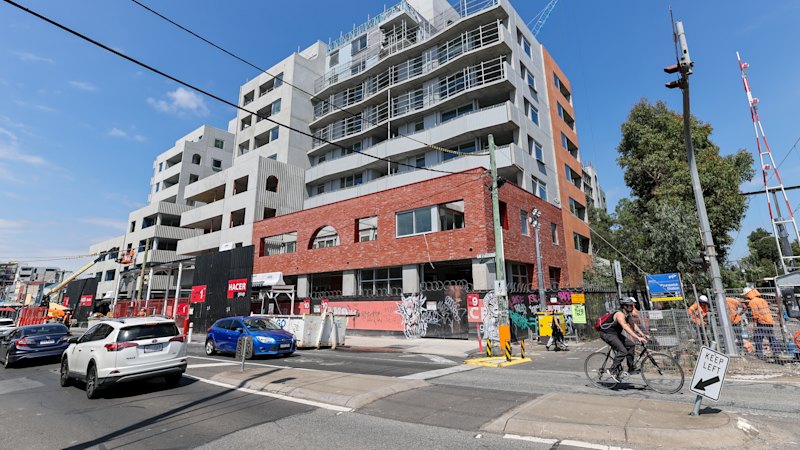
A developer that branded itself the ethical alternative to a profit-driven industry has been permitted to turn 248 promised affordable homes into market-price units, just months before completion.
Planning Minister Sonya Kilkenny’s department approved permit amendments this week to significantly reduce the affordable housing component in Assemble Communities’ developments in Brunswick and Coburg.
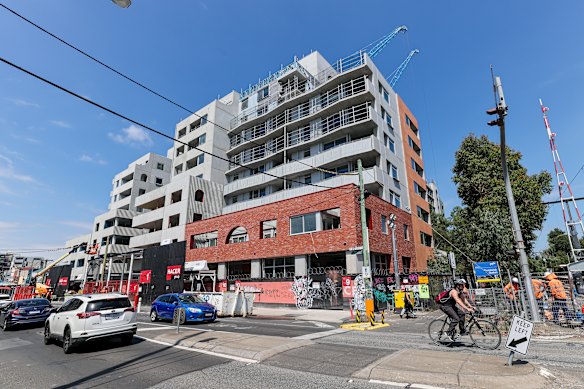 Assemble’s new development on Victoria Street in Brunswick.Justin McManus
So-called “affordable” housing is not social housing – which is reserved for low-income renters on the government waiting list and managed by the state (public housing) or non-profits (community housing). “Affordable housing” refers to private rental stock offered at a 25 per cent discount to the market rate for moderate-income earners for a set number of years only.
Both Assemble sites were originally fast-tracked under the state government’s Development Facilitation Program (DFP) on the proviso that 60 per cent of units would be “affordable”. The sites received state approval for contentious height concessions on these promises.
As first revealed by The Age last month, the change now allows the developer to scrap its signature “rent-to-own” model – pitched as a unique home ownership pathway for young workers unable to rely on the “bank of mum and dad” – in favour of standard-market build-to-rent apartments, which Assemble will retain as a corporate landlord.
Under the new permits, the proportion of affordable units across the 622-apartment portfolio will be dropped from 60 per cent to 20 per cent.
In Brunswick, the affordable component drops from 170 units to 57. In Coburg, 203 units were planned to be affordable, and now there are just 68.
Merri-bek City Council did not support the move, with its analysis finding it reduces the overall affordable housing contribution by one-third. The council argued the original 60 per cent mandate was the “public benefit” provided in exchange for height concessions that allowed the Coburg towers to go to 16 storeys – well above local guidelines.
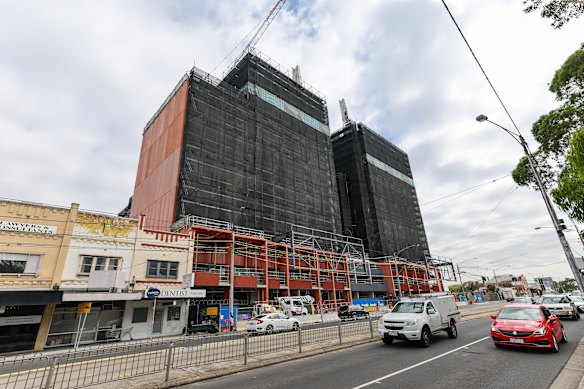 The controversial Sydney Road development in Coburg.Justin McManus
State planners rejected the council’s concerns, arguing that while there are fewer affordable units, the “public benefit” is actually higher because the new plan introduces rental discounts for 10 years. Under the original model, residents paid full market rent for five years before having the option to buy their home at a locked-in price – a pathway to ownership that has now been scrapped.
Related Article
Department planners explicitly referenced The Age’s reporting on the request in its decision documents. While they acknowledged community concerns that commitments were being “quietly” reduced, they ultimately dismissed the objections. The reports noted that while the “reduction in the proportion of dwellings” was acknowledged, the decision was made on its “planning merits” and in accordance with the scheme.
A Victorian government spokesperson defended the fast-track program.
“Through this program, we’ve fast-tracked more than 10,000 homes – more than 2000 of these are for social and affordable housing,” the spokesperson said.
The government noted that while the Development Facilitation Program required a 10 per cent affordable housing component, Assemble was still providing 20 per cent.
Assemble, which is 80 per cent-owned by superannuation funds AustralianSuper and HESTA, previously branded itself as an ethical alternative to profit-driven developers. It has previously cited “shifts in demand and underlying conditions” for the move.
An Assemble spokesperson said: “We respectfully disagree with the council’s position. There will be 125 households with locked-in, below-market rents at a 25 per cent discount, while the community benefits from stable, long-term rental supply. This is a different model of affordable housing that provides new housing supply close to public transport and services. We want to see more Australians in homes and these projects are delivering that.”
Victorian Greens housing spokeswoman Gabrielle de Vietri previously accused developers of using affordable housing as a “Trojan horse” to secure approvals, “only to gut those commitments later to make their projects more profitable”.
The state opposition planning and housing spokesman David Southwick also previously told The Age that developers were using Labor’s fast-track program to secure extra height and looser planning controls, “only to walk away from affordable housing commitments later”.
Start the day with a summary of the day’s most important and interesting stories, analysis and insights. Sign up for our Morning Edition newsletter.
Save
You have reached your maximum number of saved items.
Remove items from your saved list to add more.
 Rachael Dexter is a journalist in the City team at The Age. Contact her at rachael.dexter@theage.com.au, rachaeldexter@protonmail.com, or via Signal at @rachaeldexter.58Connect via Facebook or email.From our partners