

Oscar Piastri has weighed in on his views regarding the complexity of the 2026 Formula 1 regulations, stating that he struggles to explain what he has to do to drive his McLaren MCL40 to his friends.
2026 brought a myriad of changes to the technical rulebook in Formula 1, chief of which were significant changes to the power units of all cars on the grid.
There is now a 50-50 split between electrical power and the internal combustion engine, resulting in a greater reliance on the batteries and energy management throughout a lap.
The main issue that all teams and drivers are currently struggling with is the requirement to constantly recharge and redeploy electrical energy in a single lap to get the fastest lap time possible, especially during qualifying.
Much to the chagrin of drivers and fans alike, we are currently seeing cars slow down halfway through long straights to recharge batteries for deployment out of corners, something that is referred to as “super-clipping”.
It goes without saying that this style of driving feels unnatural and unexciting for the drivers, who are also coasting through fast corners to keep battery levels topped up.
Furthermore, the sport has become difficult for all but the most die-hard F1 fans to follow, with Formula 1 themselves finding it hard to convey the relevant information to spectators on track and on TV.
Perhaps fans don’t need to understand everything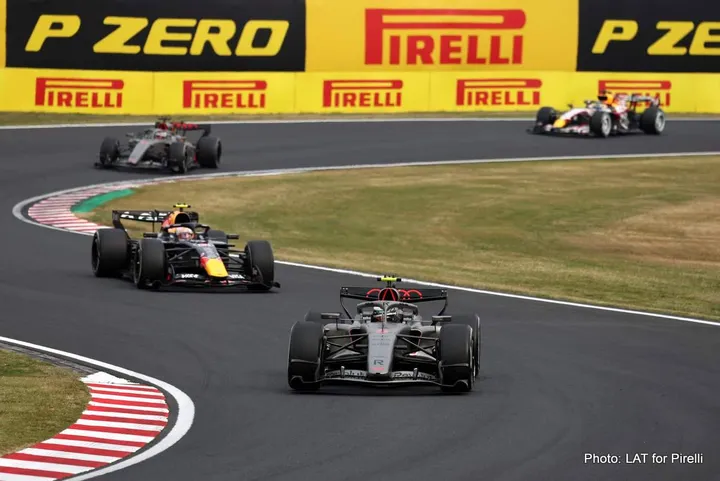
Piastri is also struggling to explain the sport he is a part of to his friends, despite spending a lot of time behind the wheel of his McLaren MCL40.
He told the written media, including GrandPrix247, at an event at the McLaren Technology Centre earlier this week: “Yes, it certainly is very complicated. You know, I tried to explain the sport to my friends in the offseason and it was a pretty long conversation with a lot of follow-up questions.”
But at the same time, the Australian driver believes that it isn’t strictly necessary for spectators to understand everything the drivers and teams are having to do to maximise the potential of their cars for the sport to remain exciting and fun to watch.
He continued: “But I think it’s not necessary exactly how many mega joules of recharge we have, or what all the rules are. Or what happens when you get on the throttle.”
Changes have been made to the intricacies of the rules since the Japanese Grand Prix, which will hopefully allow drivers to push a little harder during qualifying without as much micromanagement and make it simpler for fans to understand what is going on.
On this, Piastri added: “I think what for us is quite clear is that qualifying needed some changes, which they have done, because I think it was quite clear to see from onboards and from our comments that it wasn’t the challenge that it should have been.
“And in the race there’s a lot of changes of position, but it’s a bit random. The changes to the boost button and the way the power comes in now should make things a bit more in our control, and also a bit more sensible, a bit less extreme,” the McLaren driver concluded.