
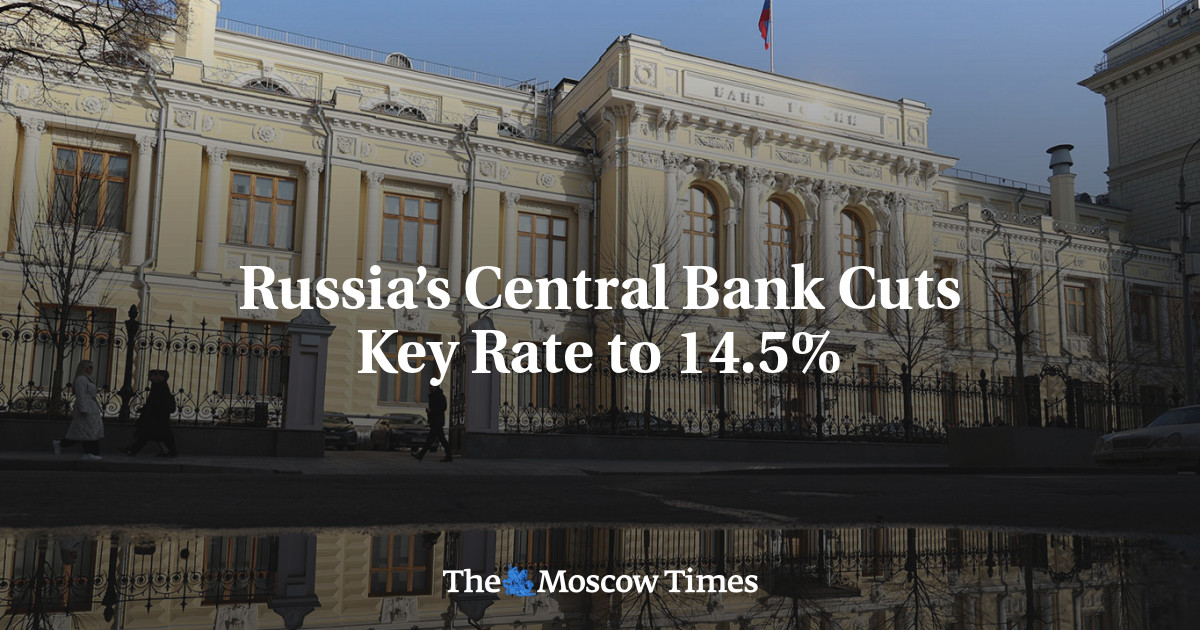
Russia’s Central Bank lowered its key interest rate from 15% to 14.5% on Friday, marking its eighth consecutive cut since beginning a policy of monetary easing after previously hiking borrowing costs to a two-decade high to curb surging inflation.
The 50-basis-point cut was widely anticipated by analysts, some of whom said it would amount to a compromise by policymakers. While inflation expectations remain elevated and the energy crisis sparked by the war in Iran continues to fuel uncertainty, officials are increasingly wary that keeping borrowing costs high could stifle long-term economic growth.
Policymakers said in a press release that annual inflation stood at 5.7% as of April 20. Despite current pressures, the Central Bank maintained its forecast that inflation will cool to between 4.5% and 5.5% later this year, eventually hitting its 4% target in 2027.
In 2024, Russia’s Central Bank raised its key rate to 21% in a drastic attempt to cool an economy overheated by military spending. The move drew criticism from business leaders who warned that sky-high borrowing costs would stifle growth.
On Friday, the Central Bank noted that the Russian economy slowed in early 2026, citing a combination of tax changes, fewer business days and “unfavourable weather conditions.” Consumer demand and investment activity remain subdued, leading policymakers to maintain their 2026 GDP growth forecast at a modest 0.5-1.5%.
Looking ahead, the Central Bank warned that “proinflationary risks still prevail,” specifically pointing to geopolitical tensions and rising energy costs. It left the door open for a possible tightening of monetary policy later this year should government spending increase or the federal deficit grow.
Sofia Donets, chief economist at T-Investments, said Friday’s rate cut matched her expectations but noted that the Central Bank’s language was “slightly more hawkish” than anticipated. She described the press release and updated medium-term forecast as being defined by “conservatism and uncertainty.”
“The Central Bank left the figures for GDP, inflation and lending unchanged in its medium-term forecast, changing only the rate itself,” Donets said. “Apparently, it hasn’t decided where the other indicators will go given the external circumstances. But we are seeing a tougher signal on the rate.”
Analysts at Alfa Investments echoed that sentiment, saying that while the 0.5 percentage point cut arrived as expected, some in the market had hoped for a “bolder move.”
Russian stocks fell after the rate-cut announcement. The ruble-denominated MOEX benchmark slid 0.6% in afternoon trading.
The Central Bank will hold its next key rate meeting on June 19.