
E-scooter company Neuron is predicting usage in Queensland could plummet by 50 per cent if proposed new licensing requirements become law, saying the changes put their presence in the state “at risk”.
In March, the Queensland Government announced plans for major changes to laws on the use of e-mobility devices like scooters and bikes, including introducing a 10km/h speed limit on footpaths, a 16-and-over age restriction, and the requirement for riders to have a valid drivers licence.
The proposal came in response to a parliamentary inquiry aimed at improving safety after a series of injuries and deaths, with 12 people dying in e-mobility-related incidents in Queensland in 2025.
Speaking to a parliamentary committee looking into the proposed changes, Neuron’s general manager, Jayden Bryant, said a significant proportion of those who hire the company’s scooters are international visitors.
He said verifying their licences would be difficult and slow.
“If I had to upload my personal ID, wait for verification — whether that takes five minutes or an hour, I don’t know — I would stop,” he said.
“The impact that this will have on the shared services scheme will be massive.
“I’m estimating that it will be a 50 per cent drop in our users … and that, obviously, from a business reality perspective as well, puts it at risk.”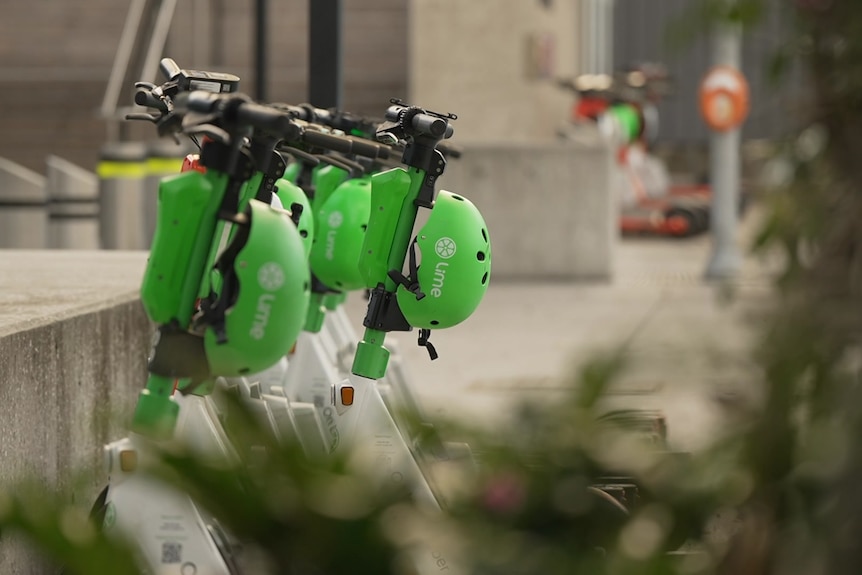
E-scooter rental companies Lime and Neuron said legislative changes could put their presence in Brisbane at risk. (ABC News)
William Peters, the head of Asia-Pacific for one of Neuron’s chief competitors, Lime, echoed those concerns.
“One in three bike share users in Brisbane are tourists,” he told the inquiry.
“Around half of Chinese adults, for example, do not hold a drivers licence, and around a quarter of adults in England do not either.
“With Brisbane 2032 ahead of us, this is not a small amount of visitors.”
In a joint submission made to the inquiry earlier this month, both Lime and Neuron said the laws, without amendment, “could see the end of services in all Queensland cities”.
Concerns raised about Qld’s proposed e-bike laws
The device hire companies are not the only ones unhappy with the idea of requiring licences to ride.
Disability advocates have told the inquiry a lot of people have come to rely on e-scooters, bikes and trikes precisely because they are unable to drive a car.
Michelle Moss from the Queenslanders with Disability Network told the committee there was no requirement to get a bicycle licence, and no reason to treat e-mobility devices limited to 25km/h differently.
“Medical fitness to drive a motor vehicle is not the same as the functional capacity to safely use a low-speed e-bike, e-scooter or e-trike,” she said.
“Should licensing be kept within legislation, we say that consideration should be given to an exemption process for people with a disability.”
Speed limits ‘will have the opposite effect’
The hearing also heard from transport academics, who said the imposition of a 10km/h speed limit on footpaths would result in more e-bike and bicycle users being killed or seriously injured.
Kelly Bertolaccini, a lecturer in transport engineering at Griffith University, said the limits would force more people to ride on the roads alongside fast moving motor vehicles.
“We know once those speed limits get above 30km/h, the rates of fatality when you get hit are really high,” Dr Bertolaccini said.
“I’m really worried that this will force more cyclists onto the road, or to just stop altogether, and actually lead to more critical crashes.”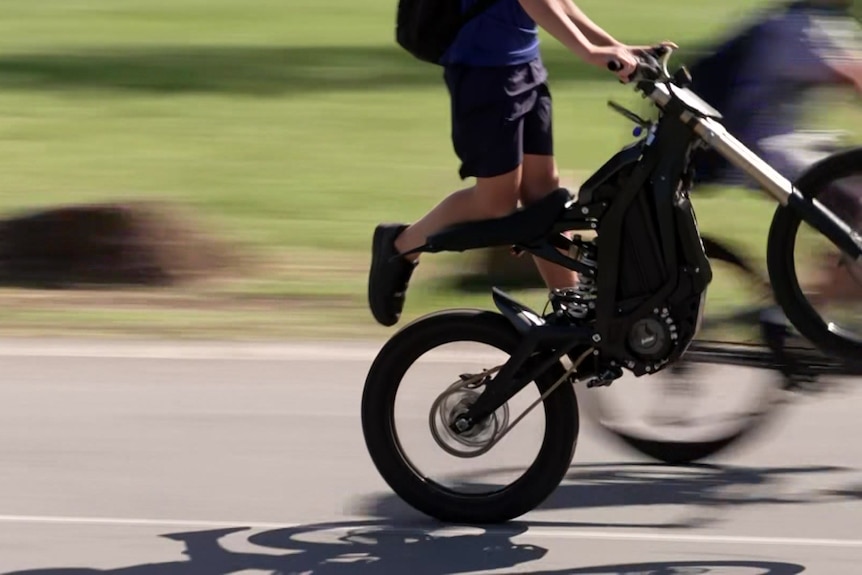
Experts have urged the government to focus on illegal e-bikes rather than compliant e-mobility devices. (ABC News)
Professor Narelle Haworth, from the MAIC-QUT Road Safety Research Collaboration, told the committee bicycles were much easier to control at speeds of more than 10km/h because of the gyroscopic forces they generate.
“Above 10-12 kilometres per hour … a bicycle will maintain its stability. [Below that] a bicycle rider must make physical adjustments to keep the bike upright,” Professor Haworth said.
“That leads to the bike going side-to-side, so instead of taking up a narrow portion of the bike path, it actually takes up more room.”
The age restrictions, licensing and speed limits are central elements of the government’s proposed bill, which it hopes to make law by July 1.

Labor MP Jonty Bush said it was her view “wholesale changes” needed to be made to the bill. (ABC News: Nathan O’Brien)
After hearing the evidence, Labor MP for Cooper and committee deputy chair Jonty Bush said it was evident “wholesale changes needed to be made to shape this [bill] into something workable”.
“Is there any way to salvage this?” she asked Professor Haworth.
In response, Professor Haworth called on the government to focus solely on cracking down on illegal e-bikes, which can achieve speeds above 25km/h.
“We don’t need to do anything for legal and compliant e-bikes beyond that which is currently in the legislative framework for bicycles,” she said.