
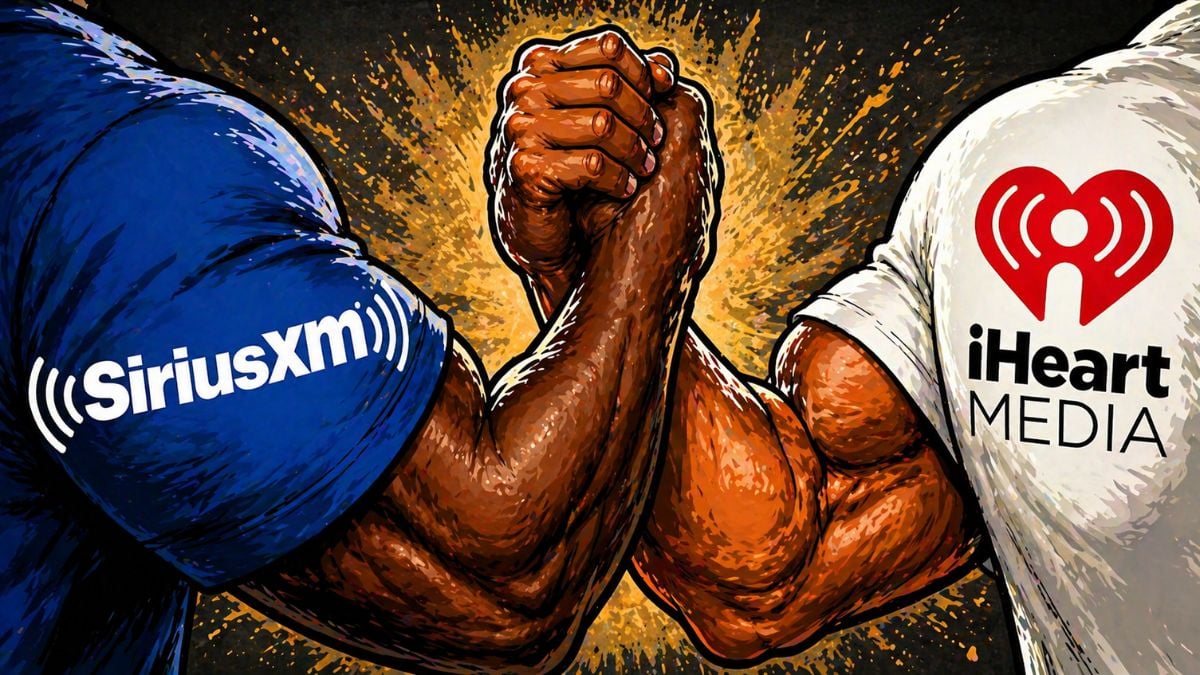
It’s not often that a five o’clock news dump raises the eyebrow of the entire audio industry. This past Friday did exactly that. Late in the day, Bloomberg reported that audio giants iHeartMedia and SiriusXM had begun early talks about possibly joining forces. Not an acquisition or a purchase, but two companies that dominate the audio industry exploring a merger to help grow each other.
Variety followed Bloomberg’s report by noting that veteran music industry mogul Irving Azoff and Apollo Global Management were offering to assist with the merger. That layer adds an interesting wrinkle, which we’ll get into later.
However, anytime there is talk of a merger, those within the walls become a bit nervous about what’s to come. Both companies have their success stories, but they also have their warts. No merger begins without clear benefits for the companies involved. However, would this one provide more stability and a brighter future for the tens of thousands of employees who make up both organizations?
Let’s lay out some details first.
iHeartMedia is the largest radio station owner in the United States. The company owns and operates more than 860 stations across 160 markets. It reports about 250 million monthly listeners and is the top podcast publisher in the United States, according to Nielsen.
Last year, the company reported $3.865 billion in revenue, relatively flat year over year, despite podcast revenue increasing 24.5%.
SiriusXM is the largest satellite radio service in the United States and boasts the biggest podcast network in the country. For comparison, iHeartMedia ranks third, with Spotify coming in second.
The company has stated that podcast revenue grew 41% in 2025 after double-digit growth in 2024. However, SiriusXM reported earlier this year that paid subscribers fell by more than 300,000 in 2025, despite total monthly churn improving by 0.1%. Overall, total revenue declined 2% year over year.
Podcast Over Broadcast
Here’s where the rubber meets the road. This merger would be more about podcast audio dominance than anything else. Follow the money and where it’s going. Both companies are currently seeing strong growth in podcast revenue on the audio side, and both have their brands attached to some of the biggest names in the space.
They also understand that the future success of their business models lies in on-demand audio rather than traditional over-the-air broadcasting. That’s not a good sign for traditional radio talent serving audiences across those 860 stations nationwide for iHeart nor the numerous talent across the channels on SiriusXM Radio.
The second layer involves how podcast consumption is shifting.

At their core, iHeartMedia and SiriusXM are audio-first companies, with video components attached to several of their larger podcast brands, but not all. The latest Jacobs Media TechSurvey, released last week, shows that over the past four years, a growing share of weekly podcast consumers prefer video versions of their favorite shows. According to Edison Research, 77% of first-year listeners actively watch video podcasts, surpassing the 75% who listen to audio-only formats.
So who has owned the video podcast race in recent years? YouTube.
In December, Bloomberg reported that consumers watched 700 million hours of YouTube podcasts on television in October 2025 alone. That figure is double what it was just one year earlier.
That’s why companies like Netflix, Meta, and Apple are investing in housing video content from podcast creators. This is also where Azoff’s involvement becomes particularly interesting.
Third Party ‘Advising’
Azoff’s background is in artist and talent management. His job is to advocate for the artists he represents and ensure they maximize their earnings. Like any good agent, he was critical of YouTube last year, calling the platform “a behemoth bully” when it comes to compensating rights holders.
“How does YouTube pay less than their competitors? They are a behemoth bully. They have 2.7 billion monthly active users and more than $60 billion in annual revenue. It’s the dominant video platform, with more hours streamed than Netflix. It’s the largest music service, with more users than Spotify. And in the ‘traditional’ TV space, it’s on track to surpass Comcast as the largest U.S. cable provider. This company now owns audience and content delivery in a way the world has never seen before,” said Azoff.
Now, while Azoff is reportedly advising both sides, wouldn’t he potentially benefit if those he represents worked in concert (pun intended) with both iHeartMedia and SiriusXM? That’s a fair question, because with any merger, you have to ask why—and how—it benefits every party involved.
That question becomes even more relevant when one of the advisors has a clear issue with the single biggest competitor to the audio-podcast space—the same space that iHeartMedia and SiriusXM would dominate together.
So let’s simplify this.
What This Could Mean
First, any merger of this size would require regulatory approval. Both sides may see a window of opportunity with the current administration taking an active role in media-related matters.
Second, radio is losing ground while digital continues to rise. The latest Jacobs Media TechSurvey reinforces that trend.
Third, the podcast consumer is now the lifeblood of audio-based content companies. It’s no longer traditional radio. Despite the reach that local radio still provides, iHeartMedia has actively used their radio platforms to educate audiences that podcasts are the destination.
“The huge advantage that iHeartPodcast has, and of course people know how big iHeart is on the radio side, but they often don’t realize the role that it plays in the growth of our podcast business,” said Will Pearson, President of iHeartPodcasts to Barrett Media in March of last year. “The reason we are, by far, the largest podcast network out there is because we’re able to lean into this massive megaphone that is the radio stations.”
That massive, free megaphone has enormous value. Now imagine opening it up to the largest podcast distribution machine in the country.
Finally, this is all about control.
Why compete when you can collaborate and dominate a category that is already losing ground to video?
iHeart adds access to its top-tier podcast talent across SiriusXM, creating another distribution hub. SiriusXM gains a larger megaphone for its podcast product through free, over-the-air radio. Both companies benefit from shared content strategy and programmatic advertising, which could help stabilize revenue for both.
Liberty Media, which owns SiriusXM, already has a built-in ownership history with iHeartMedia.
And don’t forget—the discussions are being advised by an entertainment power player with a known issue with YouTube, who would likely benefit alongside the talent he represents.
Meanwhile, if the merger goes through, what would this combined entity mean for the rest of the podcast industry? Companies like Wondery, Audioboom, Audacy, and Spotify would all feel the impact. Could this merger effectively block out competition in the future of the audio podcast industry?
It may not be a monopoly, but would any other company pass go and collect the $200 ever again?
Benefits & Challenges
For employees of both companies, the deal raises familiar concerns about consolidation and redundancy. It suggests that tens of thousands of workers are not the focal point of these companies’ long-term strategies.
This is more about global scale than local sustainability.
For creators, it introduces a new gatekeeper with unprecedented leverage. For competitors, it signals that the era of fragmented podcast growth may be giving way to something far more consolidated—and far more difficult to penetrate.
But zoom out, and there’s an even bigger implication.
This isn’t just about competing with Spotify or Wondery. It’s about building enough scale to push back against the real giant in the room—YouTube—and its growing dominance over podcast discovery, consumption, and monetization in an evolving video-first world.
What looks like a merger is really a counterpunch.
A bet that scale is the only way audio survives the shift to video. A belief that collaboration is more valuable than competition. And ultimately, a wager that owning the pipes matters more than owning any single piece of content flowing through them.
If they’re right, this could redefine how audio is created, distributed, and monetized for the next decade.
If they’re wrong, it will serve as another reminder that bigger doesn’t always mean better—especially in a media landscape where the audience, not the distributor, holds the power.
Barrett Media produces daily content on the music, news, and sports media industries. Sign up for our newsletters to stay updated and get the latest information right in your inbox.

John Mamola is Barrett Media’s sports editor and daily sports columnist. He brings over two decades of experience (Chicago, Tampa/St Petersburg) in the broadcast industry with expertise in brand management, sales, promotions, producing, imaging, hosting, talent coaching, talent development, web development, social media strategy and design, video production, creative writing, partnership building, communication/networking with a long track record of growth and success. He is a five-time recognized top 20 program director in a major market via Barrett Medi’s Top 20 series and has been honored internally multiple times as station/brand of the year (Tampa, FL) and employee of the month (Tampa, FL) by iHeartMedia. Connect with John by email at John@BarrettMedia.com.