
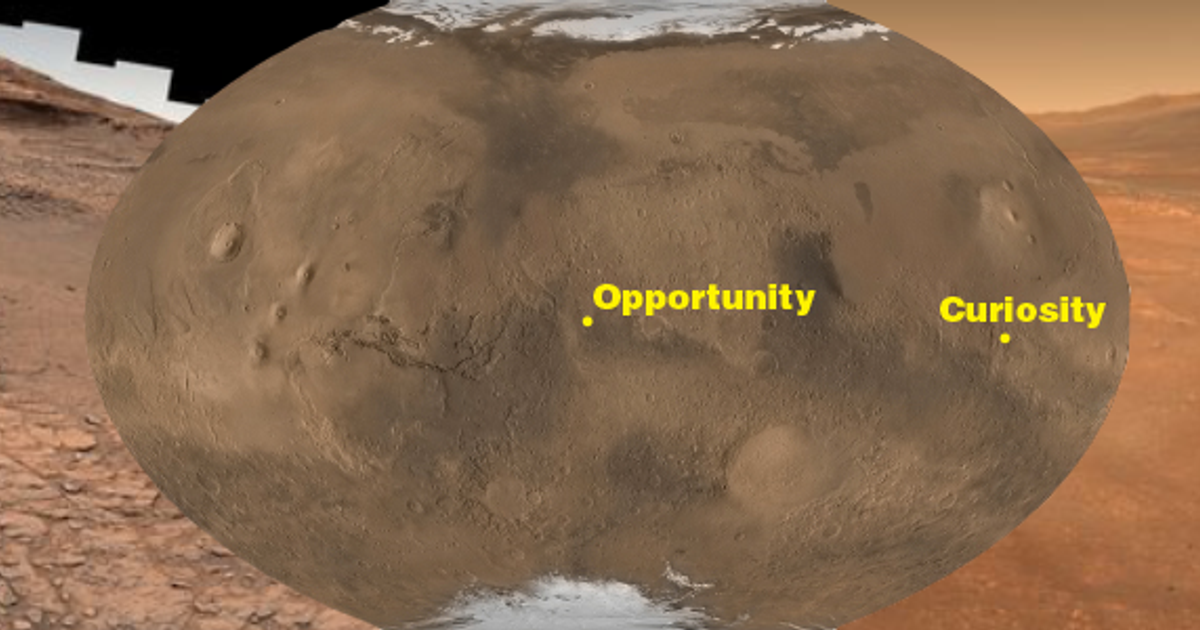
Two robots are driving across Mars, separated by 2,345 miles—about the distance from Los Angeles to Washington, D.C. have been drilling into ancient rocks, searching for evidence of Mars’s past, and returning breathtaking panoramic images since they arrived. But each is telling very different stories about what the Red Planet was once like.
NASA’s Curiosity and Perseverance rovers have captured 360-degree landscapes that highlight how the missions are revealing details of the Red Planet’s formation, watery past, and potential for life. Located 2,345 miles (3,775 kilometers) apart from each other on Mars, both rovers are exploring areas that are billions of years old. But as the nearly 15-year-old Curiosity reaches ever-younger terrain in the foothills of Mount Sharp, the 5-year-old Perseverance is venturing into some of the oldest landscapes in the entire solar system.
Curiosity finds evidence of water
When Curiosity landed on the floor of Gale Crater in 2012, it set out to determine whether Mars once had the conditions to support life. Within a year, a sample drilled from an ancient lakebed confirmed those conditions had been present, including the right chemistry and potential nutrients for microbes.
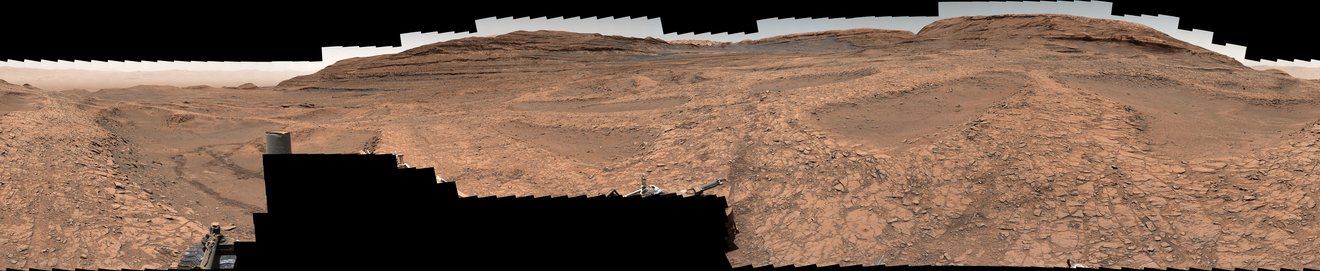
The 1.5 billion pixel panorama taken between November 9 and December 7, 2025, shows a landscape dominated by boxwork formations, created by groundwater that once flowed through large fractures in the bedrock. The minerals left behind hardened the rock along the fractures, resulting in erosion-resistant ridges. Curiosity is documenting the skeleton of Mars’s ancient groundwater networks that persisted for potentially millions of years. The gap at the bottom of the image is Curiosity herself.
Perseverance explores ancient rocks
Perseverance landed in Mars’ Jezero Crater in 2021 to study the origin of ancient rocks within the crater and to hunt for evidence that microbial life once existed. Billions of years ago, molten rock cooled to form the floor of Jezero Crater. A river then fed a lake in the crater, leaving behind sediments where traces of microbes could have been preserved.
Perseverance landed in Mars’ Jezero Crater in 2021 to exploring Mars’ oldest rocks, formed during Mars’s first billion years. This isn’t possible on Earth because rocks from that time have been mostly recycled back into the planet’s mantle.
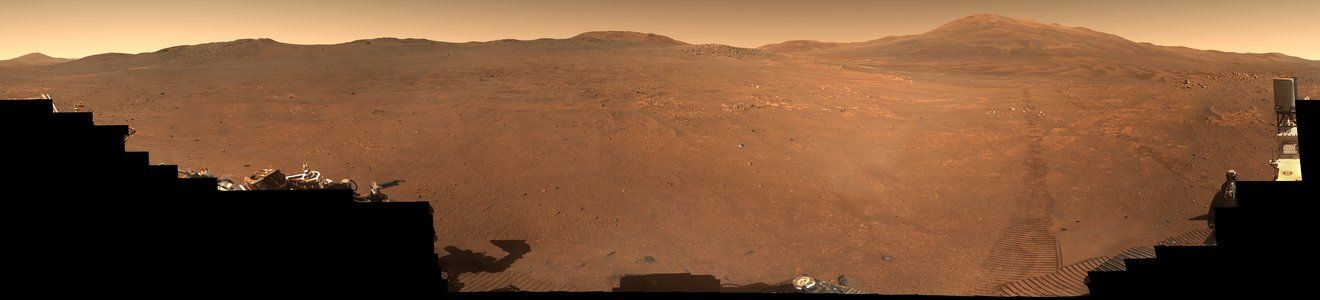
While Curiosity climbs forward through time, Perseverance is exploring some of the most ancient terrain humanity has ever studied. The rover has taken a 360-degree panorama of a region nicknamed “Lac de Charmes,” which sits outside the rim of Jezero Crater. Taken between Dec. 18, 2025, and Jan. 25, 2026, 980 images were stitched together for a 360-degree view capturing the Jezero rim and ancient rocks around the crater.
In 2024, Perseverance discovered a rock nicknamed “Cheyava Falls” dotted with “leopard spots,” a pattern formed by chemical reactions that microbes are known to create in rocks here on Earth. While this doesn’t prove microbes once lived on Mars, it’s a tantalizing hint that they might have.
While both rovers are part geologist and part chemist as they grind rock samples for onboard analysis, their capabilities are limited. This is why planetary scientists very badly want to return samples from Mars. To the Earth-based laboratories that have far more sophisticated instruments that can help answer