
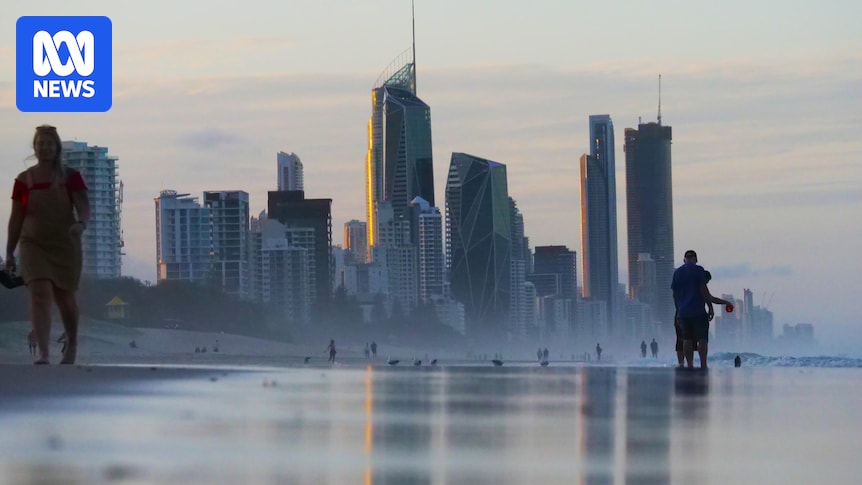
With a full-time job as a civil engineer, Siddharth Nagar believed he was financially on track to becoming a home owner.
But six months on and dozens of auctions later, the 32-year-old Gold Coast man said it was an impossible prospect on a single salary.
“You either have to do two jobs or you need a partner with a really good income,” he said.
A $1.5 million unit sale captures a growing house price problem
Mr Nagar started house hunting in South-East Queensland (SEQ) last September when many units were within his budget of $750,000.
But he said within weeks those same online listings were taken down and re-advertised at significantly higher prices.
“In Logan [south of Brisbane], units were initially around $600k but then went up to $800k,” Mr Nagar said.
“Here [on the Gold Coast] they were $750k but started going for up to $950k.”
He said the increase coincided with the October rollout of the 5% Deposit Scheme, which raised property price caps to improve accessibility for first-home buyers.
But in Mr Nagar’s view, it incentivised sellers to match their asking price to the scheme’s higher caps, which he said put homes further out of reach by increasing competition at the lower end of the market.
“As a first home buyer going into the market, there’s always investors with an extra $50k in their hands … they’re ready to overprice you any time,” he said.
He said he had lost hope of buying a home on the Gold Coast.
“I think Melbourne is right now the only option for me [to buy a home] in Australia,” he said.SEQ under-represented in scheme approvals
Last year’s expansion of the Home Guarantee Scheme — which allows for first-home purchases with just a 5 per cent deposit and avoiding lenders mortgage insurance, was billed as a measure to help Australians enter the market sooner.
Along with increasing property caps, it also removed limits on the number of people who could access the scheme and the income threshold for eligibility.
But in the rapidly growing market of South-East Queensland, those higher, albeit static, price caps have fallen behind — leaving buyers no better off.
Housing Australia data obtained by the ABC shows just 13 per cent of all properties purchased under the scheme in the five months from October were in SEQ, which takes in Brisbane, Gold Coast, Sunshine Coast and Toowoomba.
Calculated per 100,000 people, SEQ’s combined scheme approvals were about 90, compared with 132 in Melbourne, Sydney’s 127 and Perth’s 114.
Property analyst Cotality said that, with most SEQ property values exceeding the maximum cap of $1 million and shrinking supply, it was unsurprising the scheme had been rendered futile.
“When we look at the overall listing numbers … they’ve really been trending down quite rapidly over the last couple of years,” head of research Gerard Burg said.
“So we’ve got a situation where there’s a smaller pool of properties available for sale, [and] there’s this increased demand that the scheme has allowed for, but there’s just not enough opportunity there for a lot of first-home buyers to get into the market at the current environment.”

Gerard Burg says South-East Queensland’s housing market is not balanced with the scheme’s price caps. (ABC News: Billy Draper)
As of March, none of SEQ’s four cities had a median house value below its respective price cap.
And while units in some areas did, recent Cotality data showed prices of entry level properties grew much faster than those at the higher end since the expansion of the scheme.
In the six months from October, homes under the 5% Deposit Scheme’s price caps rose at nearly double the rate of those above them, the data showed.
While that trend was also evident in Melbourne, Mr Burg said the city’s relatively low median dwelling value of $830,000 gave it a “considerable affordability advantage” to SEQ, making it an increasingly appealing choice for first-home buyers.
More interstate buyers eye Melbourne
The Real Estate Institute of Victoria’s Toby Balazs said a “disproportionately high” number of first-home buyer loans were issued in the state relative to its population size in the six months since the scheme’s rollout.
Interstate buyers had mostly been driven to the capital, he said, with most targeting homes about $750,000.
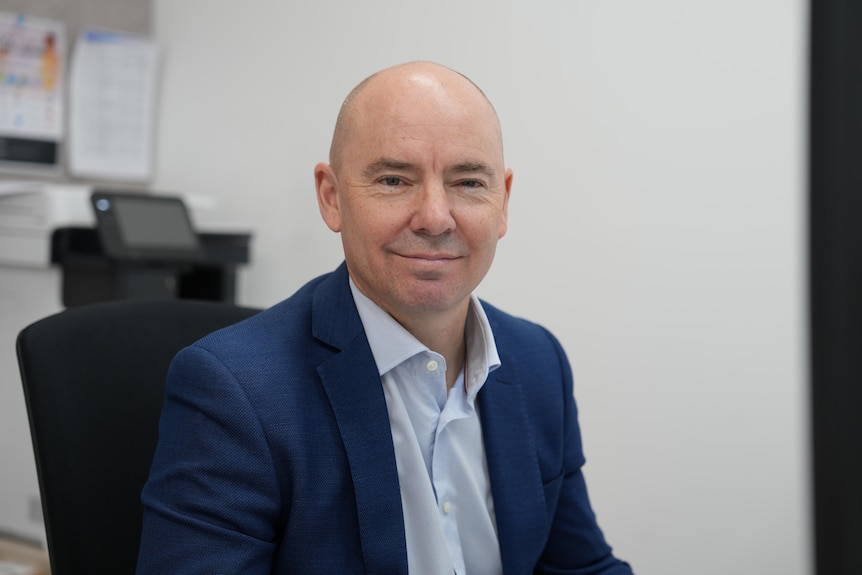
Toby Balazs says a swell of first-home buyer and investor activity has come into Melbourne. (ABC News: Steve Martin)
“If you look at the median house prices say versus Brisbane, Melbourne is cheaper by approximately $60,000,” Mr Balazs said.
“But really importantly from an apartment point of view, the Melbourne median is $170,000 lower than Brisbane.”
While national property values have shot up faster-than-average since COVID, Melbourne’s have been an outlier, seeing a growth of just 15.5 per cent in the five years to December 2025, compared to nearly 90 per cent in Brisbane.
Among the factors that contributed to the city’s growth slowdown were its pandemic-era exodus of residents, the largest proportion of whom relocated to Queensland, exacerbating demand-supply imbalances through the Sunshine State.
Mr Burg said the migration pipeline appeared to be changing direction, though it might not be entirely in the context of housing.
“It looks like we are starting to see a reversal of that trend,” he said.
“That relative affordability problem that both Brisbane and the Gold Coast have are seeing people drawn to markets like Melbourne.”
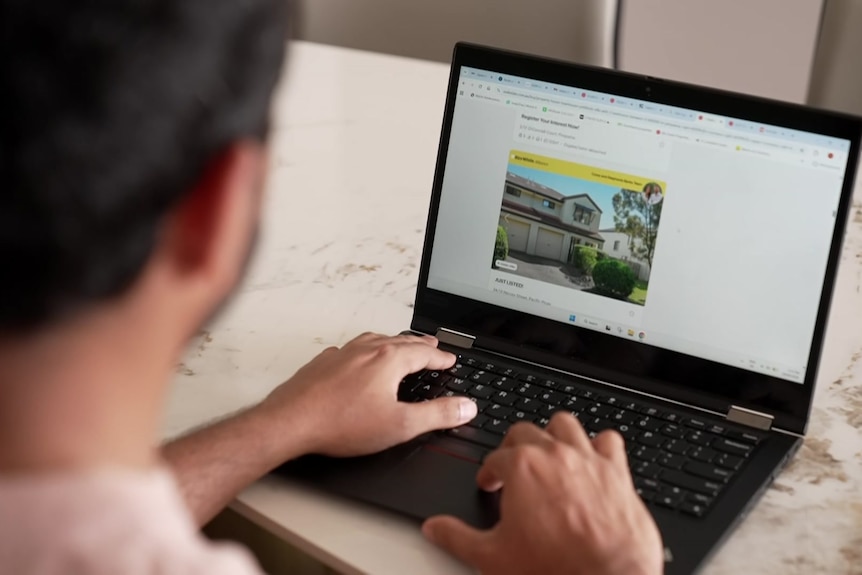
Data shows entry-level homes have surged in price since the revamped 5% Deposit Scheme kicked in. (ABC News: Glenn Mullane)
Migration gap narrows
ABS population data shows SEQ’s net interstate migration has dropped by more than 40 per cent from 2021 to 2025.
And while more people continued to arrive in the region from the other states than leave it, it was far from the popular choice it was in 2021.
“That does suggest that fewer people are looking to Queensland as a destination and potentially more people are starting to leave,” Mr Burg said.
Conversely, Greater Melbourne’s net migration increased by 112 per cent in those four years.
Internal migration data has only been published up to mid-2025, meaning figures for after the 5% Deposit Scheme expansion are not available.
However, the ABC has seen dozens of anecdotal cases online of SEQ first-home seekers having relocated to Melbourne since late last year.
Queensland regional centres out of reach
While the scheme may have seen the most success in Melbourne, Mr Burg said more buyers were considering the regions over capitals than ever before for their first home.
But Queensland’s major regional centres may be out of the picture for the moment.
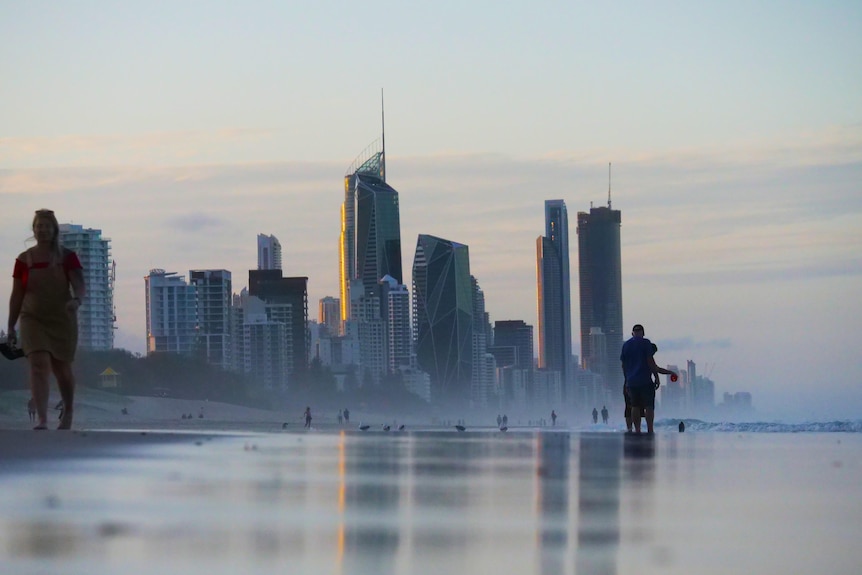
The Gold Coast’s property market is one of the most expensive in the country. (ABC Gold Coast: Dominic Cansdale)
“When I was in Brisbane, I thought moving to the suburbs or further away would make a difference, so I chose the Gold Coast, but the same thing’s happened for the second time,” Mr Nagar said.
“I don’t know where else to go [but Melbourne].”
A spokesman for Housing Minister Clare O’Neil said rapid growth in entry-level home prices compared with the rest of the market predated the expansion of the 5% Deposit Scheme.
“Without this scheme many first home buyers wouldn’t be able to enter the market at all,” they said.