
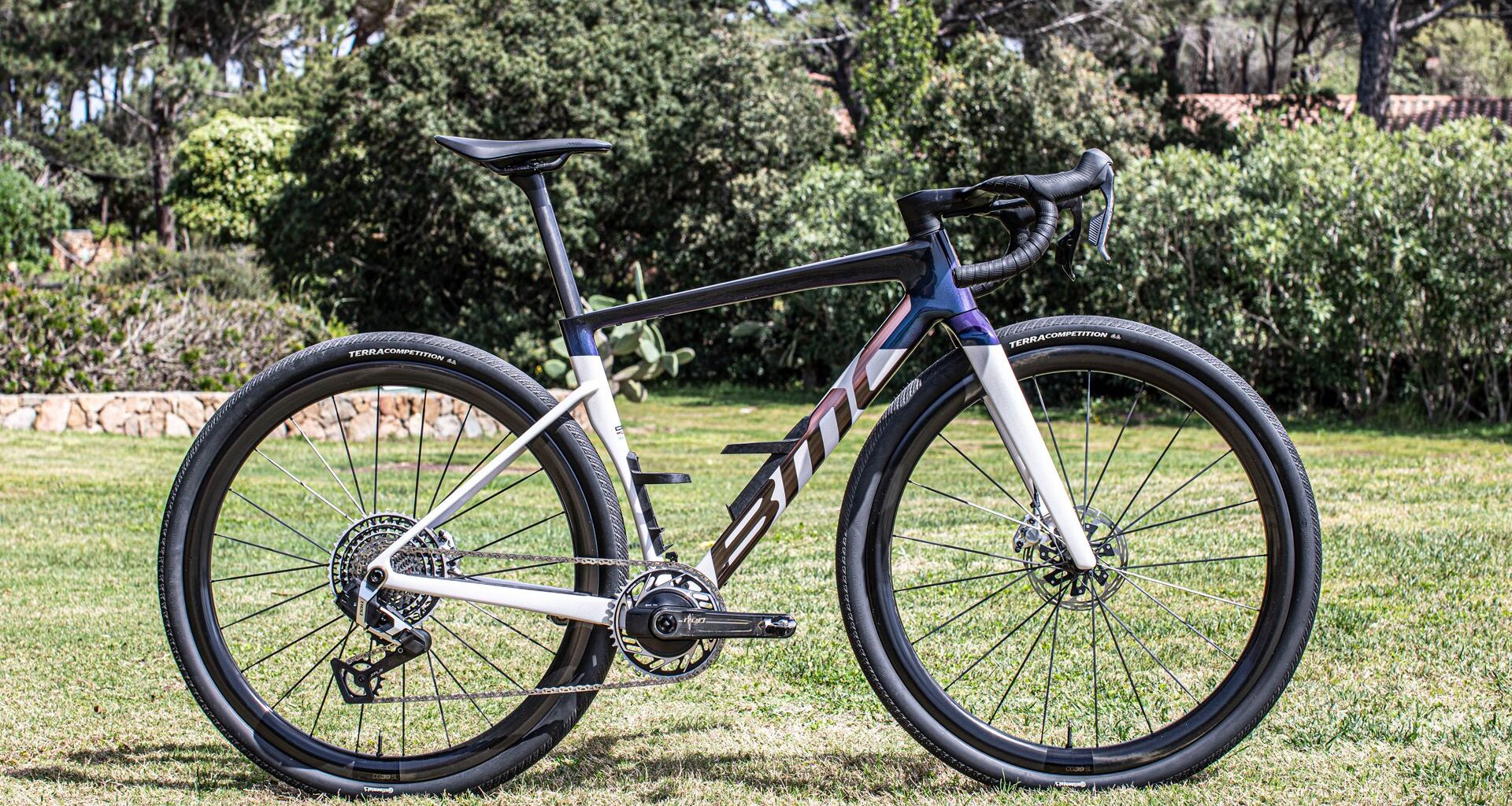
Up until recently, the road-inspired layups and racy angles of the best gravel bikes have resulted in reduced comfort and vibration-induced speed loss over challenging terrain. Having spent a lot of time riding and racing gravel bikes all over the world, I’ve experienced the very best and worst of it – including the corrugated and technical terrain of Gravel Burn in South Africa late last year. Looking back at my Gravel Burn experience, I cited the Cannondale SuperX Lab71 I used for the event was perhaps too racy given the technicality of the terrain, and I’d have been better off on something like the new BMC Kaius had it been available at the time.
Having tested the Kaius 01 One at the press event in Sardinia on a testing assortment of terrain types, I’ve come away impressed by what it offers as a package, especially in terms of overall trail compliance, front-end control, stability, and comfort – most of which stems from the clever frame design and geometry, and provision for wider tyres. BMC is a firm believer in the purity of the gravel bike and in the idea that suspension forks and shocks should be reserved for mountain bikes, not drop-bar race machines.
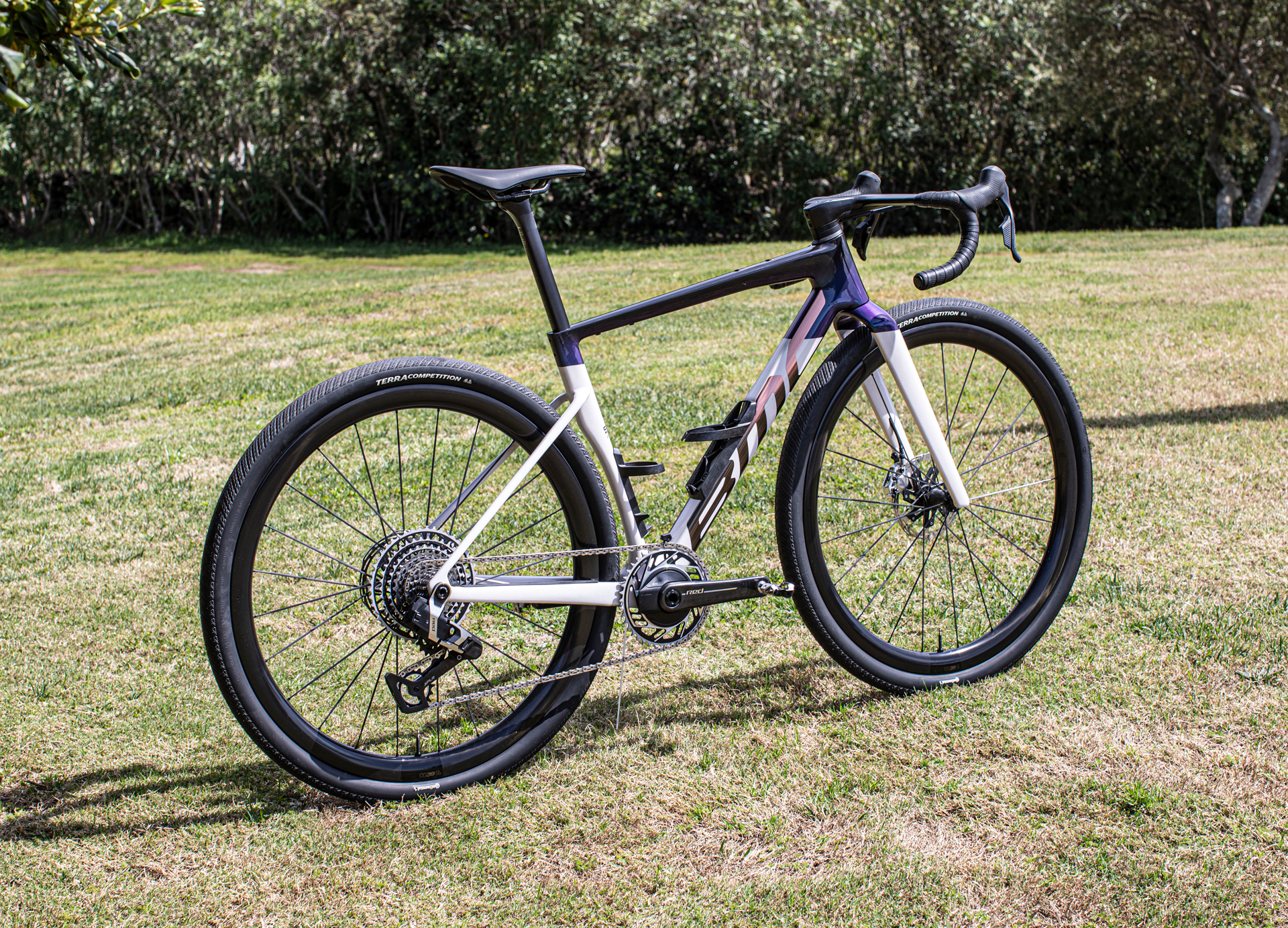
BMC has tweaked the tube shapes, frame architecture, and layup to improve aerodynamics, ride comfort and the ability to run tyres as wide as 52mm
(Image credit: Aaron Borrill)
BMC hasn’t merely shoehorned wider tyres into the existing platform either, but has instead looked holistically at the Kaius platform, tweaking the tube shapes, frame architecture, and layup to create what it believes is “the answer to every gravel racer’s wish.”
Article continues below
You may like
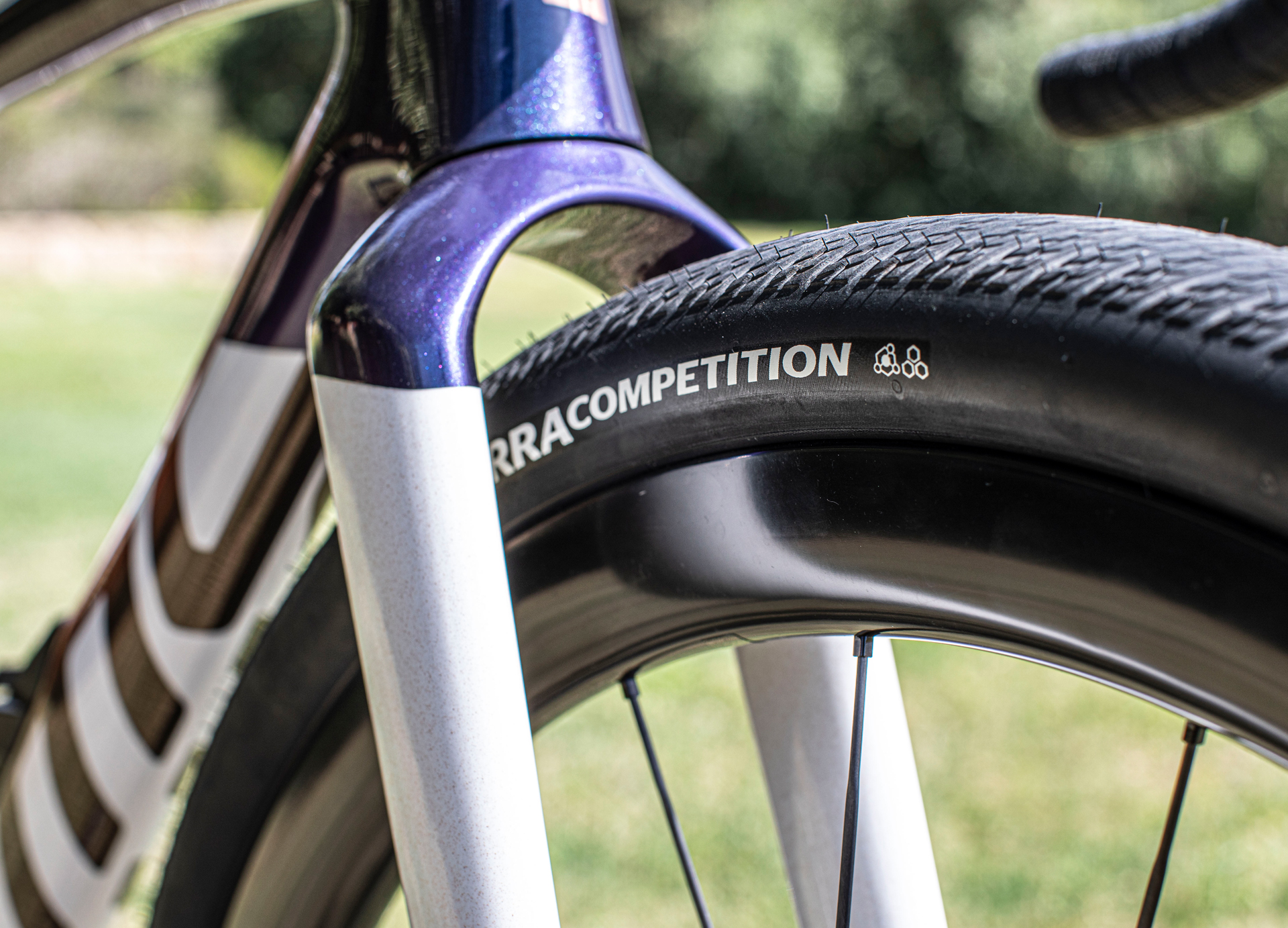
The wide‑crown Halo fork was designed to be aerodynamically optimised and compatible with a range of tyres widths
(Image credit: Aaron Borrill)
The need for speed and wider is faster philosophy
The first-generation BMC Kaius was unveiled in 2022 as an out-and-out gravel race bike with road-bike-inspired design language and angles borrowed from the Teammachine SLR. Armed with 45mm tyre clearance, it was designed as a dedicated aero alternative to the Swiss brand’s adventure-bent Urs platform. Having spoken to former BMC-sponsored rider Simon Pellaud at Gravel Burn, he told me he chose the Urs 01 One over the Kaius purely because it runs wider rubber. Simon squeezed 50mm Schwalbe G-One RS Pro tyres into both ends, even though it was designed around a maximum width of 47mm, to help with traction, protection and comfort over the 800km, seven-day stage race.
For version two, the modus operandi of the new bike was basically the same as before, focusing on blending aerodynamics, stiffness and weight with much wider tyre clearances – and I mean much wider. While Pellaud’s need for wider tyres wasn’t the catalyst for the new Kaius, his opinion, coupled with that of many other riders and the growing demands of rougher gravel courses, sealed the deal. As a result, the new Kaius has been optimised around 45mm tyres but can accommodate tyres as wide as 52mm, with 6mm clearance on each side.
To achieve this, the chainstays were lengthened by 5mm to 425mm. While the notion of wider tyres may sound counterintuitive on gravel race bikes, they are faster than narrower equivalents owing to the rubber’s ability to deform over the surface, improving traction and compliance.
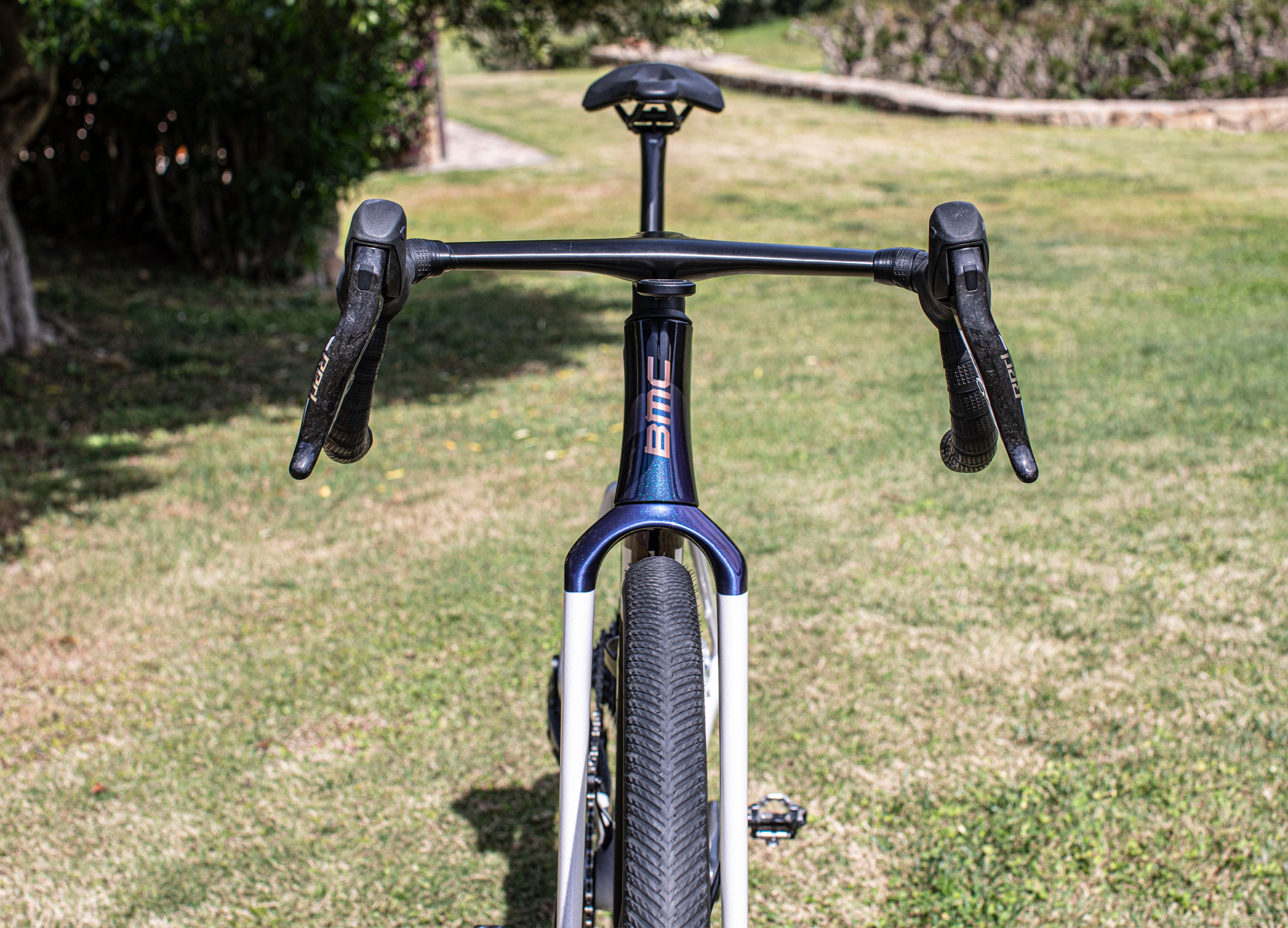
The BMC Kaius was designed and optimised around 45mm tyres but there’s space for a whole lot more
(Image credit: Aaron Borrill)
The new Kaius, however, was developed as a complete system rather than merely combining individually considered components. To ensure it remained racy, however, the new bike drew visual and aerodynamic inspiration from the latest Teammachine SLR 01 and R 01 models, as seen in the deeper head tube and the AS10 seatpost. Together with the wide‑crown Halo fork and AeroCore bottle cage system of the Teammachine R 01 (cages that seamlessly integrate with the downtube), the new Kaius frameset is 12% faster than its predecessor at 40km/h with 45mm tyres.
As a complete system (including 45mm tyres and a fully clothed rider), the new Kaius is 1.05% faster than the first generation, and this is the figure more manufacturers need to reference and talk about. According to BMC, these claims were validated using advanced computational fluid dynamics (CFD), wind tunnel testing, and real-world testing.
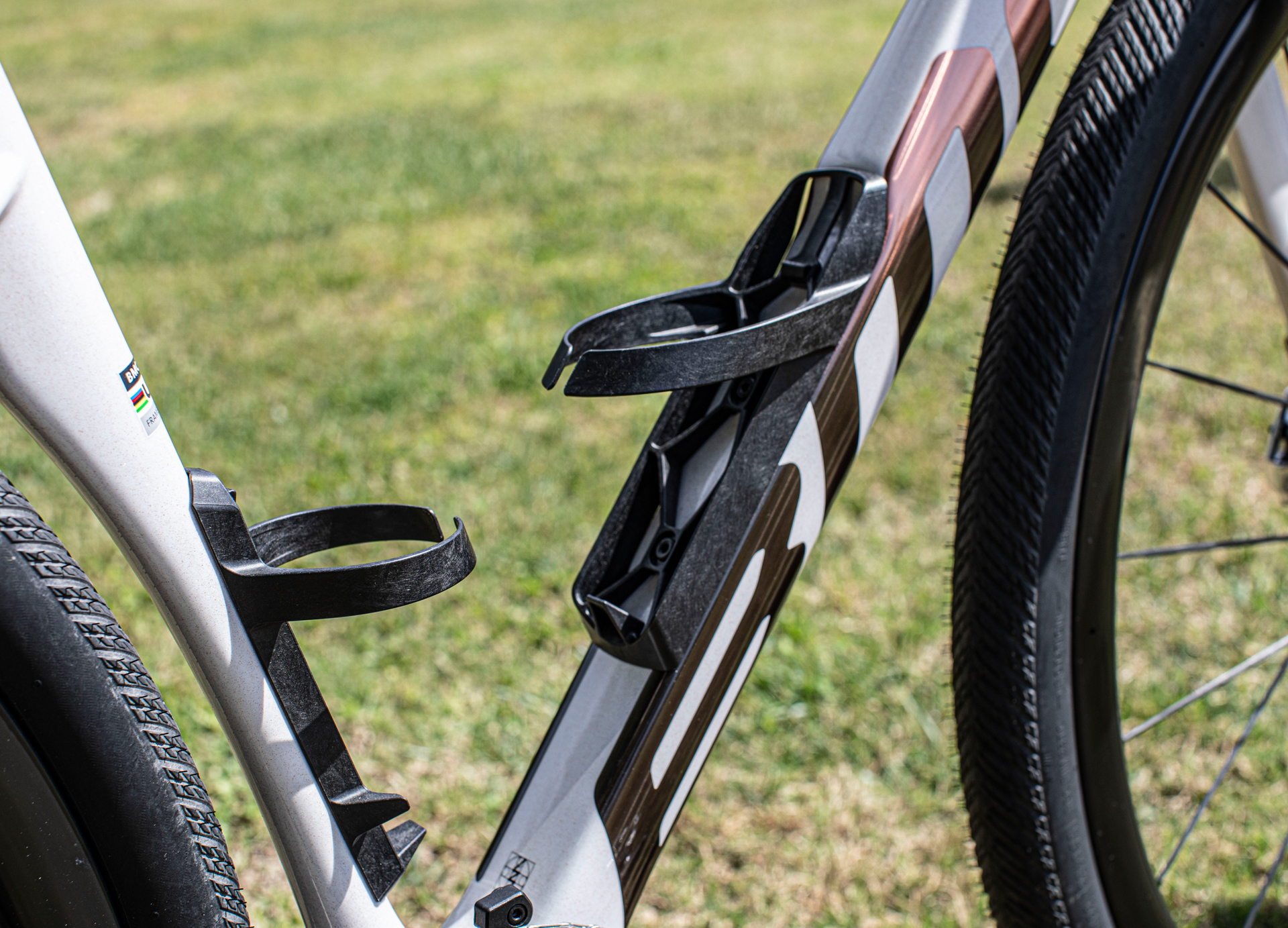
The Kaius uses the same AeroCore bottle cage system as the Teammachine R 01
(Image credit: Aaron Borrill)
Racy geometry and the one-by only approach
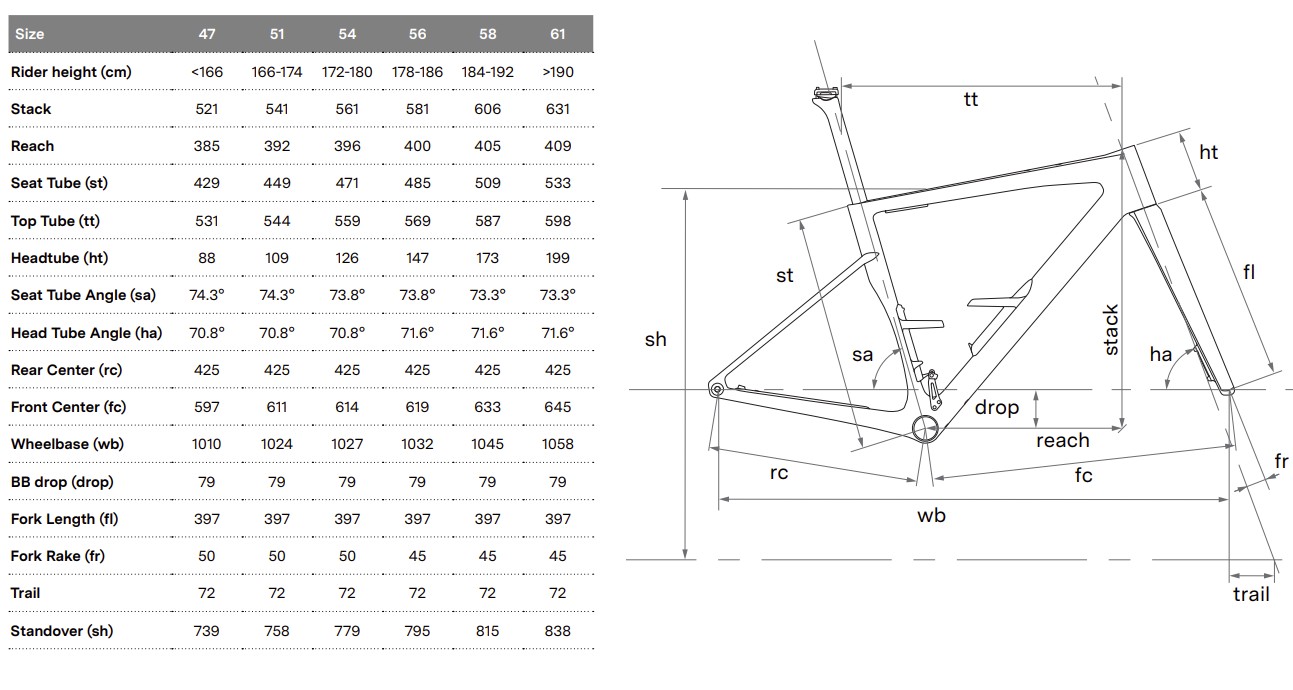
BMC has tweaked the reach, stack, and bottom bracket height to improve handling and confidence on technical descents while retaining the aggressive, racy nature of its forebear. As a result, a size 51cm Kaius gets a fairly steep seat tube angle of 74.3-degrees and a relaxed head angle of 70.8-degrees paired to a trail number of 72mm for improved front-end traction and response.
Smaller frame sizes have a slacker head tube and a 5mm longer fork rake, which also means the wheelbase on a 51cm is longer than the 54cm model. Overall, the reach is 5mm shorter, and the stack has been increased by 11mm across all six frame sizes, while the bottom bracket drop remains 79mm. To improve capability over obstacles and prevent damaging the chainring and frame, ground clearance has been increased by 10mm (this figure increases with shorter cranks). Chainstay length has grown 5mm to 425mm, and the wheelbase is marginally longer than the outgoing model. For this application, BMC has also introduced a T47-threaded BB with inboard bearings to facilitate speedy maintenance.
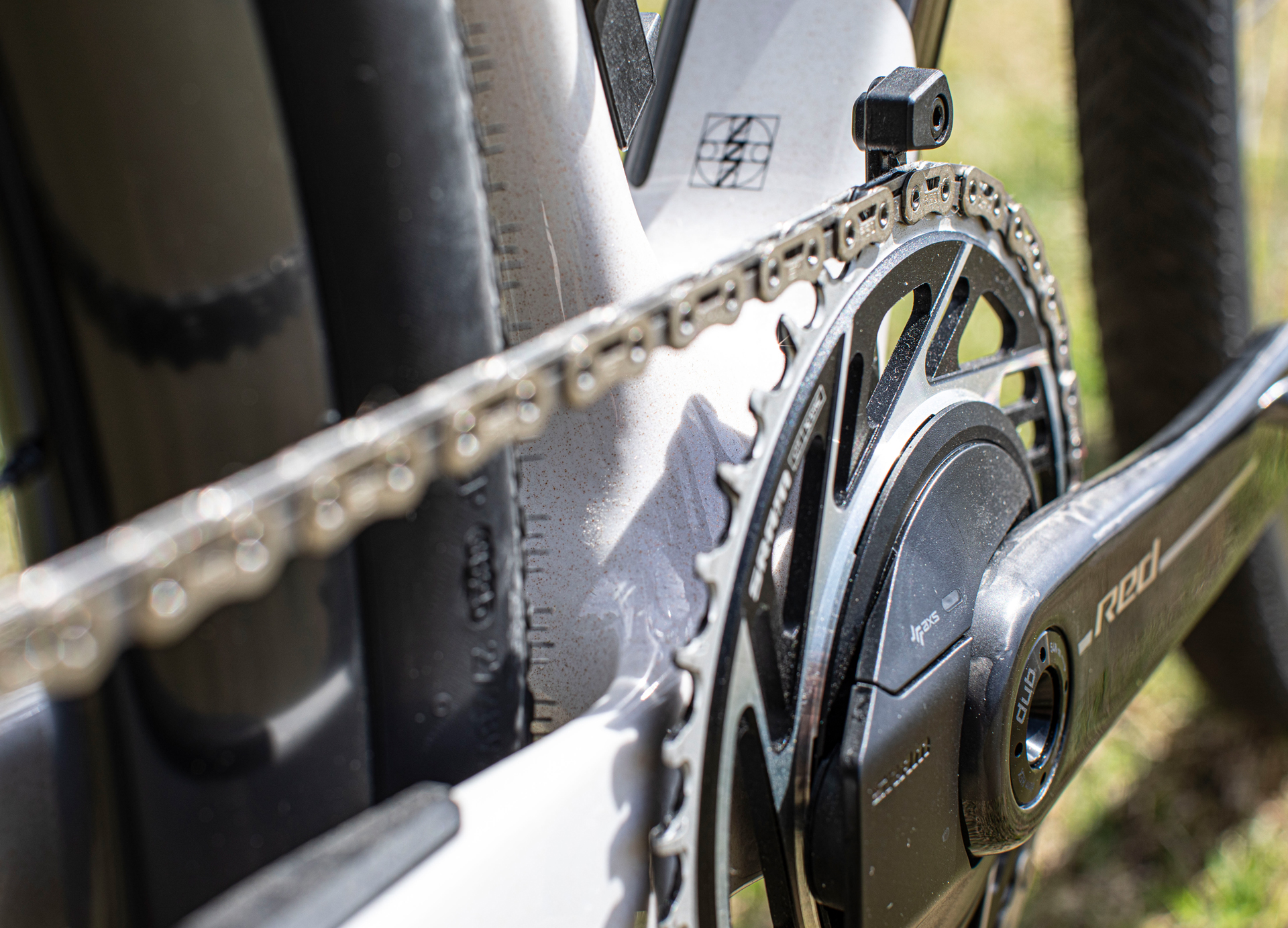
Chainring compatibility ranges from 32 to 50T without a chain keeper and from 38 to 50T with a chain keeper
(Image credit: Aaron Borrill)
The longer chainstays were introduced not only to help accommodate wider tyres but also to ensure the Kaius plays nicely with one-by wireless groupsets. As a result, the new bike can only accommodate SRAM AXS and Shimano GRX RX827 and RX710. The one-by-only compatibility is not only reserved for gravel-specific groupsets but mountain bike or mullet configurations, too – ideal for tweaking your drivetrain components, and boosting gear ratios depending on the terrain.
Chainring compatibility ranges from 32 to 50T without a chain keeper and from 38 to 50T with a chain keeper.
(Image credit: BMC)
Impressive complete system weights
The new Kaius is four per cent lighter than its predecessor – around 63g in fact – and this comes courtesy of revised materials, its 01 carbon recipe and new hardware. The Kaius is only available in BMC’s top-tier 01 layup, and this is referenced in the model range designation: Kaius 01 One, Kaius 01 Two and Kaius 01 Three. Despite the premium, high-modulus carbon fibre layup, the tube walls are 0.3mm thicker than the 0.6mm measurement of the Teammachine SLR road bike sibling to ensure extra protection against stones and rock strikes. For extra protection, BMC has applied a layer of clear 3M helicopter tape to the underside of the downtube.
In size medium (54cm), the Kaius 01 One frame weighs 998g, the fork 400g, and the seatpost 134g, making it one of the lightest gravel race frames available at 1,469g (excluding bottle cages, screws, thru-axles, spacers, headset bearings, hanger and other hardware). The complete bike weight of the Kaius 01 One in size 54, excluding pedals, is 7.1 kg. The 01 Two and 01 Three tip the scales at 7.8 and 8.3kg, respectively, in the same size.
For those looking to stand out from the standard builds, there’s the frameset-only Kaius 01 VAR 0, which is the lightest option in the range, coming in at 1,855g with all the hardware fitted, including the AeroCore cages, hanger, thru-axles, spacers, headset bearings and spacers. Featuring a raw carbon look with a UV-varnish clear coat, it can also be custom-painted, provided the paint shop is approved by BMC.
What to read next
Despite its racy intentions, the Kaius has five mounting points for those who enjoy riding long or bikepacking: on the top tube, within the main triangle, and on the underside of the downtube. There are no mounting bosses located on the fork.
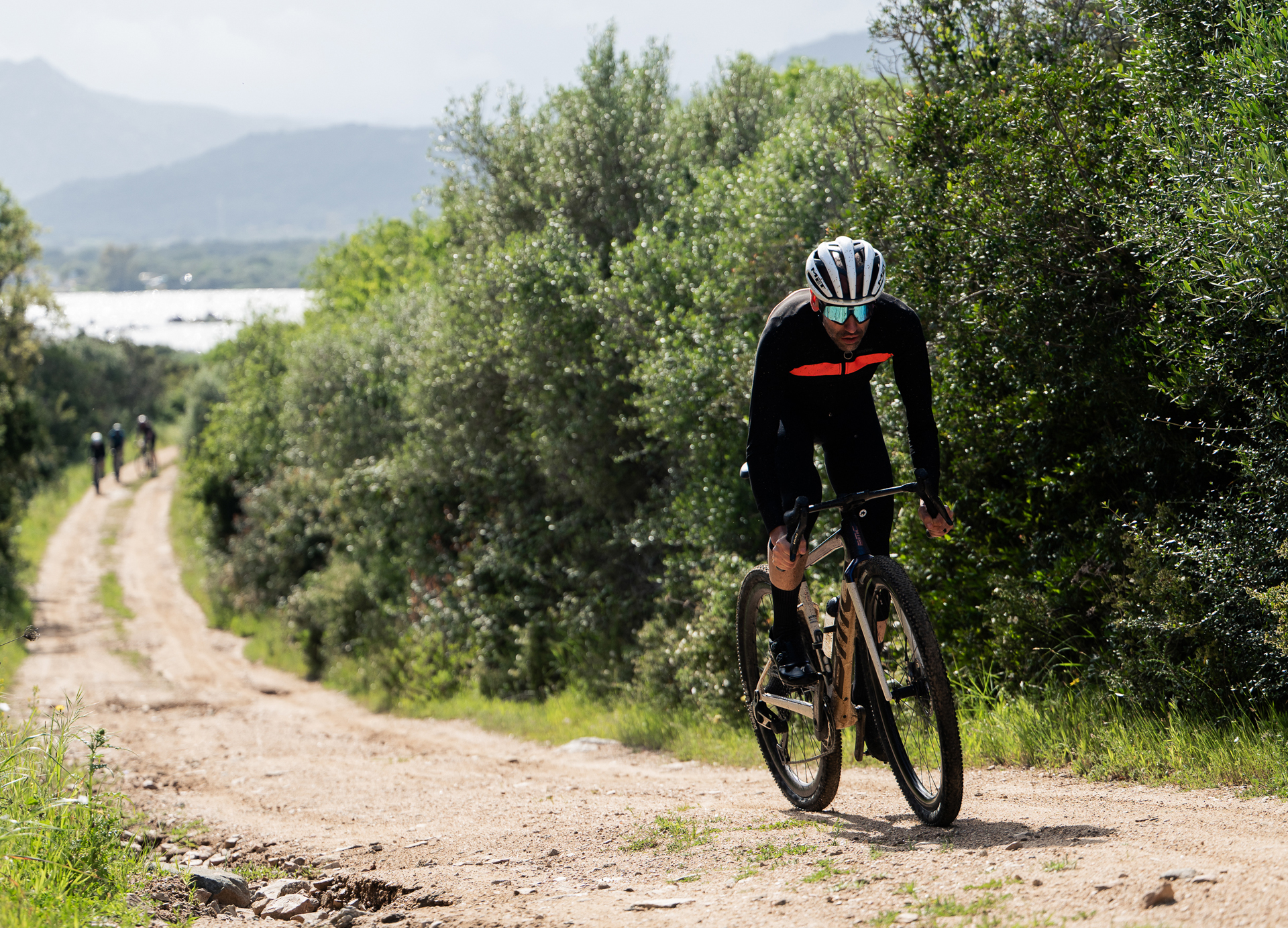
Cycling Weekly tech writer, Aaron Borrill, sampled the BMC Kaius 01 One on the press camp in Sardinia, Italy
(Image credit: Bartek Wolinski/@wolisphoto)
BMC Kaius 01 One – First ride impressions
Sardinia is an amazing place. While it’s better known for its network of mixed-condition tarmac roads and stunning backdrops, the island also offers even better gravel terrain. Technical and undulating, it provided the ideal litmus test for the all-new BMC Kaius and a chance for me to ride it in anger over two days. I was assigned a range-topping BMC Kaius 01 One in size 51cm, which sounds a little on the small side, but at 175cm tall, it complemented the fit measurements I provided the mechanic.
While gravel was very much on the menu, we spent an equal amount of time on tarmac, too – this was purposely done as most riders and modern gravel races traverse regular roads to link trails. For riders who enjoy the all-road experience, the narrowest tyre you can fit to the Kaius is a 32mm, so there’s scope to use it as an all-year one-bike solution.
Even with thicker tyres fitted at low pressures – we sampled the Kaius with the new 50mm Continental Dubnital tyres – the bike still feels urgent, granted you’ll need a few kilometres to get used to the added rolling resistance this width provides. BMC fitted these tyres over the stock 45mm Continental Terra Competition Race Rapid rubber due to the weather at the event; overnight rain wreaked havoc on the terrain, carving huge ruts and uncovering stones and rocks that warranted extra protection and traction.
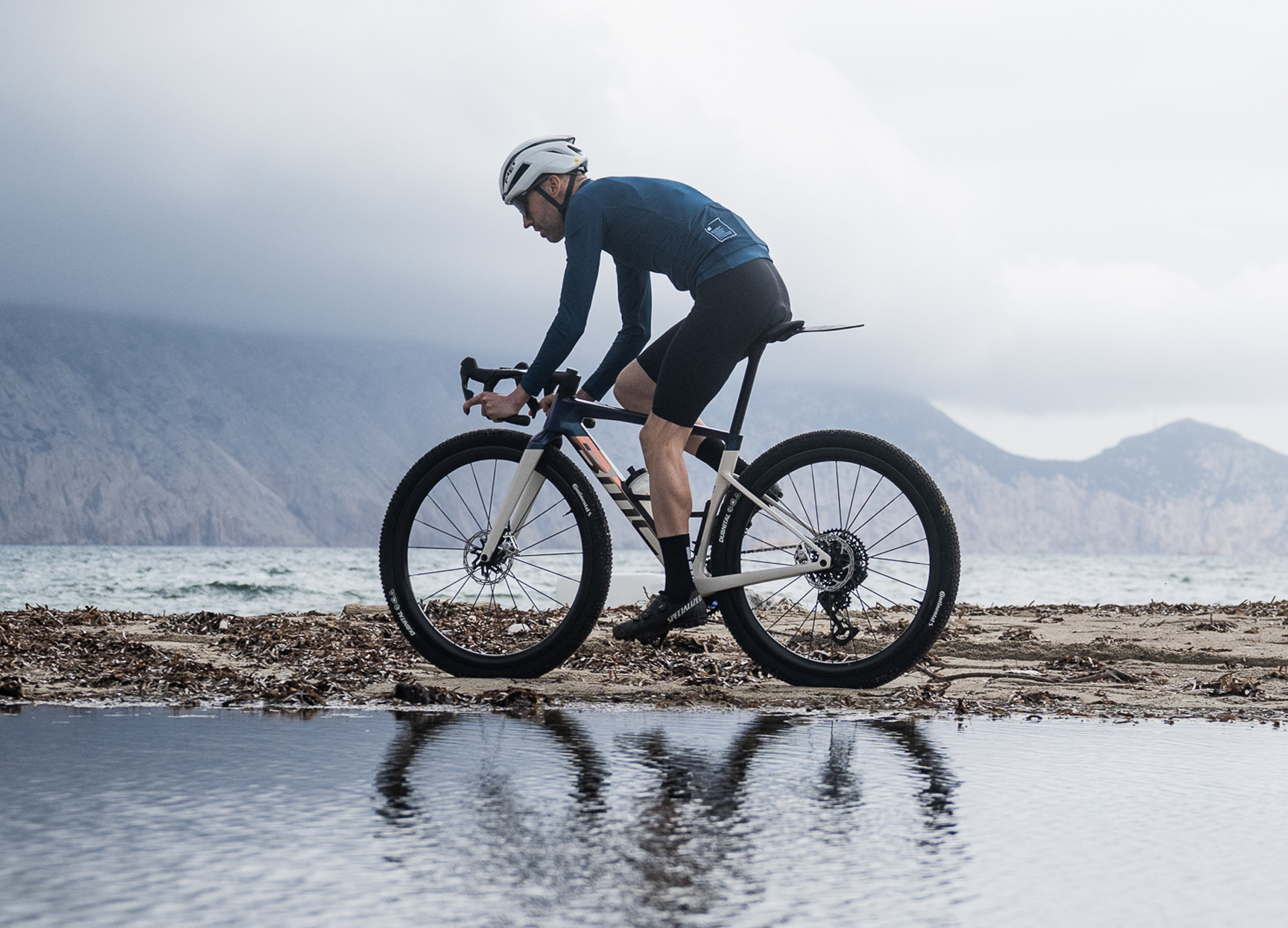
The wider tyres paired with lower pressures help it skim over bumpy terrain
(Image credit: Bartek Wolinski/@wolisphoto)
The Kaius is exceptionally well-mannered on technical gravel and rough descents. The front end is a little slower than its rivals, but the upshot is planted, predictable steering thanks to the 70.8-degree head angle and 72mm trail. The control and front-end compliance instil in the rider levels of trust that some of its rivals fail to deliver, whether you’re on the hoods or in the drops. Of course, I always recommend descending rough terrain on the drops as this forces extra weight on the front wheel and helps dig the tyres into the surface for improved control.
You’ll still need to work hard to choose your lines and weight the bike underneath you, but the wider tyres paired with lower pressures help it skim over bumpy terrain as opposed to ramming into every object that comes its way.
Traction is superb on loose terrain, and the stock 42T, 11-46T gearing flattens steep inclines, allowing you to climb with confidence and precision. At 7.1kg, it’s up there with the featheriest options on the market – the Specialized S-Works Crux, Cannondale SuperX Lab71 and Canyon Grail CFR included.
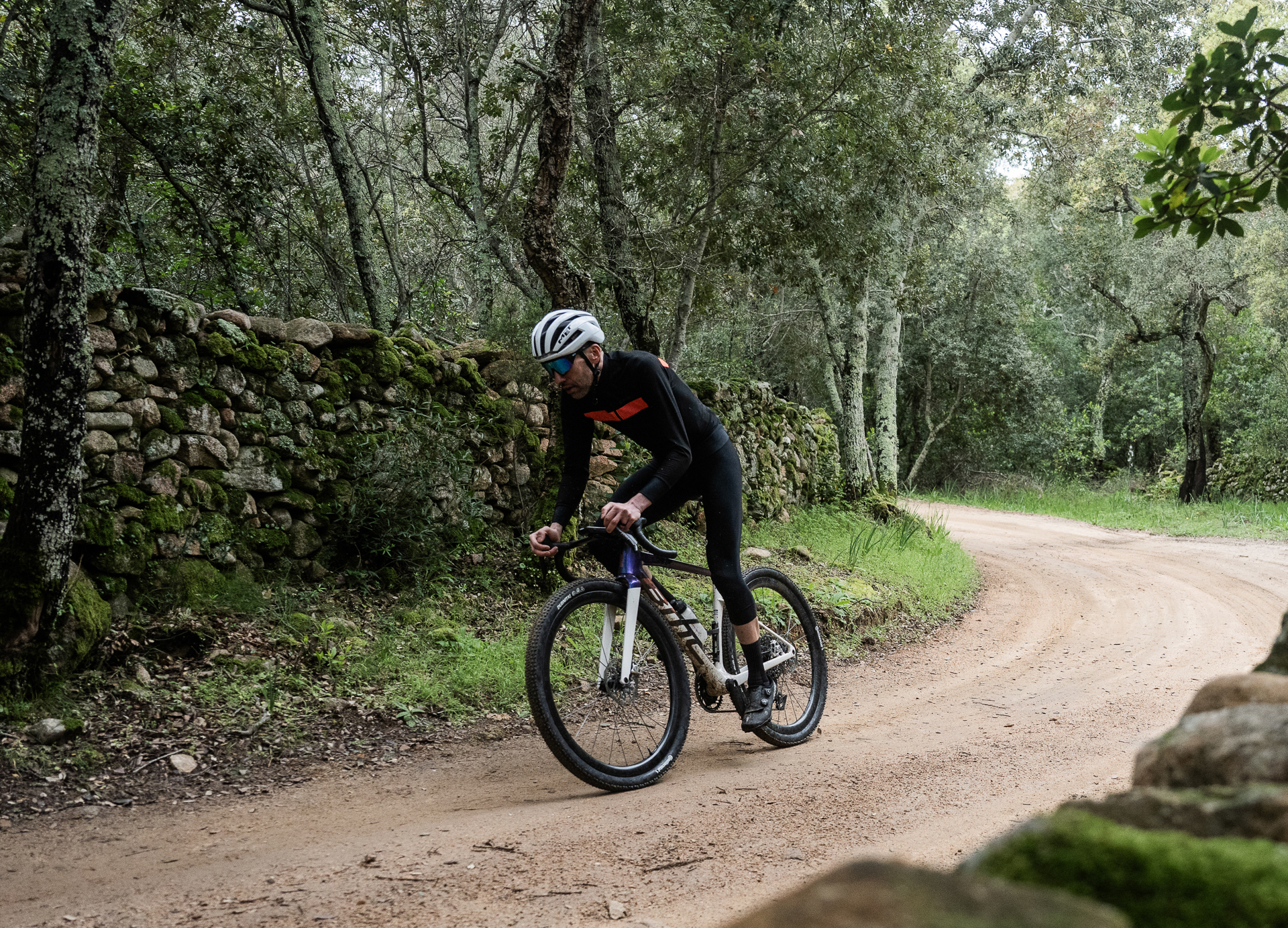
The Kaius has predictable steering thanks to the 70.8-degree head angle and 72mm trail
(Image credit: Bartek Wolinski/@wolisphoto)
This frame’s ride quality and trail compliance come from its layup and flex zones. The Arete seat tube and cutout, combined with the AS10 aero seatpost, provide improved comfort over rough terrain, and the rear axle is claimed to provide up to 10mm of vertical deflection when compressed at speed. While I can’t quantify this claim, the Kaius did feel stable and composed over bumpy surfaces.
Crank length is not specifiable at purchase but differs between the six frame sizes: 165mm (47 and 51cm), 170mm (54 and 56cm), and 172.5mm (58 and 62cm). My 51cm test bike was fitted with 165mm cranks, which forced me to spin over features rather than torque my way up using the leverage afforded by longer crank arms. While I’m still not convinced shorter cranks offer a performance benefit, they do provide added clearance during high-speed cornering and allow you to attack corners without worrying about pedal and rock strikes.
BMC has also raised the ground clearance by 10mm for added assurance.
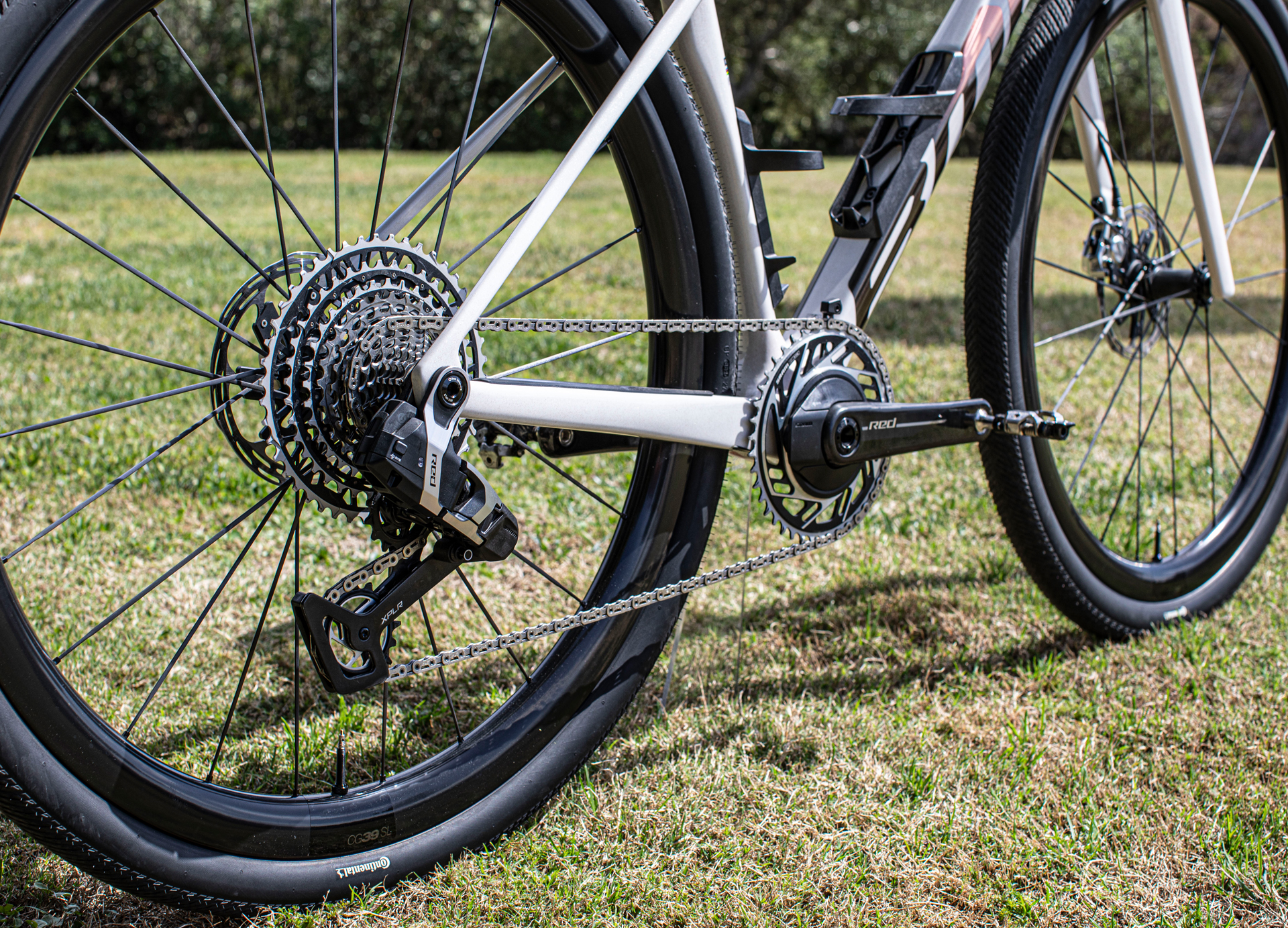
The entire Kaius range is covered by SRAM’s XPLR AXS groupsets spanning Red, Force and Rival
(Image credit: Aaron Borrill)
Pricing and specifications
The Kaius range comprises three complete builds, all outfitted in SRAM componentry and one frameset option. While there’s a variety of options, it is only available in top-tier carbon grade, so pricing is fairly steep across the board.
Spearheading the portfolio is the BMC Kaius 01 One, which comes in at £9,999 / $12 999/ €10,999. It employs an SRAM Red XPLR AXS groupset, BMC CG 39 SL carbon wheels wrapped in 45mm Continental Terra Competition Race tyres, an integrated BMC ICS carbon cockpit, a Fizik Vento Argo X1 carbon saddle, and finishing kit from BMC.
This is followed by the £7,299 / $8,999 / €7,999 BMC Kaius 01 Two. As the second model down in the range, it’s built around SRAM Force XPLR AXS. It uses the same wheels/tyres and integrated cockpit as the Kaius 01 One, but ditches the carbon rails of the Vento Argo X1 for the kium-railed Vento Argo X3.
The SRAM Rival XPLR AXS-equipped Kaius 01 Three is the most affordable complete bike in the portfolio at £4,999 / $6,199 / €5,499. While it still uses the brand’s in-house CG 40 carbon wheels, it gets a heavier version of the Fizik Venta Argo saddle and loses the carbon one-piece cockpit of the Kaius 01 One and Two in favour of a traditional yet fully integrated bar-and-stem arrangement.
Finally, the BMC Kaius 01 VAR 0 frameset will set you back £3,999 / $5,099 / €4,499.