

WORDS: Ocean Road Editorial Staff PHOTOGRAPHY Pexels
If you’ve been using AI video tools for a while, you’ve probably noticed something frustrating. The technology keeps getting better — the visuals are sharper, the motion is smoother, the lip sync is finally believable — but the workflow hasn’t really changed. You still write a prompt, wait for a clip, decide it’s not quite right, tweak the prompt, generate again, and repeat until you’re either happy or out of credits. The tools got smarter. The process didn’t.
That’s starting to shift, and it’s worth paying attention to. A new category of tool — the AI video agent — is reframing what “using AI to make video” actually looks like. Instead of you driving every micro-decision, the agent takes responsibility for the production sequence itself. The implications go deeper than a simple time saving.
The Mental Model Shift
The easiest way to understand the difference is to think about how you’d brief a freelancer versus how you’d use a stock template.
A traditional generator is like a stock template. You bring all the creative direction yourself. You decide the script, the style, the scene composition, the sequence of shots, the music, the pacing. The tool executes one piece at a time and the burden of orchestration sits squarely on you.
An agent is more like briefing a freelancer. You describe the outcome — “I need a 30-second TikTok ad introducing our new ceramic coffee maker, aimed at home brewing enthusiasts, casual and warm in tone” — and the agent makes the smaller decisions on your behalf. Script, scenes, transitions, voiceover, music, pacing — all handled, with you reviewing the result rather than building it piece by piece.
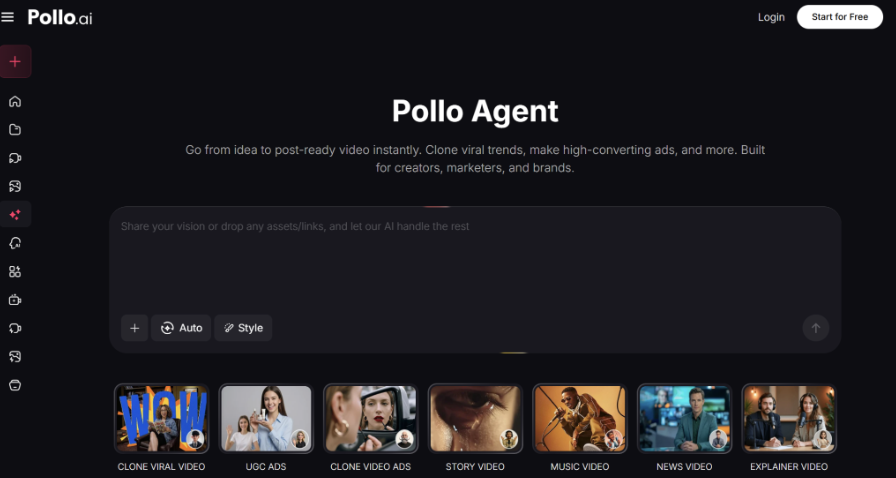
This is where Pollo Agent becomes interesting in practice. It sits on top of Pollo AI’s broader video generation infrastructure but functions as the orchestration layer — you describe what you need, and it coordinates the underlying models to deliver a finished asset. For anyone who’s spent hours juggling separate tools for scripting, generation, and editing, the workflow change is significant.
When Agents Actually Make Sense
I want to be clear here, because there’s a lot of hype in this space and not all of it is warranted. Agents aren’t the right tool for every video project.
If you’re producing a flagship brand film, a major launch piece, or anything where the creative concept itself is the value, you still want human creative direction throughout. The agent might help you prototype faster, but you wouldn’t ship its output unmodified.
Where agents earn their place is in the high-volume middle of your content calendar. The weekly social posts. The localized variants of an ad for different markets. The product update announcements that need to go out every two weeks. The recap videos for every webinar. This is the work that consumes huge amounts of time without ever feeling creatively rewarding, and it’s exactly where an agent-driven workflow pays back fastest.
A useful test: if a piece of content follows a predictable structure and the main variable is the topic or product being featured, an agent can probably handle it well. If every piece requires fresh creative thinking from scratch, you’re better off with a human-led process.
The Brief Is the New Prompt
Here’s the part that catches most marketers off guard when they first try an agent-based tool. The skills that made you good at prompting generators don’t transfer cleanly. Generators rewarded short, specific prompts focused on visual details. Agents reward something closer to a real creative brief.
Think about what you’d tell a freelance video editor. You’d describe the audience, the platform, the goal of the piece, the tone you want, examples of what you like, things to avoid, and the call to action. You wouldn’t just say “make a video about our shoes.”
Agents work the same way. The teams getting strong results are the ones treating brief-writing as a skill worth developing. A two-paragraph brief consistently outperforms a one-sentence prompt by a wide margin. Spending ten minutes upfront writing it properly saves you an hour of revisions on the back end.
The Other Tools Still Have a Place
An agent isn’t a replacement for every specialized tool in your stack. It’s a coordinator for work that benefits from orchestration, while specialized tools remain better for specialized jobs.
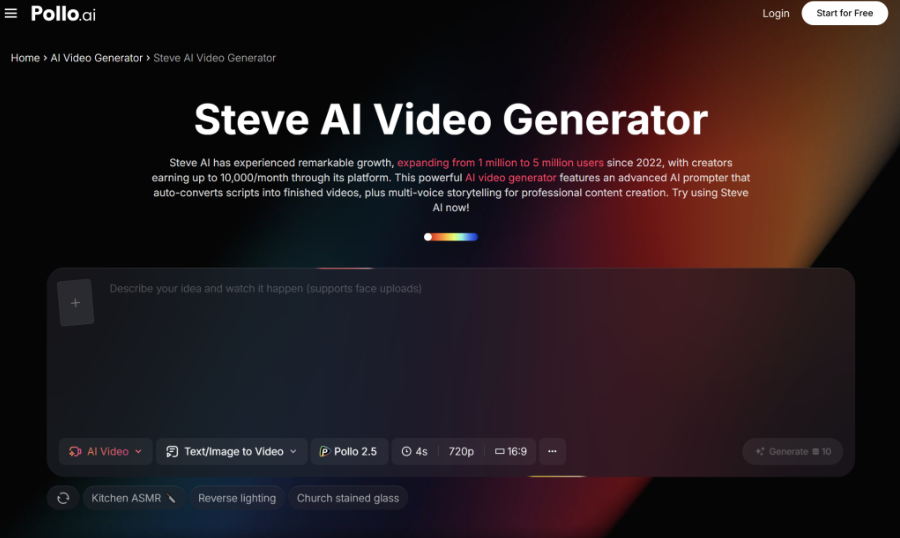
Steve AI is still my pick when you need animated explainer content for B2B or SaaS — anything where you’re communicating a concept rather than showing a lifestyle moment. Placeit remains useful for product mockups and visual assets that don’t require narrative video at all. Animoto handles template-driven social content well when you need something fast and don’t want to write any brief at all.
The smart move isn’t to consolidate everything into one platform. It’s to use an agent for the work that benefits from end-to-end coordination, and keep purpose-built tools for the rest.
Practical Adoption Without Disrupting Your Workflow
The teams that successfully integrate AI video agents tend to follow a similar adoption pattern, and it’s worth borrowing.
They start with a single content type. Not their entire video output — just one recurring format that already follows a predictable structure. Maybe it’s their weekly product highlight, or their LinkedIn thought-leadership clips, or their TikTok ad variants. Pick one, run it through the agent for a month, and see how it performs against your usual production process.
They invest seriously in the brief and style guide. The agent only knows what you tell it, and a well-documented brand voice doc plus a few reference videos goes a long way. This is unsexy work that pays off forever.
They treat the first output as a draft, not a final. Even with strong briefs, the first version of any AI-generated piece needs human review. Watch it the way you’d watch a freelancer’s submission — critically, but not adversarially. Note what works, request specific changes, and ship the revised version.
And they measure honestly. Not “did it match what I would have made?” but “did it perform well enough for the use case?” For a lot of mid-funnel social content, “good enough produced in 15 minutes” beats “great produced in 6 hours” almost every time.
What This Means for the Next Twelve Months
The marketing teams that adapt fastest to agent-based workflows are going to have a meaningful advantage in content velocity. Not because they’ll produce better individual videos, but because they’ll produce more of them, more consistently, with less coordination cost.
For solo founders and small teams, this is the bigger story. The kind of content output that used to require a full production team is now achievable by one person with a clear brief and the right tooling. That’s a real shift in what a small team can credibly attempt — and the brands that lean into it early are the ones that’ll look like they’re punching well above their weight by the end of the year.