
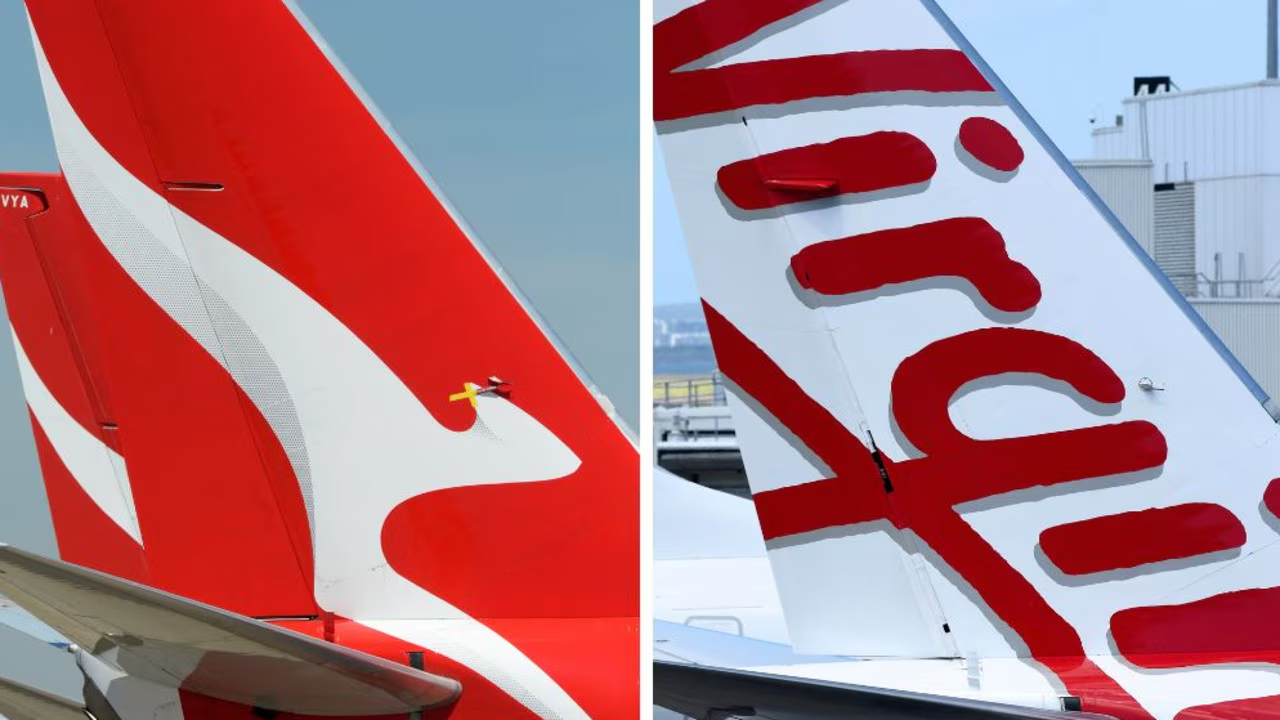
It’s an odd concept to the ordinary Aussie traveller. One week Australian airlines are announcing they must increase flight prices to offset skyrocketing jet fuel costs and the next they are dropping massive sales on airfares.
Major airlines across the world are hiking airfares and slashing capacity. One of the largest airlines in the world, United Airlines, revealed last week it would be raising fares as much as 20 per cent.
The same measures are being implemented by Virgin Australia and the Qantas Group, which own Jetstar.
On April 14, Qantas gave a market update. It said jet fuel prices had more than doubled since its half-year results in February. Just days after the results, the United States and Israel had launched military strikes against Iran, with the conflict disrupting global energy supplies.
In response, Qantas Group confirmed it had made fare increases and reduced domestic capacity by five percentage points, as well as international network changes. This included redeploying aircraft from the US and its domestic network to increase flights to Paris and Rome as travellers look for options to get to Europe without flying via the Middle East.
In a market update to the ASX on April 15, Virgin Australia told investors it had also increased airfares and would reduce domestic capacity by one per cent over the next quarter – “to offset the impact from increased fuel and other operating costs such as airport charges”.
The very next week, Virgin Australia launched two “mega sales” totalling more than 1.5 million discounted fares, and Qantas launched a “major domestic sale” with two million fares dropped across 90 routes. Jetstar had its own “Life’s a Beach Sale” in mid-March with 60,000 discounted seats on domestic and international routes.
Qantas also launched a sale on 125,000 seats to Asia on Thursday.
It may seem strange to anyone who isn’t privy to revenue management, sometimes referred to as “the dark arts” of aviation because of how complex and intricate an activity it is to sell seats at the right price at the right time.
Why Aussie airlines are hiking airfares and dropping huge sales
While airlines are currently battling their own rising operating costs, they are also up against a major challenge to attract customers during a cost-of-living crisis.
RMIT University Aviation Academy senior manager Justin Brownjohn told news.com.au when airlines speak about increasing airfares, it’s likely they are targeting routes where there are high numbers of business travellers – such as the “golden triangle” of Brisbane, Melbourne and Sydney. Airlines can command higher prices in markets where customers are more “price elastic”, Mr Brownjohn said.
Meanwhile for leisure travellers, “the first thing to go when they’re trying to save money is probably a holiday,” he pointed out.
And while airline sales may include seats on those popular routes, he suspects most of the sale fares are actually in markets that rely on tourists who will only travel for a reasonable price.
“A seat that does not get sold can never be recovered,” Mr Brownjohn said. “So once a flight operates with an empty seat, that is that is a lost opportunity for the airline.
“Airlines have made a decision in these markets that they would rather some revenue than no revenue.”
The silver lining for travellers is airline sales will continue
Point Hacks spokesman Daniel Sciberras explained that airlines plan sales well in advance and it takes a lot more planning than the regular customer would realise, meaning it’s not easy to change or completely ditch a sale last-minute.
“It’s sort of like turning a tanker around,” Mr Sciberras told news.com.au.
“They tend to not play around with their offers so much. They’ll tend to do things such as what we’ve been seeing, which would be maybe a fuel surcharge, because they’ll see it as a temporary thing and more importantly, they can just quickly execute that. They can add it on to current flights or future flight bookings.”
He said this applied to those fares included in a sale.
“For example, you can book on a sale but you’ll be having that fuel surcharge added on top,” he said.
Mr Sciberras said travellers would continue to see airline sales throughout the year, and both airlines and airports were still seeing strong demand from Aussies – particularly for travel to Asia.
In response to questions from news.com.au, Virgin Australia said: “As Australians continue to prioritise travel, we remain committed to keeping airfares as affordable as possible and being a strong competitor in Australian skies.”
It did not give details on how much airfares had increased but confirmed the airline implemented targeted adjustments to base fares in late March.
Qantas said it and Jetstar run hundreds of sales every year as part of regular network and revenue planning, and sales would continue to play an important role regardless of broader market conditions. It too did not disclose details on airfare increases that were made to mitigate the impact of the conflict in the Middle East.
Read related topics:Qantas