
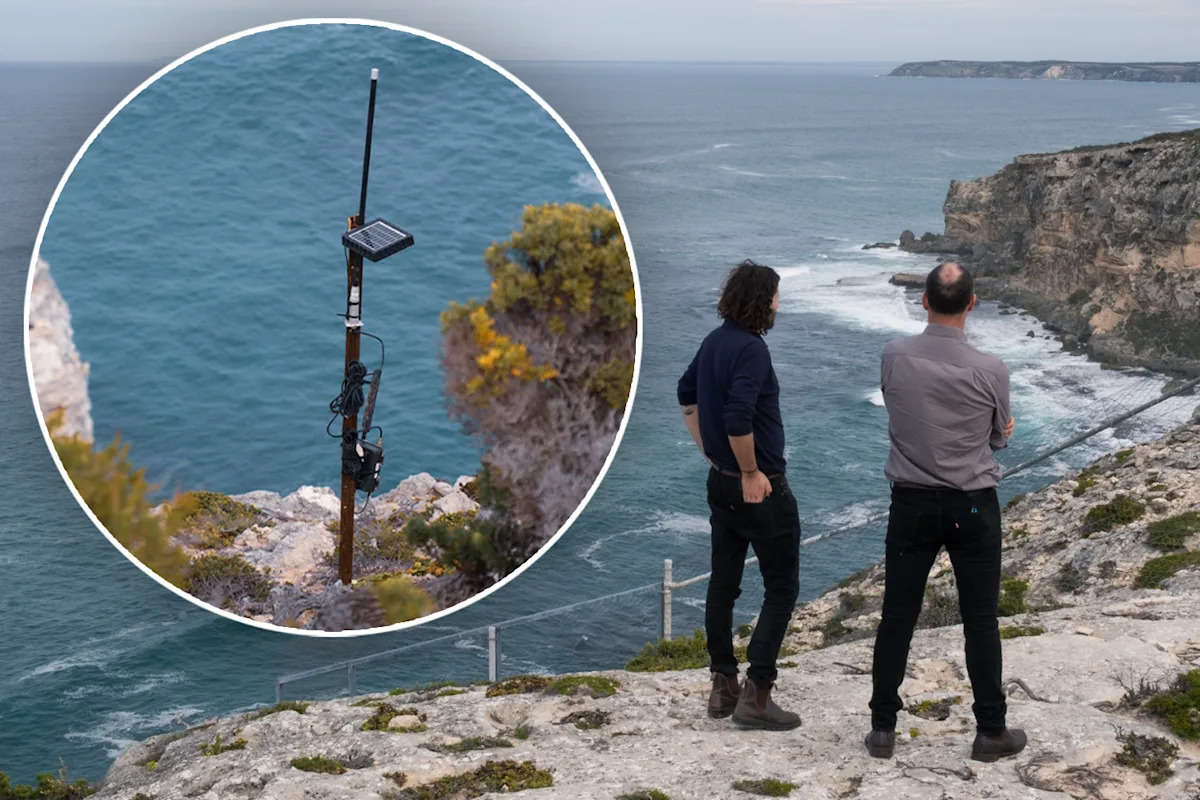
A large-scale winter operation to wipe out one of the country’s most destructive species is now underway on Australia’s third-largest island, with experts saying it could become a world-first in conservation.
More than 800 traps — alongside thermal imaging, drones and detection dogs — are being deployed in what is shaping up to be the most ambitious attempt yet to eliminate feral cats from a populated island anywhere in the world.
Winter offers a narrow window of opportunity on South Australia’s Kangaroo Island, with food scarcity and increased movement making the remaining animals easier to track.
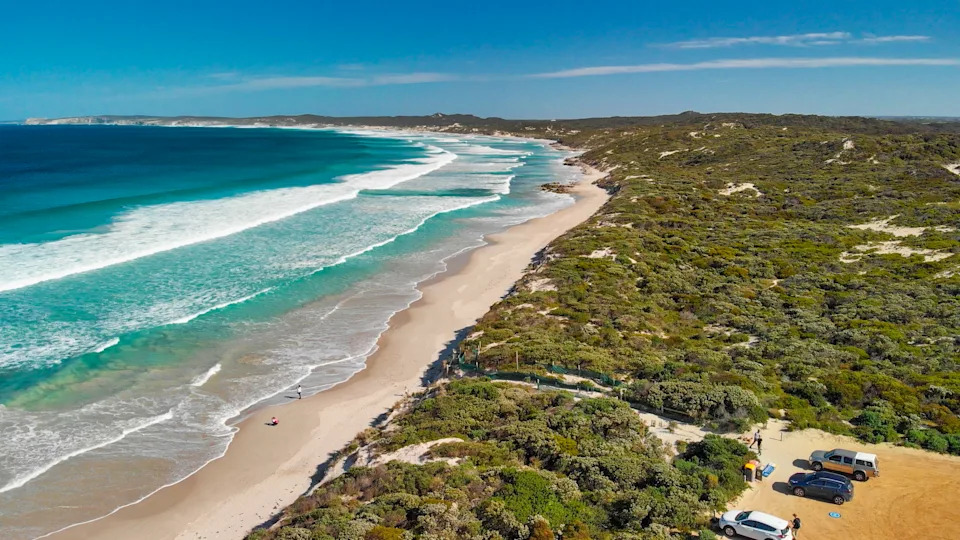
Kangaroo Island in South Australia is the country’s third-largest.
(Paola Giannoni via Getty Images)
Around 280 4G-enabled remote cameras are also in place, providing near real-time detections to guide operations on the ground.
The effort is further supported by thermal drones, vehicle-mounted thermal optics and ground-based thermal scopes, allowing teams to track and target the remaining cats with increasing precision.
If successful, the effort could provide a blueprint for tackling cat-driven extinctions globally.
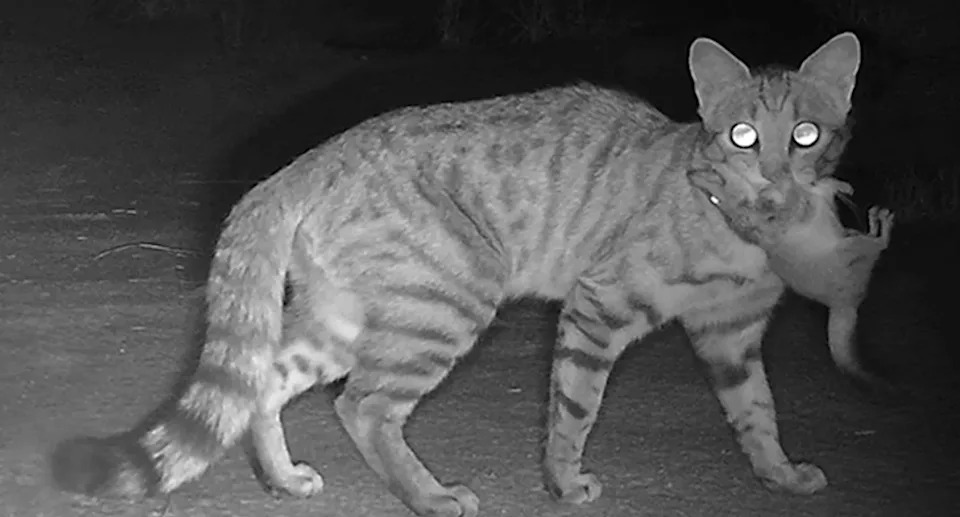
Feral cats kill more than 1.5 billion native animals every year in Australia.
Backers say the program is now within reach, but not yet fully funded.
The South Australian government has committed $800,000, while a further $370,000 has been secured through investment by the Invasive Species Council, but another $2.7 million is needed from the federal government to complete the job.
Invasive Species Council CEO Jack Gough said the scale of the operation reflects the urgency of the threat posed by feral cats to native wildlife.
‘This is exactly the kind of ambitious, practical feral cat action Australia needs more of,” he said.
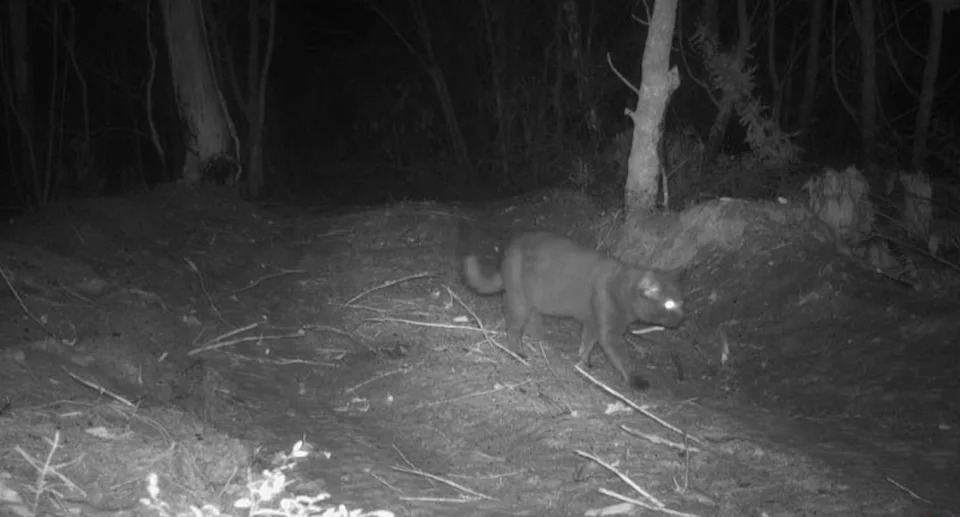
A feral cat spotted on Moreton Island, off the coast of southeast Queensland, weighing almost seven kilos. Source: Brisbane City Council
“The Dudley Peninsula program shows what is possible when governments, landholders and communities back skilled eradication teams with the funding and tools they need.
“Once complete, this will be the largest successful feral cat eradication on a populated island anywhere in the world — and that’s a huge deal for Australia and globally.”
Gough said completing the program would deliver significant protection for some of the island’s most vulnerable species.
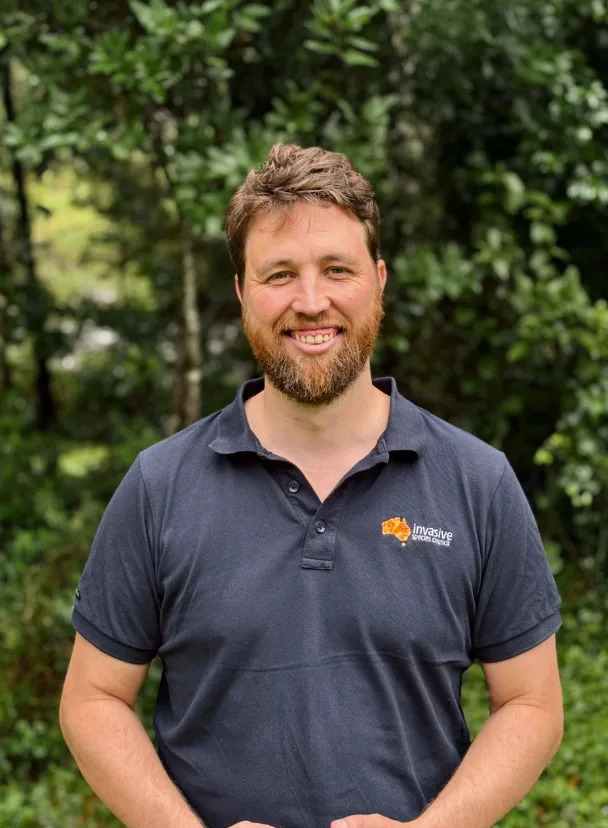
Jack Gough, CEO of the Invasive Species Council
(Source: Invasive Species Council)
“Finishing this job means real protection for some of Kangaroo Island’s most vulnerable native animals — including the Kangaroo Island dunnart, echidnas, little penguins and ground-nesting birds,” he said.
“There is already strong co-investment behind this project, with $800,000 committed by the South Australian government and $370,000 the Invaisve Species Council has secured through philanthropic investment.
“This leaves $2,731,224 in remaining funding for the federal government to step up and deliver.”
Gough said ongoing federal support would be critical to ensure the project reaches completion.
“We will continue to work with Federal Environment Minister Murray Watt to secure the remaining funding needed to get the Dudley done,” he said.
“This program is now within reach of success. The job is not done until the last cat is removed, and ongoing support from the federal government will be critical to make sure this hard-won progress is locked in.”
Kangaroo Island rises from strength to strength
The push comes after another major breakthrough on the island, where feral pigs, once roaming in the thousands, were effectively eliminated following years of coordinated control efforts.
During the horrific 2019-2020 Black Summer bushfires, which tore across more than half of the island, it’s believed feral population pig numbers were also reduced by an astonishing 90 per cent — an unexpected but welcomed outcome.
Then the remaining pigs were attacked on all fronts with a “range” of methods in 2024, including a clever pig-specific bait device that affects pigs in a way similar to carbon monoxide poisoning, killing them quickly.
It’s believed almost all were eliminated, but surveillance continues to make sure there are no survivors.
You can also follow us on Facebook, Instagram, TikTok, X and YouTube.