
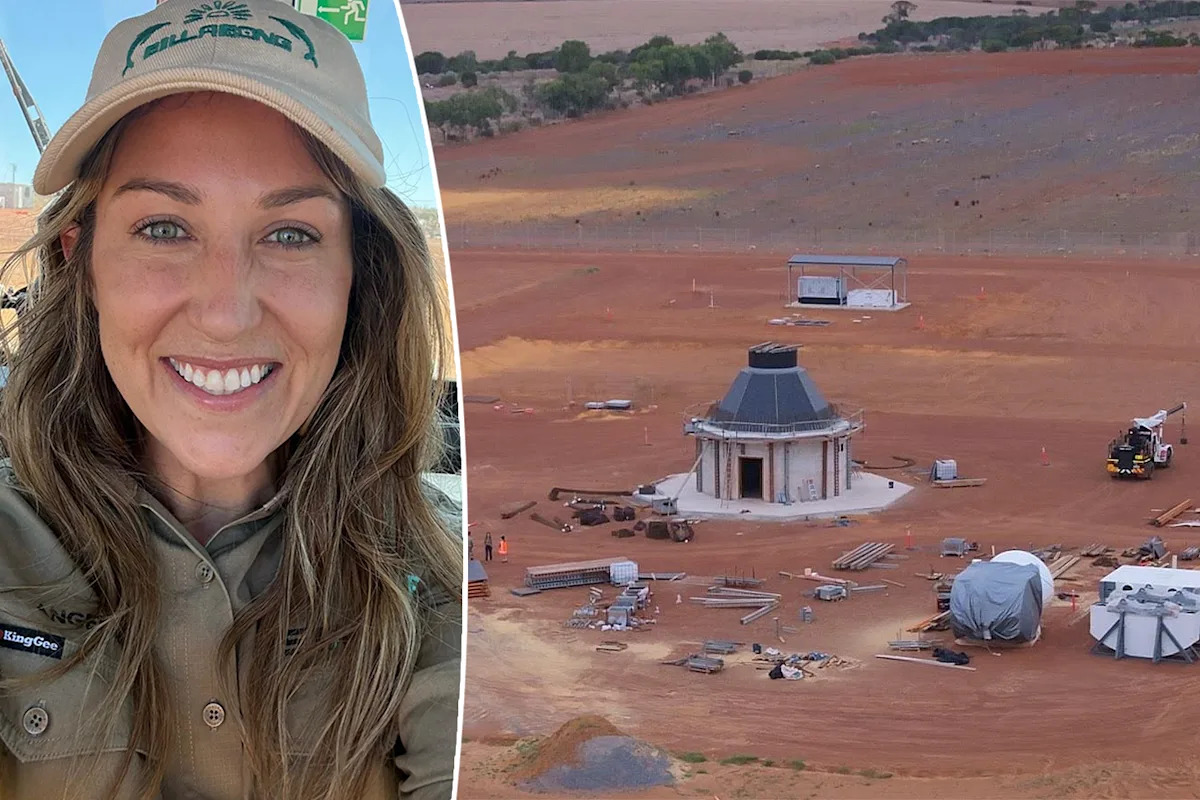
In a quiet stretch of Western Australia, far from any city skyline, a giant dish is rising from the red dirt — one that will help astronauts talk to Earth from the Moon.
It might sound like science fiction, but it’s happening just outside the tiny town of Mullewa, home to just 300 people.
While the project is deeply technical, its implications are broad.
Without ground stations like this, spacecraft can’t be controlled, astronauts can’t communicate with NASA, and data from space can’t make it back to Earth.
It’s one of just three stations of its kind in the world.
With NASA’s Artemis missions pushing further around the Moon, the need for reliable Earth communication is becoming more urgent than ever.
Do you have a story about rural Australia? Contact joe.attanasio@yahooinc.com
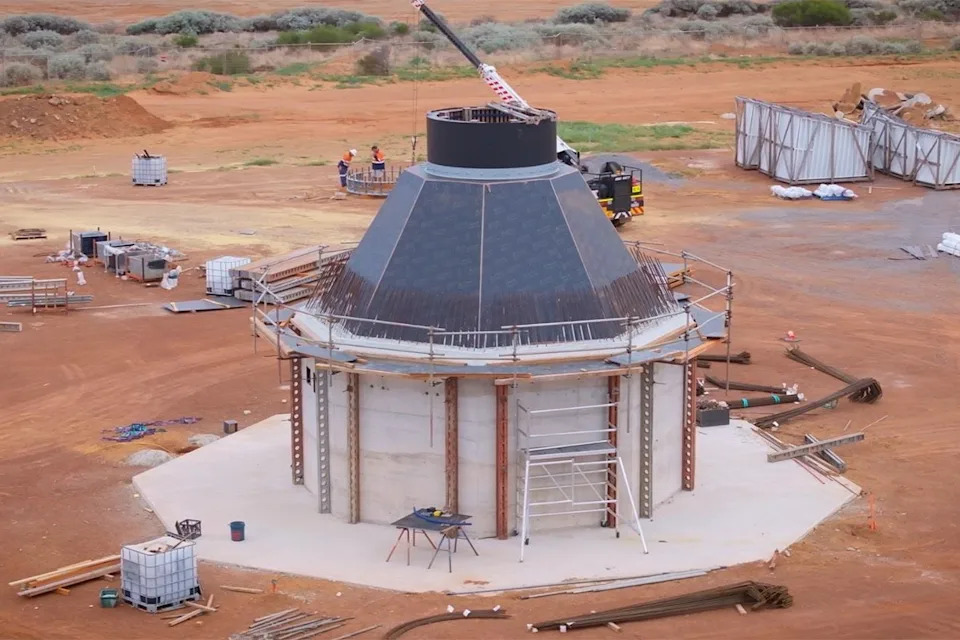
Angela’s world‑leading ground station will support NASA’s next missions to the Moon. Source: Shoelace Collective
(Shoelace Creative)From the red dirt of WA to the Moon
Angela Teale, Strategic Advisor and Co-Founder of Starsite, is helping lead the effort.
From small-town Iowa to outback Australia, Angela is now part of a growing scientific community in the remote WA town.
Her team is building a world-leading, 20-metre “parabolic dish” — what most people would recognise as a satellite antenna — designed to communicate with spacecraft orbiting and landing on the Moon as part of upcoming missions.
“Right now, we’re halfway through the build,” Angela told Yahoo News Australia.
“And that is going to communicate with the spacecraft that will go around the moon and land on the moon. It’ll enable the astronauts to communicate with Earth for the upcoming Artemis missions.
“It’s about telling a satellite what to do from the ground, and then receiving the data back from the satellite to the ground.”
But where it’s being built and why are what make the project unique.
“The characteristics of that area really lend themselves to being great for space,” she said.
The region offers strong power infrastructure, high-capacity fibre connections, and, critically, very low radio frequency interference.
“Since there’s not a lot out there, that lends well to something that’s listening really hard for signals that are deep in space,” Teale said.
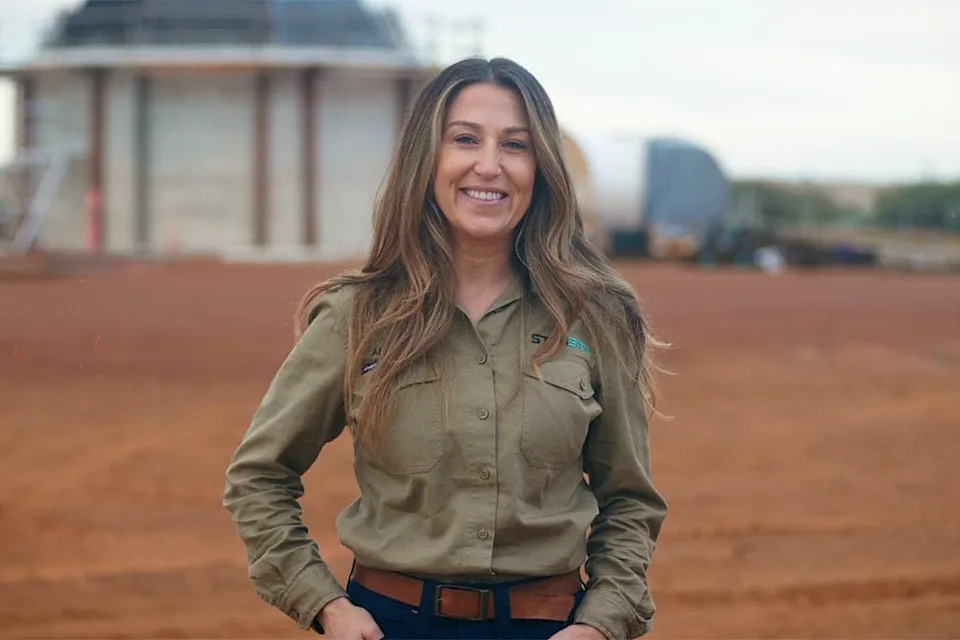
Angela hopes the landmark project will highlight that opportunities exist for women in rural communities. Source: Shoelace Collective
(Shoelace Creative)Why regional WA matters for space
In other words, the same isolation that defines much of regional WA is exactly what makes it valuable to the global space industry.
Rather than building in a major city, where radio signals are crowded and infrastructure is stretched, projects like this are moving to quieter, less populated areas.
It’s a shift that could have long-term implications for regional Australia.
During construction alone, the project has already supported around 100 jobs.
But Teale said the bigger opportunity is what comes next.
More infrastructure, more investment, and more pathways into science and engineering careers without leaving the region.
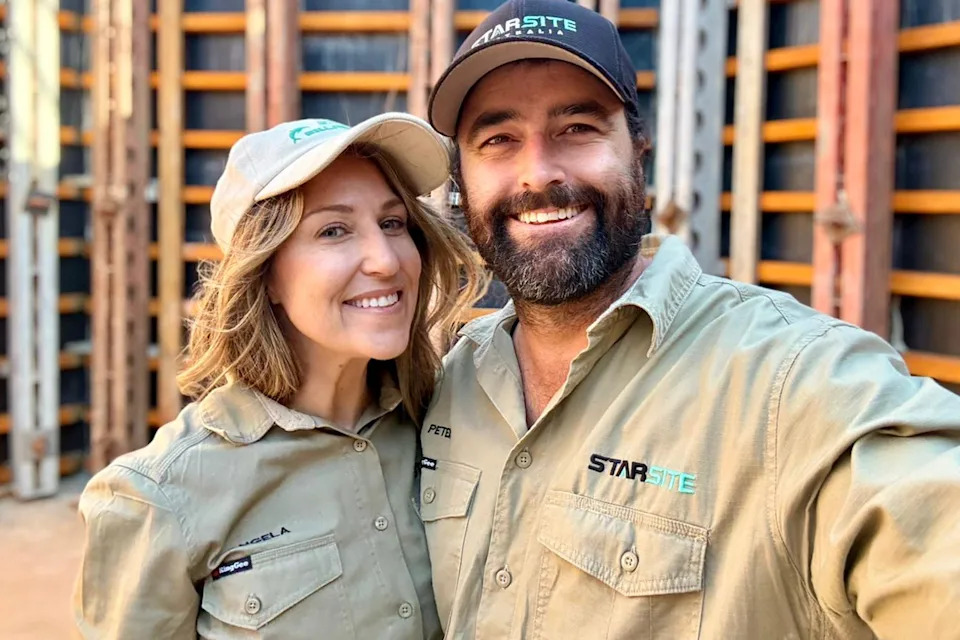
Co-founders of Starsite, Angela Teale and her husband Peter. Source: Supplied
(Supplied)
The antenna will form part of a broader global network, operated through international ground station provider KSAT, helping connect missions from multiple countries and companies.
And unlike traditional government-run systems, this network is entirely commercial.
It’s a sign of where the space industry is heading.
“This is the only commercial lunar network in the world right now that’s being established, and it’s ahead of any other one,” Teale said.
RELATED:
As more satellites are launched and more missions head to the Moon, demand for reliable communication with Earth is growing fast.
“If you look at the amount of satellites that are being launched every day, every week, they all need to talk to the earth eventually,” she said.
For Teale, the long-term goal is bigger than a single antenna.
“In five years’ time, I hope that this project… grows to be the first commercially run lunar communications facility in Australia,” she said.
It’s an ambitious vision.
But a small town in regional Western Australia could soon play a meaningful role in humanity’s next chapter in space.
It’s not just about the Moon.
It shows that world-leading technology, and the jobs and opportunities that come with it, don’t have to be confined to big cities.
Science and tech opportunities in regional Australia
Angela Teale is the 2026 Rural Women’s Award state winner for Western Australia and a national finalist, recognised for her work in bringing advanced space infrastructure to regional Australia while creating new pathways for people outside major cities to enter science and technology fields.
The program highlights women who are driving innovation and leadership in rural and regional communities, particularly where their work has a broader social and economic impact beyond their immediate industry.
As the WA winner, Teale receives a $15,000 Westpac grant and professional development funding to further expand STEM (Science, Technology, Engineering and Mathematics) engagement and satellite communications capability in rural communities.
She will go on to represent WA at the national level later in the year in Canberra, where the program’s broader goal is to elevate rural innovation on a national stage.
Do you have a story tip? Email: newsroomau@yahoonews.com.
You can also follow us on Facebook, Instagram, TikTok, Twitter and YouTube.