Since 1995, the first Monday in May has belonged to the Met Gala. This year, around 450 of the most influential figures from the worlds of fashion, culture, and entertainment will gather to pay tribute to the museum in their most extravagant looks. The dress code is Fashion Is Art, and the exhibition is titled Costume Art, exploring the “dressed body” as the common thread across all galleries and collections of the Metropolitan Museum of Art. What does that actually mean? The exhibition will feature around 400 objects, including approximately 200 garments and accessories, as well as 200 works of art, paintings, sculptures, and decorative objects, some up to 5,000 years old, all centered on this theme.
Exhibition curator Andrew Bolton has organized the display through a series of thematic body types, divided into three categories: bodies omnipresent in art, such as the classical and the nude; often overlooked bodies, such as aging or pregnant bodies; and universal bodies, such as the anatomical body. In doing so, Bolton offers a much broader perspective on corporeality than the one traditionally promoted by the fashion industry through extremely thin models and limited sizing.
Guests are invited to interpret the idea that “fashion is art,” while designers are encouraged to use clothing to show how they treat the body as a “blank canvas.” What we can expect are plenty of naked dress moments, just think of the one worn by Marilyn Monroe, later famously revived by Kim Kardashian in 2022, as well as custom looks that play with the body’s natural form. And here we are not only referring to legendary houses like Schiaparelli, but also to rising contemporary designers such as Dilara Finikoglu, who simultaneously expose and distort the human figure. Who might best embody the vision of these designers? Lady Gaga, Hunter Schafer, Teyana Taylor, Zendaya, and Beyonce, who is also hosting the evening, top my list of best dressed predictions.
Below, I highlight designers whose work is primarily concerned with transforming the body into a work of art, and whose creations will undoubtedly appear on the Met Gala red carpet on May 4.
Alexander McQueen
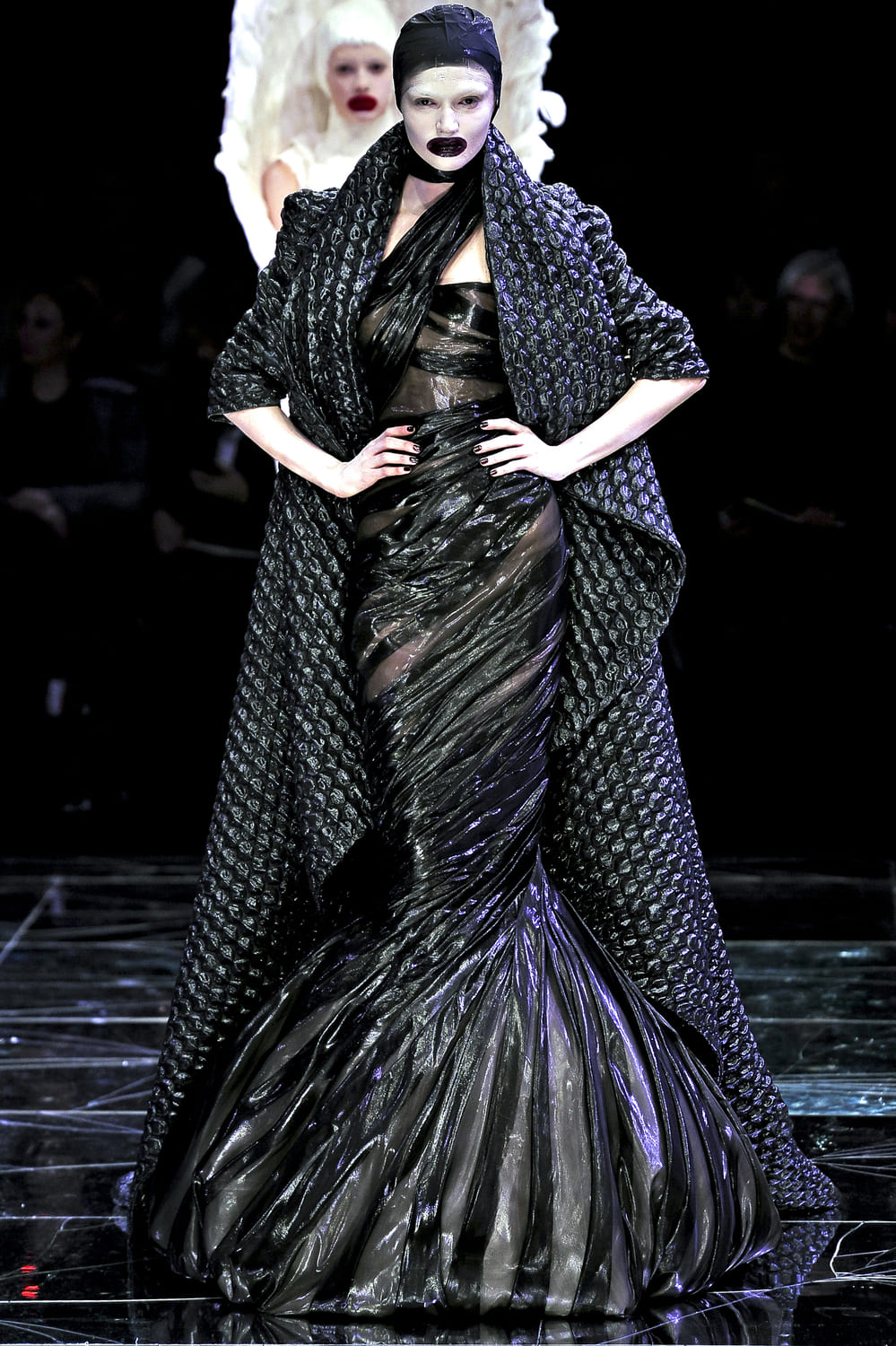
I begin, entirely subjectively, with my all-time favorite. Throughout his career, Alexander McQueen treated the body as raw material for sculpture, often pushing it to the very edge of recognizability. Just think of the Spine corset from 1998, which externally simulated the human skeleton, or the iconic bumster trousers that radically altered perceptions of the waist and torso proportions. McQueen’s ability to merge dark romanticism with aggressive tailoring produced hybrid silhouettes that blurred the line between human and superhuman or machine, turning the runway into a space where the body is both deconstructed and elevated to the level of myth.
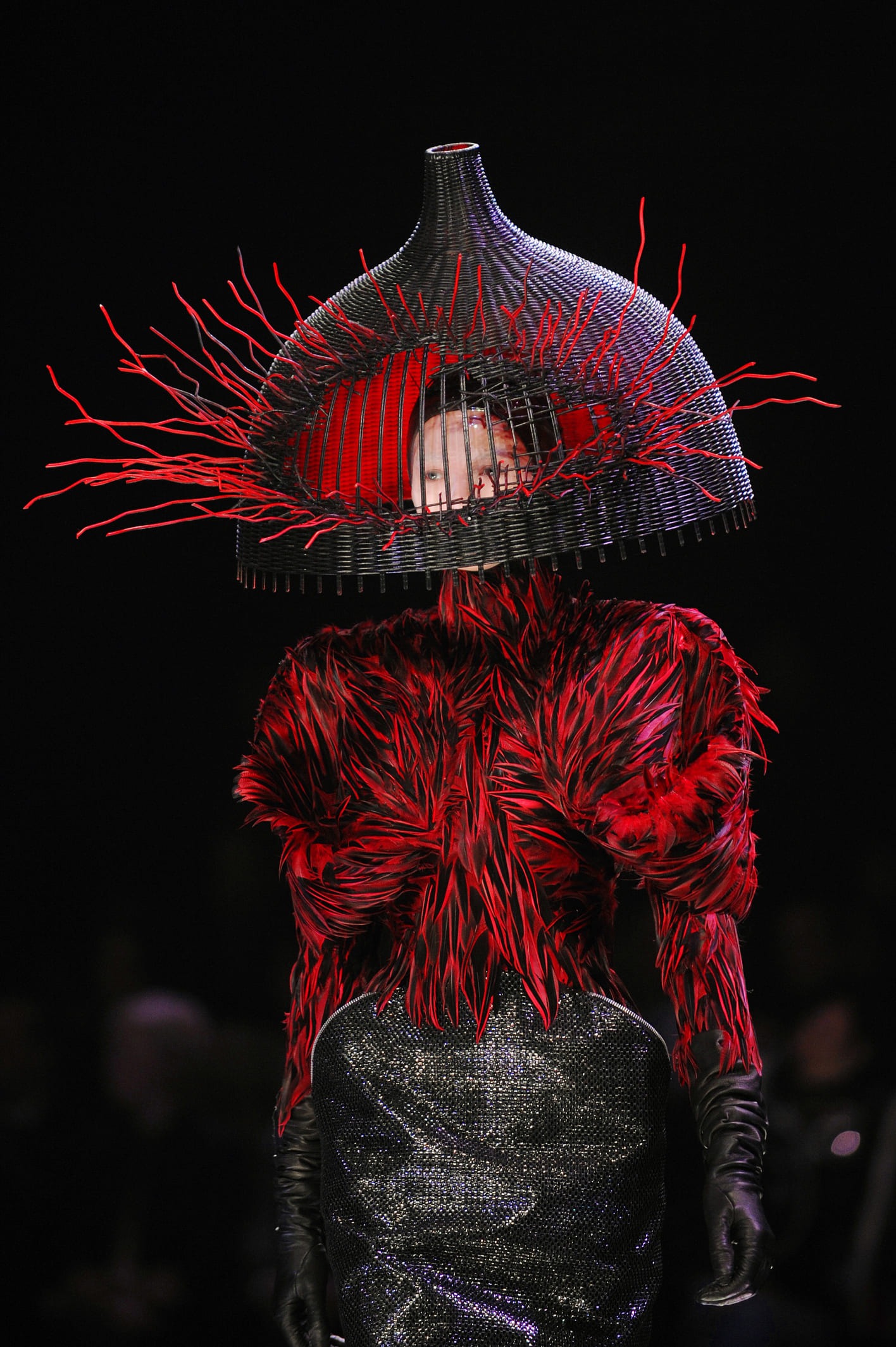
Photo: Getty Images
Jean Paul Gaultier
When it comes to provocation and the deconstruction of the “naked body,” Jean Paul Gaultier has spent decades setting standards that now form the foundation of fashion history. His vision often relies on optical illusions and anatomical prints, such as those from the cult 1995 Cyberbaba collection, where garments quite literally map the muscles and contours of the human figure. Gaultier was also a pioneer in celebrating the pregnant body on the runway, decades before it became mainstream, using fashion to highlight biology rather than conceal it. His archival pieces, from the iconic cone bras to trompe l’oeil dresses that simulate the nude female body, represent the very essence of the idea of fashion as “embodied art” and will serve as a key reference for anyone looking to explore the boundary between what we wear and what we are.
The enfant terrible of fashion, Duran Lantink, who now leads the brand, has stirred the industry with his controversial subversions of the body, though some of his more recent womenswear looks could also prove to be an intriguing choice.
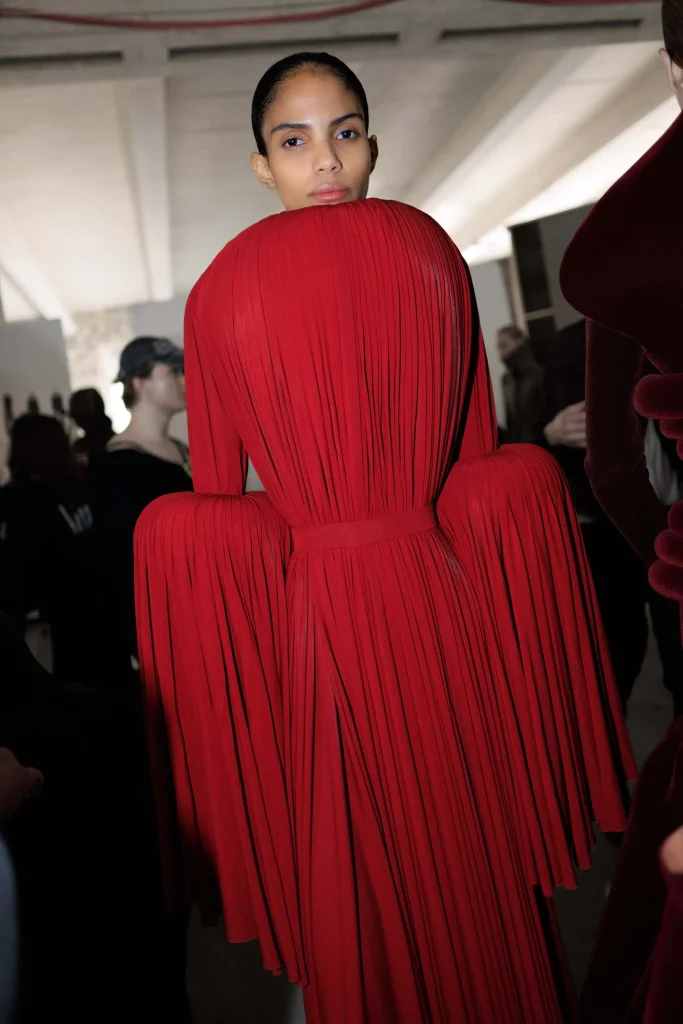
Jean Paul Gaultier Fall 2026, Acielle/Style Du Monde
Schiaparelli
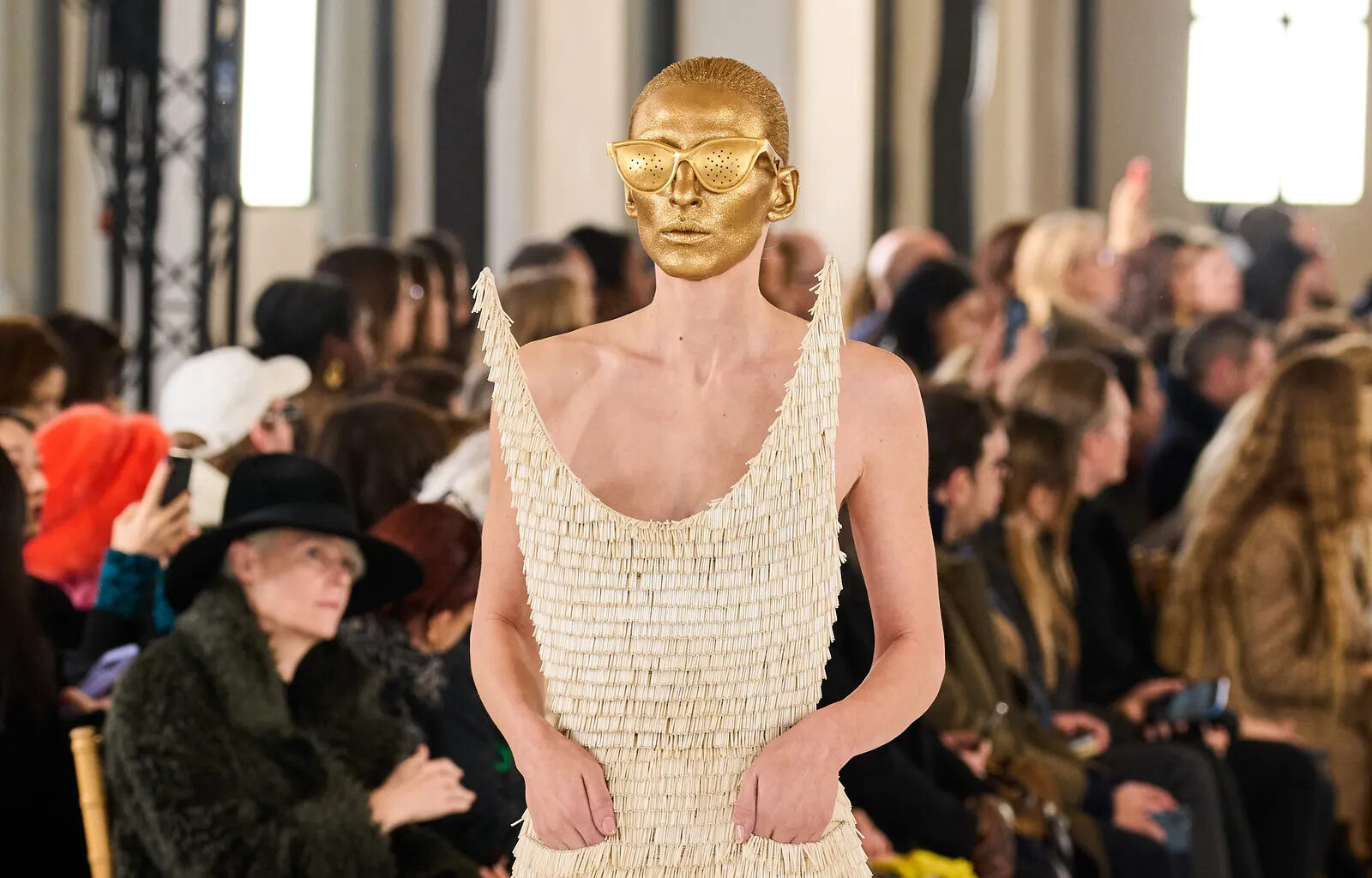
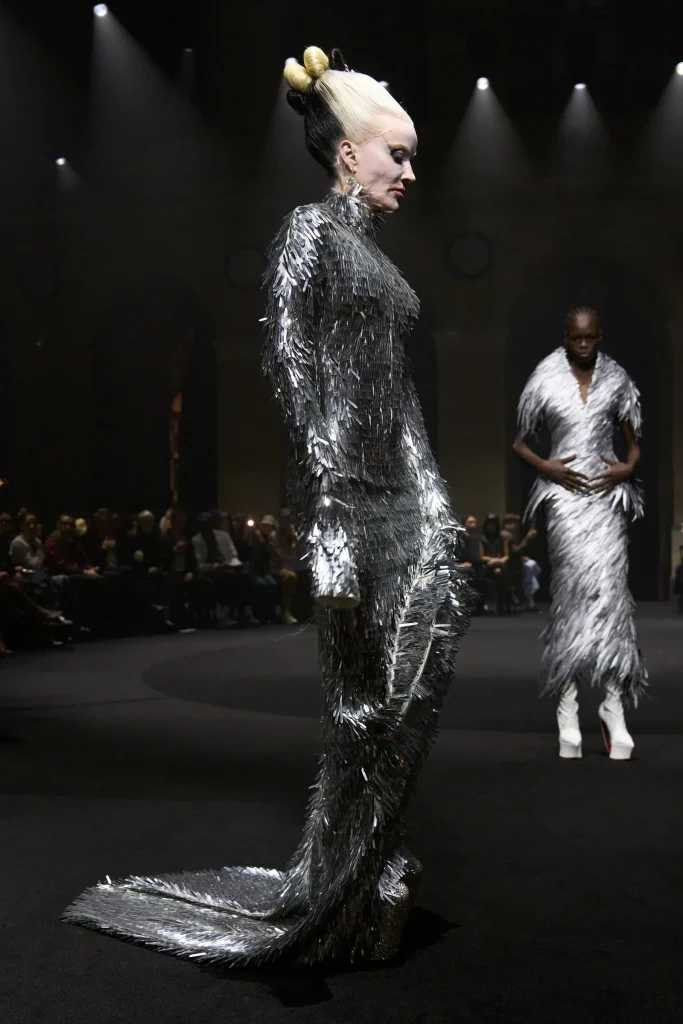
Maximalism is only desirable when delivered by the house of Schiaparelli. Its founder, Elsa, set a precedent not only by prioritizing the female form in her work, but also by using symbols and motifs of the human body as playful material for her designs, such as the skeleton dress she created in collaboration with the Surrealist artist Salvador Dalí, all of which you can explore at her major retrospective exhibition at the V&A Museum in London. Today, Daniel Roseberry has pushed even further into that territory, embellishing his work with inverted lungs, noses, and even crystal-adorned, beating hearts.
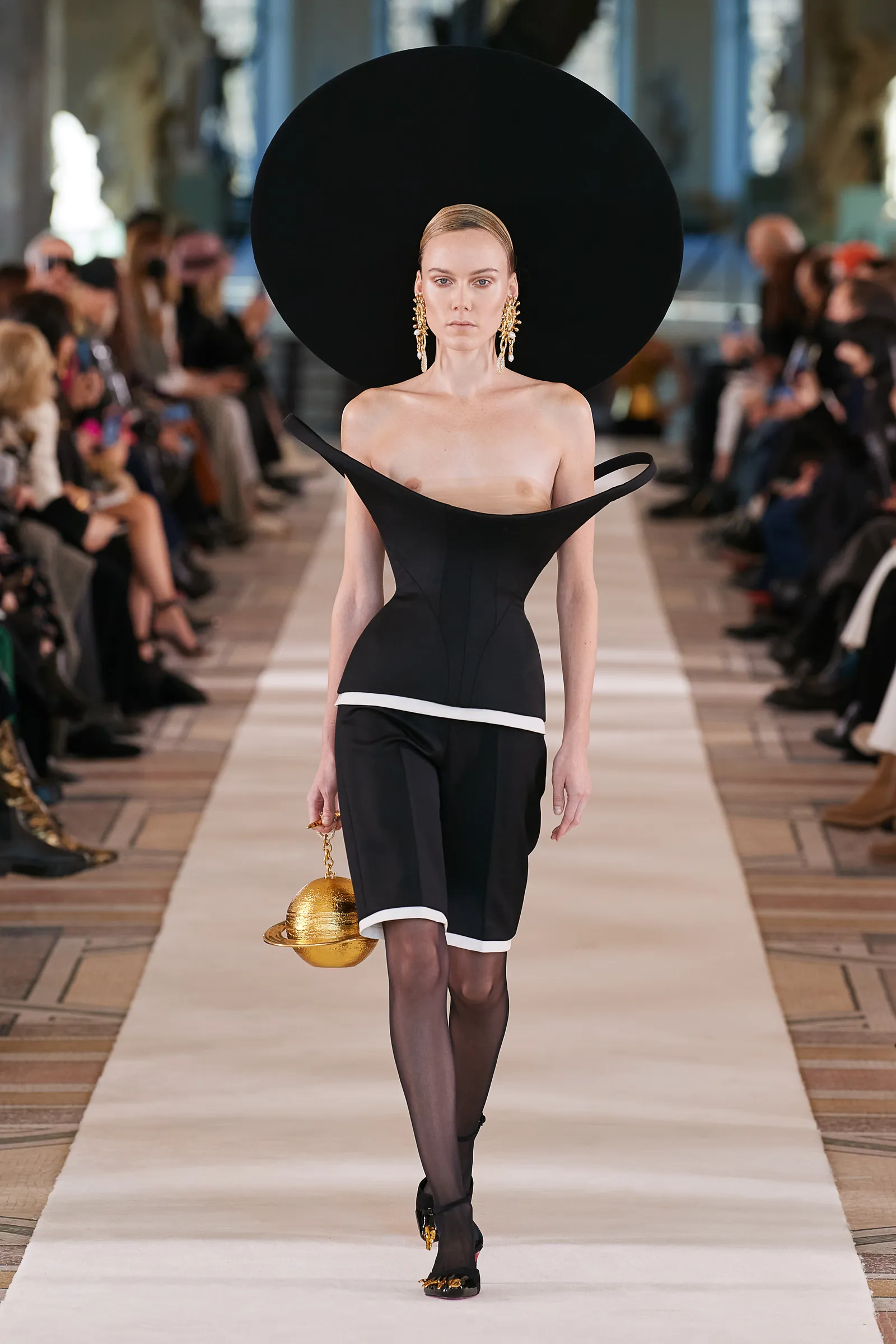
Gorunway.com
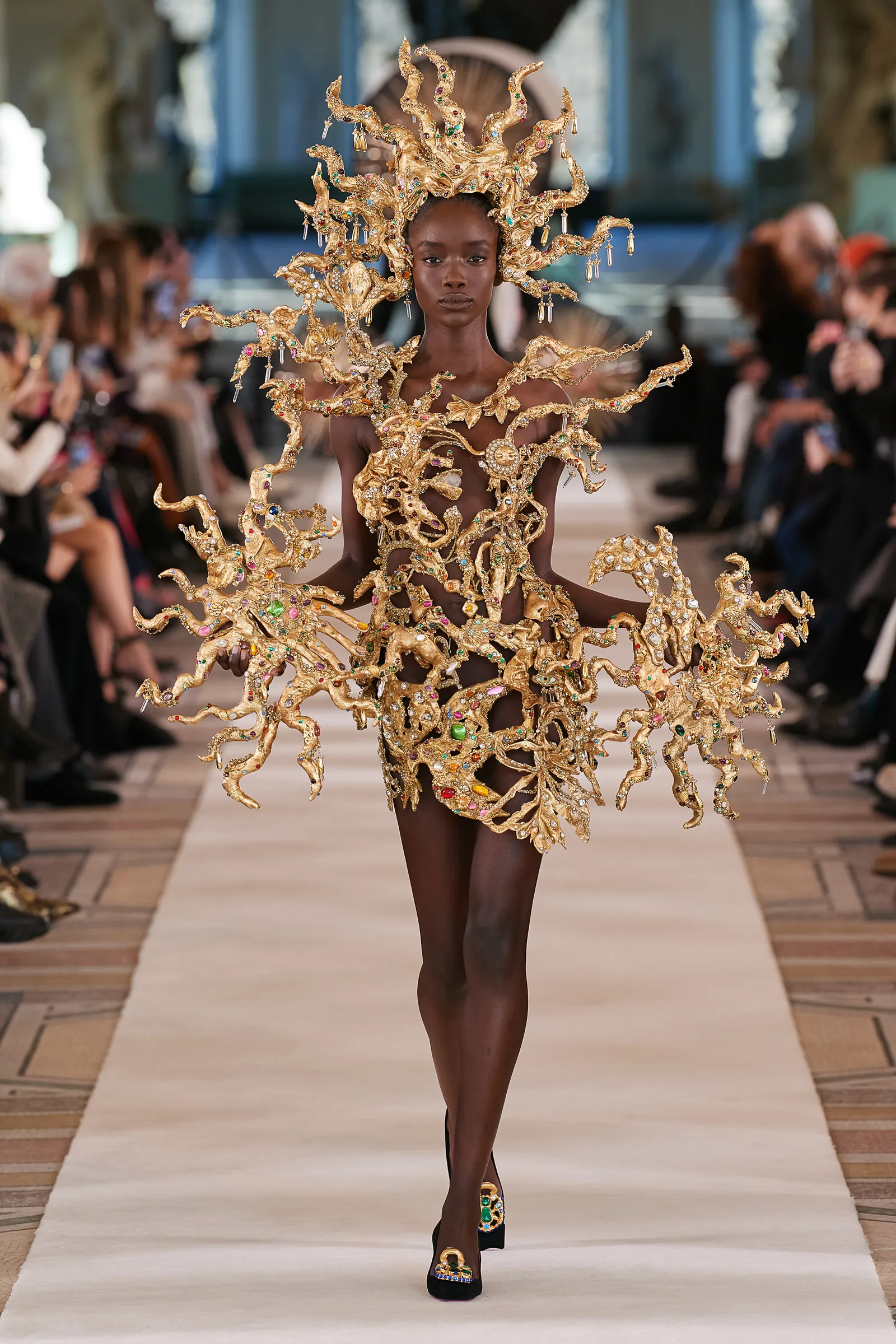
Rick Owens
In Rick Owens’ world, the body is a brutalist ceremony. His work would fit seamlessly into Bolton’s category of universal and anatomical bodies, as Owens often deconstructs the human figure to create new, almost pagan silhouettes. Just think of the Spring 2016 collection, where models carried one another like backpacks, turning the human body into a functional accessory and exploring the limits of physical endurance and connection. His design, from extremely elongated sleeves and asymmetrical cuts that drag toward the ground, to sculptural platform boots that alter the wearer’s entire balance and height, offers a vision of the body that is both primal and futuristic. Rick Owens does not flatter the figure in a conventional way, but instead uses it as a site for architectural exploration. Expect not the unexpected, but the extreme.
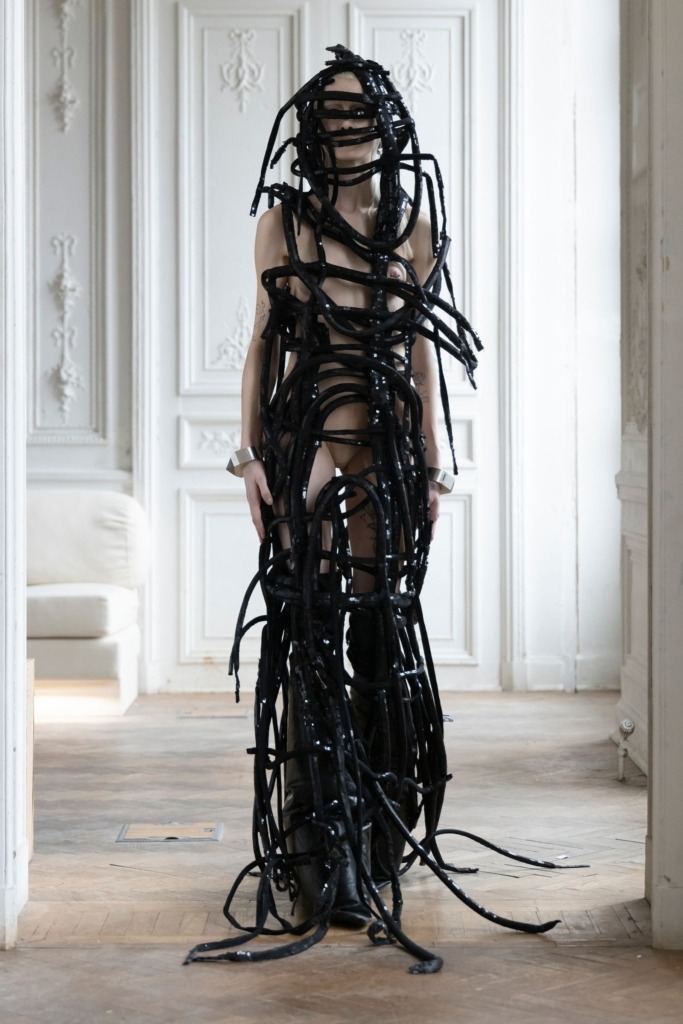
Rick Owens, fall 2024 ready-to-wear
Thierry Mugler
During the seventies, Thierry Mugler established a distinct form of heightened corporeality through his distorted female silhouettes with exaggerated shoulders and narrow skirts, where everything looked as if it had stepped straight out of Helmut Newton’s photographs. Mugler dressed the supermodels of the nineties in latex catsuits and cut-out armor, just think of the video for Too Funky. His legacy was continued more than faithfully, and with even more sex appeal, by Casey Cadwallader, while today Miguel Castro Freitas continues to interpret these dramatic silhouettes in his own way.
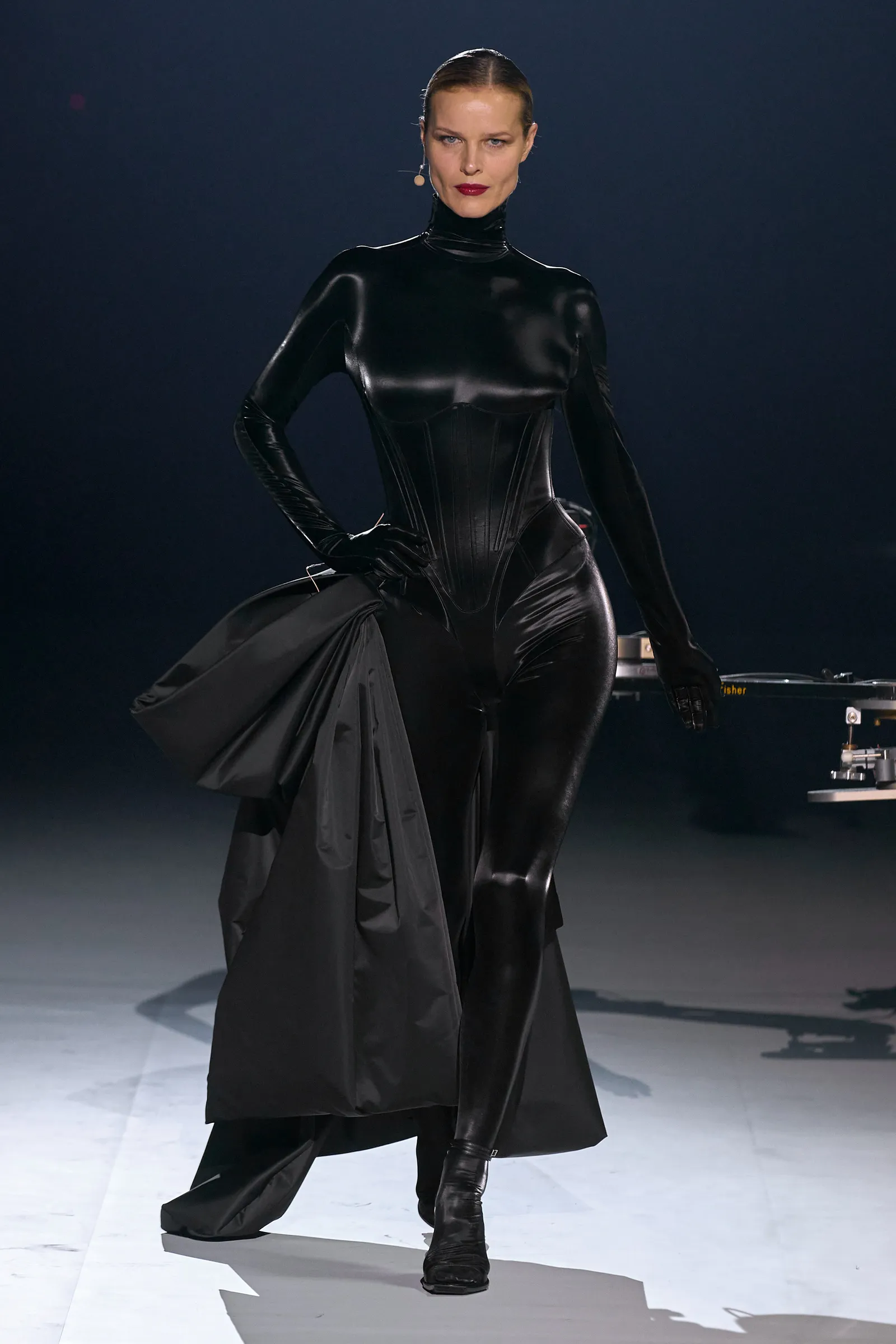
Photo: Gorunway.com
Mugler
Matières Fécales
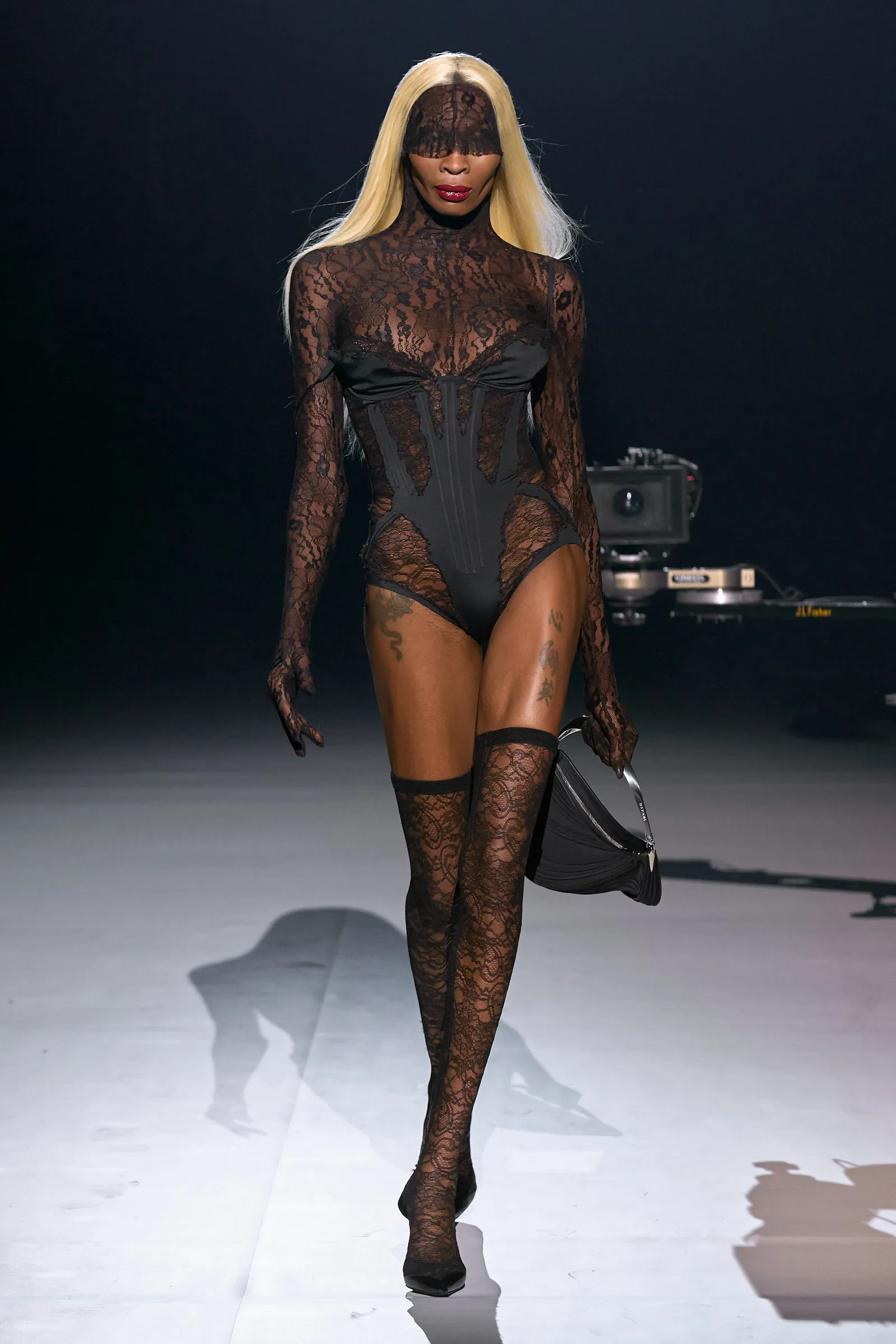
The duo behind the brand Matières Fécales, Hannah Rose Dalton and Steven Raj Bhaskaran, push Bolton’s idea of the anatomical body into an extreme, post-human realm. Their design operates as a kind of visual shock that erases the boundary between silicone prosthetics and high fashion, just think of the cult skin heels that resemble a mutated extension of the human leg. In a way that is both unsettling and fascinating, the designers currently favored by Lady Gaga distort the silhouette, elongating limbs and inflating proportions to the edge of unrecognizability. Spanning a wide spectrum of gender identities, their provocative looks are already poised for another viral moment at the Met Gala.
Gorunway.com
Dilara Findikoglu
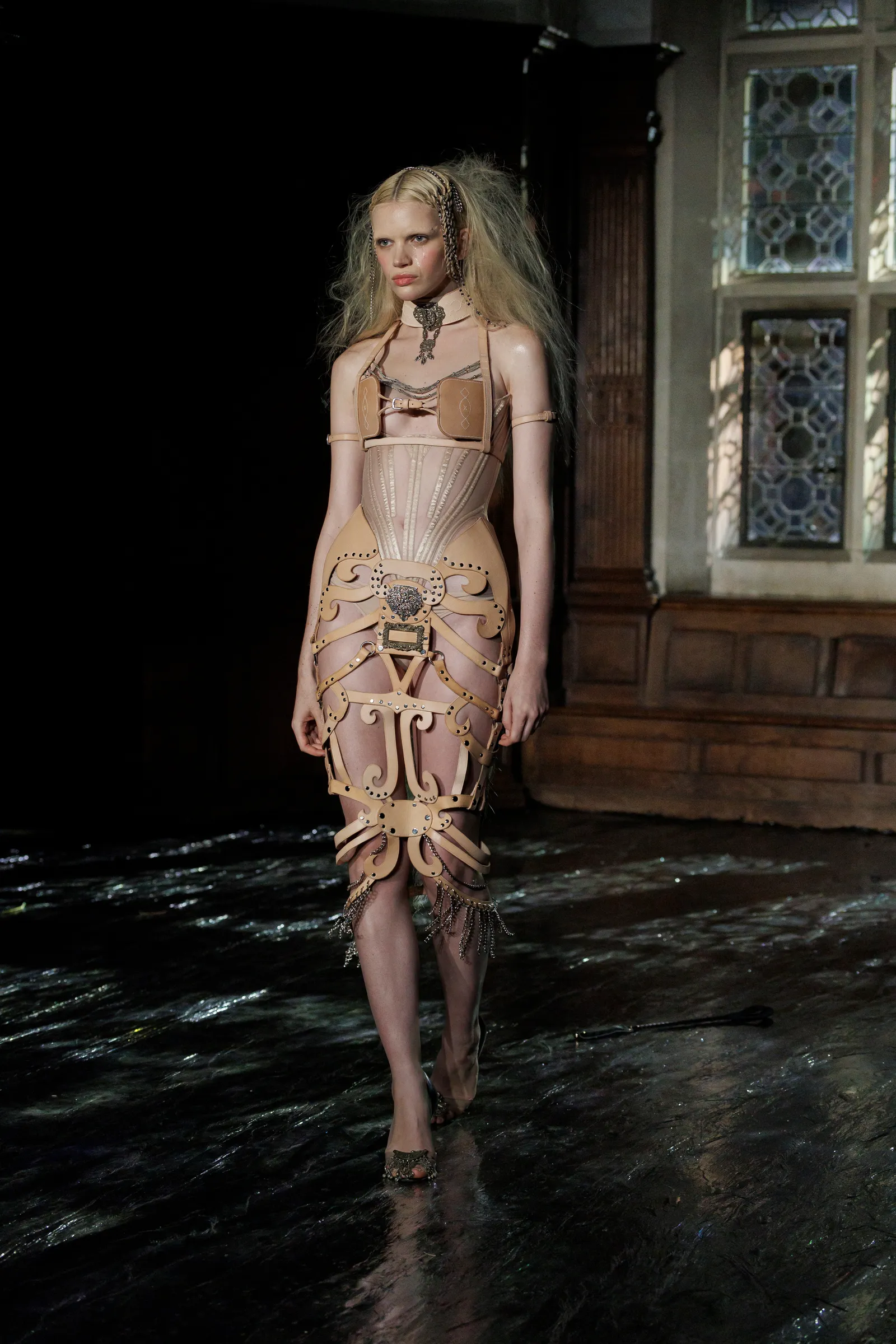
If anyone today understands the drama of the female body caught between restraint and absolute freedom, it is Dilara Findikoglu. Her work is a flawless fusion of Victorian precision and punk sharpness, where corsets are not used to shape the figure to fit society, but to turn it into a sculptural weapon. Through the use of sheer materials, leather, and details such as safety pins or human hair, Dilara creates garments that appear to grow directly out of the skin. She does not offer a performative display of the female form, which makes her a designer who will most certainly redefine what it means to be “dressed” on the most important steps in New York on May 4.
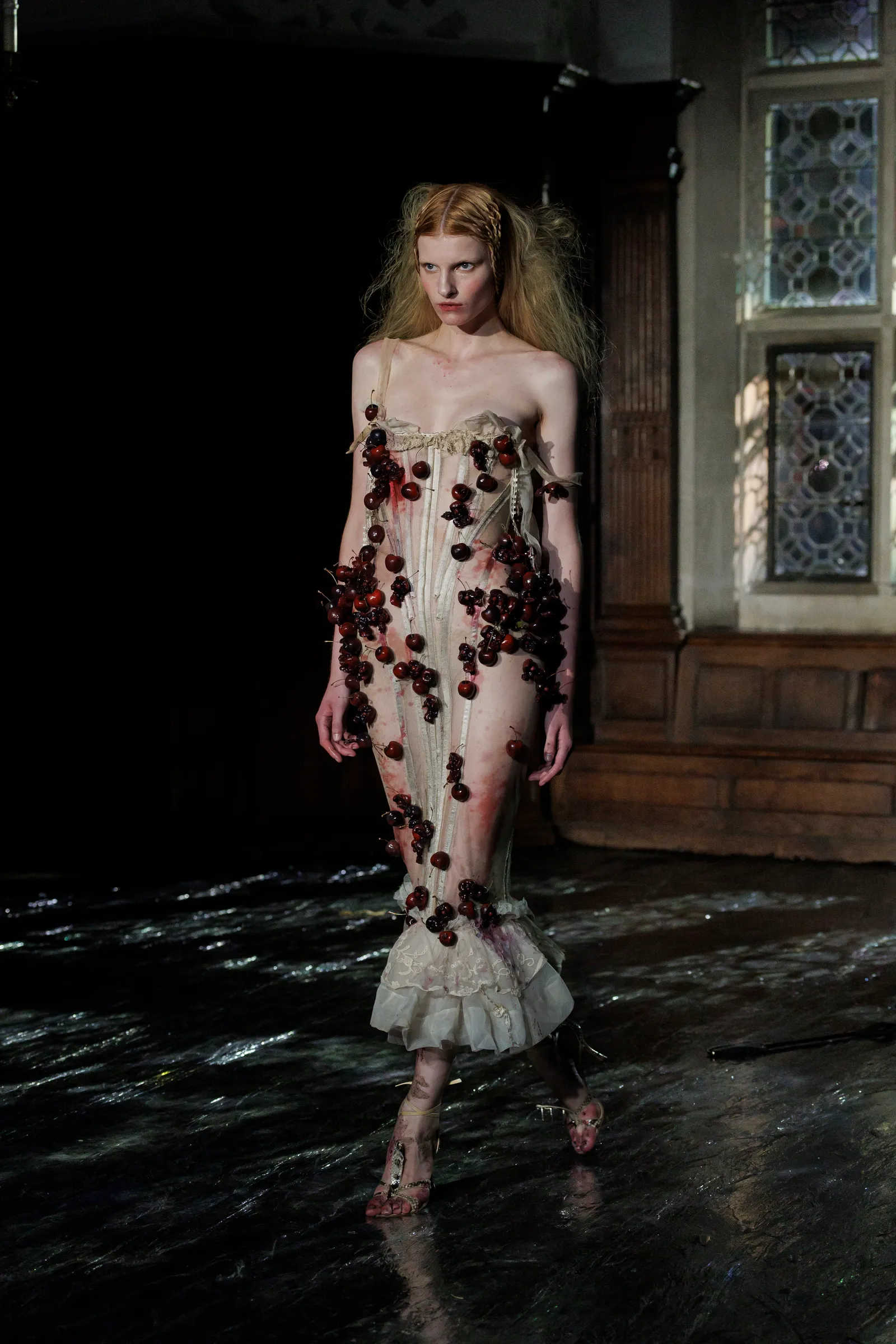
Gorunway.com
Alaïa
While other designers sketched on paper, Alaïa cut directly on a live model, treating fabric as connective tissue between architecture and anatomy. He was the only designer who truly understood musculature. His dresses did not simply cover the skin, they disciplined and elevated it, creating that unmistakable, powerful silhouette that defined the notion of body-conscious fashion, do we remember the bandage dress? Today, under the direction of Pieter Mulier, the brand is experiencing a renaissance grounded in the pure technique of shaping material around the body, rendering it both fragile and indestructible. Alaïa was and remains the starting point for any discussion of the body as a work of art, and all we want is for Pieter to remain in this role for a long time, one that makes the brand among the most anticipated at Paris Fashion Week.
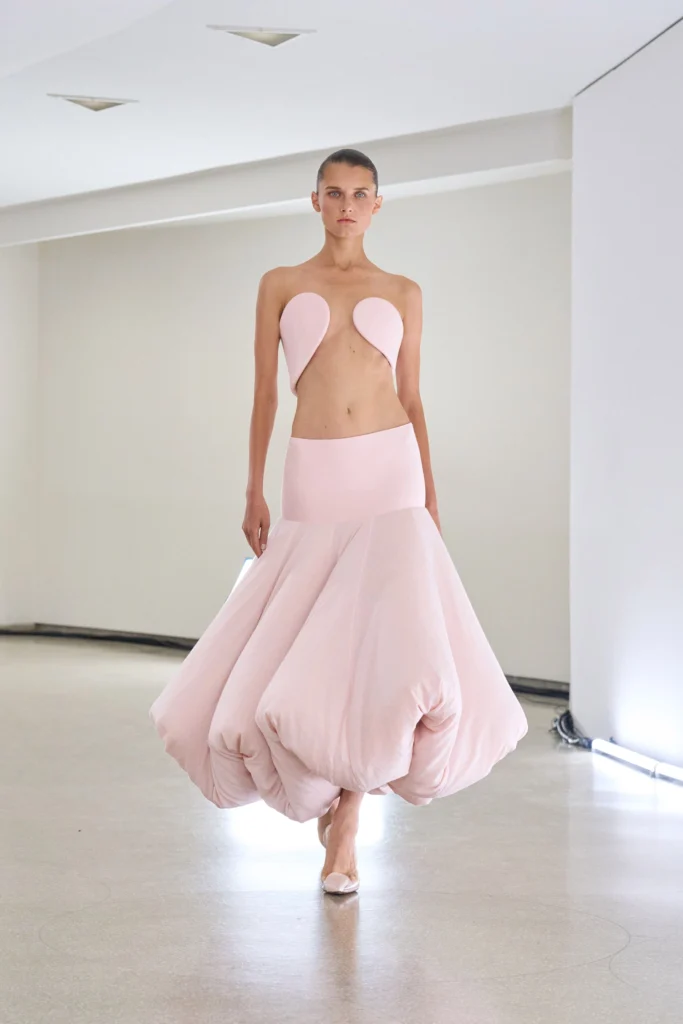
Alaïa Spring 2025
Iris van Herpen
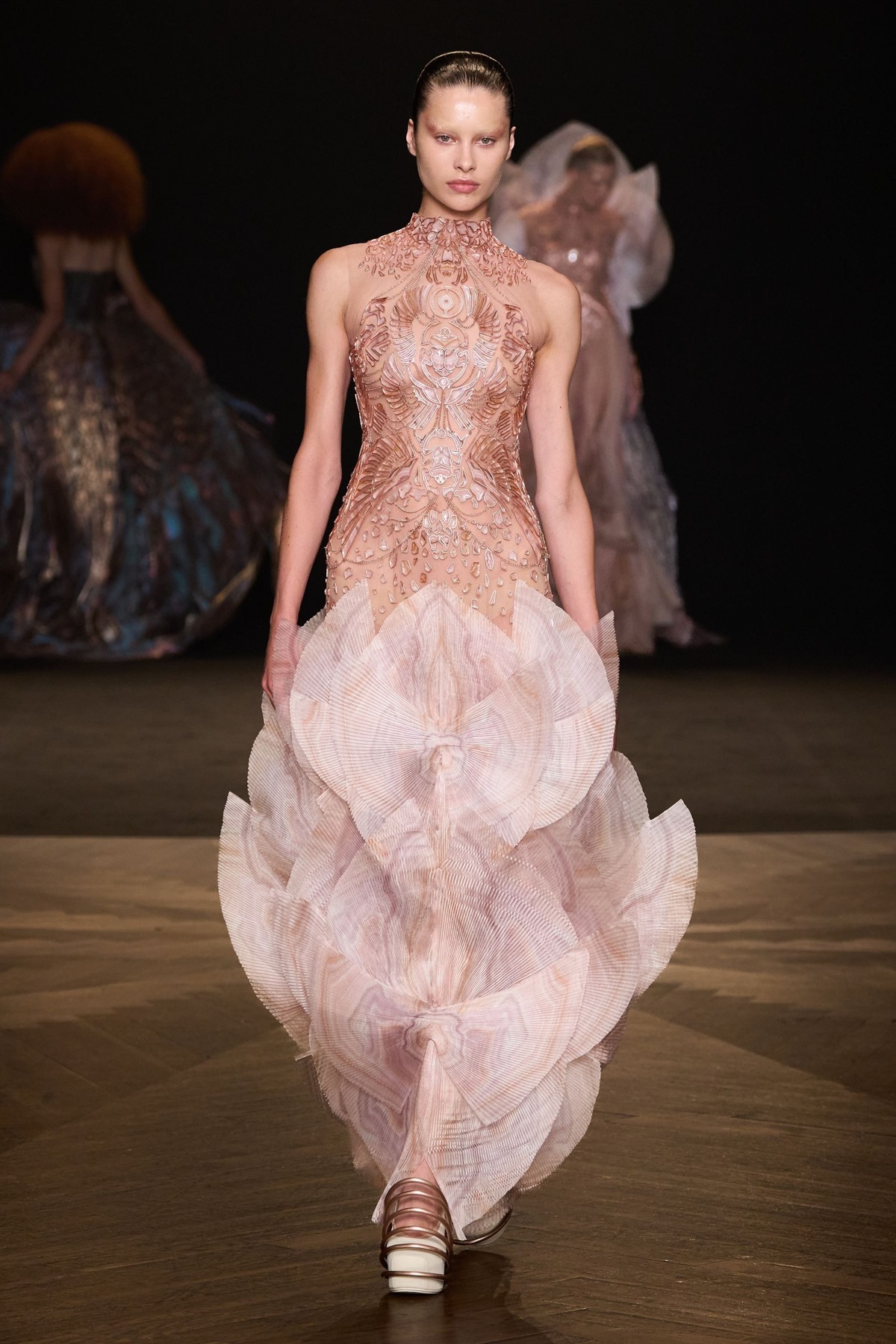
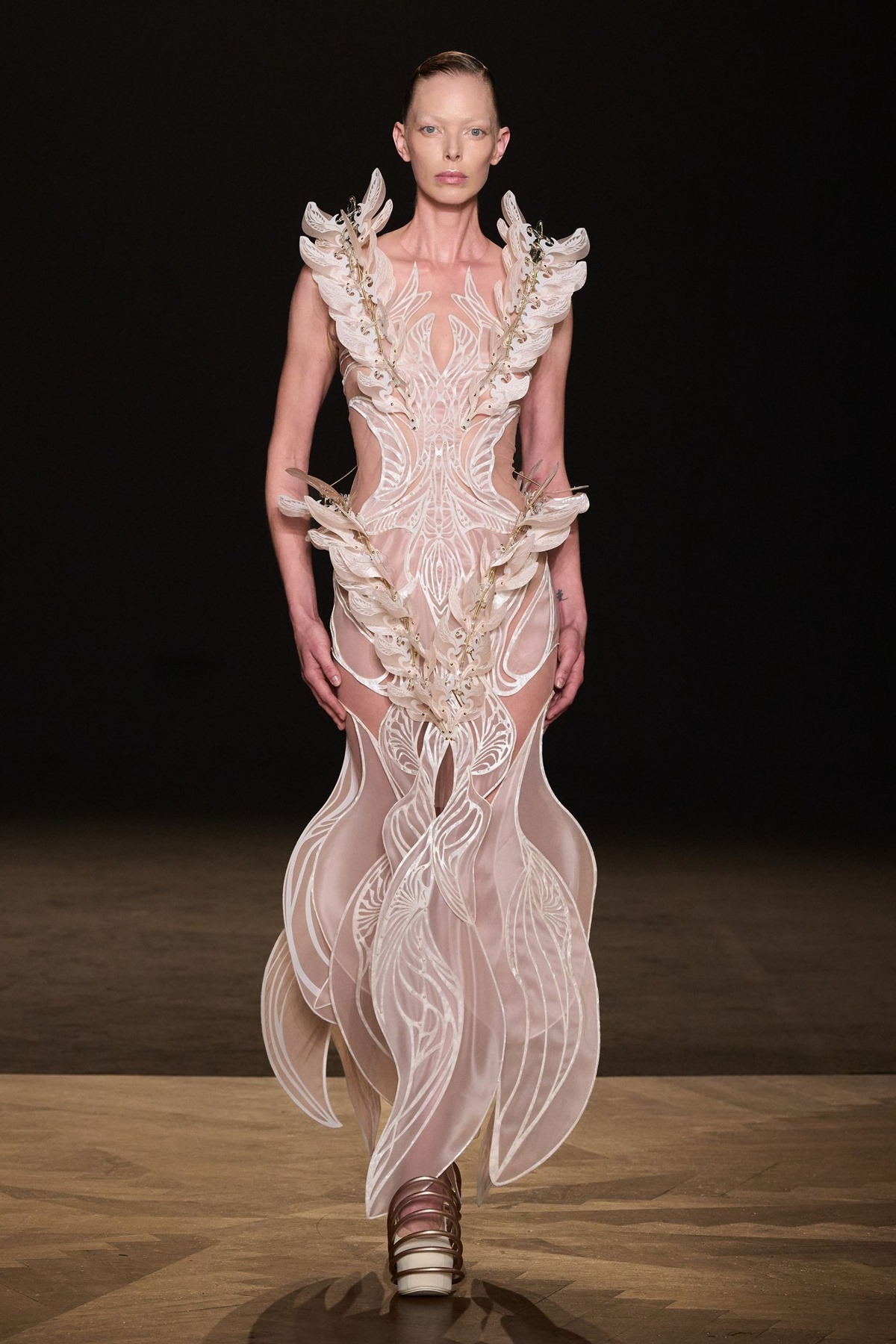
While other designers rely on traditional textiles, Iris van Herpen uses science and 3D technology to explore the invisible processes that drive the human form. Her work aligns seamlessly with the concept of “embodied art,” as her creations often simulate the movement of the nervous system, the flow of fluids, or the complexity of human cellular structures. Using laser cutting and innovative materials, she creates ethereal, kinetic sculptures that not only adapt to the body, but act as its futuristic, organic extension.
Gorunway.com