
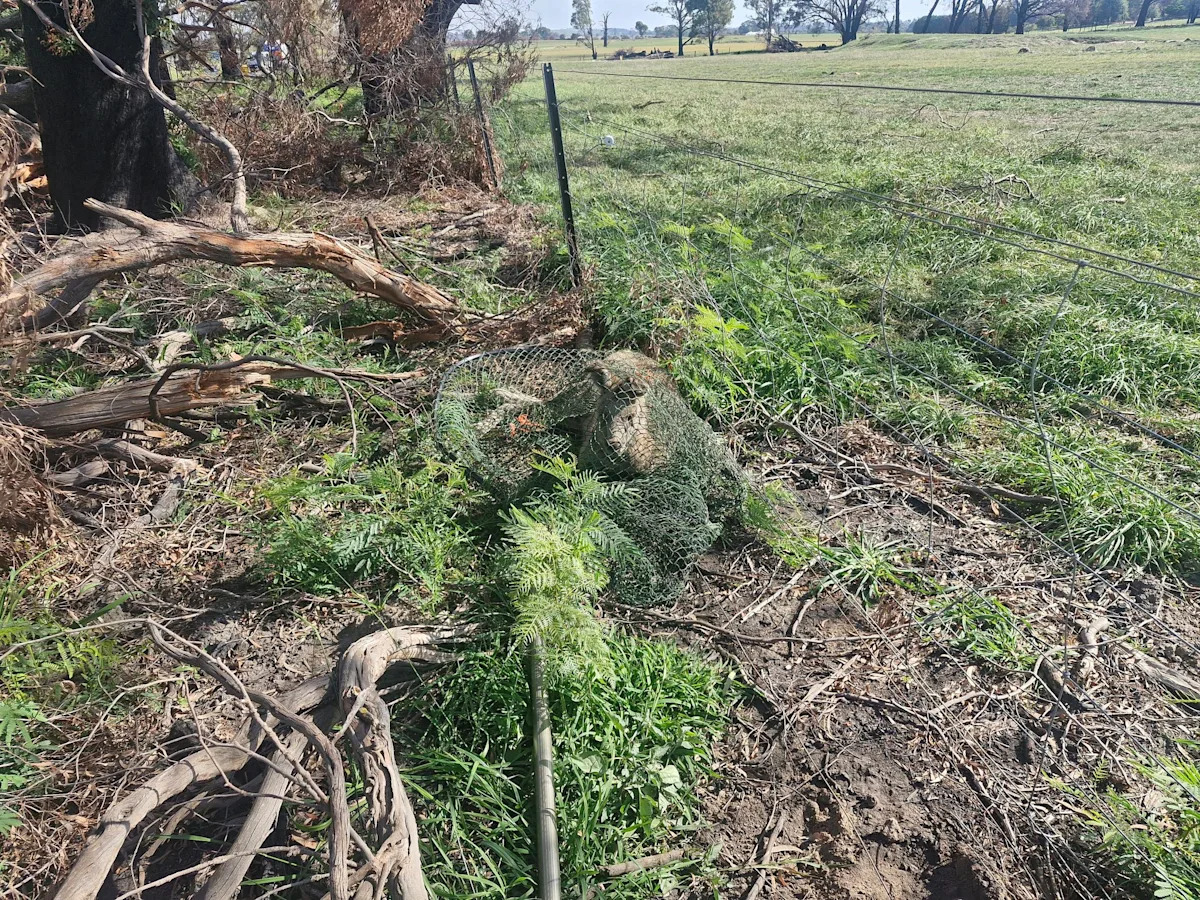
A major oversight has been identified as kilometres of new fencing are installed, leading to the maiming of Australia’s wild animals.
In the months after the Longwood bushfire burned over 136,000 hectares in northeast Victoria in January, infrastructure is being replaced on farms.
Penning in sheep is understandably one of the most pressing needs, but new replacement fences are creating an unintended problem.
Before the fires, wild creatures like kangaroos had learned to navigate decades-old infrastructure, allowing them to move between feeding grounds, seek shelter, or find a mate.
They’d hopped over drooping wires and wriggled through small holes, something the new strands don’t have.
A sad photograph taken by a trained wildlife rescuer last week highlights the problem.
It shows a large, male kangaroo with a dislocated hip lying on the ground, after he became entangled in a fence.
Kate Turner, from Murrindindi Ranges Wildlife Shelter, explained to Yahoo News that in many cases “they don’t even realise their paths have been blocked”.
“They try to jump over them, they get their feed hooked, and it can lead to dislocations, pelvic fractures and serious wounds,” she said.
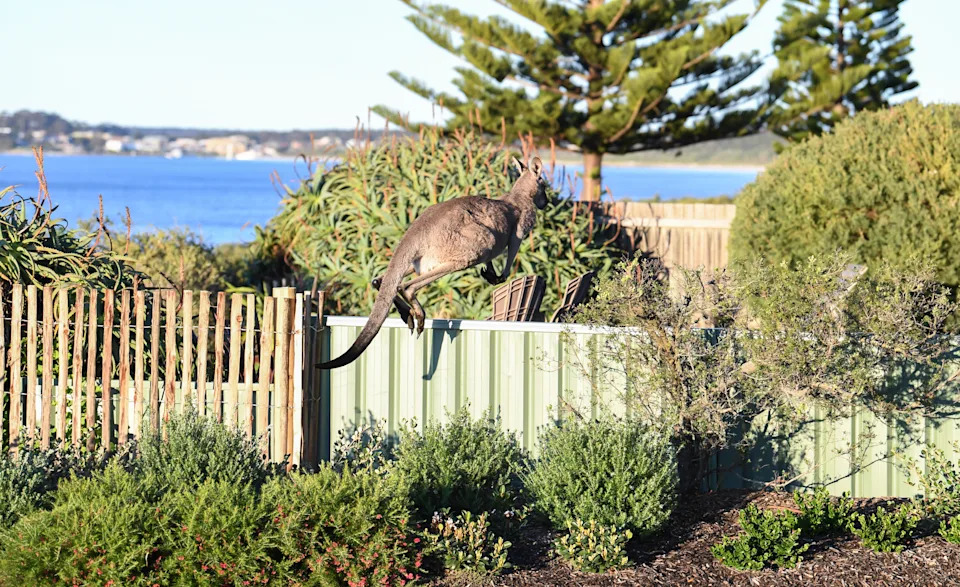
When the fence is clearly visible, kangaroos can judge their height. But new wire strands are difficult to see. Source: Getty
(Getty)Kangaroo given second chance after fence rescue
Once a kangaroo’s leg is damaged, it can no longer hop, and it often faces a long, slow death.
In many parts of Australia, injured adult kangaroos are simply euthanised because most vets aren’t capable of treating such large wild animals, and recovery can be slow.
In the case of the animal Kate rescued, she expects to have him in care for at least six to eight weeks.
But she is determined to give him a second chance.
Do you have an ingenious way to help wildlife? Contact newsroomau@yahoonews.com
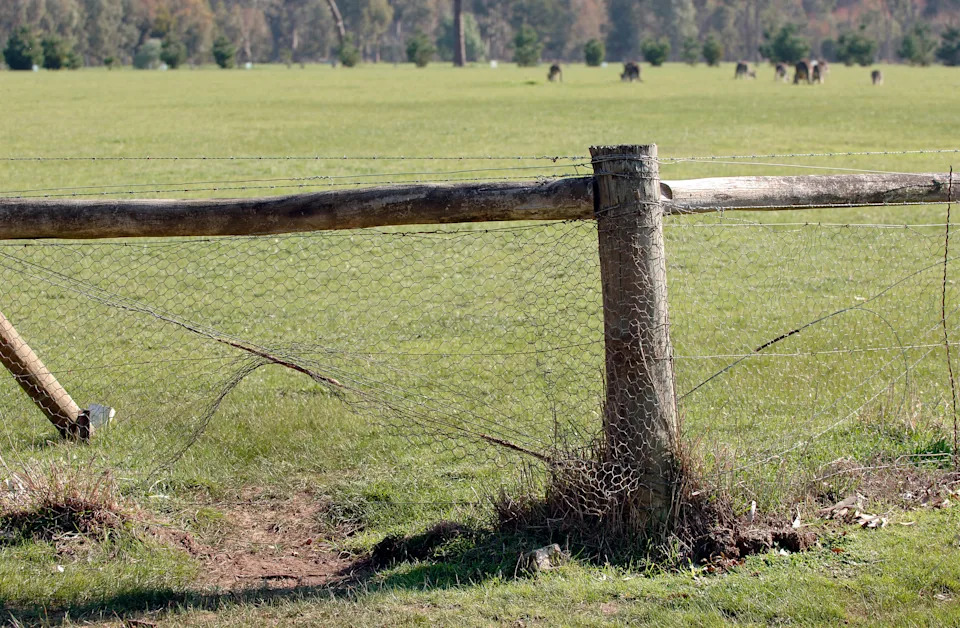
Over the years, kangaroos learn where there are holes in ageing fences. Source: Getty
(Getty)
After carrying the kangaroo to her vehicle, she completed a seven-hour round-trip to get him treatment at a vet.
“As long as his hip stays in, he gets to recover, but if it comes out again, unfortunately, that’s it,” she said.
How a simple fence change could save lives and property
Kate is worried more kangaroos and wallabies will suffer the same fate in the coming months.
She’s spent months treating animals burned in the bushfire and still has eight adults and 15 joeys in care.
But there are simple measures landholders can take if they want to reduce both the likelihood of kangaroos getting caught and their fences being damaged.
Kate suggests staying away from barbed wire, as it’s more likely to entangle animals, and using strand wire instead.
Solar-powered electric fencing has become more accessible, and its wires have more flexibility and are less likely to cause harm.
Using a white-coloured sight wire as the top strand is also important because kangaroos are able to see it, improving their chances of clearing it.
As new fences are installed, she’s calling on farmers to check their fences daily for entangled wildlife, and to call a rescue volunteer for help.
“Instead of just releasing the roo, make a phone call,” she said.
“People release them, and then they can try and run off with a horrific injury.
“Often when I do get notified, it’s months later, and it’s past the point where I can do anything.”
You can also follow us on Facebook, Instagram, TikTok, X and YouTube.