
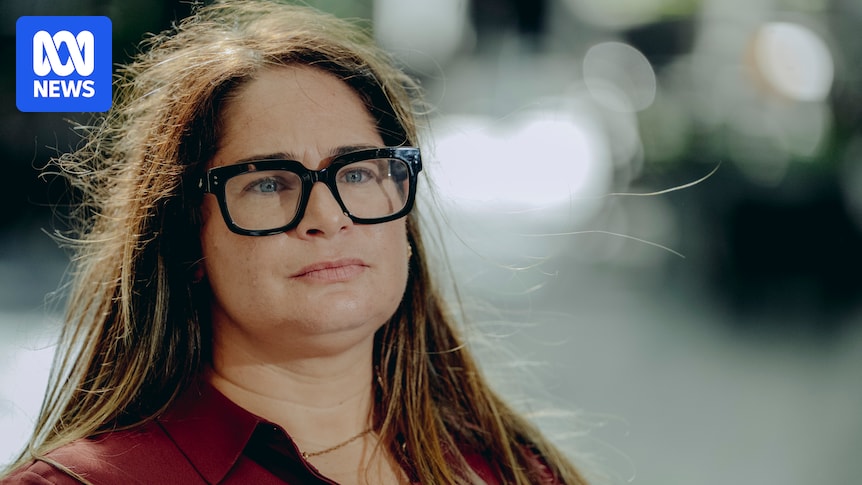
Jewish woman Natalie Levy had an idyllic childhood growing up singing songs on Bondi Beach, but her children now attend school surrounded by heavy security and swastikas graffitied on buildings.
Public hearings for the Royal Commission on Antisemitism and Social Cohesion began this week, with witnesses like Ms Levy telling the inquiry of their experience of discrimination in the community.
The inquiry was called to assess the circumstances surrounding the Bondi terror attack, which killed 15 people on December 14, and the spread of antisemitism that preceded it.
Ms Levy said her mother and father immigrated to Australia from England and Ukraine, respectively, for a “better life”.
A volunteer with the Jewish Community Security Group NSW (CSG NSW), Ms Levy said antisemitism was an “olden-day concept” that had been “the furthest thing from anyone’s mind” during her childhood.
But she said the situation for her children was very different.
Her son attends a Jewish school, its gates flanked by four police officers, two CSG NSW officers and two parents.
“It’s just something that he has become used to,” she said.
Her 15-year-old daughter is one of two Jewish students at a Sydney public school, with Ms Levy describing the teenager as a proud but scared young woman.
“She sees swastikas all around the school, children saying ‘heil Hitler’ and people putting up their arm in salute,” she said.
“She is scared for me being here today.”
Impact of Bondi terror attack
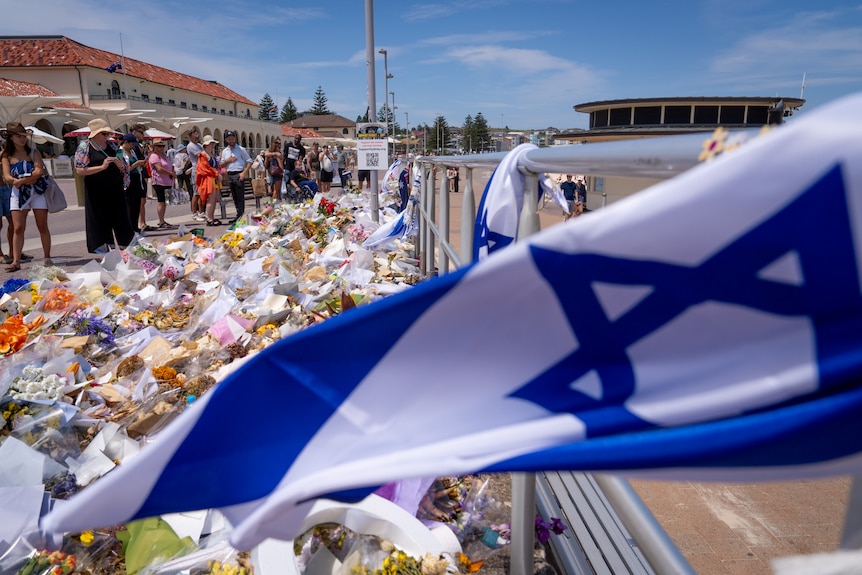
Ms Levy was wearing a bee broach, a symbol which was used to honour the Bondi shooting’s youngest victim, Matilda.
“This pin represents everything that we lost … due to two years of unchecked and vile antisemitism,” she said.
“We can’t afford to lose any more people.”
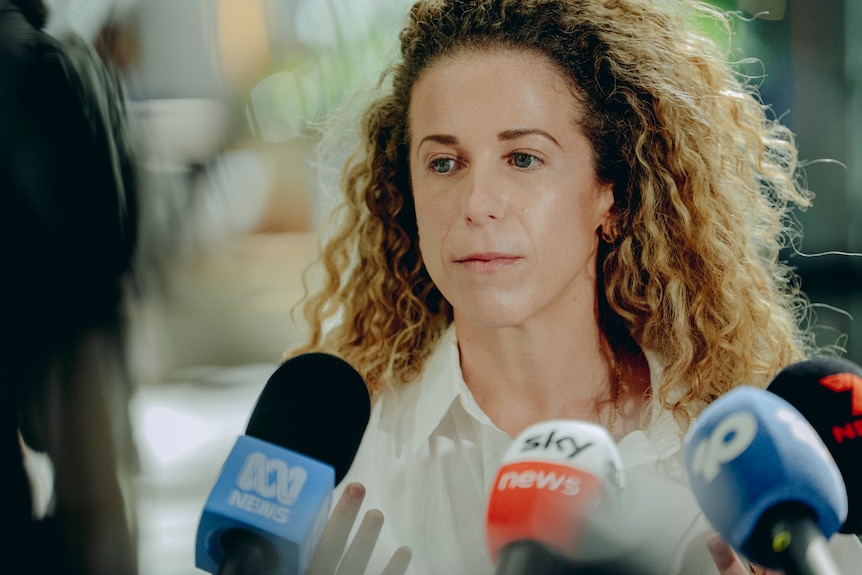
Jewish mother of three, known by her first name Dina, addressed the royal commission. (ABC News: Liam Patrick)
Jewish mother of three, known by her first name Dina, said one of her daughters burst into tears during a recent visit to Bondi Beach.
When asked what was wrong, Dina said her daughter told her: “Now when I come to Bondi, I think about dying.”
Regional Victoria academic and Jewish Israeli Tali Pinsky moved to Australia with her family in March 2025.
Ms Pinsky said the family had drawn stares when they spoke Hebrew in public and told people where they were from.
“People just stare at us and stop speaking to us or they turn their back and go,” she said.
“We are proud Israelis, we don’t feel there should be anything wrong with that.”
Ms Pinky says she has faced discrimination from some people when they realise she and her family are Israeli. (ABC News: Che Chorley)
Ms Pinsky said she regularly reported antisemitic imagery and comments on social media, only to be informed by the platform that the material was not found to be in breach of community guidelines.
Some witnesses are using pseudonyms for privacy and security concerns, with police maintaining a heavy presence for the proceedings.
Holocaust survivor says Jews ‘have become targets’ in Australia
A Geelong mother known as AAP said her children were disturbed by antisemitic remarks made by their peers, with her son saying some had discussed dressing up as Adolf Hitler or the alleged Bondi Beach shooters for their Year 12 muck up day celebrations.
She said she had wanted to address the issue with her son’s school, but her children preferred to keep quiet for fear of being “isolated” and “teased”.
‘Shaking uncontrollably’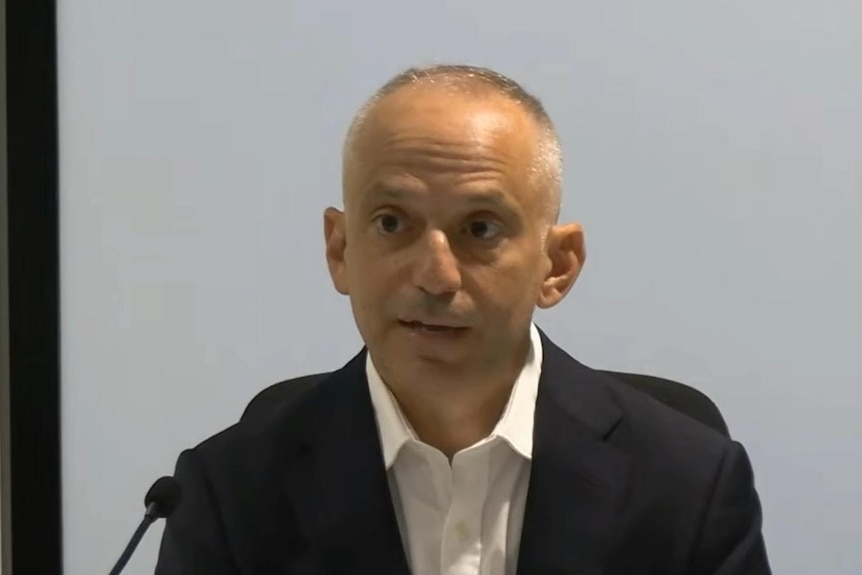
Nir Golan said antisemitic abuse was directed at him in the street. (Supplied)
Sydney father of three, Nir Golan, said he no longer wears a kippah in public after an incident in 2023.
Mr Golan said he was abused on a Bondi Junction street by a man wearing “military-style clothing”.
He said the man shouted racial slurs at him, performed the Nazi salute and made a finger gun gesture to his head.
“I broke down and started shaking uncontrollably,” he said.
Mr Golan said he does not allow his children to wear their kippah in public.
Royal Commissioner Virginia Bell SC delivered her interim report on the commission on Thursday, making 14 recommendations to improve Australia’s counter-terrorism capabilities.
On Monday, she told the inquiry the “sharp spike” in antisemitic incidents appeared “clearly linked to events in the Middle East”.
The commission has received more than 7,400 submissions, with two more hearing blocks scheduled in the coming months.
A final report is due a year from the date of the terror attack.
More on the royal commission