
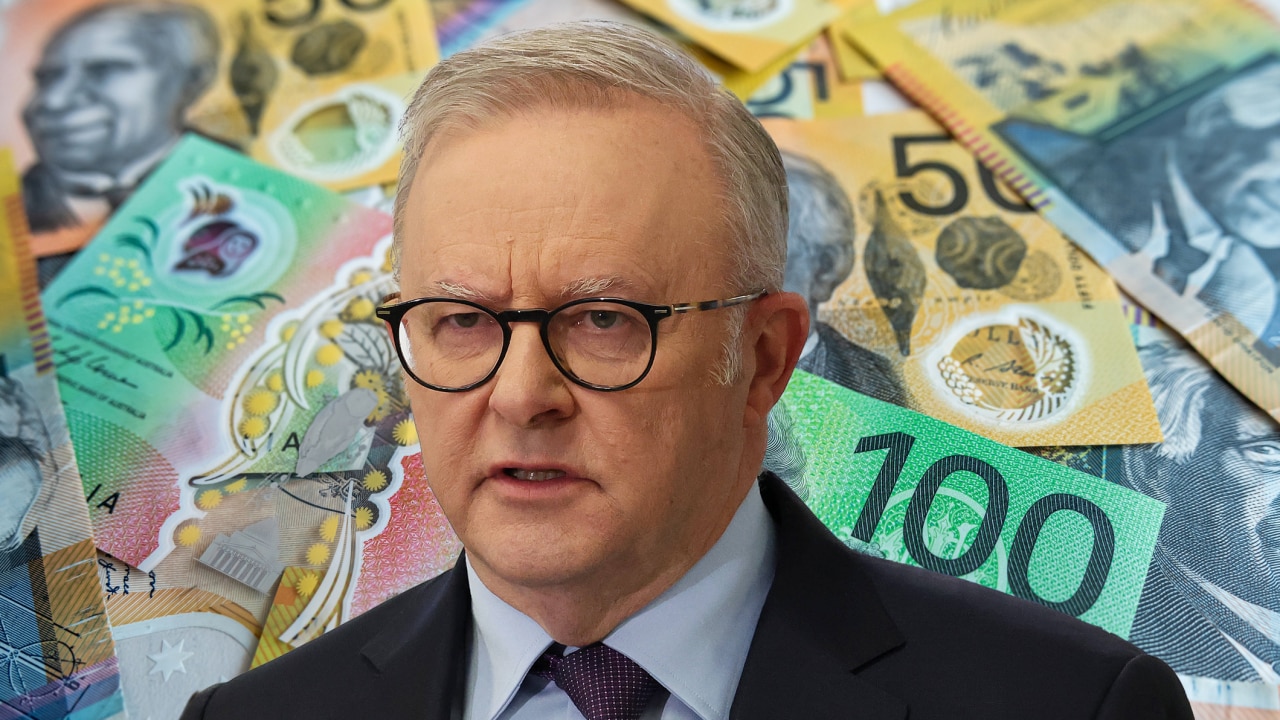
Last week, Australian mattress manufacturer, A. H. Beard announced that it had in entered voluntary administration after 126 years in business.
Chairman Garry Beard was reportedly in tears as he told staff that the company’s future was uncertain and a major restructure was imminent.
And just like that, 340 jobs are on the line as another Australian manufacturer buckles under the weight of increasingly difficult economic conditions.
The mooted causes of the collapse?
Falling household spending, rising manufacturing costs and a consumer shift towards cheaper imports.
This all sounds very familiar.
It echoes, even.

Now, running a business is hard work.
It just is.
Data from the Australian Bureau of Statistics shows some 48 per cent of new Australian start-ups fail within four years.
Make it to five years and you’ve reached Base Camp.
Not the summit, but a place where you’ve earned the right to take stock for a minute before you set off again.
In Australia, small and family businesses come in all shapes and sizes.
They can be sole traders, partnerships or companies.
They can have two or two hundred employees.
Many of us wouldn’t trade it for anything; there is a certain satisfaction to running your own show and creating something from nothing.
But small and family businesses are especially exposed to the economic elements – and for want of a better phrase – if the economy sneezes, we catch a cold.
And if that’s not enough to keep you sharp and motivated, it is very common for private business lending to be secured by the family home or directors’ guarantees.
So not only is your capital on the line, but the roof over your head as well.
This is important context, because when a mature, established family business goes bust, you pay attention.
A. H. Beard isn’t a small family business – it turned over $134 million in the last financial year.
But the point is that a business with generations of competent operation doesn’t just fall off a cliff – there must be particular challenges in the trading environment.
In the case of A.H. Beard, we still need mattresses, right?
Sure, there are cheaper imports, but the product sold by this 126-year-old business is not obsolete.
It’s not Kodak nor Blockbuster.
And we can’t sleep on AI.
Their mattresses are sold in Harvey Norman, Forty Winks and even Costco.
The product line ‘King Koil’ is a household name, and the company estimates that it has produced over 10 million mattresses in its history.
This is not a fly-by-night outfit.
This is an established business that has died by a proverbial thousand cuts.

While we cannot control the price of cheap imports, there are two things which we can work to improve in this country: declining productivity and inflation.
One is the ugly cousin of the other.
On inflation, we know that inflation is a tax on disposable income.
The higher prices rise, the less we can buy with the income we earn.
On its own, it acts to dampen demand.
Increasing input costs also squeeze margins, meaning business is pinched from both sides.
For March 2026, annual inflation rose to 4.6 per cent, with headline inflation up 1.1 per cent on the month of February.
While it declined at the start of 2025, rampant government spending followed by elevated fuel prices has seen it kick off again.
Both the International Monetary Fund and the Reserve Bank of Australia have warned the Albanese Labor government about its dangerous levels of spending and yet it takes no heed.
And so, we go around the mountain again, with increasing pressure on the pinch, for both households and business.
Add to that, increasing labour costs, decreasing labour productivity, and reduced flexibility are now entrenched in our economy.
In 2022-2023 alone, Australia saw labour productivity decline 3.7 per cent across the whole economy.
In 2024-2025, market sector labour productivity fell by 0.2 per cent while non-market sector productivity fell by 1.9 per cent.
Every time productivity declines, input costs increase as a proportion of output, margins suffer and so does affordability.
Similarly, increased energy costs and regulatory compliance put more pressure on margins and efficiency.
While each of these things individually may not appear to be business killers, cumulatively they become oppressive.
Smothering.
And here is the sad irony of the matter: while the Albanese Labor government spruiks a “A Future Made in Australia”, its legislative agenda is loading business with cost and compliance, thereby diminishing economic viability.
The consequence is that it drives the consumer to imports on both price and availability.
So here we are.
A.H. Beard may not survive this.
Without a unionised workforce, they’re unlikely to be prioritised for government support.
The reality is that Labor’s “A Future Made in Australia” isn’t so much a nation building policy as it is a fund desperately attempting to paper over the consequences of failing government policy, including Net Zero.
It’s promoting bailouts as economy development.
No doubt, if business was given room to breathe and freedom to operate efficiently, the taxpayer wouldn’t have to keep propping up obliterated profit and loss statements.
Back to A.H. Beard – and it isn’t alone.
In 2025, clothing retailer Rivers shuttered after decades of operation citing similar causes for its demise. The company had its roots as a footwear maker dating back to 1863.
And there you have it: two businesses that survived two world wars and the Great Depression couldn’t survive Albo and his merry band of midwits.
That should make any casual observer grimace at the state of it all.
Caroline Di Russo is a lawyer with 15 years of experience specialising in commercial litigation and corporate insolvency and since February 2023 has been the Liberal Party President in Western Australia.