
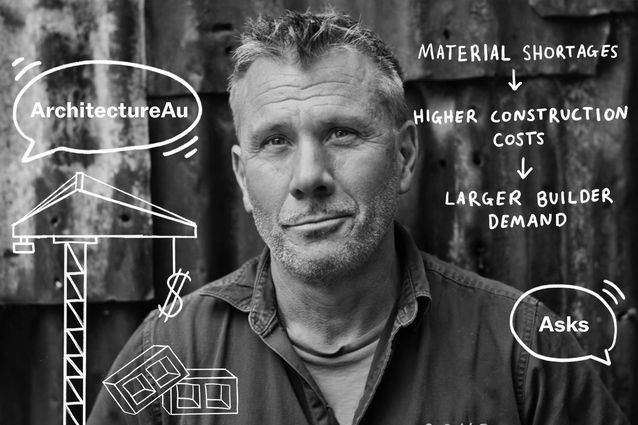
Only a few years ago, the COVID-19 pandemic triggered a global domino effect of material shortages, soaring construction costs and surging builder demand. Projects stalled or were abandoned altogether, leaving Australia’s built environment businesses struggling to find consistent work. Now, with the war in the Middle East, building materials are facing delays and construction costs are rising again – what does this mean for architects and built environment professionals still recovering from the shock of COVID-19? Will it get worse before it gets better?
Unfortunately, I think that any reading of the current market says it is going to get worse before it gets better.
I’ve been talking to ex-clients and current clients on why they or their friends are not engaging architects for residential projects, and the takeaway is that everyone knows someone who got charged $200,000 for a design they then couldn’t afford to build.
How much of the blame of that lies with architects’ communication or with clients’ poor understanding around budget? It’s hard to say, but architects have a credibility issue.
The only path forward I can see is to bridge that trust gap.
That may involve a pre-tender process with limited documentation to obtain a few builders’ estimates, giving the client a cost check and the confidence to commit to further documentation. Or, in much the same way as holding an auction with a reserve, the client could put down a figure for what they want to spend – a “reverse reserve” – at tender stage, so the builder can assess if the project’s feasible and decide whether to tender.
In calmer and more stable times, we could do a fairly good job estimating the cost of a project based on previous work. That’s become harder in the last few years: projects are taking longer, with subcontractors being slow or unresponsive because they’re understaffed or demotivated, so fewer projects are being built, leaving less data to work off.
Maybe it involves a return to simplicities; removing some of the bells and whistles. Some of my favourite architecture in the world is in Brazil, and came out of a period in the 1960s when they were under military dictatorship, the economy was down the pan, there was little money to work with and sourcing materials was difficult. Maybe, if you’re trying to hit a budget, now’s not the time for curved rammed earth walls and off-form concrete skylights.
– Scott Burchell is a residential builder in Melbourne, specialising in complex architectural builds in a variety of scales. Director of Comb Construction, Burchell started his career studying architecture at Sydney University, and has never lost his passion for architecture, especially for finely crafted modernist details.
This article is one of five responses to the same question: “Construction costs are rising again – will it get worse for architects before it gets better?” Read Jemima Retallack’s response to the same question here. Stay tuned for responses from Ehsan Noroozinejad, Lyndall Bryant and Jon Clements.