
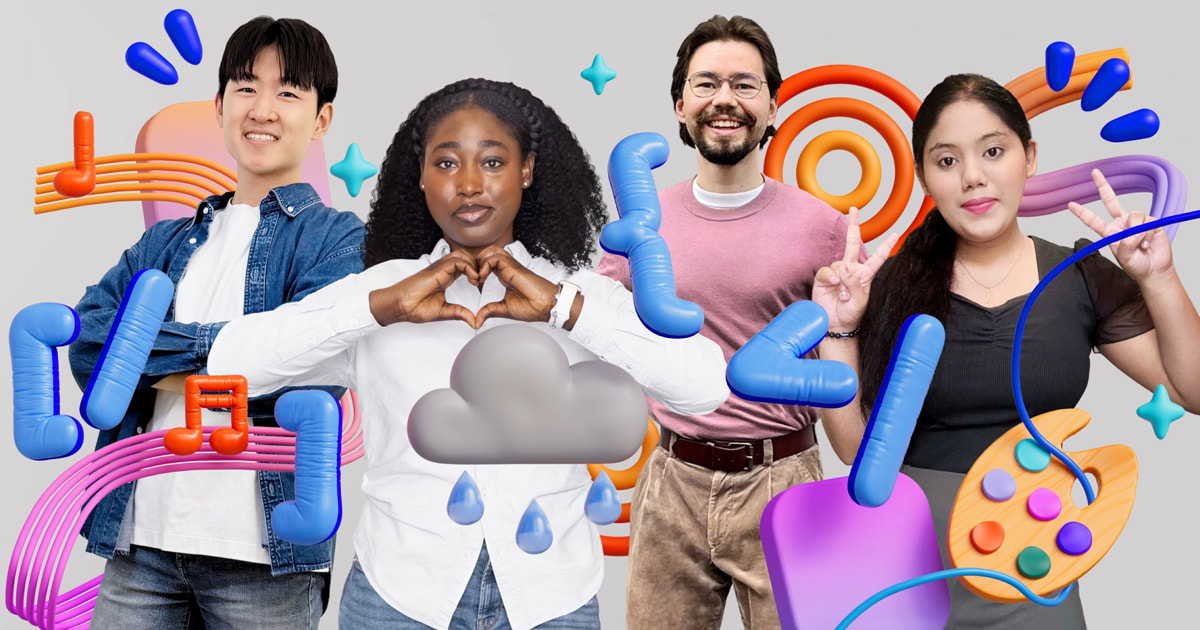
Receiving real-time feedback while giving a presentation. Escaping a flood zone in Accra. Playing the viola, without the physical instrument. Drawing on iPad without worry of tremors. These are just four of the solutions that this year’s Swift Student Challenge Distinguished Winners created with their winning app playgrounds.
The annual Swift Student Challenge invites students from across the globe to bring their ideas to life through original app playgrounds built with Apple’s easy-to-learn Swift coding language. This year’s 350 winning submissions represent 37 countries and regions, and showcase a wide range of technologies.
“The breadth of creativity we see in the Swift Student Challenge never ceases to amaze us,” says Susan Prescott, Apple’s vice president of Worldwide Developer Relations. “This year’s winners found remarkable ways to harness the power of Apple platforms, Swift, and AI tools to build app playgrounds that are as technically impressive as they are meaningful. We’re incredibly proud to support their journey and can’t wait to see what they create next.”
Fifty Distinguished Winners have been invited to attend the Worldwide Developers Conference (WWDC) at Apple Park in June, where they’ll take part in a curated three-day experience. Throughout the week, the students will have the opportunity to watch the Keynote live, learn from Apple experts and engineers, and participate in hands-on labs.
Many of this year’s winners took inspiration from their communities – or even from conversations at their kitchen tables – to engineer impressive apps with accessibility at their core. Below, Distinguished Winners Gayatri Goundadkar, Anton Baranov, Karen-Happuch Peprah Henneh, and Yoonjae Joung delve into their app playgrounds and the real-world problems they’re aiming to solve, demonstrating the power of app development to drive lasting change.
Making Art More Accessible with Steady Hands
Gayatri Goundadkar, 20, grew up drawing and painting with her grandmother in Pune, India. The two shared a passion for Warli painting, a centuries-old art form known for its use of basic geometric shapes. But as Goundadkar’s grandmother aged, her hands started shaking and she was unable to partake in her daily practice. That loss stayed with Goundadkar and inspired her to build Steady Hands, an app playground that uses Apple Pencil stabilization to support individuals with tremors in creating art.
“My main audience is older adults,” explains Goundadkar, a third-year computer science student at Maharashtra Institute of Technology World Peace University, where she’s involved in an app development program. “Especially in India, technology can feel intimidating for that generation, so I made every decision with that in mind. The interface had to feel calm, not clinical. I didn’t want anyone to open the app and feel lost or overwhelmed. I wanted them to feel like it was made for them.”