
This story is part of Peak, The Athletic’s desk covering the mental side of sports. Sign up for Peak’s newsletter here.
Amy Cuddy is a social psychologist who studies nonverbal communication. She was a professor at Harvard Business School and is a best-selling author.
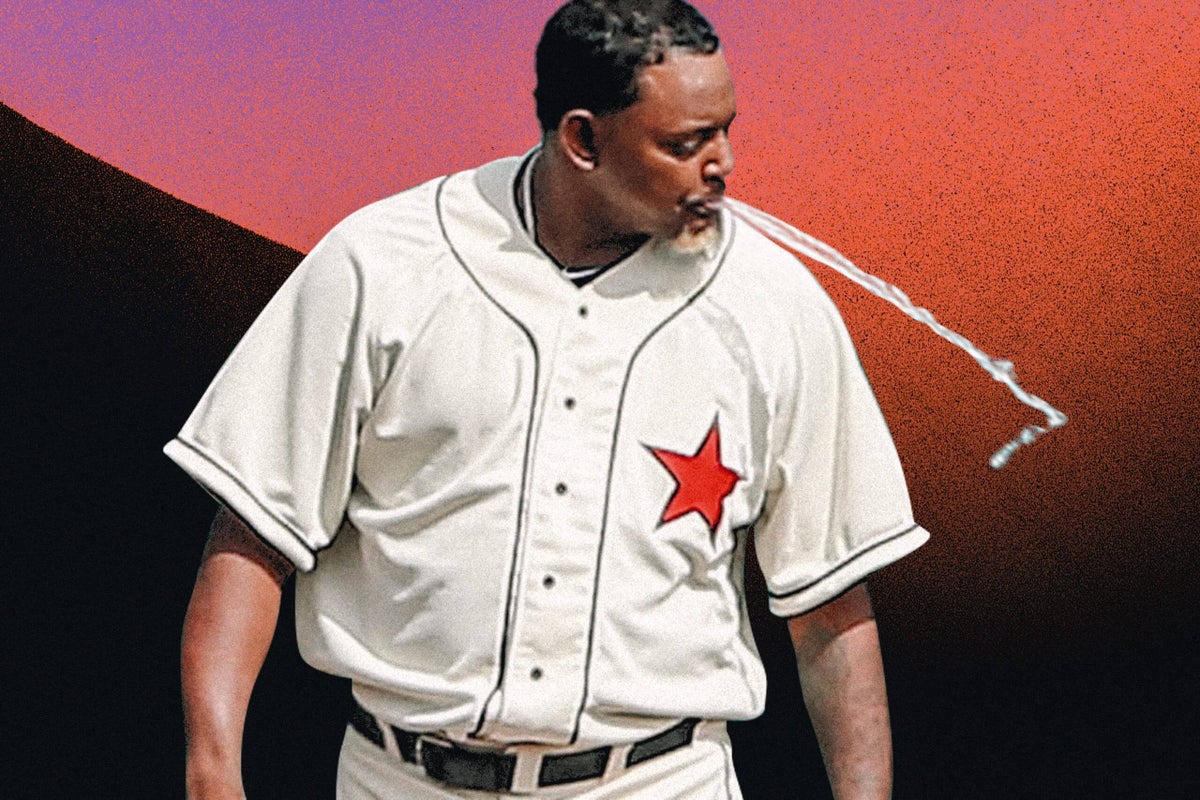
José Valverde was a man of ritual. Before trotting out to the mound, the former Detroit Tigers closer would fill his mouth with water in the bullpen, then spit it out in perfect symmetry — left, right, no shortcuts. He’d slap his glove against his thigh, swap his cap to his throwing hand and start his run.
The real challenge came next: crossing the entire infield without stepping on a single line. Not just the foul lines — every line. The stripes mowed into the outfield, the chalk borders, even the seams where the grass met the dirt. In baseball’s maze of lines, Valverde moved like each one was electrified.
He led all of baseball in saves in 2011. Make of that what you will.
Baseball is stacked with players like Valverde: elite athletes at the peak of their game, each with quirks that’d raise eyebrows anywhere else. For a time, Tigers Cy Young winner Justin Verlander swore by the same Taco Bell feast before every start: three crunchy taco supremes (hold the tomato), a cheesy gordita crunch and a Mexican Pizza (no tomato). Former MVP Jason Giambi, desperate in a slump, would pull on a gold lamé, tiger-stripe thong for luck — and it worked so well that Yankees teammates quietly started borrowing it, too.
None of these players is unhinged. If anything, the science suggests they’re doing something smart.
The uncertainty gap
Baseball is the only major American sport where the best hitters in the world fail seven times out of ten and call it a career. Pitchers throw the ball and then have almost no control over what happens next. A perfectly located fastball becomes a bloop single. A hanging curveball gets lined into the gap for a double.
The randomness is relentless, and it operates on a 162-game season that stretches across six months. That’s plenty of time to develop strange habits.
Anthropologist George Gmelch was the first to map this onto baseball, comparing players to the Trobriand Islands fishermen who used elaborate rituals when fishing the dangerous open sea but none at all in the calm inner lagoon. Baseball, he noted, works the same way. Hitters and pitchers — the open-sea positions — develop rituals constantly. Fielders, who successfully execute their job more than 90 percent of the time, almost never do. Ritual rises and falls with uncertainty.
What’s actually happening in the brain
For a long time, sports psychologists treated rituals as a confidence trick — a placebo that worked because players believed it worked. The science has gotten more interesting than that.
A 2017 neuroscience study found that rituals don’t just make people feel better — they change how the brain responds to failure. Participants who performed a ritual for a week showed measurably blunted neural responses when they made mistakes. Their brains were, quite literally, processing setbacks differently. Not ignoring them. Just absorbing them without the same spike of distress that might send a hitter spiraling after an 0-for-4 night at the plate.
A 2023 study went further, finding that ritualized behavior improves self-control specifically under competitive pressure — and that the effect grows stronger the higher the stakes. This is the part that should make anyone reconsider the eye-roll they gave Valverde’s line-stepping routine. The weirder the pressure, the more the ritual earns its keep.
The mechanism behind it all is B.F. Skinner’s operant conditioning, and it works embarrassingly fast. A player touches his crucifix before an at-bat and gets a hit. The brain files that away. He does it again. Gets another hit. Now it’s a ritual. Now it feels mandatory. Skinner demonstrated this with pigeons — reward them at random intervals regardless of their behavior, and they’ll develop elaborate, specific routines they believe are producing the food. He called them superstitious pigeons. Baseball has been producing them for 150 years.
What makes the baseball version particularly durable is that the reinforcement schedule is almost perfectly designed to keep the loop running. Players don’t hit every time they perform the ritual. They hit sometimes. Intermittent reinforcement — the same mechanism that makes slot machines so hard to walk away from — is the most powerful kind. Verlander didn’t keep eating Taco Bell because it worked every start. He kept eating it because he couldn’t be sure it wasn’t working.
The ritual outlasts everything
This is the detail that separates ritual from routine. A routine is something you do because it’s useful. A ritual is something you do because stopping feels dangerous. Research confirms that removing a ritual before a performance actually increases anxiety and reduces self-efficacy — players who had their rituals disrupted performed worse, not because anything physical changed, but because the psychological scaffolding was gone.
Sport psychologist Jonathan Fader, who has worked with the Mets and the NFL’s Giants, has built much of his work around this simple observation: Human beings are deeply disturbed by uncertainty. A baseball player facing a 100-mile-per-hour slider cannot eliminate the uncertainty of whether he will hit it. What he can do is run a ritual before each pitch. That ritual doesn’t change the uncertainty. It changes how the body and mind meet it. What it produces is an illusion of certainty.
The illusion, it turns out, is doing real work.
There’s a version of this story where the lesson is that baseball players are uniquely irrational — creatures of habit in a sport that rewards superstition. But the research points somewhere more interesting. The ritual isn’t a failure of logic. It’s a solution to a problem that logic can’t solve. You can study every spray chart, memorize every pitcher’s release point, do everything right — and still go 0-for-4. What the ritual gives you isn’t control. It’s the ability to walk back to the plate tomorrow like you have some.
Maybe the tacos help. Maybe they don’t. Maybe that’s not really the point.
As Cleveland Guardians All-Star Steven Kwan once said: “It ain’t weird if it works.”