
A North Queensland resident has triggered a high-stakes test of Queensland’s new renewable energy laws, as a global takeover looms over the company behind a controversial Whitsundays wind farm.
Singapore-based Sembcorp Industries is seeking to acquire Alinta Energy, the proponent behind the proposed Mt Challenger Wind Farm, about 28km northwest of Proserpine.
The project — still in early planning stages — is understood to involve up to 30 turbines capable of generating hundreds of megawatts of power and has already drawn concern from nearby residents and farmers.
The takeover would place a global energy heavyweight in control of a multi-gigawatt pipeline of renewable projects, with billions tied up in the acquisition and future pipeline including developments planned for the Whitsundays.
Sembcorp documents show Alinta holds a 10.4GW development pipeline, with more than 2GW prioritised for development in the coming years.
Sembcorp has indicated Alinta’s existing leadership team would remain in place, even as control of the company shifts to overseas ownership.
The Mt Challenger Wind Farm does not yet form part of Alinta’s existing portfolio, instead sitting within a multi-gigawatt development pipeline Sembcorp is seeking to acquire and expand.
Council showdown over new rules
At Wednesday’s Whitsunday Regional Council meeting, resident Damien Fredrick told councillors concern over the project had already escalated well beyond the local level.
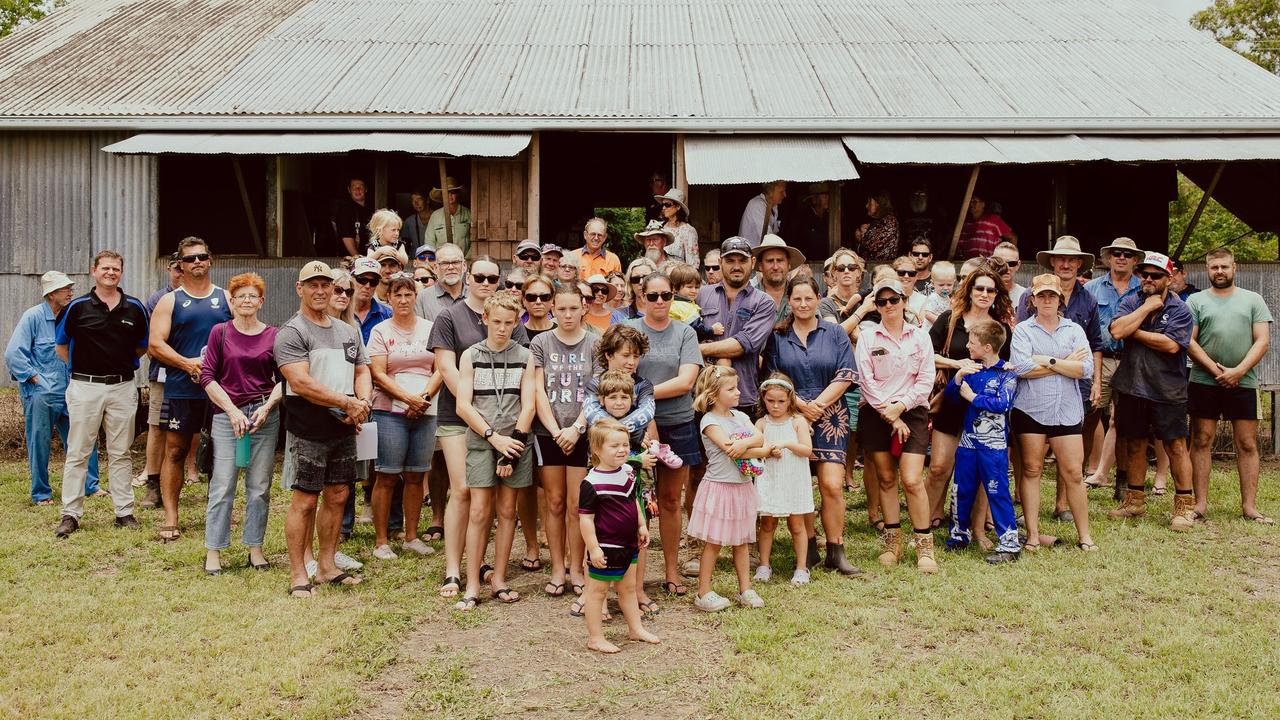
He said more than 140 residents and farmers from Crystalbrook and Kelsey Creek met in October after learning of the proposal through “community word-of-mouth”.
“Following engagement with council … the community was encouraged to formalise concerns through a petition process,” he said.
Mr Fredrick said that process led to two petitions being lodged with the state government, attracting more than 6000 signatures.
He pointed councillors to the tabled government responses, which outline that wind farm proponents must enter into a community benefit agreement with local government before lodging a development application.
“Given this context, I respectfully ask … does the council acknowledge that this formally tabled petition presents a significant documented level of community concern?” he said.
Mr Fredrick also questioned whether the council would be bound to enter into such an agreement, or whether it retained full discretion to refuse proposals that did not reflect broader community interests.
He further asked how the council would ensure the wider community had an opportunity to review and provide input into any future agreement, noting a CBA policy was under development.
He was told a written response would be recorded in the minutes of the next council meeting.
Personal impact and organised opposition
Opposition to the project has also been organised through the Whitsunday Wind Farm Action Group, which says it has held multiple meetings with residents, councillors and MPs as concern continues to build.
In a video shared by the group, Mr Fredrick described the proposed development as “right on my doorstep”, saying it would “surround my property on three boundaries”.
The farmer said the situation had been “very draining” on his family and had required significant time and money to respond to.
The group has raised issues including the integrity of the Social Impact Assessment process, turbine setbacks from homes and property boundaries, and the need for clear decommissioning plans.
Policy questions extend beyond region
The exchange highlights growing uncertainty around how Queensland’s new community benefit agreement framework will operate in practice.
The questions go to the heart of the policy, probing whether large-scale community opposition — such as the more than 6000 signatures gathered through two state petitions — carries weight in negotiations, and whether councils have the power to refuse agreements that do not reflect local interests.
They also raise broader questions about how consultation will be handled, and whether communities will have meaningful input into agreements negotiated as part of a state-led approvals process.
Government response stops short
In its response to the petitions, State Development, Infrastructure and Planning Minister Jarrod Bleijie said it was “only fair that regional Queensland communities are properly consulted on any new renewable energy developments in their backyard, like many suburban communities are afforded when it comes to high rise development in their neighbourhood”.
However, the state government stopped short of intervening, instead pointing to existing planning and assessment frameworks.
What happens next
The requirements for a community benefit agreement and social impact assessment form part of changes to how large-scale renewable energy projects are assessed in Queensland, introduced under the new state government following the 2024 election.
The measures are designed to ensure local governments and communities are formally consulted before projects progress to the development application stage, though final approval remains with the state.
Any future proposal would ultimately be assessed by the State Assessment and Referral Agency.
The proposed acquisition remains under assessment by the Australian Competition and Consumer Commission, with a decision expected in May.
The takeover is now in its final stages, with completion targeted for the first half of 2026 pending regulatory approval.