
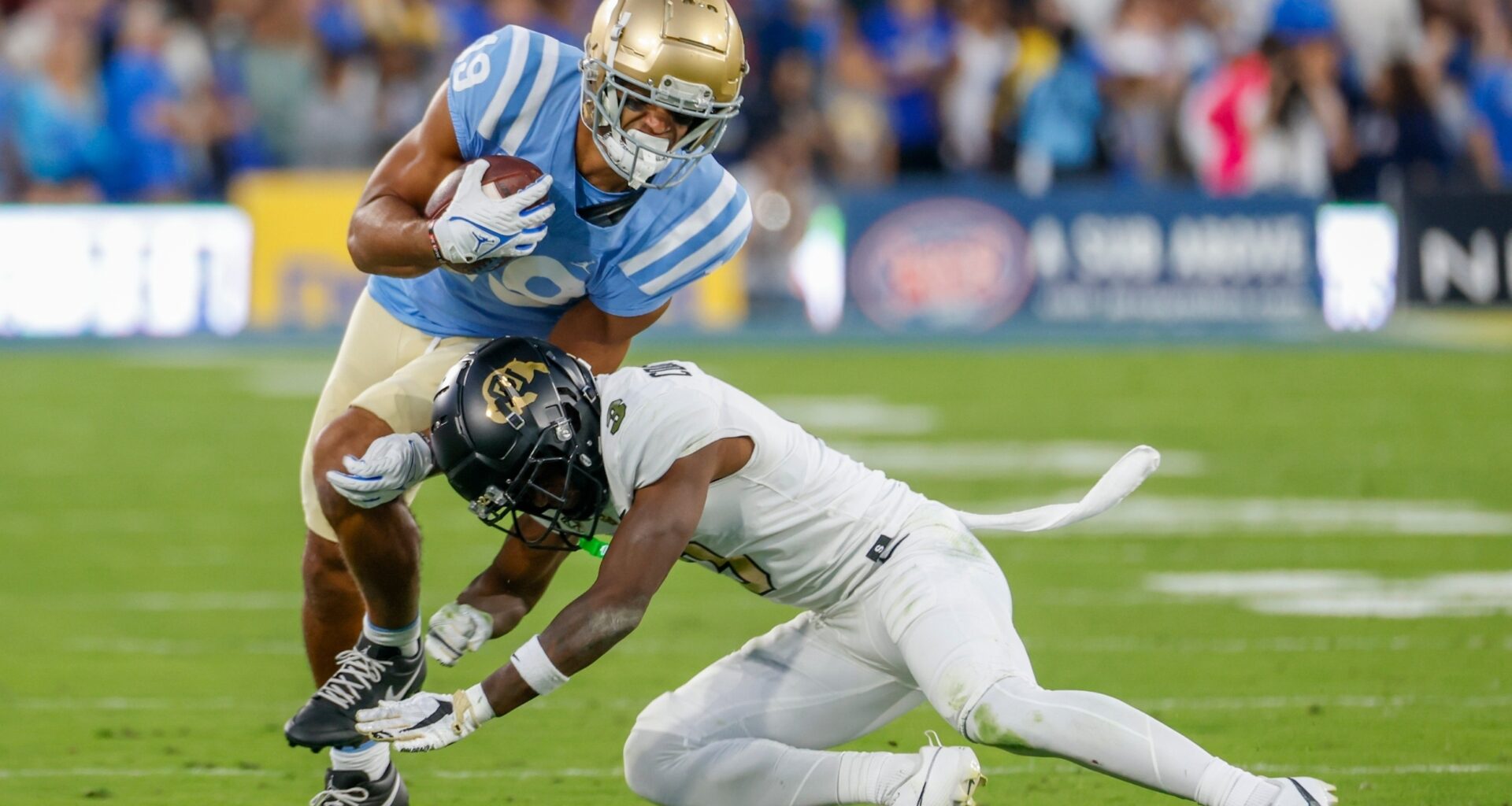
The routine hits that don’t send football players to the sideline barely register in sports medicine. There are no headaches, wobbly steps, or trainers running onto the field.
Practice resumes the next morning, and the day after that, as if nothing happened.

A new study followed six college football players through an entire season and checked for evidence of those routine hits. They found it – just not where anyone expected.
Hits that don’t register
The research was led by Dr. Kenneth Douglas Belanger, a biologist at Colgate University (Colgate).
The team monitored six NCAA Division I players throughout one season to investigate how routine hits may affect the gut.
Their question hinged on what scientists call subconcussive hits – head impacts that fall below the threshold for a concussion diagnosis but still rattle the brain.
A football player can take 100 to 1,000 of these in a season.
Earlier work has linked them to short-term cognitive dips and later neurodegenerative risk, but no one had asked whether they touched the gut.
Looking for changes in the gut
The setup was meticulous. Helmet sensors logged every impact during practices and games, sorting them by force into five tiers. GPS units worn between the shoulder blades tracked physical exertion.
Players collected fecal samples – 226 in total over the season. After each one, they answered a daily questionnaire covering sleep, stress, illness, caffeine, alcohol, NSAID use, and other variables that can touch the digestive tract.
Bacterial DNA from each sample was sequenced. Activity data was crunched.
Next, the researchers looked for patterns connecting how hard players were hit to changes in the gut microbiome.
This includes trillions of microorganisms living in the intestines that regulate inflammation and talk to the nervous system.
A different bacterial mix appears
Hits had to clear a threshold to count for the short-term analysis – a session in the top 25 percent of impact load, followed by three quieter days.
Across 13 such windows, microbial composition stayed roughly stable for the first 24 hours. Then it moved.
Two to three days after a hard-hitting session, the bacterial mix in the gut looked measurably different from where it started.
That delay is the part worth pausing on. The hit happens on a Saturday. By Monday or Tuesday, with the player feeling fine and back at practice, something downstream has already changed.
Bacteria on the move
When the team drilled into which microbes were moving, a few names kept showing up. Coriobacteriales, Prevotellaceae, and Prevotella all dropped in abundance after impact-heavy days. Ruminococcus climbed.
These names have a track record. Prevotella declines have been tied to lower production of short-chain fatty acids, compounds that calm inflammation and help maintain the blood-brain barrier.
Ruminococcus, on the other hand, shows up at higher levels in people with inflammatory bowel disease – a different kind of company from the one a player wants to keep.
Across the season
The single-impact analysis was only half the picture. Researchers compared each player’s early-season samples with their late-season ones.
Across the cohort, the microbiome at the end of the season looked significantly different from where it started.
Mixed-effects modeling – statistical machinery designed to separate one variable from a tangle of others – suggested the cumulative head impact load contributed to the season-long change.
That conclusion held even after accounting for changes in diet, exercise intensity, sleep, stress, NSAID use, energy drinks, and ten other factors.
Time itself, total physical strain, and pre-workout supplements also registered as influences.
Limitations of the study
Six players is a small group. There was no non-football control group, and the design cannot establish causation – only correlation.
All six participants were white males in their early 20s, which limits how broadly the findings apply.
What this study can do is open a door. A paper on diagnosed concussions has already shown the gut reacts to brain trauma. This is the first work to extend that link down to the hits clinicians never see.
Until this study, “asymptomatic” was the working assumption for the small hits. A player walks off, feels fine, plays again.
Now, there is biological evidence that something below the surface changes in the days that follow. Even when the player reports nothing.
That changes the picture in concrete ways. Trainers have reason to rethink recovery windows, and teams could eventually track cumulative biological changes across a season, not just the diagnosed injuries.
Complex organ systems communicate
Researchers also gain a new biological signal to chase – one a stool sample can capture without an MRI or a blood draw.
“We are only beginning to scratch the surface in our understanding of how these complex organs and organ systems communicate with and affect each other,” said Dr. Belanger.
Larger groups – including women, who respond differently to brain injuries, according to a recent study – will sharpen the picture.
The conversation about the long-term toll of contact sports just gained a biological variable nobody had measured.
The study is published in the journal PLOS One.
—–
Like what you read? Subscribe to our newsletter for engaging articles, exclusive content, and the latest updates.
Check us out on EarthSnap, a free app brought to you by Eric Ralls and Earth.com.
—–