
Summary
Arduino Nano Tamagotchi emulator in a 3D-printed shell mimics the real 90s toy – adorable and pocket-sized.
Uses ArduinoGotchi firmware (GPL) adapted for Nano; expect to tweak code and 3D files.
Bill of materials: Arduino Nano, 3.7V LiPo, 168×64 OLED, screws, multimeter, and 3D printer access.
When you’re making stuff with teeny-tiny hardware, a Tamagotchi is just one of many things you can make with it. I mean, it makes sense; it’s pocket-sized, it makes for an engaging project, and once you’re done, you have a cute little fella to take care of. Sounds like a win on all fronts, if you ask me.
The thing is, when people make their own Tamagotchis, they tend to create their own pet-based software to go with it. Which is fine and all; coding the Tamagotchi itself can be just as fun as sorting out the hardware. But if you want a real Tamagotchi—you know, the ones that came out back in the 90s—you can download a Tamagotchi emulator and put it in this cool 3D printed shell.
Related
You, too, can install this cute open-source tamagotchi on your ESP32
He’s too adorable not to.
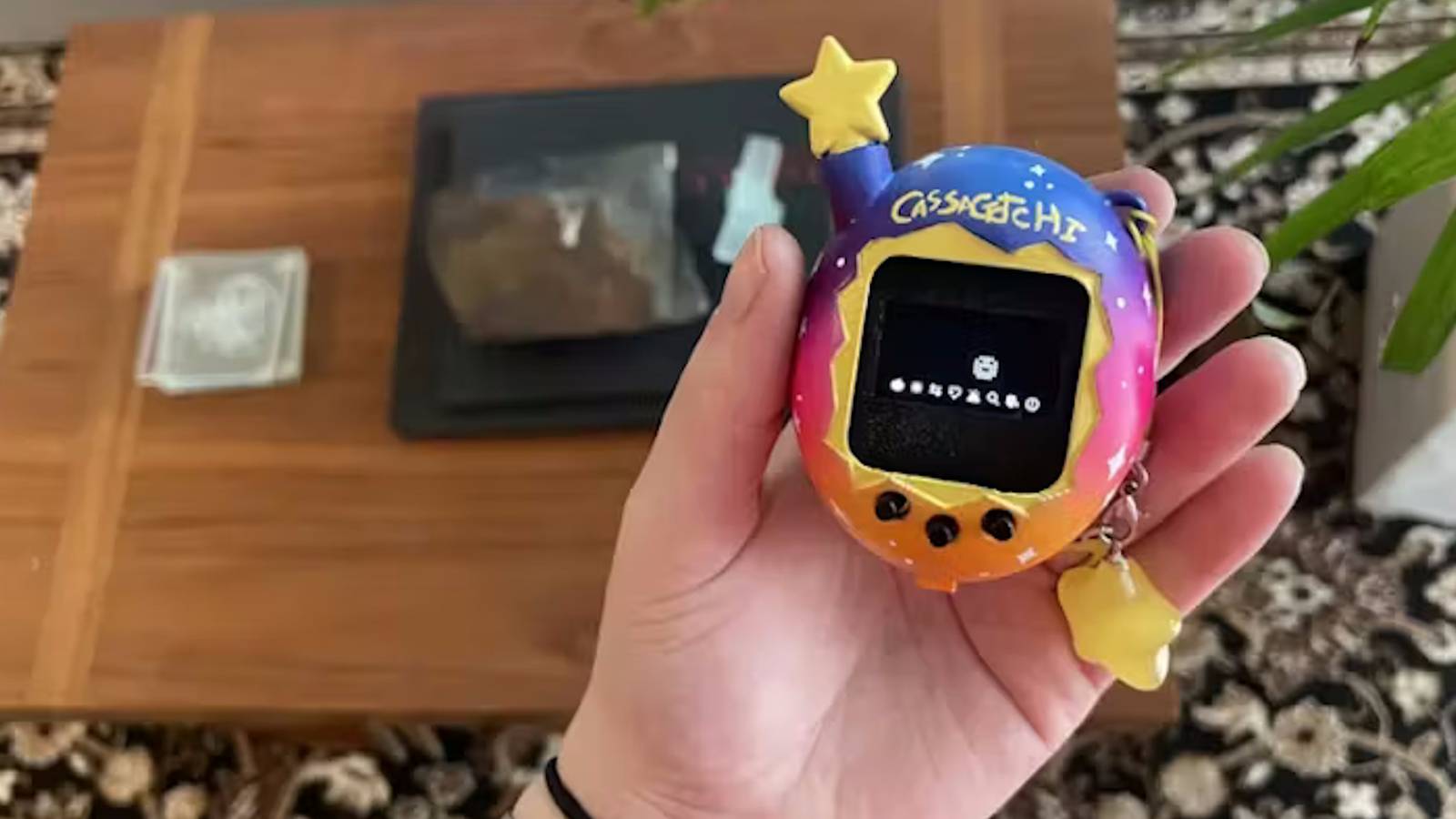
The CassaGotchi is a 3D-printed Arduino Nano project that emulates the real deal
And it looks adorable
As spotted by Hackster.io, this cool little project was the insane idea of Chaos Theory. The goal was to recreate the joy of the toy from the 90s, including an emulation of the original software and making a 3D printed shell that’s reminiscent of the real deal.
Here’s how Chaos Theory describes it on their Instructables page:
This is a Tamagotchi emulator running on an Arduino Nano inside a 3D printed chassis and shell.
[…]
This is a Nano-adapted version of ArduinoGotchi, based on GPL-licensed firmware by Gary Kwok, modified for a compact handheld build.
Please note: I am a total 3D-modelling noob and expect that many improvements could be made to these files. I would only recommend attempting this project if you have a passing knowledge of Arduino coding, circuitry, and 3D modelling.
The bill of materials isn’t so bad. As you imagine, you’ll need the Arduino Nano and access to a 3D printer, but you’ll also need a 3.7V lithium polymer battery, a 168×64 OLED display, some screws, a micro-screwdriver, a multimeter, and some hot glue. It’s quite the shopping list, but getting to make a Tamagotchi that looks, feels, and plays like the real deal is worth it, if you ask me.
Related
This is the GameCube Mini Nintendo should have made
The Nintendo Kawaii console is almost the same size as a Game Boy cartridge.