

An Aussie tradie has revealed he has seen a ‘huge jump’ in business for a booming driveway addition which costs from $450 to install.
Electrician Ryan Wilson told Yahoo News he’s seeing an overwhelming rise in EV charger installations, as the number of Aussies buying electric vehicles surges.
The Federal Chamber of Automotive Industries (FCAI) and the Electric Vehicle Council revealed that 15,839 EVs were purchased in March, the most ever sold in a single month in Australia.
Ryan, who owns Terrigal Electrical Services and Tradies in Business, said his team has gone from installing one EV charger every six weeks in 2020, to now doing three each week.
“We are seeing a huge jump in our EV charger installs,” he said.
Ryan said his business has gone from installing one EV charger every six weeks in 2020, to now doing three per week. Source: Supplied
“Obviously, that’s come off the back of the huge petrol increase, so people are like, ‘I’m gonna save money by buying an EV.’ People are just getting a little bit more educated on electric vehicles.
“When they first hit the market, there were a lot of horror stories that came out about electric vehicles catching fire and they weren’t, in a lot of people’s views, a ‘cool car’ to drive.
“The perception has definitely changed.”
Do you have a story on EV charging? Contact newsroomau@yahoonews.com
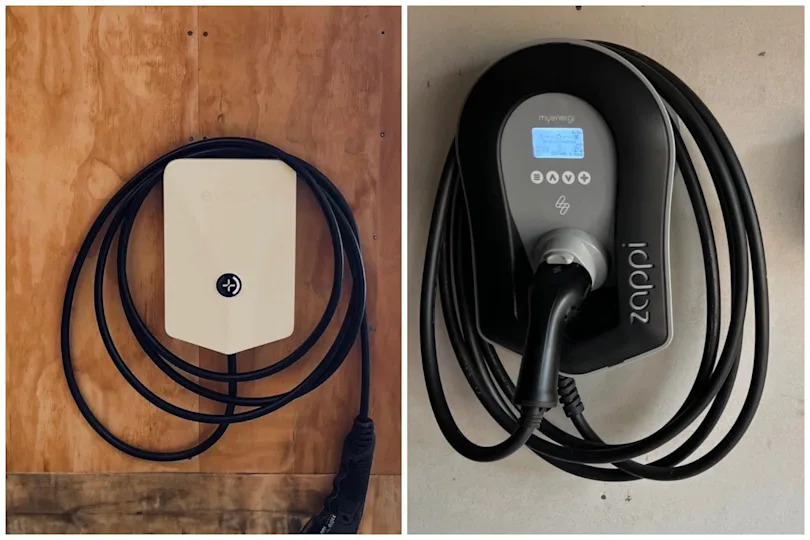
How much does EV charger installation cost?
The 41-year-old electrician said an entry-level charger, that can be purchased from Bunnings, will cost about $450-$750 to install.
In comparison, the “smarter” three-facings chargers with all the “bells and whistles” will range between $1300 to $2200.
“Even if you do get a basic set-up, if you charge during the day while the sun’s out and you’ve got solar, it’s still going to utilise that solar,” Ryan said.
“I’m finding people wanting the basics to get up, and get driving and to save that money.
“I guess having an electric vehicle, some people can get solar panels on their roofs, it’s just giving you a little bit more resilience, and I think you won’t be as affected by things that happen on the other side of the world.”
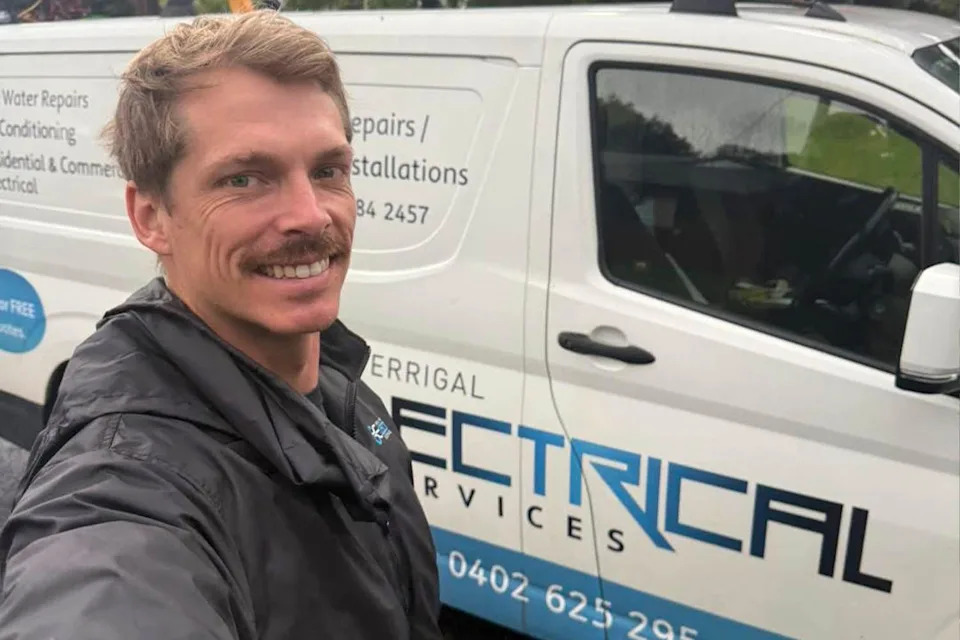
Ryan Wilson has been inundated with EV charger installations. Source: Supplied
Ryan said it’s really important that an electrician or specialist in EV charging inspects your property before you buy a vehicle.
“You want to make sure that your home, townhouse or unit — whether the existing electrical infrastructure can support an EV charger.
“It’s a really good idea to get an electrician around just to have a look at their existing capacity for their house and how difficult it is to get a new circuit from their switchboard to their charger location.
“You can imagine in a unit block, sometimes that’s really difficult to do. You know, if they’re three levels up and their car parks in the basement. It can be tricky.”
Ryan’s business set to switch to EV work vans
Terrigal Electrical Services currently drives Toyota HiAce vans across the Central Coast, Ryan said his company will be switching to the full electric Kia PV5 core by this year.
“Kia cars are really coming into the market, and they’re gonna hit really hard from about mid this year in Australia. I’m actually going to be making the jump myself to the new Kia van and I think what you’re going to see by the end of the year is more of these vehicles on the road,” he said.
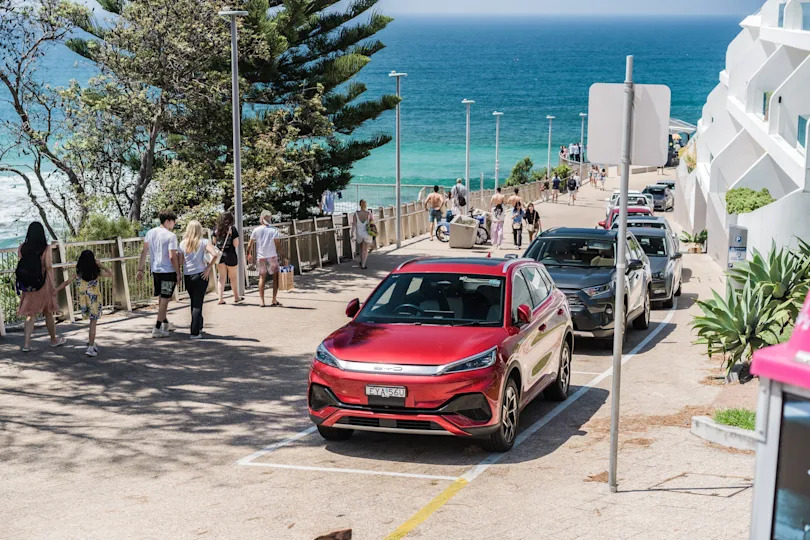
Hussein Dia told Yahoo News that more Australians are switching to EVs. Source: Getty Images
RELATED
Meanwhile, Professor of Transport Technology and Sustainability at Swinburne University of Technology, Hussein Dia, told Yahoo News more Australians are switching to EVs rather than petrol and diesel vehicles.
“First, fuel costs are playing a role,” he said.
“With petrol prices remaining volatile and, at times, quite high, many households are looking for more predictable and lower running costs. Charging an EV, particularly at home, is generally much cheaper per kilometre than refuelling a petrol vehicle,” he said.
“Secondly, government incentives have helped reduce the upfront cost barrier, especially for fleet and salary-packaged vehicles.
“Thirdly, we are seeing a much wider range of EV models entering the Australian market.
“A few years ago, choice was limited and often expensive. Now there are more options across different price points, which is making EVs accessible to a broader group of buyers.”
You can also follow us on Facebook, Instagram, TikTok, X and YouTube.