
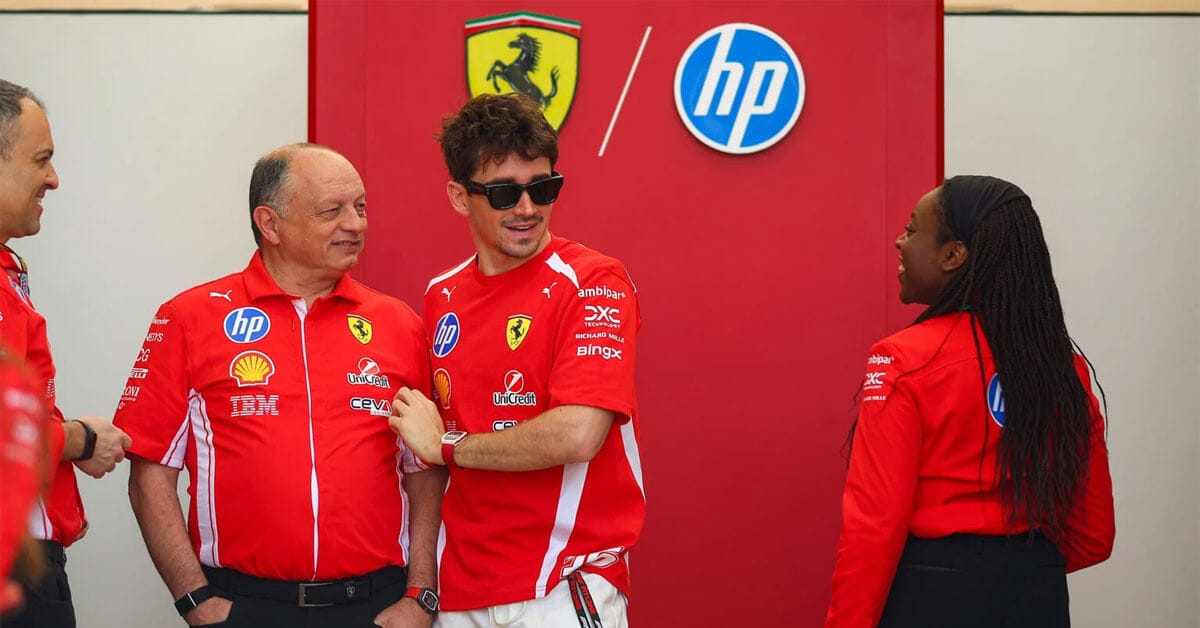
Ferrari’s bold 2026 Formula 1 philosophy is already influencing rival teams as Fred Vasseur transforms culture at Maranello
Ferrari’s aggressive interpretation of the 2026 Formula 1 regulations is not only attracting attention throughout the paddock, but is also beginning to influence the development direction of several rival teams. The ambitious concepts introduced on the SF-26 have placed the Italian side firmly under the spotlight this season, with many competitors closely studying the innovative aerodynamic and chassis solutions emerging from Maranello.
Under the leadership of team principal Fred Vasseur, Ferrari have embraced a far more daring technical approach for the new era of Formula 1 regulations. The Scuderia’s willingness to push the limits of the rulebook has already sparked conversations across the paddock and reportedly even prompted discussions within the FIA regarding possible future rule adjustments aimed at preventing an escalating development battle heading into 2027.
Ferrari first became one of the major talking points of the 2026 campaign during pre-season testing in Bahrain. The team unveiled several unconventional ideas, including the much-discussed exhaust flap system, internally referred to as the FTM, alongside their distinctive “Macarena” rear wing concept. At the time, many observers believed Ferrari’s rivals would struggle to replicate the FTM solution because it required an extremely specific integration between the diffuser, gearbox and exhaust layout in order to remain compliant with FIA regulations.

However, the situation quickly evolved as the season progressed. By the time Formula 1 arrived in Miami, several teams had already introduced their own interpretations inspired by Ferrari’s original design philosophy. The rapid spread of similar concepts throughout the grid reportedly led the FIA to begin evaluating whether exhaust wing-style solutions should remain legal beyond the current regulations cycle. Reports have also suggested that the governing body is assessing Ferrari’s controversial Halo wing concepts for potential restriction from 2027 onward, with safety concerns believed to be one of the primary factors behind those discussions.
Despite the increasing scrutiny surrounding Ferrari’s technical innovations, the developments also underline the dramatic transformation taking place behind the scenes at the Maranello factory. According to reports from the Italian media, Ferrari are now benefiting from a significantly healthier and more productive working environment under Fred Vasseur’s leadership.
A growing feeling inside the paddock suggests that Ferrari’s recent technical creativity has been made possible by the calmer and more relaxed atmosphere Vasseur has encouraged since taking charge of the Scuderia. Engineers and designers are reportedly being given greater freedom to experiment with radical ideas, while management is said to be far more accepting of calculated risks and occasional mistakes during the development process.
This represents a major cultural shift compared to Ferrari’s traditional environment, which has often been associated with immense pressure, especially during periods without championship success. Historically, the weight of expectation surrounding Ferrari has frequently created a tense atmosphere inside Maranello whenever results failed to meet the standards associated with Formula 1’s most iconic team.
Vasseur’s approach appears focused on removing some of that pressure in order to allow Ferrari’s technical departments to operate with more confidence and creativity. The Frenchman seems determined to modernise the culture within the organisation, believing that innovation and long-term success are more likely to emerge from stability and trust rather than fear of failure.
Ferrari’s willingness to aggressively interpret the new regulations has been particularly important given the team’s ongoing performance deficit in one crucial area. While the SF-26 has demonstrated encouraging aerodynamic efficiency and strong chassis characteristics, Ferrari are still believed to trail Mercedes in overall power unit performance. That engine disadvantage has limited the Scuderia’s ability to fully capitalize on the strengths of their innovative aero package during the opening phase of the 2026 season.
Even so, Ferrari have remained competitive enough to regularly challenge near the front of the field. Although the team are still searching for their first Grand Prix victory of the 2026 Formula 1 season, both Charles Leclerc and Lewis Hamilton have already secured podium finishes, demonstrating the underlying potential of the SF-26 package.
The arrival of Lewis Hamilton has further intensified attention on Ferrari’s internal transformation. The seven-time world champion joined the Scuderia hoping to help return the team to championship-winning form after one of the longest title droughts in Ferrari’s modern Formula 1 history. Ferrari last secured the drivers’ championship in 2007, while their most recent constructors’ title came one year later in 2008.
Over the years, several former Ferrari figures have openly discussed how difficult the atmosphere inside Maranello could become when results failed to arrive. Former Ferrari engineer Rob Smedley previously suggested that the factory was not an enjoyable environment during struggling periods because the pressure associated with Ferrari’s expectations weighed heavily across the entire organisation.
Fred Vasseur has seemingly attempted to reverse that mentality since taking over leadership of the team. Ferrari have not won a Grand Prix since 2024, yet the atmosphere surrounding the project now appears considerably more stable and optimistic than during previous difficult periods.
Many within Formula 1 continue to point toward Mercedes as the benchmark example of how a strong internal culture can contribute to sustained success. The Silver Arrows dominated the sport between 2014 and 2020 and have once again emerged as one of the leading forces during the early stages of the 2026 season.
Former Formula 1 driver Hans-Joachim Stuck recently suggested that Mercedes’ harmonious working environment had historically provided drivers with an important psychological advantage. He indicated that figures such as Toto Wolff had helped create a more supportive atmosphere than the one traditionally associated with Ferrari. Stuck also explained that when drivers feel the entire team stands firmly behind them, it naturally creates additional motivation and confidence, even at a subconscious level.
Ferrari will now hope that the cultural reset initiated by Fred Vasseur can eventually deliver similar long-term rewards. While the Scuderia are still chasing their first victory of the 2026 Formula 1 campaign, the combination of bold technical innovation and a healthier atmosphere at Maranello could provide the foundations Ferrari need to finally re-establish themselves as genuine championship contenders in Formula 1’s new era.
May 9, 2026Luca Marini
Let other Scuderia Fans know about us


