
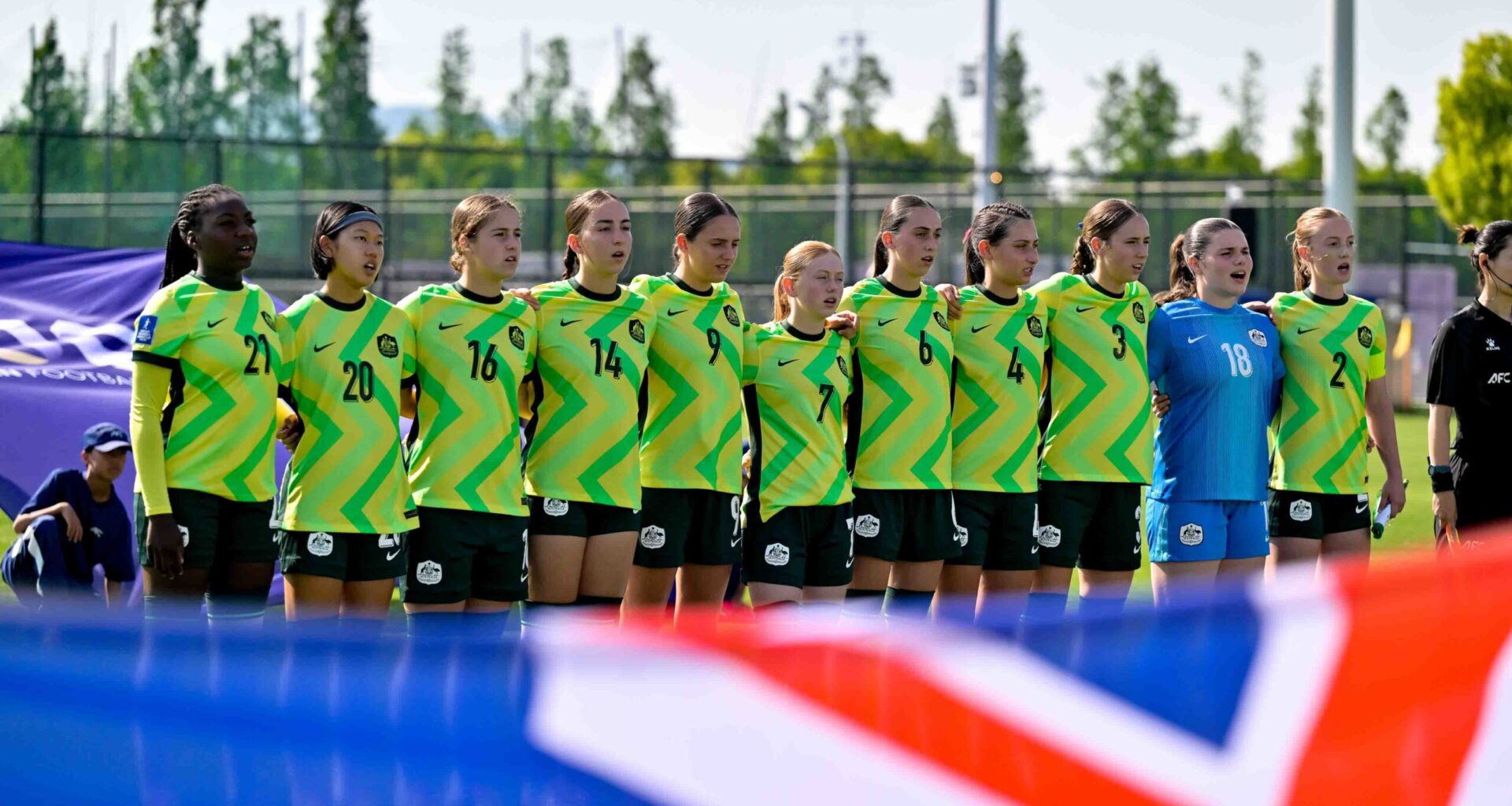
There is a particular tension that lives inside youth football. It sits somewhere between innocence and ambition. Between development and consequence. Between players still learning who they are and a sport already demanding answers from them.
For the Junior Matildas, that tension arrives on Monday afternoon in Suzhou, China.
One win.
That is all that separates this group of teenagers from becoming the first Australian U17 women’s side to qualify for a FIFA U-17 Women’s World Cup through the AFC pathway.
Standing opposite them will be Vietnam, another emerging football nation trying to force its way into a region changing faster than Australia perhaps anticipated.
Because this is no longer the AFC Australia first entered.
For years, the conversation around Australian women’s football development has centred on the Matildas and the senior team boom. When you delve underneath the well earned and much deserved commercial success and cultural momentum sits a football question: can Australia consistently produce elite players at youth level inside Asia’s increasingly competitive ecosystem?
This quarter-final won’t answer that question completely. But like the AFC U20 Women’s Asian Cup campaign it will add a further body of evidence of what we are set to prepare for in the next decade of Australian women’s football.
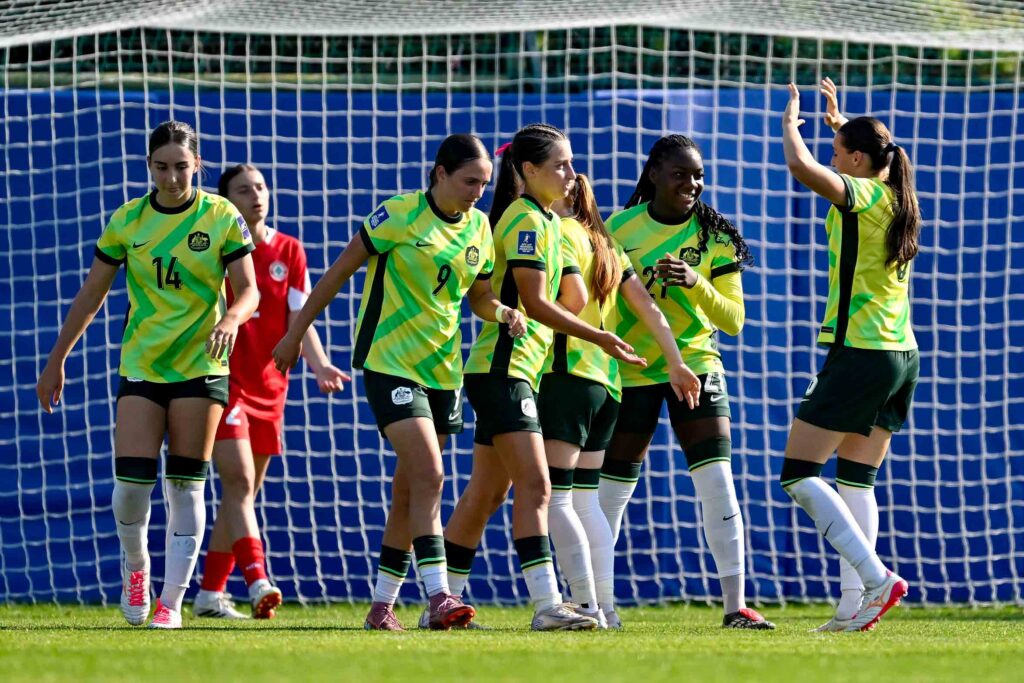 Australia celebrate their opening goal against Lebanon (Photo Credit: The AFC)
A thoughtful, quietly spoken and deliberative mentor, Junior Matildas Head coach Mike Cooper understands the scale of the moment, even if he purposefully softens the framing around his players.
“It’s a huge opportunity,” Cooper told The Women’s Game.
“Without putting too much pressure on the players about what that will then do for women’s football, I think it’s more that we’re focusing on what it could do for them as young people.
“The opportunity to go to a World Cup is huge for young players. Huge for exposure, for learning, and it could just add so much value to their future.
“So we’ve spoken about that. We can obviously use that as inspiration and I think the players understand that.”
That balance has become central to the way Cooper speaks about this group. Ambition without overload, standards without anxiety and development without losing sight of results.
Rather than becoming consumed by the occasion, this team appears to be growing into it game by game, understanding more clearly what tournament football in Asia demands.
The ghosts of near misses
Australian women’s youth football has lived close to this moment before.
There have been talented U17 generations. Players who would later become senior internationals. Players who would go on to shape the Matildas era that transformed the sport domestically.
But the World Cup breakthrough at this age group has never properly arrived through Asia.
The closest calls have often been brutal. Qualification matches slipping away against technically sharper opposition.
Generations caught in the difficult transition period after Australia moved into the AFC, when the country was still learning the rhythms and demands of Asian tournament football.
And yet, historically, this age group has still produced future senior stars.
Players like Kerr, Foord, Catley, Carpenter, Cooney-Cross and Sayer all passed through the Junior Matildas environments as teenagers. Different cycles, with different contexts but with the same reality: elite exposure matters.
That is what sits underneath this quarter-final, not just qualification but acceleration.
World Cups at this age group are not simply rewards. They are developmental multipliers. The best young nations in women’s football understand this intimately.
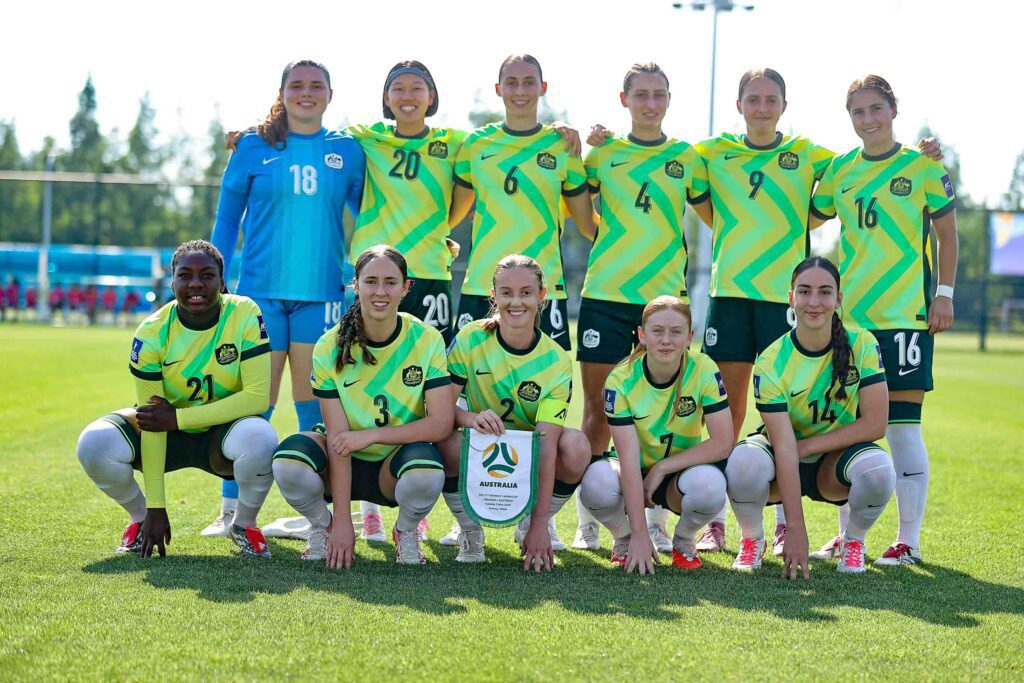 Junior Matildas Starting XI v Lebanon (Photo Credit: The AFC)
Spain, Japan, DPR Korea, Germany, Brazil and the United States repeatedly expose players to elite youth tournaments until pressure becomes familiar rather than frightening.
Australia is still trying to build that continuity. Which is why Cooper’s comments carry weight beyond coach-speak.
“What it does for women’s football in Australia? Hopefully it highlights the fact that we do have talent to invest in,” he said.
“If we can increase our investment, that depth of talent would increase, and that should give us a chance to be more consistent at these tournaments in the future.
“I think the players understand the opportunity in front of them, but we’re also trying to make sure they stay focused on the process and the performance.”
That quote feels important because it quietly acknowledges the broader truth.
Talent has rarely been Australia’s biggest issue. Consistent technical development, tournament exposure and depth across the pathway have been harder to sustain.
Three matches, three lessons
The group stage revealed a team still learning itself in real time.
Against India, Australia controlled territory and possession in difficult humid conditions, eventually winning 2-0 through relentless pressing and sustained pressure. Theo Mouithys Mickalad immediately emerged as one of the tournament’s most dangerous forwards, forcing defensive mistakes simply through intensity.
Against Lebanon came a wobble. Australia led and yet again controlled stretches. The Junior Matildas created chances to end the match but then allowed momentum to shift.
It is the result Cooper has reflected on most openly.
“We tried to play good football in the first two games, and had a lot of possession,” Cooper said.
“We just weren’t quite clinical enough in the final third to kill the games off earlier. But the girls did really try and play our brand of football, so we’re proud of that.
“We’ve played some good football, but it’s been inconsistent. But also that’s pretty normal for youth players as well.
“What we can improve on is that belief to keep playing under pressure. Mistakes will happen. But can we deal with that transition moment earlier and higher up the field to gain control again?”
Modern youth football is transitionary football, unpredictable football. Teams that dominate the chaotic moments usually survive tournaments. Japan, as they usually do, demonstrated that brutally in the final group game.
The 5-0 loss to the Japanese requires context. Australia rotated heavily with players were rested to account for the heavy condition. Beyond the squad management, the match exposed the speed and clarity of the region’s benchmark nation.
Cooper embraced the lesson rather than disguising it.
“The third game against Japan, that was a real challenge,” he said. “We rotated the squad to manage overall load, and Japan were also exceptional, very good on and off the ball.
“It was a great learning experience to be exposed to that for the players and staff. Now it’s all focused on Vietnam. We’ve got a great opportunity to make history.”
Japan’s technical rhythm, positional rotations and pressing triggers looked instinctive because, culturally, they largely are. Their pathway has repeated these environments for decades. Australia is still trying to create that same football fluency consistently.
Sometimes youth football tells the truth harshly.
The encouraging sign for the Junior Matildas and Cooper is that this generation appears increasingly willing to try.
There is composure here, bravery in possession, appetite to play through pressure rather than escape it. It does not always work and that is the point.
Young players only become comfortable in difficult football situations by surviving difficult football situations repeatedly. It’s a cruel little ecosystem, development.
Rising of the middle powers
Vietnam’s presence in this quarter-final is not accidental.
The old hierarchy is shifting. Japan remains the gold standard, while DPR Korea remain one of the great tournament nations in youth football. Korea Republic continue to evolve and China are rebuilding with serious intent. Beneath them, the rise has become broader.
Vietnam and India are investing at their youth levels. Thailand continues to develop and Uzbekistan are improving.
The middle tier of of the confederation is no longer simply participating at tournaments. It is competing and that matters when discussing Australia’s current and future pathway.
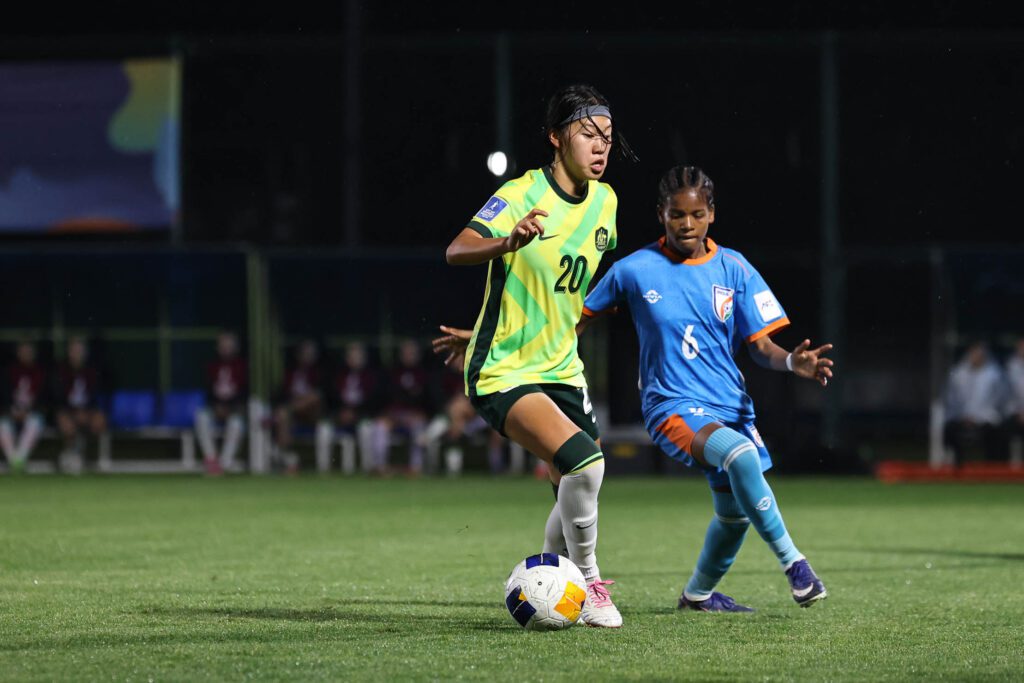 India are one of the emerging middle tier AFC nations (Photo Credit: The AFC)
Coached by Japanese tactician Okiyama Masahiko, they carry unmistakable influences: compact shape, disciplined spacing, technical comfort and patience in possession.
There is that country again. Japan. Influencing youth football across the continent and it is no surprise.
The Japanese Football Association’s 50-year plan (which we have mentioned ad nauseum), the JFA Pledge, sits at the centre of so much of their movement in the game. Part of that plan includes exporting emerging young coaches to other nations, providing them with experience and exposure that might not always be possible at home. The result is nations across the region that carry Japanese football DNA. Vietnam is one such nation.
Vietnam’s group stage tells a story of character as much as quality. They lost 0-3 to tournament heavyweights China, absorbed that result, and came back to beat Myanmar 2-1 in a decisive qualifier as the edged through on goal difference ahead of Thailand.
Against Myanmar they showed a dangerous set-piece threat, midfielder Linh Chi opening the scoring with a long-range free kick before Ngoc Anh doubled the lead from the left. When Myanmar pulled one back to make it 2-1, Vietnam held. They do not panic in big moments as they have already proved.
Cooper has spent the build-up carefully preparing his players not just tactically, but psychologically.
“We’ve obviously prepared them for what Vietnam do. What traits they have as a country, as a culture,” he said.
“We tried to make the players well prepared. Today [Sunday] we had a really good session clarifying those details, but also focusing on ourselves. We’re going to look at the stadium to allow the players to get used to the environment, and then go for it.”
He pauses often when he speaks, measured and considered, but there is clear belief underneath the restraint.
“The players will be prepared. They’ll be ready. And it’s a really nice stadium as well. From a young person’s opportunity and experience ahead? Yeah, it couldn’t be better.”
More than a result
Perhaps the most revealing thing Cooper says about this campaign is not about tactics or Vietnam or qualification. It is about what these teenagers are absorbing simply by existing inside this environment.
“Credit to the girls and the staff,” he said. “Every day, they wake up with an infectious energy and appetite to learn and be the best they can be. They haven’t dwelled on anything. They move on very quickly.
“It’s not just that they move on without learning. They’re very aware that they need to learn from all these experiences.
“The facility here is exceptional, so all teams are in the same venue. We get to see what other teams do on and off the field. The players are learning so many things about what a high performance environment is, what high performance habits are, and to be able to do that consistently, day in, day out, I’ve been really proud of how they’ve approached every day.”
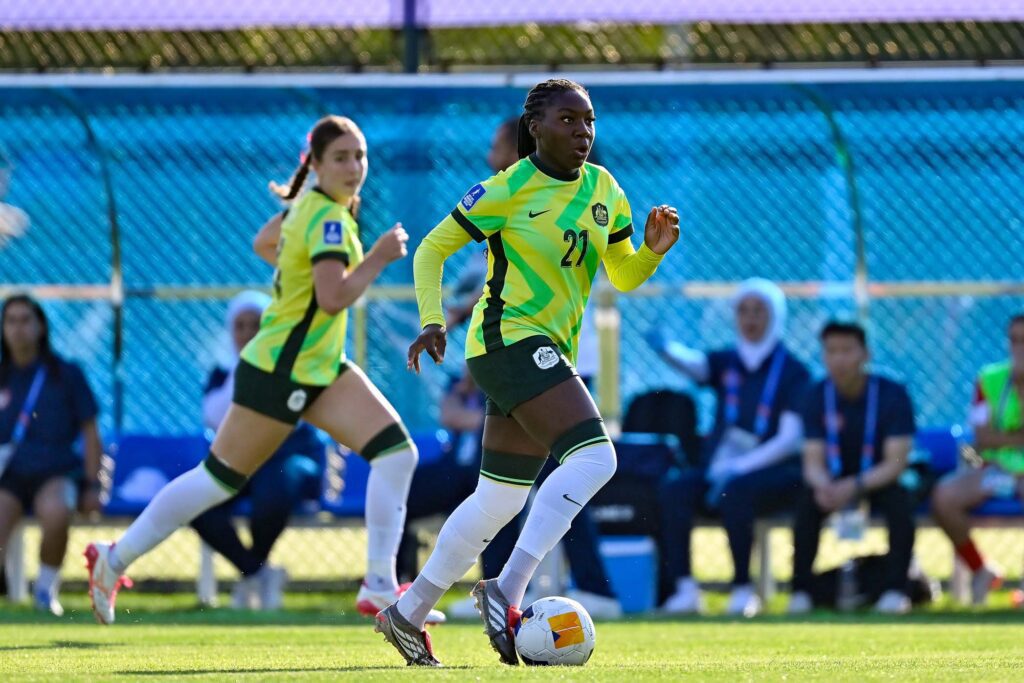 Theo Mouithys Mickalad on the ball for Australia (Photo Credit: The AFC)
When it comes to the match itself, Theo Mouithys-Mickalad is the player Vietnam’s coaching staff will have watched most closely. Two goals in the group stage, she arrives at this quarter-final with fresh legs, sharpened instincts and one with the ability to unlock a disciplined defensive block with a moment of individual brilliance.
Her goals have not been lucky. Against India she created her own opportunity through sheer pressing intensity, forcing a goalkeeper error that others would not have manufactured. Against Lebanon she finished with composure that belied her age, running onto a perfectly weighted through ball from Keira Sarris and chipping the keeper in full stride. She is a player who makes things happen.
Sarris herself deserves recognition beyond the assist. The midfielder has been one of the quieter architects of Australia’s best moments. Her vision in tight spaces and ability to find runners between defensive lines is the kind of quality that only becomes obvious when you watch closely. Against Lebanon, the pass that created the goal was as important as the finish.
Willa Pearson, who wore the armband across the first two matches, brings a different kind of influence. They Sydney FC A-League Women’s breakout provides the composed, organising presence Cooper’s system needs when the ball is being recycled and Australia is building through pressure.
Cooper has been deliberate about using the group stage to build depth rather than simply results.
“I really feel that the girls have applied themselves really well in terms of attitude and application, in terms of energy on the field, and they really have tried to implement what we want them to do.”
“The other positives we’ve had is we’ve managed to get all outfield players on the field to give them experience in the Asian Cup. I think that’s really, really important, and I think that will help all those players progress and develop in the future.”
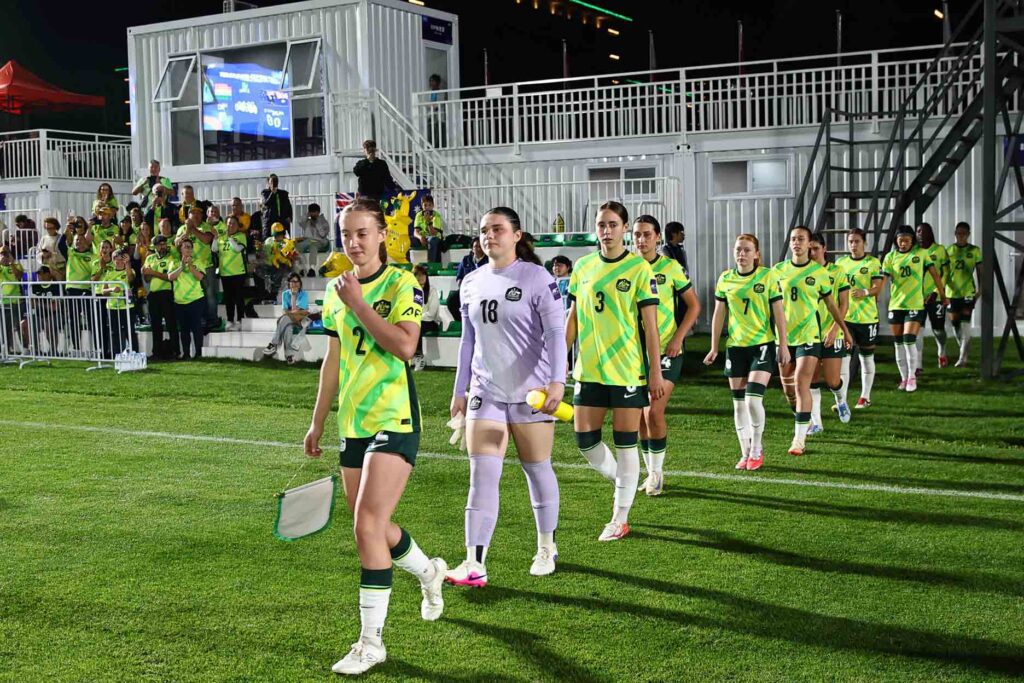 Junior Matildas walking out against India (Photo Credit: The AFC)
That philosophy of tournament football as development, not just results is what makes the squad Cooper brings to Monday’s quarter-final crucial. One where he is not relying on two or three individuals to carry the weight. And there will be moments of weight, especially with plenty on the line for both nations.
“What we can improve on is that kind of belief to keep playing under pressure,” Cooper said.
“Mistakes will happen. But can we deal with that transition moment earlier and higher up the field to gain control again? And when we play against better countries, still try and play our brand of football – which is possession-based under pressure. Which is not easy.”
Possession under pressure demands technical confidence and mental resilience in equal measure. It is easier to play direct when the game is tight. It is easier to defend deep when the opposition is threatening.
Cooper’s ask of these teenagers is the harder one; to keep believing in the method even when Vietnam are sitting compact and the spaces are disappearing. The India performance showed they can do it. The Lebanon draw showed the cost when they drift from it.
“I’m confident that they’re going to try and bring their best self to the game tomorrow,” Cooper said.
For a nation still reaching for its first U-17 Women’s World Cup from this pathway, that self might just be enough.
MATCH DETAILS
Vietnam v Australia (U17 WNT)
Date: Monday, 11 May 2026
Kick-off: 3.00pm local/5:00pm AEST
Venue: Suzhou Taihu Football Sports Centre
Live Stream: AFC YouTube