
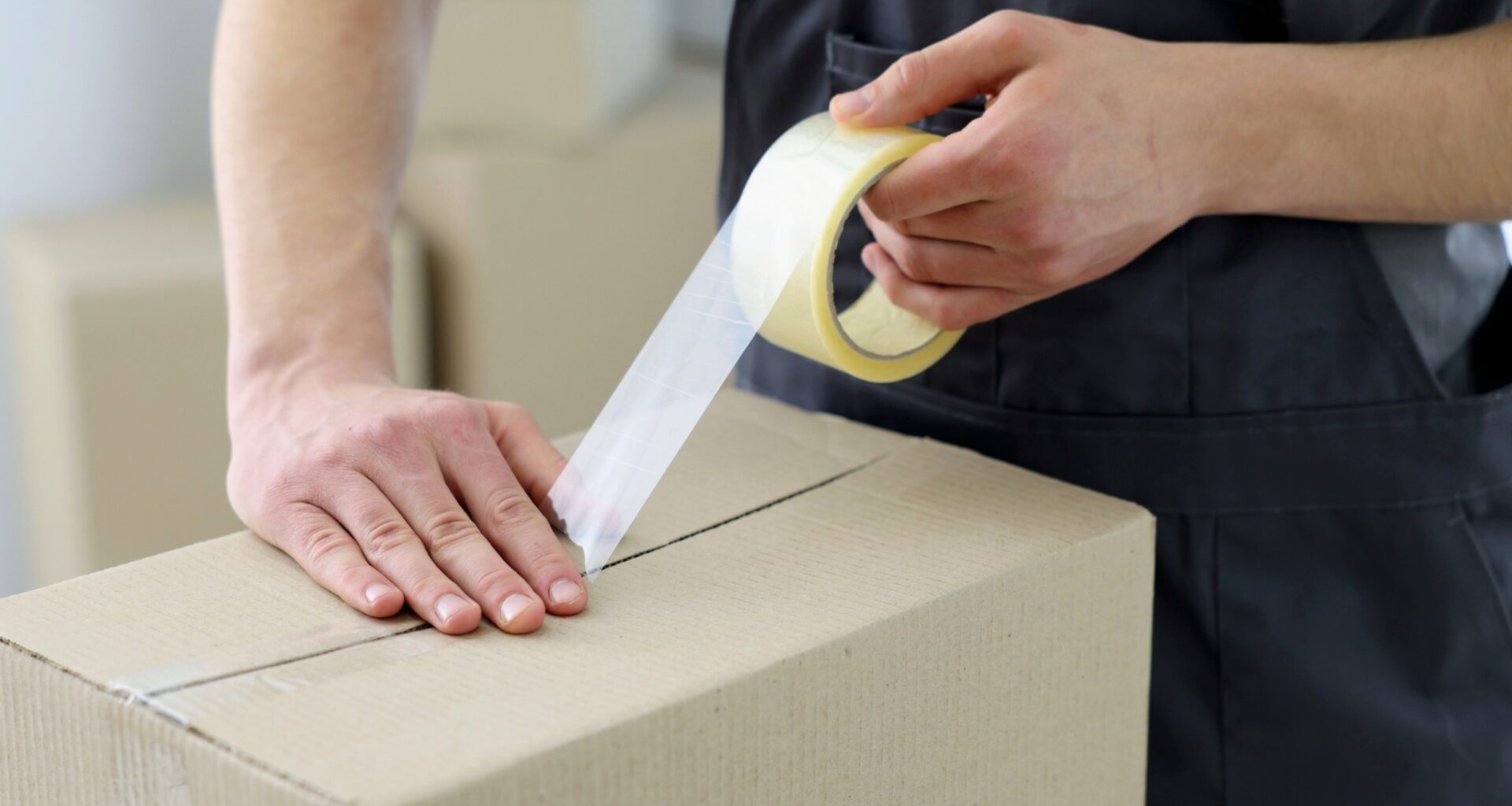
Peel a strip of tape halfway off a surface and lay it back down. The next time you lift, there’s a subtle catch right where you stopped – a spot that takes a bit more force to clear than the rest.
It’s always been there. Most people peel right past it. But a team of physicists just spent months asking what it is.
Materials that hold a record of the past

A surprising number of materials carry a kind of memory. They hold a physical record of what has been done to them.
A folded sheet of paper keeps a crease. Certain alloys, when heated, return to the form they were trained to hold.
Most of those recordings depend on a specific condition. Researchers call it return-point memory, and the textbook example is a combination lock.
Turn the dial clockwise, then back counterclockwise, then forward again. That alternating motion locks each digit into place. Reverse course and the sequence dissolves.
Professor Nathan Keim of Pennsylvania State University (Penn State) wanted to find a system that could pile up memories without that constraint – inputs that only go one way – and he found his answer in adhesive tape.
A simple pattern emerges
The team built a small automated rig that lays a strip of tape onto a flat surface, lifts it partway up to a set distance, and then lowers it back down.
Each cycle began with the tape lying flat and ended the same way. The motion only moved in one direction: peel the tape up, then press it back down, without ever reversing course.
The first experiment followed a simple pattern, with the researchers peeling the tape to one distance, lowering it, then repeating the process at progressively shorter distances.
Every time, something changed right at the stopping point – a zone that required noticeably more force to peel past than the rest of the strip. Each new peel left another one, closer in than the last.
Many memories, one direction
Until this study, no one had demonstrated that a material could store a clean sequence of separately accessible memories using nothing but one-way input.
A 2019 review of memory in materials catalogued dozens of systems and recurring tricks, but storing memories from purely one-way input had remained mostly theoretical territory.
Sebanti Chattopadhyay, postdoctoral scholar and first author of the paper, said the tape needed no coaxing. Lines just formed each time the peeling stopped.
“The harder you press it down, the more firmly it adheres to a surface,” said Chattopadhyay.
That was the first piece. The team also figured out how to control how strong each line could be.
Tuning the strength
When the rig held the tape peeled up before lowering it, the zone at the stopping point appeared to come out stronger – requiring more force to peel past afterward.
The longer the hold, the firmer the result. A short pause left a faint mark. A longer one left a deep one.
Each line could carry both a position and an intensity – the basis for encoding information rather than just timestamps. Some lines could even persist after the rest were wiped clean.
Reading what the tape recorded
To read what the tape had stored, the team simply peeled past where the lines had been formed. An instrument on the rig measured the force needed at every point along the strip.
Each time the peel crossed one of those reinforced zones, the force spiked. Plotted out, the trace shows a sharp pulse at each one – each a saved memory.
Order is the key here. The most recent peel sits closest to the still-stuck portion of the tape. Start lifting, and the most recent memory is always the first one you meet. Last in, first out.
A simple pattern reader
In cognitive science, there’s a working memory test called the n-back task. Participants watch a stream of items and decide whether the current one matches an item shown a certain number of steps earlier.
The simplest version compares each item with the one immediately before it: Does this match the last one?
The tape can do that because each retrieval starts with the most recent memory, a new peel naturally lands right next to the one before it. Two values come out side by side, in order.
Keim said the group treats the tape as a simple pattern reader, not a general-purpose computer.
Future research directions
The study makes a clear point: an everyday material can store a stack of separately tunable memories created without any back-and-forth motion.
Those memories can then be read out in sequence, compared, erased, or preserved.
Latching – the way each new memory locks into place at the stopping point – turns out not to be unique to tape. The team argues it should appear in any system where input only ever goes one way.
No one is going to build a laptop out of Scotch tape, and the researchers don’t pretend otherwise.
What physical computing actually offers isn’t elegance — it’s resilience. Mechanical systems keep working in conditions that would shut conventional electronics down, as a recent paper on the field documents.
Knowing that a cheap, off-the-shelf material can already perform a small comparison operation widens the field of candidate materials worth investigating.
The team plans to keep mapping what materials can quietly remember.
The study is published in the New Journal of Physics.
—–
Like what you read? Subscribe to our newsletter for engaging articles, exclusive content, and the latest updates.
Check us out on EarthSnap, a free app brought to you by Eric Ralls and Earth.com.
—–