
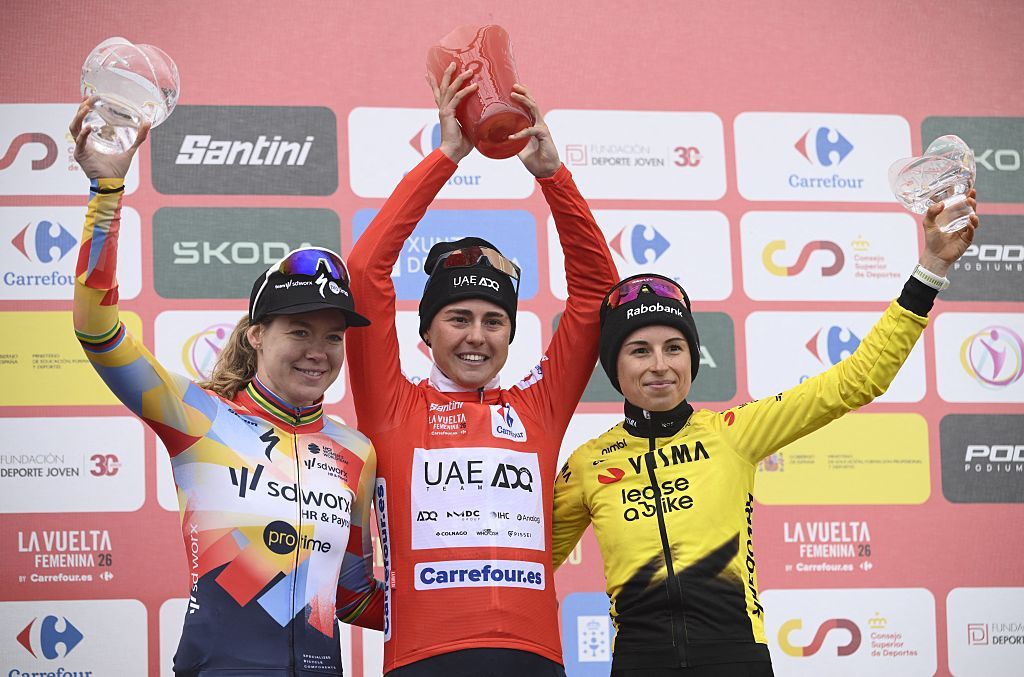
The seven-day Vuelta Femenina by Carrefour.es saw Paula Blasi (UAE Team ADQ) become the first Spanish winner of the race as a young generation of riders took charge. Franziska Koch (FDJ United-Suez) continued to impress after a stand-out spring campaign, and SD Worx-Protime showed that they are still one of the best teams in women’s cycling. We also look back on the aggressive racing and, unfortunately, on the crashes.
I am now in my ninth season of covering women’s road cycling, and for much of that time, races saw the same main protagonists. Now and then, a new rider would move into the top echelon of the sport, but there was no generational break as the ‘old’ names still dominated the results sheets and race reports.
Apparently, women’s road cycling is like a ketchup bottle, and at this Vuelta Femenina, there was a flood of riders aged 20 to 25 taking centre stage and confirming their abilities to not only contend against the best in the peloton but beat the ‘old guard’.
Latest Videos From
You may like
Stage 3 winner Cédrine Kerbaol (EF Education-Oatly) had already established herself at the top of the sport. However, she is still only 24 years old, a month younger than her teammate Noemi Rüegg, who has been extremely consistent for the past two seasons but still lacked that big victory until she won the opening stage.
For 25-year-old Shari Bossuyt (AG Insurance-Soudal), stage 2 was her first WorldTour victory in a difficult sprint, coming from behind with astonishing speed. Bossuyt’s teammate Lore De Schepper, still only 20 years old, wore the white jersey for three days and finished 11th overall.
Sarah Van Dam (Visma-Lease a Bike) assumed her team’s sprint leadership after Marianne Vos crashed, and the 24-year-old Canadian showed that she is more than an outsider if a hilly race comes down to a reduced sprint.
After four years with numerous setbacks, Petra Stiasny (Human Powered Health) finally got her breakthrough victory as the 24-year-old minuscule climber soared up L’Angliru. Marion Bunel (Visma-Lease a Bike) stayed out of trouble on the first five stages (an often underestimated skill for a GC climber) and then climbed to third place overall on the final two days.
And last but absolutely not least, there was Paula Blasi (UAE Team ADQ). The 23-year-old continued her meteoric rise that started three weeks ago when she took a surprise breakaway victory in the Amstel Gold Race. On Les Praeres, Blasi was the last rider to lose contact with Anna van der Breggen (SD Worx-Protime), and where others would be overjoyed with a second place, she seemed almost disappointed not to be able to follow one of the greatest women’s cyclists in history all the way to the finish.
The following day on L’Angliru, Blasi hit back, this time distancing Van der Breggen herself to win the GC. It was the final Vuelta for Blasi’s teammate Mavi García, and the 42-year-old, having been the torchbearer for Spanish women’s cycling for so many years, can retire happy in the knowledge that Blasi is there to carry on.
Franziska Koch truly is cycling’s new Swiss Army knife
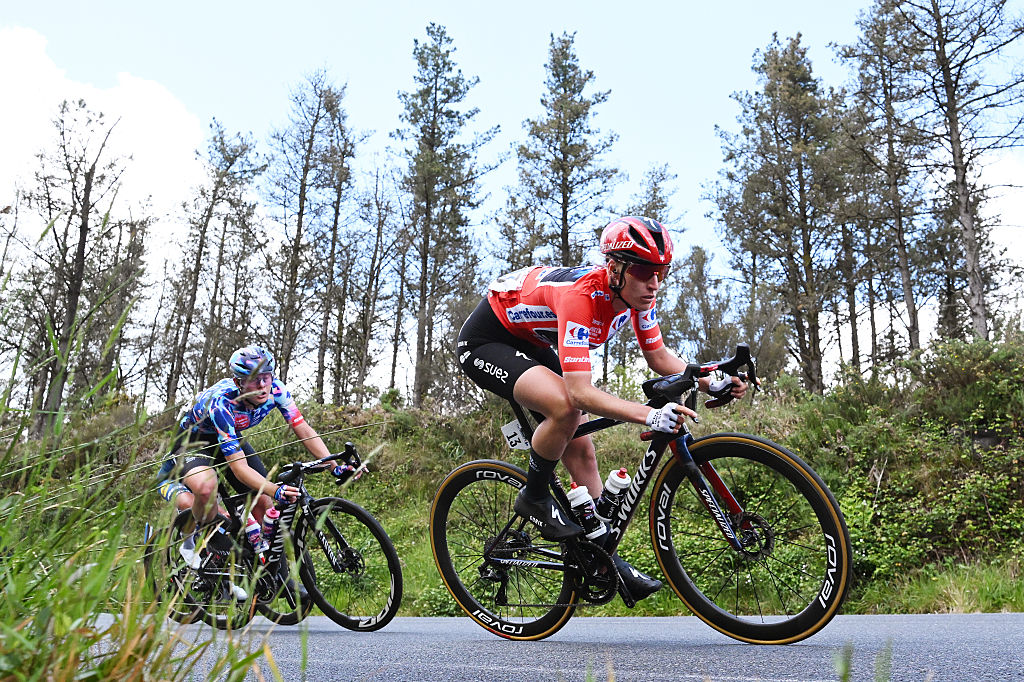
Franziska Koch (FDJ United-Suez) on stage 3 (Image credit: Getty Images)
Franziska Koch is perhaps the rider who epitomises this new generation best: She was an inspired signing by FDJ United-Suez ahead of the season and showed that time and again in the spring Classics, putting the cherry on top by winning Paris-Roubaix. After that stellar spring campaign, the German champion went into the Vuelta with a much bigger spotlight and arguably more pressure on her.
What to read next
The race route was in her favour as there was hardly any real flat stage (even the flattest final on stage 5 ended with a 200-metre ramp to the finish line), but going into the race, I would not have picked Koch to become one of the biggest protagonists.
Koch finished third on stage 1, then moved up another step on stage 2 and inherited the red jersey after Noemi Rüegg’s crash. She defended the red jersey on stage 3 but lost it the next day, still sprinting to fifth place. On stage 5, she finished seventh. The steep finishing climbs of the last two stages are possibly the only thing Koch can’t do.
And from the very beginning, Koch and her team had a plan: Every day, they went for the intermediate sprint to collect points for the green jersey. She took the lead in the points classification after stage 2, finally putting on the green jersey after relinquishing the red jersey after stage 4. Lotte Kopecky (SD Worx-Protime) leapfrogged Koch on the fifth day, but the 25-year-old did not give up, taking the fight for green all the way to the final intermediate sprint, only a few kilometres from the foot of L’Angliru.
SD Worx-Protime, while no longer all-dominant, are still very good indeed
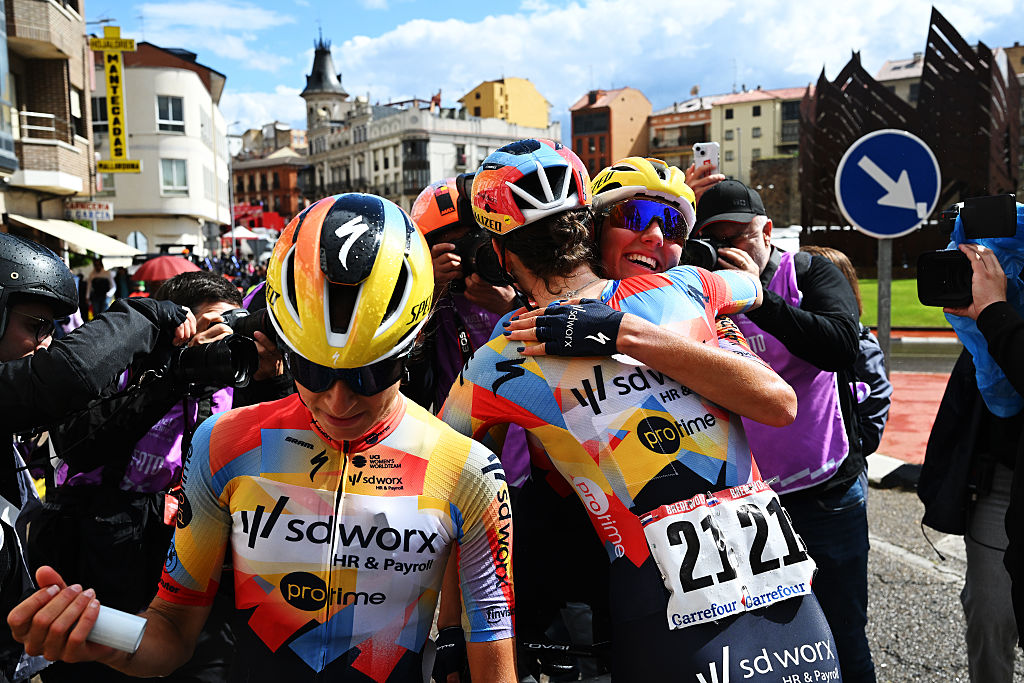
Stage 5 winner Mischa Bredewold celebrates with her SD Worx-Protime teammates (Image credit: Getty Images)
Only a few years ago, Team SD Worx absolutely dominated women’s road cycling to an extent that, in retrospect, sounds unbelievable: In 2023 and 2024, the team won 40 and 45 times, respectively, in Women’s WorldTour races over in 73, and 75 WWT race days. Both years, they added another 13 UCI victories below the WorldTour level and a half-dozen of national championships on top.
The team saw Demi Vollering, Marlen Reusser, and Niamh Fisher-Black leave ahead of 2025, and long-standing super-domestique Christine Majerus retired. Their 2025 season, though still very successful, was far less dominant.
The spring of 2026 saw Lotte Kopecky and Lorena Wiebes ‘only’ winning Milano-Sanremo and In Flanders Fields, but at the Vuelta Femenina, SD Worx-Protime showed up in strength: Kopecky, Anna van der Breggen, and Mischa Bredewold were supported by a well-rounded quartet as Femke Markus was joined by Julia Kopecký, Nienke Vinke, and Valentina Cavallar.
In the first stages, the support was thrown behind Kopecky, who finished runner-up twice in three days, interrupted by a relegation for irregular sprinting on stage 2. The fourth day finally brought Kopecky the sprint victory, and to top it off, Van der Breggen made it a 1-2.
Stage 5 was the ultimate show of force as Bredewold was allowed to sprint for victory herself instead of leading out Kopecky, who was content to watch the competition, finish second for another 1-2, and defend the red jersey.
Van der Breggen won the stage 5 summit finish by pushing a steady but hard pace from the start of the climb, dropping everyone and taking the red jersey. The 36-year-old could not follow the best on L’Angliru but still finished the race as the overall runner-up. In the end, three stage victories, a GC podium, and the points jersey is a haul that (almost) every other team would envy.
Attacking pays off – not always, but eventually
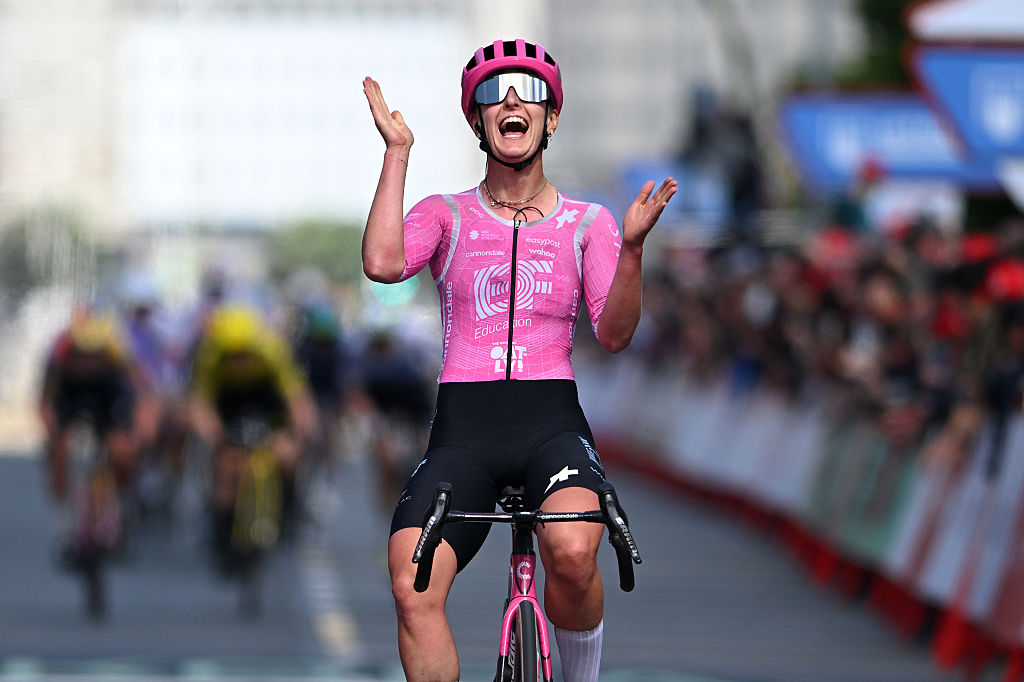
Cédrine Kerbaol (EF Education-Oatly) wins stage 3 (Image credit: Getty Images)
I am always happy to see riders and teams take a race by the horns and try to make their own luck instead of sitting back and waiting to see what happens. They won’t always succeed – in fact, more often than not, they will not succeed – but the mindset was summed up well by Lauretta Hanson (Lidl-Trek), who told her stage 4 breakaway companion Marta Jaskulska (Human Powered Health): “Maybe tomorrow, we’ll see.”
They had just been reeled in less than 3km from the finish line, and Hanson did describe the outcome as “a bit heartbreaking”. Nonetheless, she seemed more than ready to do it all over again. When it comes down to it, a breakaway isn’t about winning – it’s about holding out hope, even against the odds.
While Hanson and Jaskulska were left empty-handed, Marine Allione (Mayenne-Monbana-My Pie) made a memory for a lifetime: Having taken the two mountain sprints on the stage, she rode herself into the multi-coloured polka-dot mountain jersey, the first time her French team had held a Grand Tour classification jersey. And the team defended the jersey by attacking: Alice Coutinho went into the breakaway on stage 5 and won both of the day’s mountain sprints to take the jersey from her teammate’s shoulders.
And stage 3 saw an attacking masterclass from EF Education-Oatly: The day after losing Noemi Rüegg in a crash while wearing the red leader’s jersey, the team threw everything at the hilly final into A Coruña, and after an attack by Kristen Faulkner with 12km to go and a move by Alice Towers on a steep cobbled ramp, Cédrine Kerbaol’s counter-attack stuck, and she pulled away to win the stage.
Crashes influenced the race
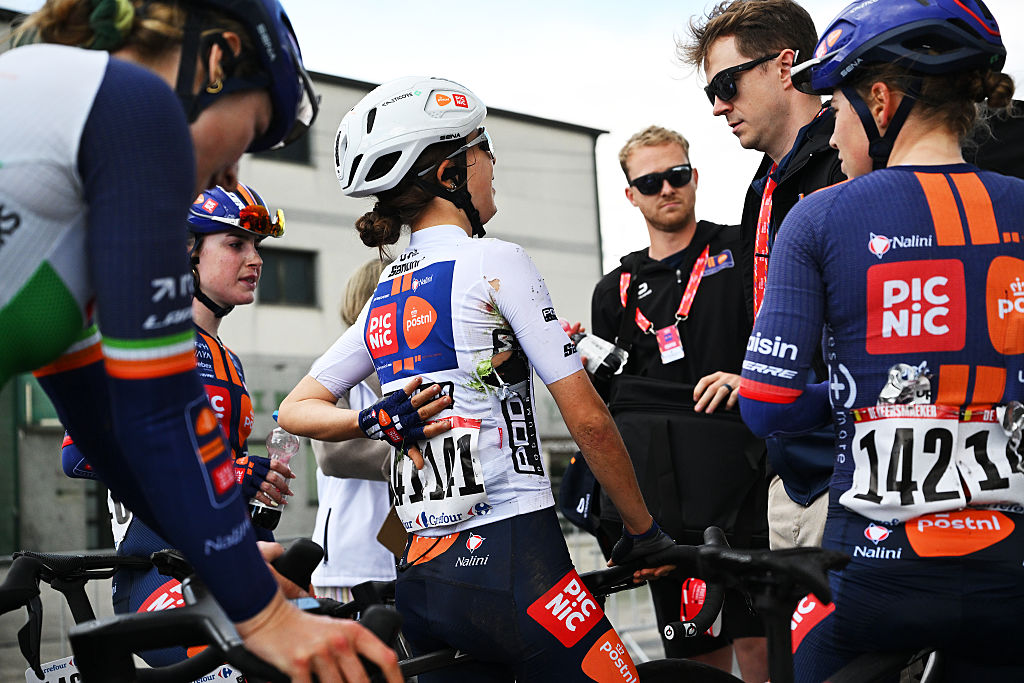
Eleonora Ciabocco (Picnic PostNL)m in torn jersey, talks to her team at the end of stage 2 (Image credit: Getty Images)
Although the Vuelta Femenina only runs for seven stages instead of three weeks like a men’s Grand Tour, the same pattern is at play: The first couple of days are always hectic and nervous, and unfortunately, this often leads to crashes that end a rider’s race.
In this Vuelta, red jersey Noemi Rüegg, crashing the day after winning stage 1 and having to abandon with a shoulder fracture, was the most visible of these crashes. The same crash also claimed Eleonora Ciabocco – the Picnic PostNL rider was able to finish the stage, wearing a torn white jersey for the best U23 rider, but she did not start the following day.
In stage 1, the most famous victim of a crash in a technical descent within the last 10km was Marianne Vos (Visma-Lease a Bike). Vos had won two stages and the points jersey in three consecutive Vueltas since 2023, and she still returned to place seventh on the stage but could not take the start on stage 2 due to her injuries.
A mass crash on wet roads shaped the finish of stage 5, and when Maëva Squiban (UAE Team ADQ) crashed out on stage 6, the race lost a serious contender for the mountain jersey. Several other DNFs were also the result of crashes, directly or indirectly.
However, and it feels almost absurd to write this when the then-race leader literally fractured her shoulder, the riders involved were still ‘fortunate’ to escape without more serious injuries. Road cycling has always been dangerous, and crashes will always be a part of the sport, but more measures need to be taken to safeguard against life-changing or even life-ending injuries.
Subscribe to Cyclingnews for unlimited access to our La Vuelta Femenina coverage as the likes of Anna van der Breggen, Paula Blasi, Kasia Niewiadoma-Phinney and others battle it out. Don’t miss any of the breaking news, reports, and analysis from one of the biggest women’s stage races of the season. Find out more.