
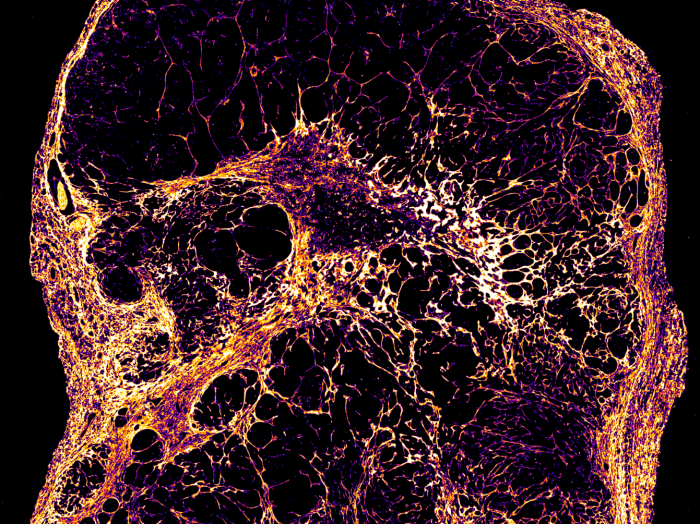
Researchers have mapped the drivers of breast cancer cells that resist therapy by growing extremely slowly rather than entering a completely dormant state.
A new study by the Garvan Institute of Medical Research and UNSW Sydney has uncovered a hidden mechanism explaining why breast cancer can return many years after successful treatment.
Published in Nature Communications, the research revealed rogue cells that change their programming to allow them to divide at a remarkably slow pace, meaning they could form microscopic tumours that silently tick away in distant organs, evading detection for decades.
This research addresses a major challenge for patients with estrogen receptor-positive (ER+) breast cancer, where the possibility of relapse can linger for years after being declared cancer-free. Even after five to 10 years of initial hormone therapy, up to 30% of patients develop incurable relapse, heavily contributing to the more than 3300 women who die from breast cancer in Australia every year.
Relapse is known to be caused by cancer cells lying dormant in the bone or other organs before ‘waking up’ to cause metastasis. The new research provides evidence on a parallel pathway by which stealthy cancer cells develop into secondary tumours – findings which could uncover new approaches to prevent metastasis.
“We have become very good at treating primary breast cancer, but late relapses remain a major challenge,” says UNSW Conjoint Associate Professor Liz Caldon, Lab Head at the Garvan Institute and senior author of the study.
“While we know some cancer cells can go into a state of complete hibernation, we characterised an important alternative pathway that enables cells to never truly stop dividing during treatment,” A/Prof. Caldon says.
“Instead, they survive by growing extremely slowly in the background, until a tiny speck becomes a pebble.”
Even though these cancer cells are slow-growing, they are far from harmless. Once these ‘micrometastases’ – tiny secondary tumours – cross the threshold of detection or disrupt a vital organ like the brain or bone, they can become a life-threatening relapse that is notoriously resistant to chemotherapy.
“For a long time, the idea that extremely slow-growing cells could drive relapse was just a theory,” A/Prof. Caldon says.
“We’ve found evidence for the way this could happen in ER-positive breast cancer,” she says.
“By identifying the pathways that are important in these slow-growing cells we have a new lever to potentially prevent these deadly outcomes.”