
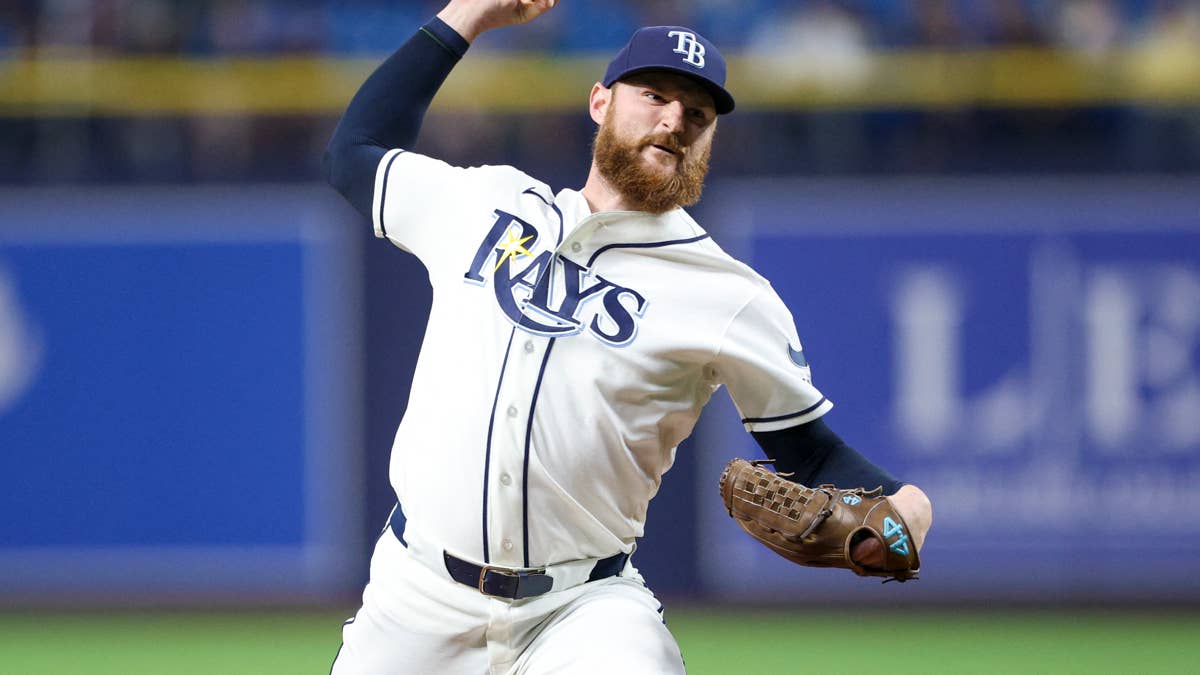
Bryan Baker has come out of nowhere to become a top reliever in fantasy baseball 2026, accumulating 11 saves so far for what had been a beleaguered Tampa Bay bullpen.
So what’s Baker’s angle?
Therein lies the secret to his mastery.
Advertisement
The Remake Numbers That Matter Most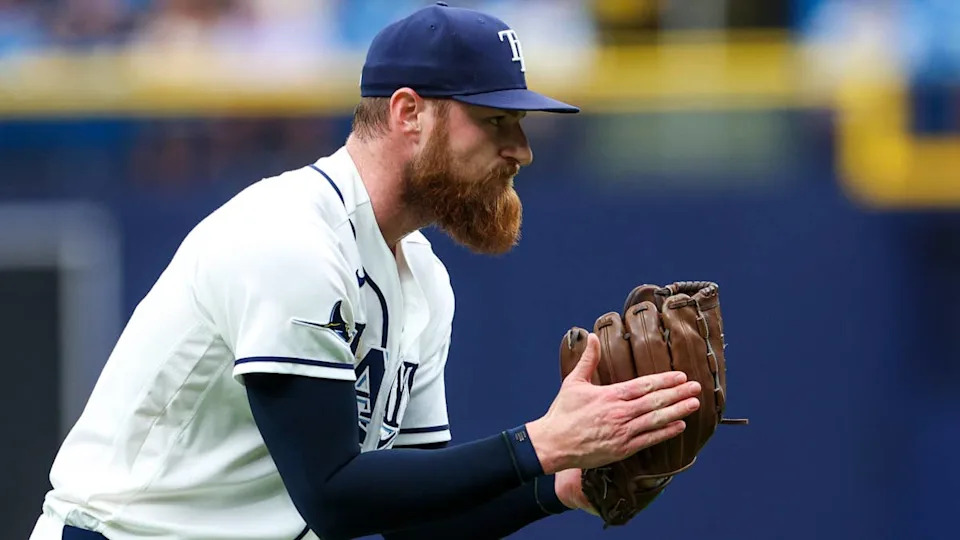
Bryan Baker’s revamped fastball shape now supports one of baseball’s strongest underlying reliever profiles.Nathan Ray Seebeck-Imagn Images
Velocity, Arsenal Shift, and Contact Suppression
Let’s back up and reframe his season so far. Bryan Baker is two saves behind Mason Miller for the major league lead. Yeah, it’s like that.
Baker, a 31-year-old veteran, counted just four career saves with an okay 3.86 career ERA. A decent bullpen arm with a 96-mph fastball, but not much else.
So what’s changed.
Stop me if you’ve read this before….Baker has re-invented himself by dropping his arm angle. Since lowering his arm slot, his stuff is nastier, and, repeat after me, he has earned 11 saves this season.
Advertisement
Baker is essentially a fastball-changeup pitcher, throwing those two pitches more than 93 percent of the time. But thanks to a new arm angle (51 degrees this year, lower than 54 degrees in 2025, but much lower than his 60 degrees in his 2021 rookie season), his fastball has renewed life.
He is throwing that pitch at about the same velocity as last year, with a touch more spin, but his stuff+ grades on his fastball have jumped from 94 to 102. (100 is league average).
Baker has actually increased his arm angle on his slider, which he suddenly throws less than 7 percent of the time and has a Stuff+ grade of 112. His bread and butter, though, is his excellent change-up. That pitch has a 138 Stuff+ grade, so is 38 percent better than the average change.
Advertisement
Historical Comps of Re-invented Relief Pitchers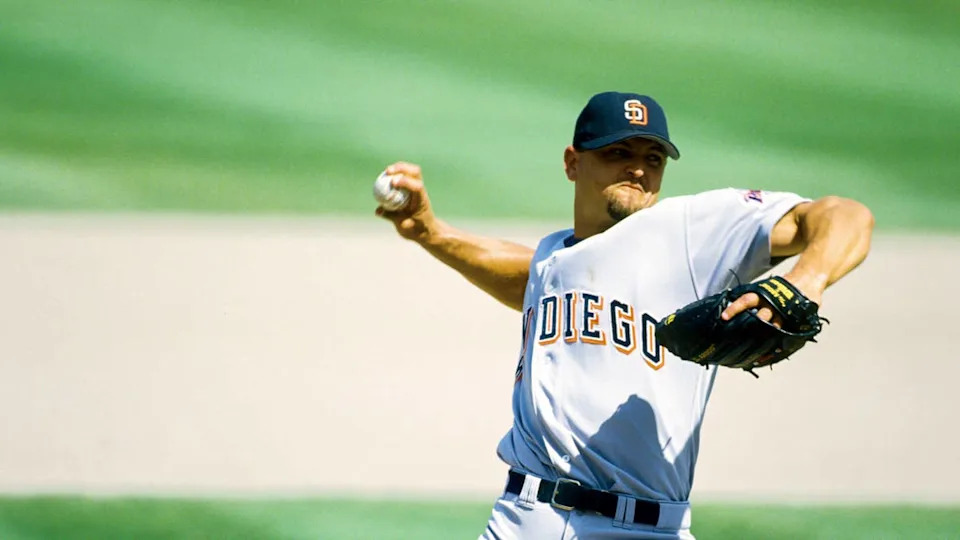
Trevor Hoffman’s legendary changeup reinvention provides the clearest historical blueprint for Bryan Baker’s breakout.
Trevor Hoffman is the gold standard. Hoffman entered the majors as a power pitcher with a mid-90s fastball, but a shoulder injury in 1994 permanently diminished his velocity and forced him to reinvent his approach. Working that offseason on a new grip with teammate Donnie Elliott, he developed a changeup that crossed the plate 15 to 17 mph slower than his fastball while matching it in arm speed and appearance. That “Bugs Bunny pitch,” as teammates called it, proved nearly unhittable and carried Hoffman to 602 career saves and a Hall of Fame plaque. Like Baker, Hoffman was a pitcher who lost one weapon, committed to a secondary pitch as the primary offering, and built an entirely different identity around it.
Advertisement
Kenley Jansen offers the more recent, Statcast-era version of the same story. From 2011 to 2017, opponents slugged just .315 against Jansen’s cutter. By 2019 that number had risen to .465, and hitters who had spent years being overmatched by one pitch were starting to time it. Rather than insist on the same approach, Jansen rebuilt. By 2023 he had shifted his release point significantly closer to third base and several inches lower, producing a cutter that his own manager described as “invisible” and “just a different pitch.” Jansen also diversified his repertoire, adding a sinker that paired with the cutter to create a tunneling effect that got under barrels, and he committed to the changes so completely that he threw cutters more than 80 percent of the time in 2025, more than any other pitcher in baseball. He is still closing games in 2026 at age 38. The lesson: when a mechanical adjustment is real and the pitch design follows, the shelf life extends.
Jason Adam is the most direct functional comp for Baker’s specific reinvention path. A journeyman reliever who spent years in middle relief without a defined role, Adam overhauled his arsenal around a dominant changeup in his early thirties and emerged as one of the better setup arms in MLB. His changeup-first approach—same conceptual architecture Baker is now using, high fastball up, changeup below—produced elite whiff rates and contact suppression that his surface ERA consistently undersold. Adam’s career arc is the closest analog to what Baker is currently executing: not a power pitcher relying on velocity alone, but a pitch-design conversion that created a genuinely new pitcher from the same arm.
Exact Fantasy Strategy: Add or Trade for Baker Right Now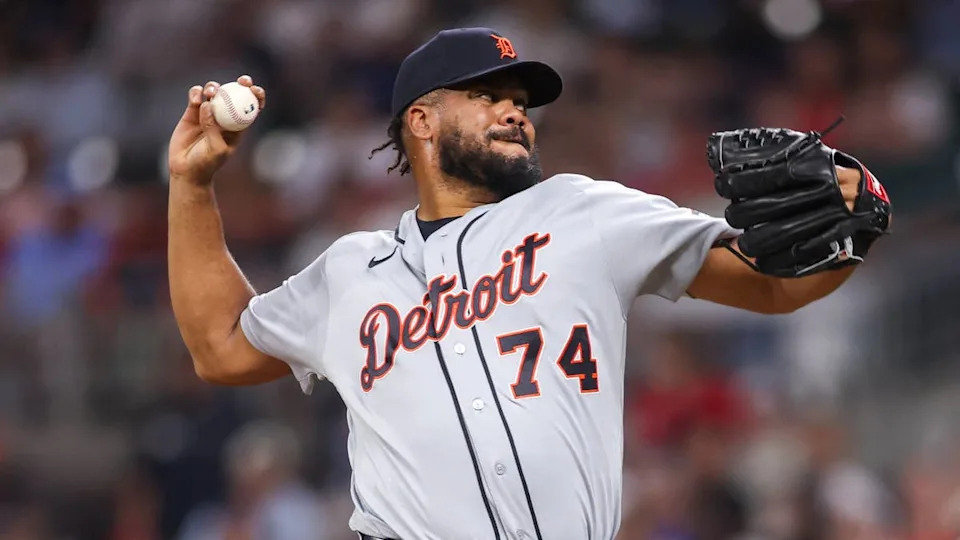
Kenley Jansen’s late-career mechanical adjustments demonstrate how elite relievers can successfully extend fantasy relevance.Brett Davis-Imagn Images
Waiver Priority, Trade Value, and Roster Advice
If Baker is available in your league, he is your top priority add this week. But assuming he is not, you’ll need to work the trade circuit to land him.
Advertisement
In categories leagues, his saves total alone makes him roster-worthy, but the 2.16 ERA and 0.84 WHIP are genuine ratio contributors. In points leagues, strikeout-to-inning efficiency matters just as much as saves, and Baker delivers on both counts. In dynasty formats, he is a controllable closer-quality arm on a bargain contract through 2026.
In the trade market, expect to overpay slightly. A reliable starting pitcher or a solid corner bat is a reasonable return ask. Do not give up a top-five asset for a reliever, but do not lowball this one either. Eleven saves and elite Statcast contact suppression through May 11 is not a rental. It is a closer who finally has the arsenal to match what the numbers always suggested.
The quiet part of this story is that Baker’s underlying profile was never the problem. The ERA was the problem, and the ERA was wrong. Fantasy managers who understand the difference between results and stuff already own him. Everyone else needs to catch up.
Advertisement
Questions About Bryan Baker, Answered
Why is Bryan Baker one of the top relievers in 2026?
His 11 saves and elite contact suppression come from a deliberate arm slot drop, changeup-first arsenal, and career-high fastball velocity.
Are Bryan Baker’s blown saves a major concern?
The blown saves are real, but the underlying stuff is not the problem. The article explains why the ERA does not reflect his true quality.
Should I add Bryan Baker on waivers or trade for him right now?
He won’t be available on waivers, but he is an excellent trade target if his owner doesn’t make you pay through the nose for him.
Advertisement
How sustainable is Bryan Baker’s current performance?
The article examines the arsenal changes and historical comps for relievers who remade themselves mid-career.
What risk factors remain with Bryan Baker in 2026?
The article discusses any remaining command or usage concerns that could affect his role.
Is Bryan Baker worth rostering in shallow 10- or 12-team leagues?
Yes. His save total and underlying stuff make him a priority add even in shallower formats.
This story was originally published by Athlon Sports on May 12, 2026, where it first appeared in the Fantasy section. Add Athlon Sports as a Preferred Source by clicking here.