
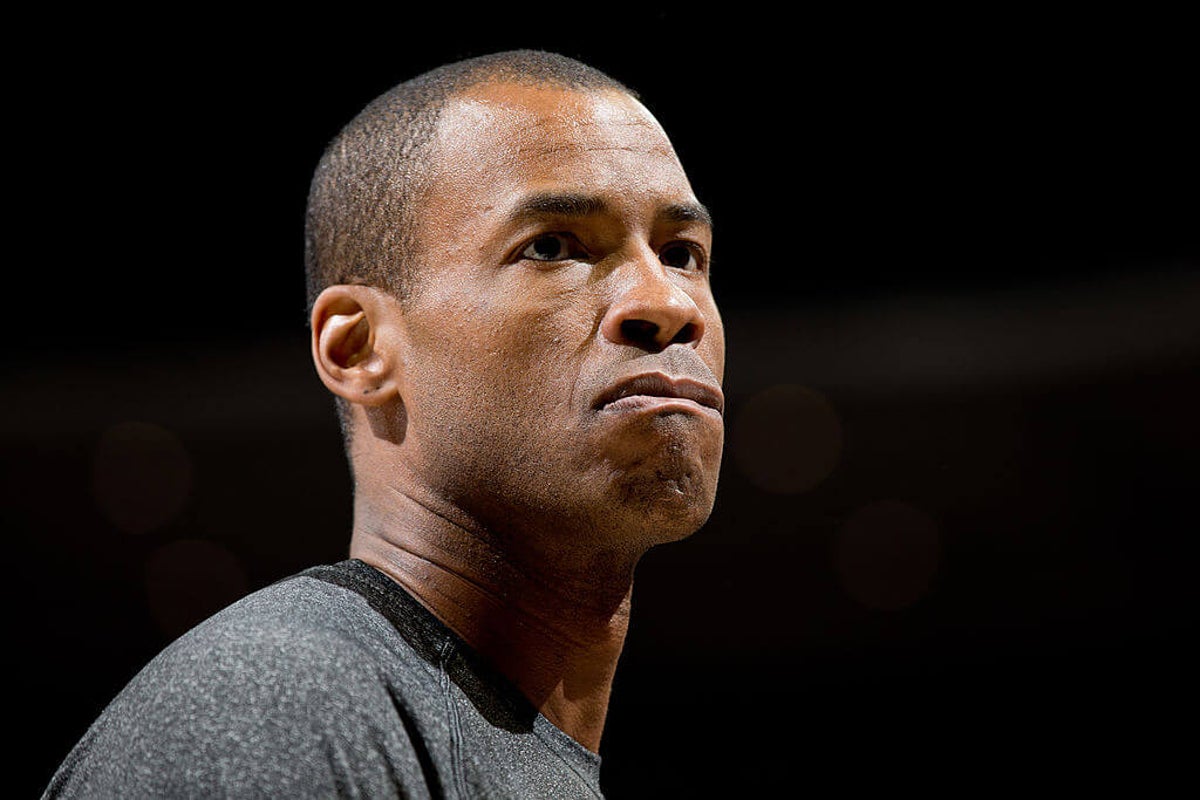
When Jason Collins was working up the courage to come out as gay to his grandmother, he worried what she might say. She was a deeply religious woman. And, out of all of his family members, she was the one he was most nervous to confide in.
But she looked at him — truly saw him for who he was — and embraced him. “Baby,” she told him, “it’s about love.”
Love is one of the many principles Collins would come to stand for. Love is what Collins encouraged. Love is what enabled him to overcome his fear of what his family, friends, NBA teammates and coaches would say, when he decided to come out on April 29, 2013, a watershed moment in professional sports.
Love is one of the many gifts that Collins gave us. He died at age 47 Tuesday. He announced in December that he was undergoing treatment for Stage 4 glioblastoma, one of the most severe forms of brain cancer.
“We are heartbroken to share that Jason Collins, our beloved husband, son, brother and uncle, has died after a valiant fight with glioblastoma,” Collins’s family said in a statement released by the NBA Tuesday.
“Jason changed lives in unexpected ways and was an inspiration to all who knew him and those who admired him from afar. We are grateful for the outpouring of love and prayers over the past eight months and for the exceptional medical care Jason received from his doctors and nurses. Our family will miss him dearly.”
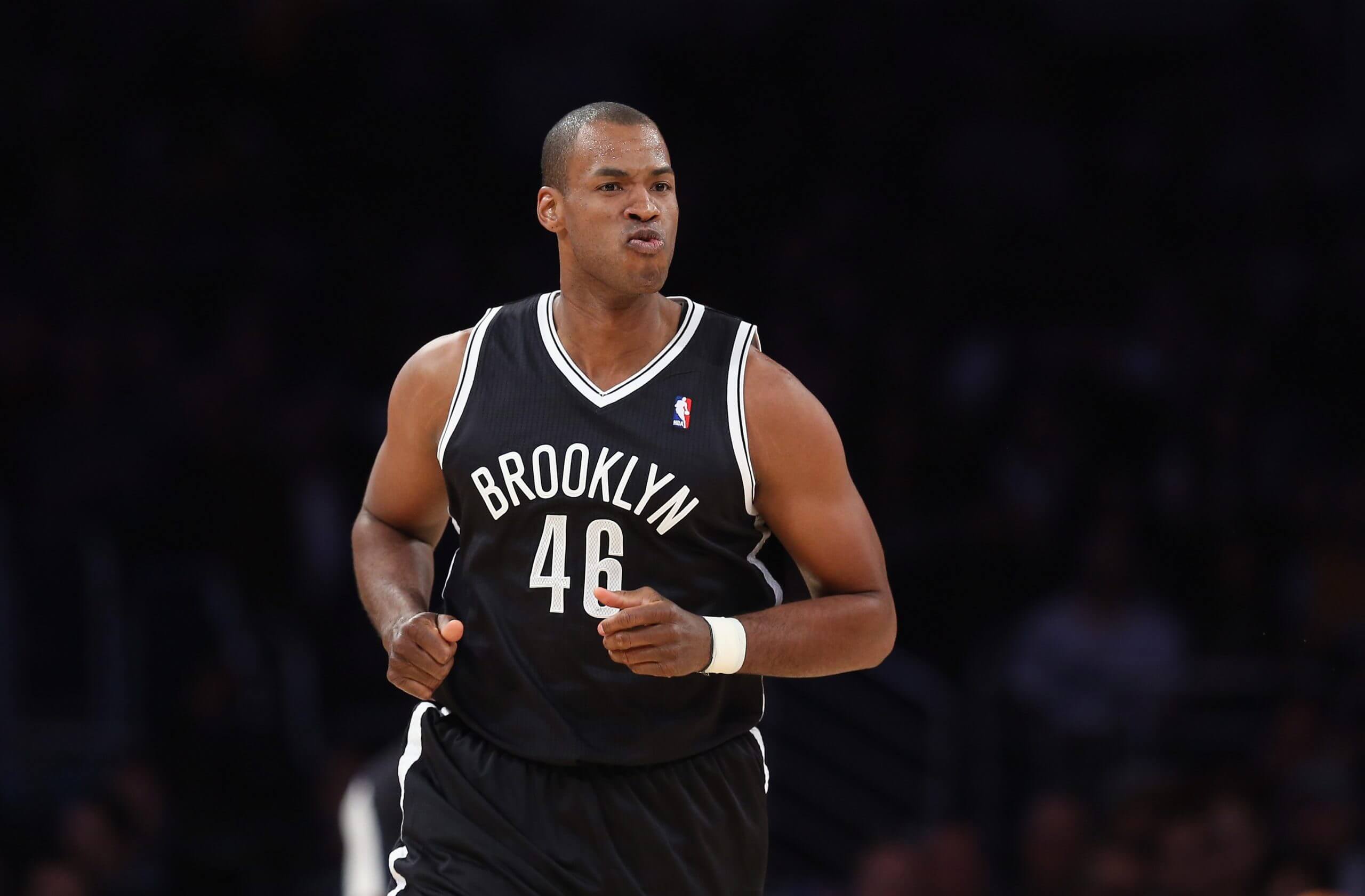
Jason Collins was on the Nets two NBA Finals teams in 2002 and 2003. (Jeff Gross / Getty Images)
After spending a lifetime of wishing he were different, Collins told the world exactly who he was in 2013.
“I’m a 34-year-old NBA center. I’m black. And I’m gay,” he announced that day in an essay for Sports Illustrated, becoming the first active publicly gay athlete of North America’s four major pro sports leagues.
No more hiding. No more living a lie. No more wrestling with himself. If he was going to play basketball, he was going to play basketball fully. As himself. All of himself.
Whole.
And because of his courage, a new generation of athletes stood a little taller. Straightened their shoulders a little firmer. He gave people permission to be themselves — to love who they want.
And to love themselves.
When diagnosed with cancer, he shared his own story, on his own terms, as he did when he came out in 2013. “I can honestly say, the past 12 years since have been the best of my life,” Collins told ESPN. “Your life is so much better when you just show up as your true self, unafraid to be your true self, in public or private. This is me. This is what I’m dealing with.”
When Collins decided to come out as gay in 2013, he was inching toward the end of his professional career. He had a fine NBA resume that included playing for six teams. He was widely respected by his coaches and teammates. He was a first-round draft pick in 2001 and an All-Pac 10 player at Stanford. Collins was drafted by the Houston Rockets and then traded to the New Jersey Nets. He was on the Nets’ two NBA Finals teams in 2002 and 2003.
He could have ended his career without saying a word. But the more he looked around him, and the more he looked inside him, searching to, as he would say, embrace “the puzzle that is me,” he realized that he would have to be the role model he wished he had. No one else had spoken up. No one else, it seemed, was willing to sacrifice, willing to take the risk of the stigma that he surely knew would come with his words.
“I wish I wasn’t the kid in the classroom raising his hand and saying, ‘I’m different,’ he wrote that day in 2013. “If I had my way, someone else would have already done this. Nobody has, which is why I’m raising my hand.”
His impact was widely felt not just in the NBA, not just in basketball, but in all sports. Around the world. President Obama. Kobe Bryant. Everyone was listening. In sharing his truth, he opened up a space for others to be vulnerable, too. And there have been other athletes who have come out since, including NFL players Michael Sam (2014) and Carl Nassib (2021).
If the measure of a life is one’s impact on others, Collins succeeded in droves. He continued his advocacy long after 2013, becoming a public speaker and political activist. He was a balm in a world where homophobia and transphobia have risen. He was an example of the way that athletes can use their voice for the betterment of society. It didn’t matter how many career rebounds he had; he taught thousands of children that words are powerful. That one can find acceptance; belonging that he didn’t know was possible when he was growing up in Los Angeles.
He followed a strong moral compass, one that taught him to “be a good teammate,” he told The Athletic in 2023. “It all goes back to what my grandmother said: your reputation will go places you will never go. Try to have a positive effect on people so that when you leave their presence, they’re speaking kind words about you. Know that the world has enough negativity already. … Try to be as positive and to help somebody else as much as you can.”
As a journeyman, he always knew he had more basketball years behind him than he did in front of him. Time was always in the background, asking players of his caliber, of his age, when it might be time to hang up his sneakers. But he was thinking beyond that. He was thinking about how to help other people. And he wanted to do it before time ran out — before his career was over.
For years, he wondered whether he should come out — and when. And what the consequences might be. When former Stanford University roommate, Joe Kennedy, a congressman from Massachusetts at the time, marched in a Pride parade in Boston, he felt more of an urge to speak his truth. But it was the Boston Marathon bombing that shifted something in him. It “reinforced the notion that I shouldn’t wait for the circumstances of my coming out to be perfect,” he wrote in 2013. “Things can change in an instant, so why not live truthfully?”
His death reminds us of how quickly things can change. That urgency to live in our own truths, and to be supportive of others. To be positive. To be kind.
There is always time to love.