
LYNCHBURG, Va. (WSET) — What started as a drug to treat type 2 diabetes has quickly become one of the most popular weight loss trends in the country.
Ads for medications like Wegovy and Ozempic promise rapid weight loss and a path to a healthier lifestyle, but doctors say that while these drugs can be effective, long-term success depends on more than just a weekly shot.
Amy Snead has been on a GLP-1 medication for two years. It used to be that a walk to her neighbor’s house would leave her out of breath.
Today, she walks up to five miles several times a week around her Pittsylvania County home.
Snead is one of millions of Americans who have turned to GLP-1 drugs to help them lose weight.
“I was always the shorter one and the bigger person, the fat person,” she said.
She says she struggled with her weight her entire life, trying everything from traditional diets to keto.
“It was absolutely miserable for me. I felt very weak, I felt deprived, I felt sick at times,” she said.
SEE ALSO: Fact Check Team: Weight loss drugs are reshaping US agriculture and food industry
Like many diets, the weight didn’t stay off.
“You feel good about yourself one minute, and then just a couple of months later that weight is back,” Amy said.
About two years ago, she was diagnosed as pre-diabetic. Her doctor recommended a GLP-1 medication. She now takes a weekly injection and says it has changed the way she thinks about food.
“Your food noise stops,” she said.

Amy Snead has lost 126 pounds using a GLP-1 drug (WSET)
So far, she’s lost 126 pounds.
GLP-1 stands for glucagon-like peptide-1, a naturally occurring hormone that helps regulate blood sugar and appetite.
It slows down how quickly the stomach empties, helping people feel full longer.
But in some people, that hormone doesn’t function properly.
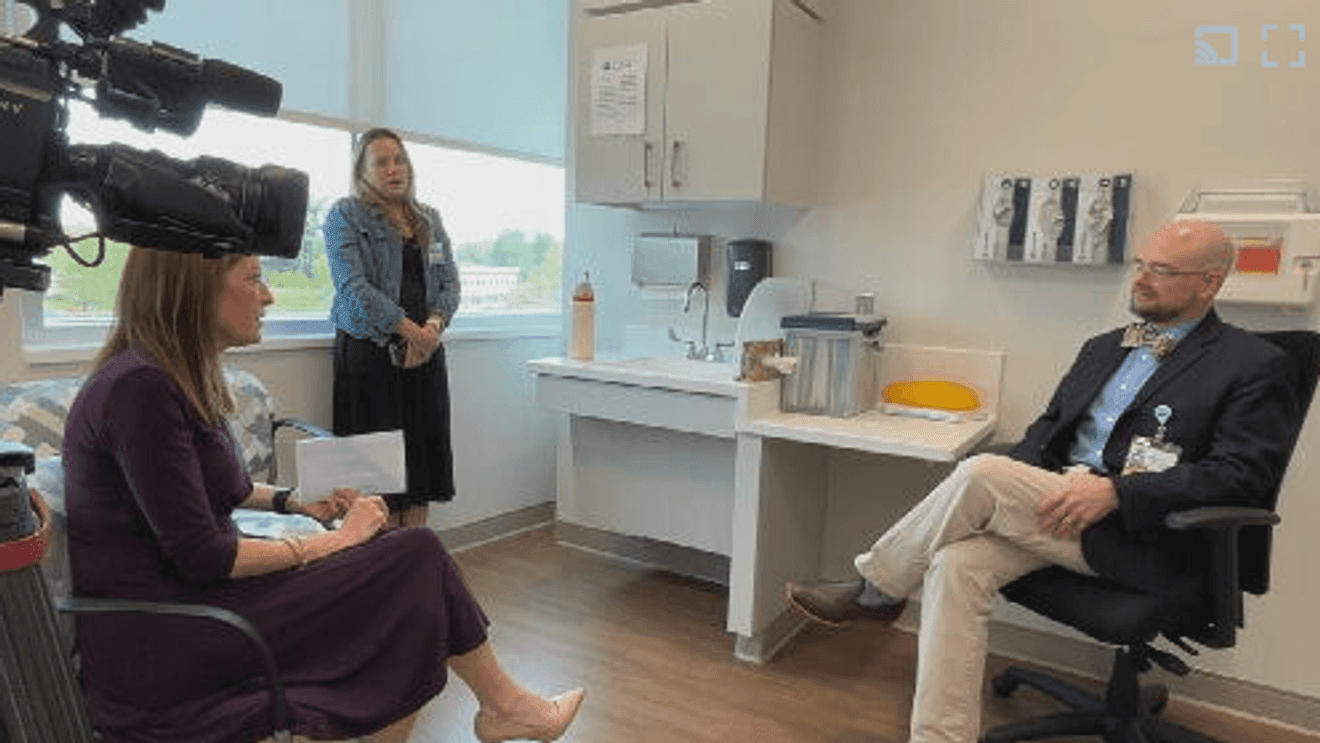
“Folks with obesity, their stomach isn’t slowing down properly,” said Dr. Michael Jones, an obesity and cardiometabolic specialist in Lynchburg.
Doctors have prescribed GLP-1 drugs for diabetes for more than 20 years, but only more recently for weight loss.
“They just can’t eat as much as they used to,” Jones said.
He says these medications are best suited for people with obesity, the underlying condition that often leads to type 2 diabetes. Jones says obesity isn’t simply about what you weigh — it’s about how fat is distributed in the body, particularly visceral fat around organs.
And for many patients, diet and exercise alone aren’t enough.
“What we’ve been doing in diet culture is akin to giving people a cough suppressant for their pneumonia,” he said.
Cindy Capps has been taking a GLP-1 drug for four years and has lost 85 pounds.
SEE ALSO: ‘I thought I was dying’: How a local weed smoker’s nightmare reflects a statewide issue
“I can remember being at the pediatrician’s office and being told I needed to lose weight even as a child,” she said.
She first learned about the drugs from a friend while on vacation and started researching them immediately.
She’s lost 85 pounds so far.

Cindy Capps has lost 85 pounds using a GLP-1 drug (WSET)
But researchers say there are concerns about the long-term effects of these medications. Side effects can range from nausea and constipation to more serious conditions like pancreatitis and gallbladder issues.
Doctors also warn about another risk: muscle loss.
GLP-1 drugs suppress appetite, so patients often eat less — including less protein, which is essential for maintaining muscle. Studies show that patients who don’t stay physically active, especially with strength or resistance training, may lose muscle along with fat.
Researchers at the University of Virginia say studies show many patients are not following recommendations to maintain muscle while losing weight.
“It’s important to remember individuals should try to get 150 minutes of activity a week,” said Dr. Sid Angadi, an associate professor of kinesiology at UVA.
He also says there are still unanswered questions about the long-term effects of these medications, since their use for weight loss is relatively new.
“At this point, we don’t have trials showing you can completely prevent muscle loss,” Angadi said.
Research shows that when patients stop taking the drugs, the weight often returns — but not necessarily the muscle.
“There’s some preliminary evidence suggesting the majority of the weight we gain back is fat,” said Dr. Zhenqi Liu, a physician and endocrinologist at UVA.
Despite the concerns, patients like Amy and Cindy say they have no plans to stop taking the medication.
“I just want to be healthy for my family,” Cindy said.
Amy says the changes have been so dramatic that even her own son didn’t recognize her at first when he saw her from behind at a local store.
“He said, ‘Mom, I didn’t even know it was you,’” she said.
Doctors say patients should be cautious about where they get these medications.
Brand-name drugs like Ozempic and Mounjaro are FDA-approved and require a prescription.
Some online sellers offer compounded versions that are not FDA-approved and may vary in quality and safety.
Cost is another factor. With insurance, patients may pay anywhere below a few hundred dollars a month. Without coverage, the drugs can cost up to $1,400 monthly.