
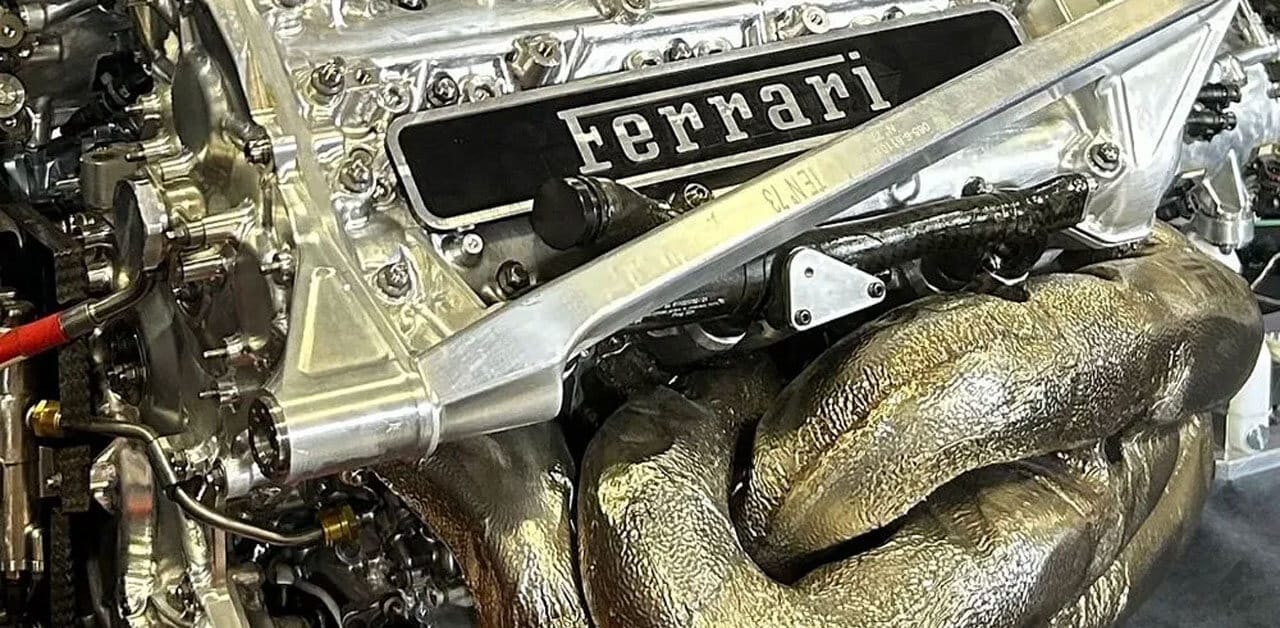
Reports suggest Ferrari’s Formula 1 power unit project suffered a major technical misjudgment, leaving Lewis Hamilton and Charles Leclerc fighting with a significant performance deficit against Mercedes
Ferrari’s 2026 Formula 1 campaign may be paying the price for a crucial technical misjudgment made long before the first race of the season, with fresh reports suggesting the Scuderia’s power unit programme was built on flawed assumptions during its early development phase.
As a result, Ferrari’s engine department is understood to have entered the new Formula 1 regulations era already knowing that the current power unit would represent more of a stopgap solution than a genuine championship-winning weapon.
That scenario would help explain one of the biggest contradictions of the 2026 season so far: Ferrari appears to possess one of the strongest chassis packages on the grid, yet continues to lack the straight-line speed necessary to consistently challenge for victories.
For both Lewis Hamilton and Charles Leclerc, the frustration is obvious.

While Ferrari initially looked like the most likely team to challenge Mercedes at the start of Formula 1’s new era, the picture has shifted rapidly. Mercedes has established itself as the benchmark thanks largely to its dominant power unit package, while McLaren—benefiting from the same engine architecture—has increasingly looked capable of overtaking Ferrari in the competitive order.
The central issue appears to be power output.

Industry estimates suggest Ferrari may be operating with a deficit of roughly 25 to 30 horsepower compared to Mercedes, a gap large enough to fundamentally shape race outcomes in modern Formula 1, especially under the current hybrid power unit regulations where energy deployment and efficiency are critical.
According to reports in the Italian media, information emerging from inside Ferrari’s broader technical environment points to “critical issues” encountered during the early design stages of the 2026 power unit programme.
The reported problem centered on Ferrari’s projected combustion efficiency targets. Engineers are believed to have overestimated the level of energy efficiency that could realistically be extracted from the internal combustion architecture, leading development decisions down an overly optimistic path.
In Formula 1 engine development, such a forecasting error can be enormously expensive.
Once a power unit concept is locked into a particular architecture, correcting strategic mistakes becomes exceptionally difficult due to packaging constraints, homologation pressures, and the immense complexity of hybrid system integration.
Leadership changes also appear to have played a role in the transition period.
Following the departure of engine chief Wolf Zimmermann, who moved to Audi, Ferrari’s engine programme came under the stewardship of Enrico Gualtieri, who reportedly inherited the difficult task of redirecting development under severe time pressure and within tight budget limitations.
Under those circumstances, Ferrari is understood to have shifted strategy.
Rather than attempting an aggressive late redesign that could compromise reliability, the Scuderia reportedly prioritized durability, operational consistency, and a stable performance baseline for 2026, effectively accepting that this would be a transitional campaign on the power unit side.
That does not mean Ferrari has given up.
The FIA’s Additional Development and Upgrade Opportunities framework could offer a partial lifeline. After the Canadian Grand Prix, engine manufacturers will be formally assessed against the benchmark power unit—widely believed to be Mercedes—and development concessions will be allocated accordingly.
Ferrari’s position within that system could prove crucial.
If the Scuderia’s power unit is judged to be significantly behind, Ferrari could gain access to millions in additional development spending and multiple intervention opportunities aimed at reducing the performance gap.
There has been some speculation suggesting Ferrari may be deliberately masking its true performance to maximize those benefits, but such theories appear difficult to support given the visible performance limitations affecting both Lewis Hamilton and Charles Leclerc on track.
Even with additional funding, however, expectations should remain realistic.
Closing a gap of approximately 30 horsepower through a single upgrade cycle would represent an extraordinary technical recovery, especially under modern Formula 1 development constraints. More likely, any short-term gains would offer incremental progress rather than a complete reversal.
For that reason, many inside the paddock increasingly view 2027—not late 2026—as the realistic target for Ferrari’s fully revised engine concept.
Until then, Ferrari may be forced to rely on chassis efficiency, aerodynamic innovation, strategic execution, and driver excellence from Lewis Hamilton and Charles Leclerc to remain competitive against better-powered rivals.
May 15, 2026David Carter
Let other Scuderia Fans know about us


