
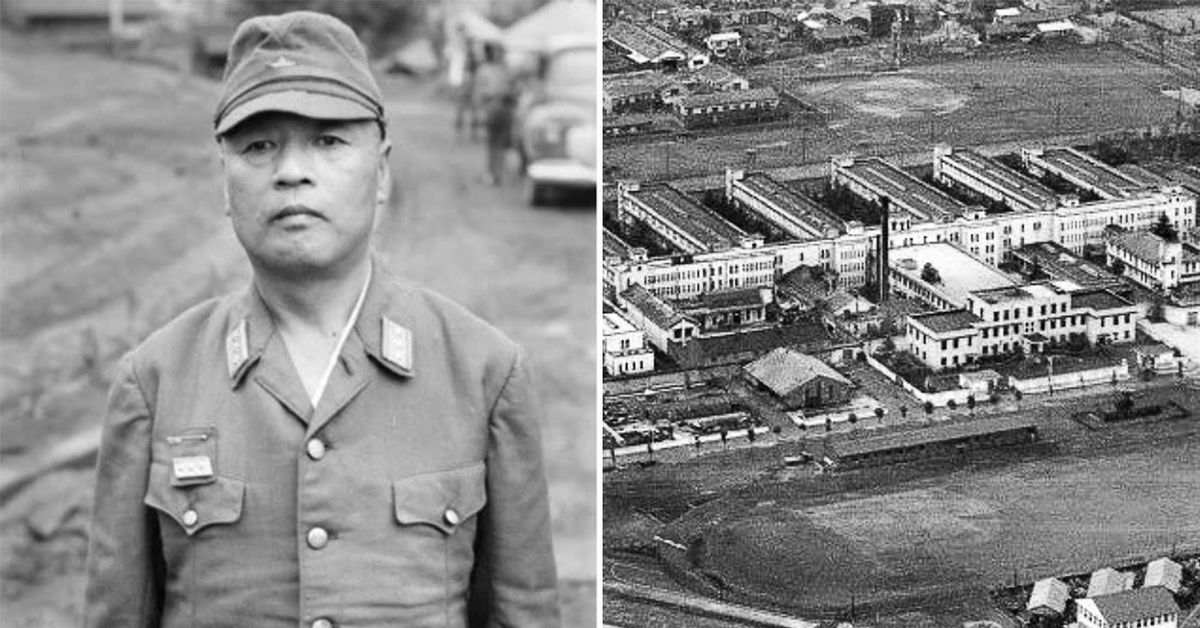
Imamura was accused of presiding over a series of terrible crimes, including what became known as the “pig-basket atrocity”.
Allied troops in what is now Indonesia were put in tiny cages intended for pigs by Japanese troops. Japanese general Hitoshi Imamura thought he should have been locked up longer. (Public Domain)
The perceived intention of the grim execution was to frighten Indonesian locals from getting involved in guerilla activities.
They were then thrown into the shark-infested waters off the coast.
Imamura was given a ten-year sentence for his role in the crimes.
But the general was appalled by the sentence, which he considered to be too lenient.
He had previously asked the court to hasten their trial so more troops that were under his command could be convicted more quickly.
For eight years, he was locked up in Tokyo’s Sugamo Prison, where the most high-profile war criminals of Japan were kept. Sugamo Prison housed many Japanese war criminals after 1945. (Supplied)His sentence was served alongside Prime Minister Hideki Tojo, who was tasked with serving food to his fellow prisoners in the lead-up to his execution.
Imamura was released after eight years behind bars.
Finding the light sentence disgraceful, he returned to his home and had a replica of his prison cell built in his garden.
For the rest of his life, Imamura lived in the backyard cell as a self-imposed punishment for his crimes.
 Japanese general Hitoshi Imamura thought his sentence was manifestly inadequate. (Public Domain)
NEVER MISS A STORY: Get your breaking news and exclusive stories first by following us across all platforms.