
May 16, 2026 — 5:00am
Save
You have reached your maximum number of saved items.
Remove items from your saved list to add more.
AAA
This week the Victorian Coroners Court has been hearing the story of one family devastated by their son’s suicide.
Kyle Hudson was encouraged by online betting sites to come out and play – almost 500 times.
And play he did. The court heard that his bets between 2017 and 2021 totalled $900,000, including deposits of more than $406,000.
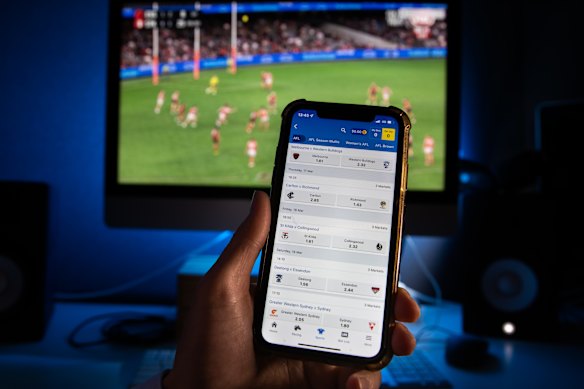 The Albanese government released its response to the gambling harm report this week, on the day of the federal budget.Jason South
Was there a limit to how far Kyle could go? Well, one of the online sports betting companies he had an account with was bet365 (“we’re putting the power in your hands”), and they did allow Kyle to set a limit – the monthly deposit ceiling was $1 million.
But his spending was monitored, surely? Another gambling giant, Sportsbet, told the court that Kyle’s spending had triggered its internal alert system on average once every six weeks, and it contacted him directly by email or phone over his behaviour 37 times. Sarah Rizzo, director of customer operations at the company, provided evidence that many of these internal alerts were reviewed manually by staff, who determined “no further action” was required.
At another betting company, Entain (which operates Ladbrokes and Neds in Australia), Kyle was blacklisted – not out of concern for his safety, but for fear that he was gaming the system by having a bet each way.
Related Article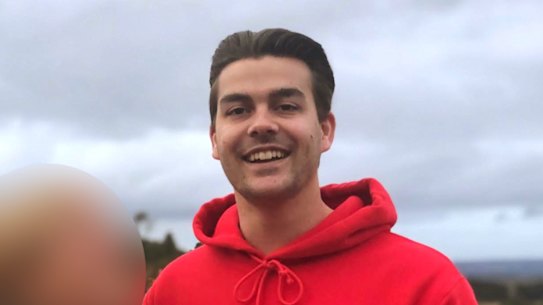
On July 6, 2021, he came out to play twice more, losing more than $6000. By the end of that day, Kyle Hudson was dead. He was 22 years old.
Each of these companies told the court that since Kyle’s death, they have reformed their processes. Rizzo said that Sportsbet would now be alerted more often; bet365 no longer offers a $1 million monthly limit; and Christina Baek, Australia’s head of compliance at the $6 billion Entain Group, said it now had tighter rules around monitoring of customers under the age of 26.
But something else has changed since then. On June 28, 2023, the late Labor MP Peta Murphy released the report of an inquiry into gambling harm, with 31 recommendations. Among them were the creation of a national online gambling regulator, a ban on “free money” inducements to wager online, a phased and comprehensive ban on advertising for online gambling, and a levy on online betting companies to finance a national harm-reduction strategy.
At the time of Murphy’s death, Prime Minister Anthony Albanese and Murphy’s colleagues in government paid tribute to her work. The recommendations of her report were cross-party and unanimous. Yet, they sat in the government’s inbox for well over 1000 days.
This week, the government finally tabled its response – on the day of the federal budget, when most of the journalists in Canberra were in a lock-up to cover the treasurer’s announcements. Of the 31 recommendations, only a handful were looked at. We won’t be getting a national regulator or a comprehensive advertising ban, and inducements weren’t touched.
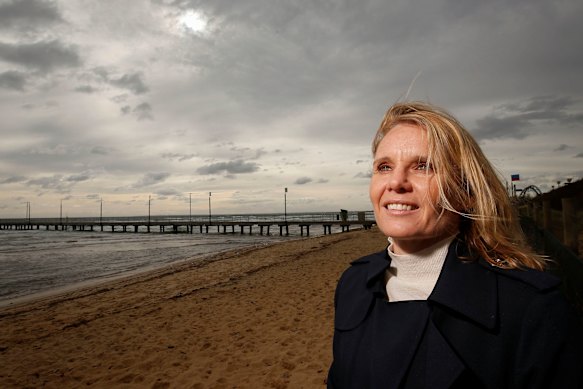 The late Labor MP Peta Murphy led the inquiry into gambling harm.Darrian Traynor
In April, when the government announced some restrictions on advertising on television and players’ uniforms, Sports Minister Anika Wells declared that “our reforms will break the connection between wagering and sport”. Yet, it is precisely that connection that many will blame for the 1000-day delay and the halfheartedness of what has been put forward.
The symbiotic relationship between the betting companies, the nation’s richest sporting leagues and commercial broadcasters, including Nine, owner of this masthead, is worth hundreds of millions of dollars annually. Most governments would hesitate to disrupt such a nexus, even without the lobbying of the parties involved.
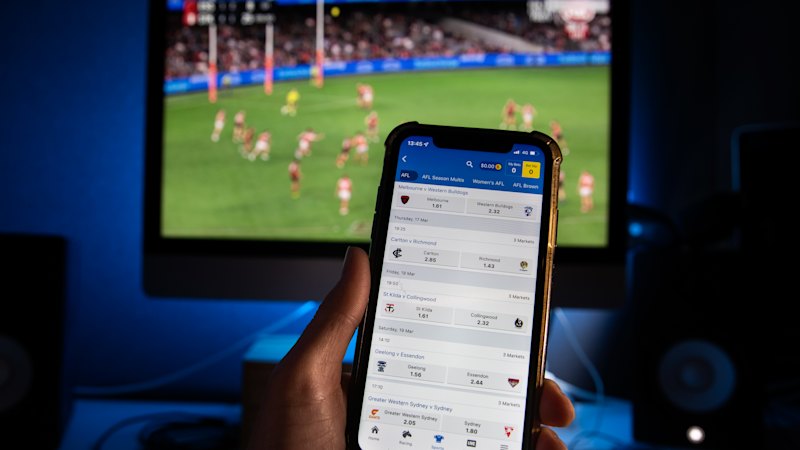
On the AFL’s website, short preview videos for upcoming games demonstrate the problem. Far from being simply considerations of the merits of each competing side, these are ads for wagering on both the outcomes of matches and individual performances within them, brought to you by well-known former players.
Related Article
In recent weeks, two former AFL players with commercial relationships to betting companies, Kane Cornes and Luke Hodge, have stood down from the sport’s All-Australian selection panel to avoid a conflict of interest. Hodge, always adept at shrugging off tacklers, cast his decision in terms of preserving the integrity of the honours system rather than his own remuneration.
Everyone can see who the winners are in this system – they race across our screens under the brightest of lights. But the losers are too often hidden from view, suffering and even dying in the shadows.
This masthead recently reported on hundreds of cases in which gamblers who had joined the national self-exclusion register BetStop were still losing money and the regulator, the Australian Communications and Media Authority, was unable to act on the breaches.
Martin Thomas, chief executive officer of the Alliance for Gambling Reform, says Australians squander $31.5 billion every year – the biggest losers in the world for gambling per person.
“The reason why we have such a huge problem here is because we have some of the laxest gambling legislation in the world,” he says.
Until the government fronts up properly on tackling sports betting and pays Peta Murphy’s work the respect it deserves, we will keep having to count losses of a type that none of us can afford.
Gambler’s Help: 1800 858 858. Lifeline: 13 11 14.
Save
You have reached your maximum number of saved items.
Remove items from your saved list to add more.
 The Age’s View – Since The Age was first published in 1854, the editorial team has believed it important to express a considered view on the issues of the day for readers, always putting the public interest first.From our partners