
Victoria’s sobering-up centre in Collingwood will close next year, ending a support service for people found drunk in public less than four years after the offence was abolished.
Aboriginal and Torres Strait Islander readers are advised that this article contains names and images of a person who has died. The image has been used with family permission.
The Department of Health, which confirmed the closure after questions from the ABC last week, insisted dedicated centres for Aboriginal people and outreach for the general population would continue.
The 20-bed site run by cohealth has endured criticism for low uptake since it opened in November 2023, when public intoxication was decriminalised and health workers took responsibility from police.
Outreach workers have since supported people who are drunk in public by offering water, help to get home, or phoning family. If needed, people are transported to the centre to sober up.
But a redesign of the framework over the coming year means people who are drunk in public and need extra support will progressively be taken to local health and community services instead of the Collingwood site, which will then close in mid-2027.
The department did not immediately explain which services would take responsibility.
If you need help: National Alcohol and Other Drug Hotline: 1800 250 015 — 24/7 info, counselling and referrals (webchat available Mon-Fri 8:30am-5pm)Family Drug Support: 1300 368 186 — 24/7 support for families, friends and carers of people with problematic alcohol and drug useAl-Anon: 1300 252 666 — support groups for friends and family of alcoholicsPath2Help: an online tool that assesses the problem and connects you to nearby support servicesNarcotics Anonymous: 1300 652 820Beyond Blue: 1300 224 636 Lifeline: 13 11 14MensLine Australia: 1300 789 978
“Victoria’s public intoxication services will continue,” a department spokesperson said.
“People intoxicated in public will continue to be supported by outreach services to help them get home safely or return to the care of family and friends.
“The centralised service model will evolve, with an emphasis on localised and integrated service delivery to ensure Victorians continue to get the care they need.”
Work to continue
This month’s state budget reduced funding to manage the reform from June 2027 onward, from $28.5 million to $23.8 million per year.
Dedicated centres for Aboriginal people will continue in St Kilda and regional areas like Shepparton.
Sobering up centres for the general population never opened in the regions.
The state opposition has long cast the centres as a waste of taxpayer money, housing an average of about three people a day in the first year, and argued the beds could be better used.
Victoria was among the last Australian jurisdictions to abolish the offence — which Aboriginal people were disproportionately policed by — 30 years after the 1991 Royal Commission into Aboriginal Deaths in Custody called for the reform.
The government committed to the change after the 2017 death in custody of Yorta Yorta woman Tanya Day, who was asleep on a train and arrested for public drunkenness.
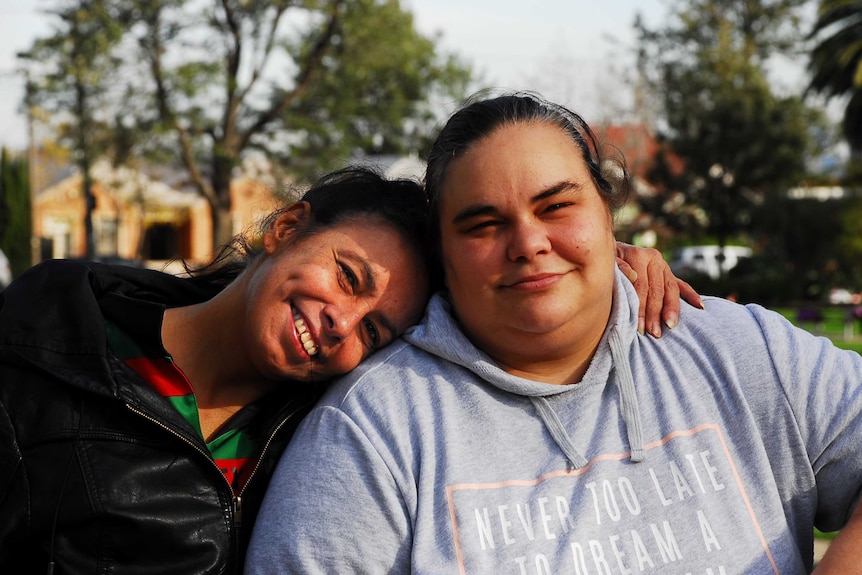
Tanya Day’s (left) death in 2017 was the impetus for legal reforms. (Supplied)
She hit her head in her cell but police did not notice a lump on her head for three hours, when they called an ambulance. Ms Day had a bleed on her brain and died more than two weeks later of a cerebral haemorrhage.
The organisation responsible for outreach for the general population in Melbourne, as well as the Collingwood site, cohealth, said the community health organisation would continue to be a provider under the new framework.
“Over the next year, cohealth is working with government, Aboriginal leadership, staff, and service users to strengthen public intoxication health services, including transitioning sobering services for the general population from the centralised Collingwood site to more local options connected to health services by mid-2027,” a spokesman said.
“A health-based response to public intoxication saves lives, improves health and safety outcomes, and benefits individuals and the broader community.”
While the public intoxication charge was abolished on November 7, 2023, the Collingwood sobering centre was not ready in time and opened later that month, adding to questions about the state’s readiness.
A drunk 34-year-old man in 2024 was hit by a car and killed after cohealth declined to take him to its Collingwood centre because of rostering constraints, prompting the community health organisation to overhaul its staffing policies.