
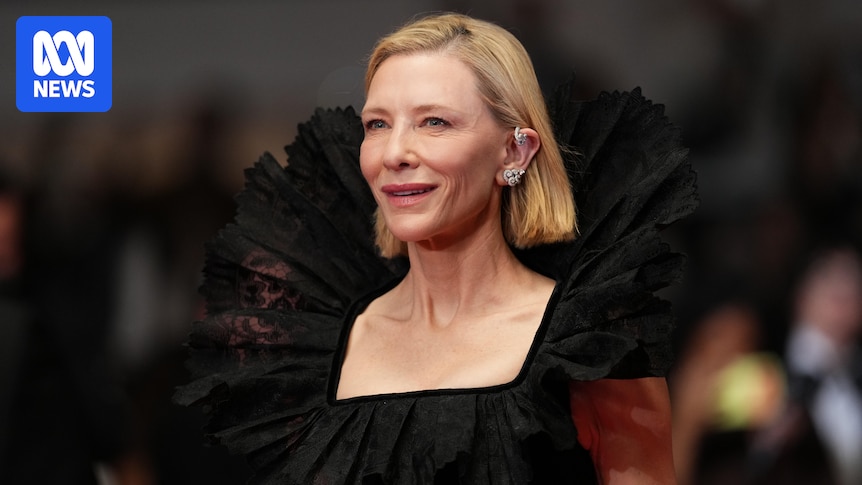
Australian actor Cate Blanchett has lamented that the #MeToo movement “got killed very quickly” in Hollywood.
In a wide-ranging, staged conversation at the Cannes Film Festival in southern France on Sunday (local time), Blanchett said the tide of #MeToo had turned in Hollywood, where she has been outspoken about gender equality.
“It got killed very quickly, which I think is interesting,” she said.
“There are a lot of people with platforms who are able to speak up with relative safety and say, ‘This has happened to me’. And the so-called average woman on the street, person on the street, is saying ‘me too’. Why does that get shut down?”
In Harvey Weinstein’s courtroom, #MeToo’s legacy was on trial
In 2018, when the Oscar-winner was president of the jury in Cannes, Blanchett took part in a red-carpet protest.
She and 81 other women appeared on the steps of the Palais des Festivals, representing the total number of female directors selected for the competition since its inception.
Over the same period, 1,866 male directors had been selected.
“I’m still on film sets and I do the headcount every day. There’s 10 women and there’s 75 men every morning,” Blanchett said.
“I love men, but what happens is, the jokes become the same.
“You just have to brace yourself slightly, and I’m used to that, but it just gets boring for everybody when you walk into a homogeneous workplace.”
The #MeToo movement was founded by activist Tarana Burke to support women and girls of colour experiencing sexual violence in the American South.
It became a global movement in 2017 after actor Alyssa Milano used the phrase online following the first sexual assault allegations against former film producer Harvey Weinstein.
Nearly 100 women went on to accuse Weinstein of sexual misconduct spanning decades, allegations that helped trigger a broader reckoning across the entertainment industry.
Now, almost a decade later — and as jurors in Weinstein’s third New York rape trial struggle to reach a unanimous verdict — the movement’s legacy has grown complicated.
What was once hailed as a transformative cultural shift is now facing questions about how much lasting change Hollywood is willing to accept. But supporters of the movement say its significance remains.
AP/ABC