
Madring’s general director shares the latest update on construction progress and the long-term vision for Madrid’s new Formula 1 Grand Prix
Luis García Abad, general director of Madring and a long-established figure in the Formula 1 paddock due to his close connection with Fernando Alonso, has provided a major update on the progress of Madrid’s ambitious new Spanish Grand Prix project.
The new circuit is being designed as a semi-permanent track that combines public roads with temporary infrastructure near IFEMA, placing the event at the heart of one of Europe’s major capitals. This concept brings significant logistical advantages, including immediate proximity to Madrid’s international airport and strong public transport connections, making accessibility a key selling point for Formula 1 fans.
The challenge of building a Formula 1 circuit in a major European city
Constructing a Formula 1 venue in Europe comes with significant regulatory complexity, from environmental rules to urban planning requirements.
Speaking to Motorsport, Luis García Abad explained: “Well, honestly, it’s very difficult because building something in Europe or in Spain is not simple. We have a huge number of regulations, we have to comply with many laws, environmental rules, and all kinds of requirements. But we are on schedule, and our plan from the beginning was something we had been working on well in advance.”

The project team only chose to make details public once every aspect had been fully confirmed, while continuing to stick to the original timeline. The goal remains to complete the work by the end of May. García Abad stressed that the organisers are fully committed to meeting both Spanish and European regulations, with a strong focus on environmental sustainability and responsible noise management.
One of the most eye-catching features of the new circuit will be the spectacular Monumental corner, a 547-metre banking with a 24% incline that is expected to become one of Formula 1’s most visually striking sections.
To improve safety, however, adjustments were required. Luis García Abad said: “Yes, that happened because we were trying to create this huge banked corner, the Monumental, which measures 547 metres with a 24% banking. It’s an enormous corner. The FIA considered it much better to reduce the speed at corner entry. So we had to build two additional corners to lower that access speed. That is the reason for the modification.”

Those design changes have also helped improve grandstand placement while further reducing the acoustic impact on nearby neighbourhoods, helping the circuit integrate more naturally into the urban environment.
Noise management and local community relations
Because Madring will not be a permanent racing circuit, organisers argue that noise disruption will be extremely limited, amounting to fewer than 14 hours per year.
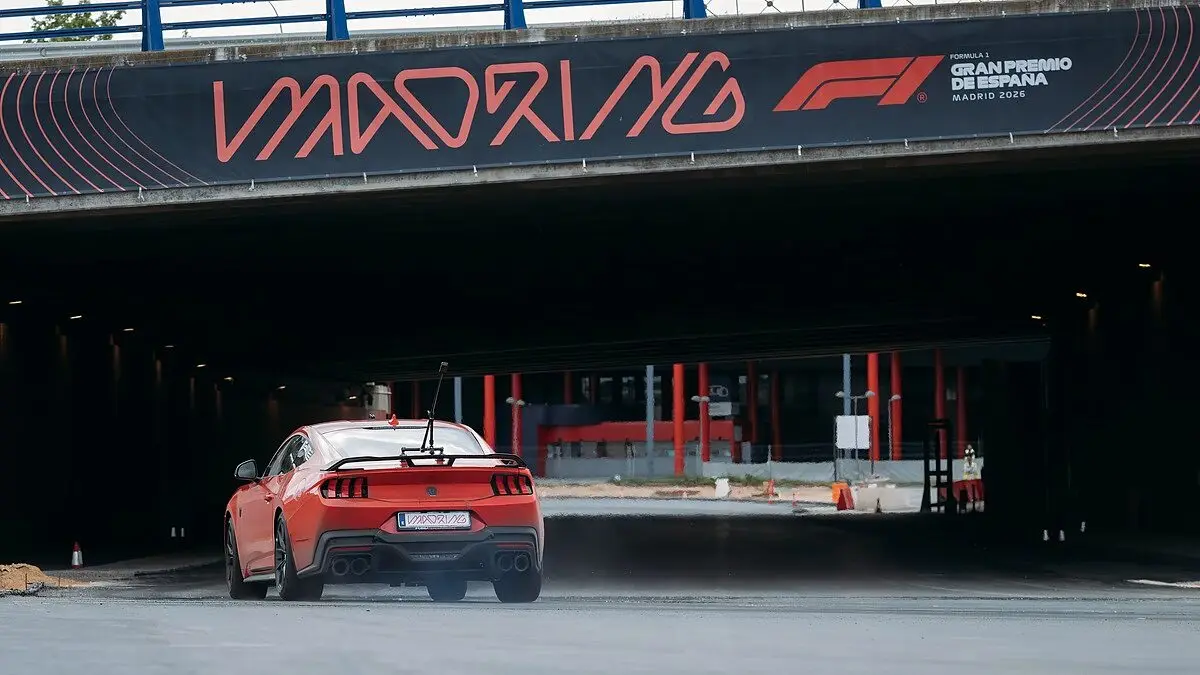
García Abad pointed to a previous demonstration event featuring Carlos Sainz and Williams as an example: “Last June, we held a roadshow with Carlos Sainz and Williams, and we actually had more noise impact from Mari Boya’s Formula 3 car than from the FW45 driven by Sainz. It’s something we can manage.”
The organisers have also taken a proactive approach with local residents, making clear that the Formula 1 event itself will last only three days, while the area will remain available for public use during the rest of the year, including cycling, jogging and other community activities.
Unlike many modern Formula 1 projects backed by sovereign wealth or major public subsidies, Madring is being developed without direct government financial support, in a model more comparable to circuits like Silverstone and Zandvoort.
The project takes advantage of IFEMA’s existing infrastructure, significantly lowering both construction and long-term operational costs. García Abad explained: “We do not have to pay maintenance costs for the facilities for the rest of the year because the circuit will be integrated into the venue itself. We did not want to depend on public money because that is something extremely difficult to sustain in a business like this.”
The Formula 1 contract runs for ten years, with organisers relying on major sponsors like Santander and local commercial partners to secure long-term financial sustainability.
Ticket demand and Madrid’s commercial ambitions
Ticket sales are reportedly progressing strongly, with more than 90,000 tickets already sold.
Daily attendance is projected at around 125,000 spectators, which would place Madrid among the largest Formula 1 events on the calendar. Around 98,000 to 100,000 fans are expected to be seated in grandstands across multiple pricing categories, while hospitality areas such as the Paddock Club and VIP zones could host between 20,000 and 22,000 guests.
García Abad stated: “We are talking about around 125,000 people per day. A huge, huge Formula 1 Grand Prix in terms of spectators, without any doubt.”
The organisational strategy places heavy emphasis on public transport to manage crowd movement efficiently while transforming the race weekend into a city-wide festival atmosphere.
Madrid’s strong air links with South America are also seen as a major commercial advantage, particularly given direct flights and established communities from countries like Colombia, Mexico and Venezuela. Organisers believe this creates an opportunity to attract an international younger audience eager to combine Formula 1 action with Madrid’s wider cultural and nightlife appeal — from the Prado Museum to the city’s vibrant evening scene.
Additional side events are also under consideration, including concerts and pre-event test sessions with single-seaters to validate the circuit layout.
The track’s visual identity will also be enhanced with green design elements intended to create more striking television images.
The Madring project is shaping up as one of Formula 1’s most ambitious modern ventures, aiming to bring the championship back into the heart of a major European capital while balancing engineering complexity, sustainability goals and major commercial appeal.
The ambitious Madring project represents a bold, innovative blueprint for integrating modern Formula 1 entertainment into the heart of a major European capital. By bypassing public funding and utilizing pre-existing corporate infrastructure, Madrid is setting a sustainable economic benchmark that challenges the government-subsidized models of modern street circuits. Balancing strict environmental regulations, local noise management, and high-speed technical safety requirements like the modified Monumental corner is an immense operational hurdle, but it is precisely the kind of forward-thinking integration the sport requires. If the organizers can seamlessly deliver on their promises of a city-wide festival atmosphere alongside world-class racing, Madrid is poised to firmly secure its spot as the crown jewel of the European F1 calendar for the next decade.
May 20, 2026Elena Rossi
Let other Scuderia Fans know about us


