
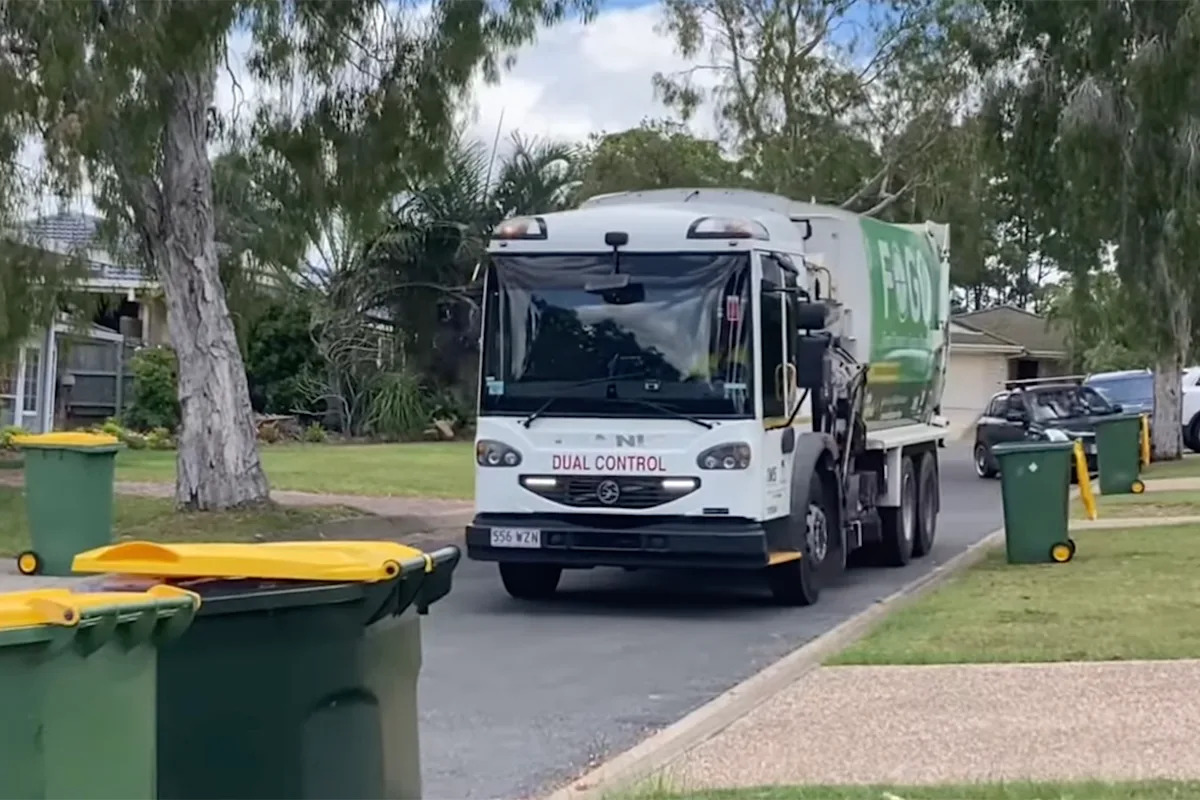
An Aussie council is offering a new bin to residents to help cut back on household waste after ditching the controversial food and organic waste bins (FOGO) almost two years ago.
Ipswich City Council, in South East Queensland, ran a FOGO service for around four years before deciding to scrap it completely in late 2024 — largely due to the smell.
Rotting food was identified as a source of odour at processing facilities, and combined with contamination issues and the lack of compliant organic processors in the market, the council decided to pause the program.
Now, residents in the rapidly growing city are being offered two options: a compost bin or a worm farm.
Both are free for residents under the council’s Organics at Home initiative, and aim to reduce households’ waste output by up to 30 per cent.
Residents are invited to select their bin of choice, which will be delivered in June.
“The compost bin is best for homes with both kitchen scraps and garden waste,” Ipswich Mayor Teresa Harding said.
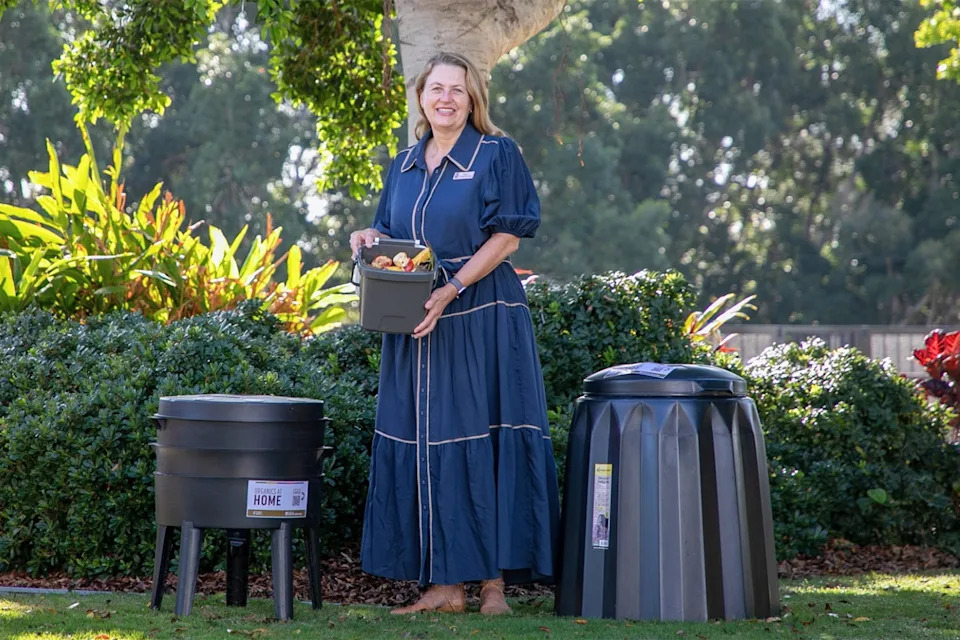
Ipswich Mayor Teresa Harding stands next to the worm farm and compost bins available to residents, Source: Ipswich City Council
(Ipswich City Countil)
“With the right mix of organic waste, a compost bin or worm farm produces nutrient‑rich fertiliser that can be used to improve soil health and support plant growth in home gardens, potted plants, lawns and vegetable patches.
“The worm farm is ideal for small spaces or homes without garden waste, turning daily food scraps into nutrient-rich castings and liquid fertiliser for plants,” she said.
Why are Aussies unhappy with FOGO bins?
Ipswich City Council is not the first to reconsider FOGO bins.
Over in Western Australia, the City of Bunbury is considering scrapping the bins after 10 years in operation due to mounting strain on the program.
The collapse of local processing left thousands of kilograms of rotting waste being diverted to landfill each month, prompting councillors to move to abandon the program.
In the City of Rockingham LGA, residents say they don’t have an issue with the FOGO bins themselves, but rather the impact the changes have had on their waste collection services.
The general waste pick-ups have been halved to fortnightly collections, creating an influx of maggots, flies and crows in suburban streets.
There are similar concerns in Wellington Shire Council in Victoria’s Gippsland region, where residents have started a petition over a plan to reduce red bin pick-ups to every second week.
What’s the difference between a FOGO bin and a compost bin?
Waste from FOGO bins is collected from the kerb, just like our general waste and recycling bins.
Compost bins are usually kept in a backyard to process organic waste at home.
While all food scraps are accepted in FOGO bins, compost beginners are advised to avoid putting meat, dairy and bread into the bins while they’re still learning. That’s because these foods can attract vermin.
Compost bins require more attention, but are generally a low-maintenance system that also provides nutrient-rich soil for gardens.
You can also follow us on Facebook, Instagram, TikTok, X and YouTube.