
A hidden army in the skin
Macrophages are a type of immune cell that makes up as much as 30% of the cells within a melanoma tumour. While they have long been known to play a role in cancer, there has been little clarity around whether they help or hinder tumour growth.
In the past, researchers have tried indiscriminately eliminating all the macrophages in the body to see how it affects the tumour.
However, Dr Keith’s team found that not all macrophages in the skin were the same, identifying one particular subpopulation that expressed a protein called CD169. By specifically targeting and depleting these CD169-positive macrophages, they found the tumours grew larger. This shows that these specific macrophages were preventing the melanoma from growing.
Watching cancer cells being eaten in real time
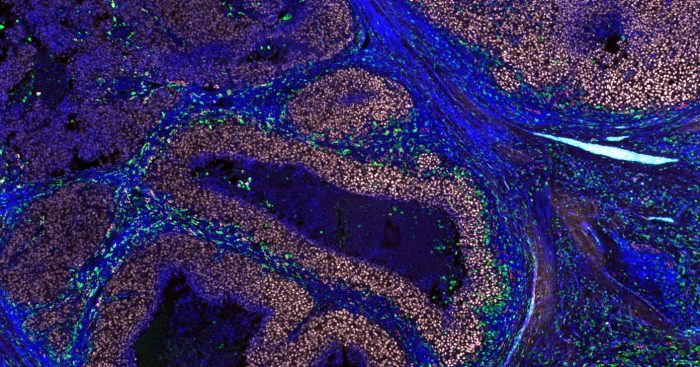
The team used intravital two-photon microscopy – an advanced imaging technique that allows them to watch biological processes unfold at the cellular level inside living organisms. In mice, the researchers observed the CD169-positive macrophages physically engulfing live melanoma cells. To confirm the clinical relevance of their real-time footage, the team also analysed human tissue, finding these same macrophages present in healthy human skin and enriched around the margins of human melanoma tumours.
“Macrophages have always been known as the body’s housekeepers – they clear away dead cells and debris,” explains UNSW Conjoint Professor Tri Phan, senior author on the paper. “What Dr Keith caught on camera was these cells actively nibbling away and engulfing live cancer cells, constraining tumour growth. Critically, this attack appears to occur independently of T cells and B cells – the immune players most commonly credited with fighting cancer – which made the discovery unexpected, and genuinely exciting.”