
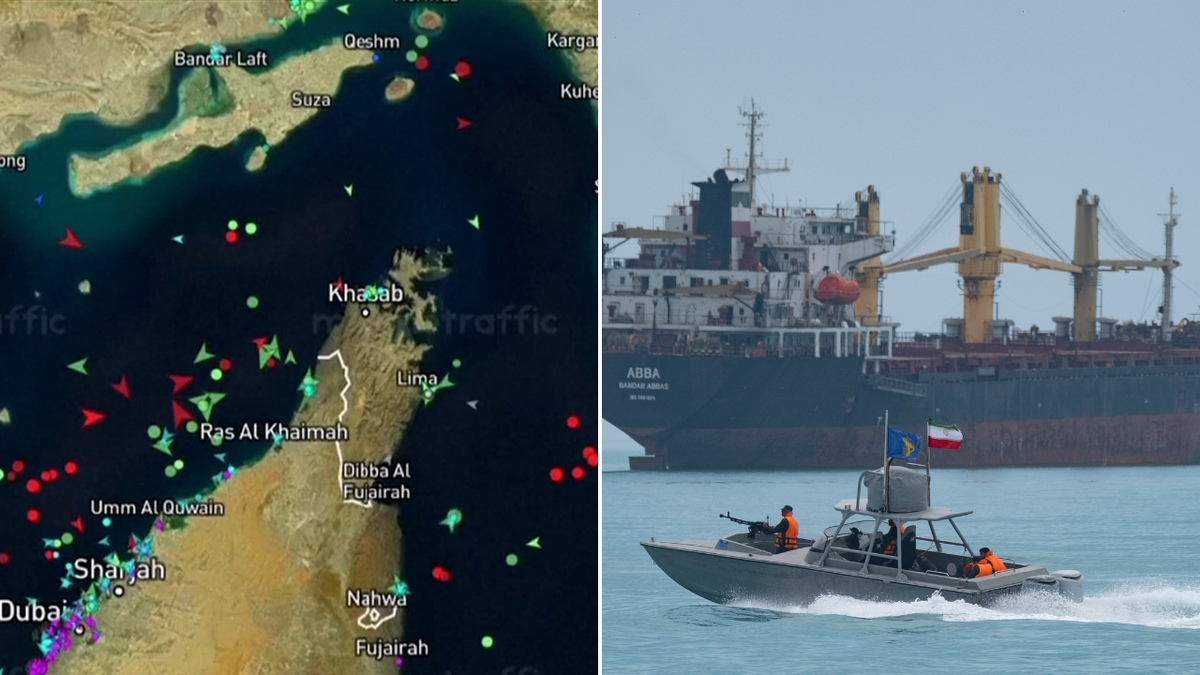
An agricultural expert is sounding the alarm on the war in the Middle East saying the Strait of Hormuz needs to open soon before Australian farmers reach a “point of no return” .
Farmers have already scaled back their use of fertiliser due to increased cost and lack of availability with one regional Victorian wheat grower admitting he expected 10 to 15 per cent less yield this year.
The Strait of Hormuz has been locked down by Iran since the start of the war in February, triggering a crisis across the globe due to it carrying approximately a third of the world’s globally traded supply of fertiliser.
Know the news with the 7NEWS app: Download today Arrow
In Australia, the price of urea — the most commonly used fertiliser — skyrocketed from $845 in February to around $1,435 per tonne this month, according to analysis from GrainGrowers.
Wimmera Mallee Environmental and Agricultural Protection Association president Ross Johns said in his 44 years of farming, conditions have never been this “extreme”.
“We’ve seen high prices for fertiliser and farm inputs before, but not quite to this extreme,” he said.
“At the moment the input prices are about 30 to 50 per cent higher than the previous highest in about 2008.”
Inputs describes all the costs farmers pay to produce — including their employees’ wages, machinery, fertiliser and fuel.
Johns’ family has been farming wheat, barley and canola in Victoria’s west since 1873.
In 1982, Johns inherited his first 3,500 acres, which has since expanded to 15,000 acres.
Johns said his crops rely on urea throughout the year for a better yield but rising costs have forced him to reduce fertiliser application this season.
“I just use a little less and use it more sparingly, but using less will ultimately result in lower crop yields,” he said.
“I’m expecting crop yields to be down 10 to 15 per cent on what they potentially could have been, and that’s certainly going to have a significant negative impact on Australia’s economy.”
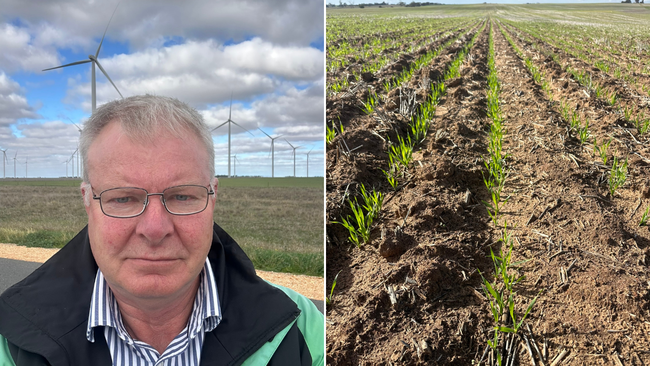 Ross Johns (L) warned of reduced yield if the fertiliser shortage continues. Credit: Supplied
CommBank agricultural economist Dennis Voznesenski said reduced production will ultimately lead to higher food prices.
“If you have a 15 to 45 per cent reduction in your application then the production impact is 9 to 25 per cent,” he said.
“Reduced production gradually leads to higher prices both offshore and locally.”
Voznesenski said Australian Premium White prices had already risen 12.4 per cent in northern NSW and 19 per cent in southern Queensland since February.
“This is driven primarily by dry conditions and partly by increased fertiliser costs,” he said.
Voznesenski said by June the world was going to reach a “point of no return” if the Strait of Hormuz remained closed — with prices jumping shortly after.
“I’m just waiting to see if if the strait is opened up or not, and at that … point of no return — once we get to June, July, that’s when I’ll go, ‘OK, so the world is going to be slightly different now,” he said.
“If large shipments still aren’t leaving the Strait of Hormuz by the end of July that’s when the market is likely to start gradually pricing in the production impact.”
 CommBank agricultural economist Dennis Voznesenski says the Strait of Hormuz closure could soon have a significant impact on food prices. Credit: Supplied
Despite the concerns, the Albanese government is hoping to avoid getting to a “point of return” with a multi-billion-dollar fertiliser and fuel storage plan announced in the recent federal budget.
In response to the federal budget, Johns said farmers were encouraged by investment directed at guaranteed fuel supplies and fertiliser.
“We’ve been trying to tell them that agriculture is a very important industry for Australia, and suddenly they have recognised it,” Johns said.
However, Johns said farmers were concerned that elevated inflation will push interest rates higher, adding further pressure on the sector.
“Most farmers have some level of debt so that will have a negative impact on the agriculture sector,” he said.
With no indication of when the war might end, Johns said the solution was in developing Australia’s own domestic urea supply.
“We are a huge gas exporter, and urea is made from gas, we could make our own” he said.
A urea and ammonia manufacturing plant, Project Ceres, is currently under construction in Karratha, WA and is expected to become the nation’s largest urea plant.
However, the project is not expected to be finished until mid-next year.
“We must rely on overseas supplies for some time to come yet,” Johns said.
After four decades in farming, Johns said he worries about the future of the industry he plans to eventually hand over to his son.
“I’m very supportive of young people in farming, but it’s pretty tough starting out in agriculture at the moment,” he said.
“The government must understand agriculture not only feeds the population of Australia, but it also provides 14 per cent of Australia’s exports.”
Why the budget won’t help everyday Aussies at the bowser
2 min read
Albanese’s $10b fuel plan welcomed but expert says vulnerabilities remain
2 min read