
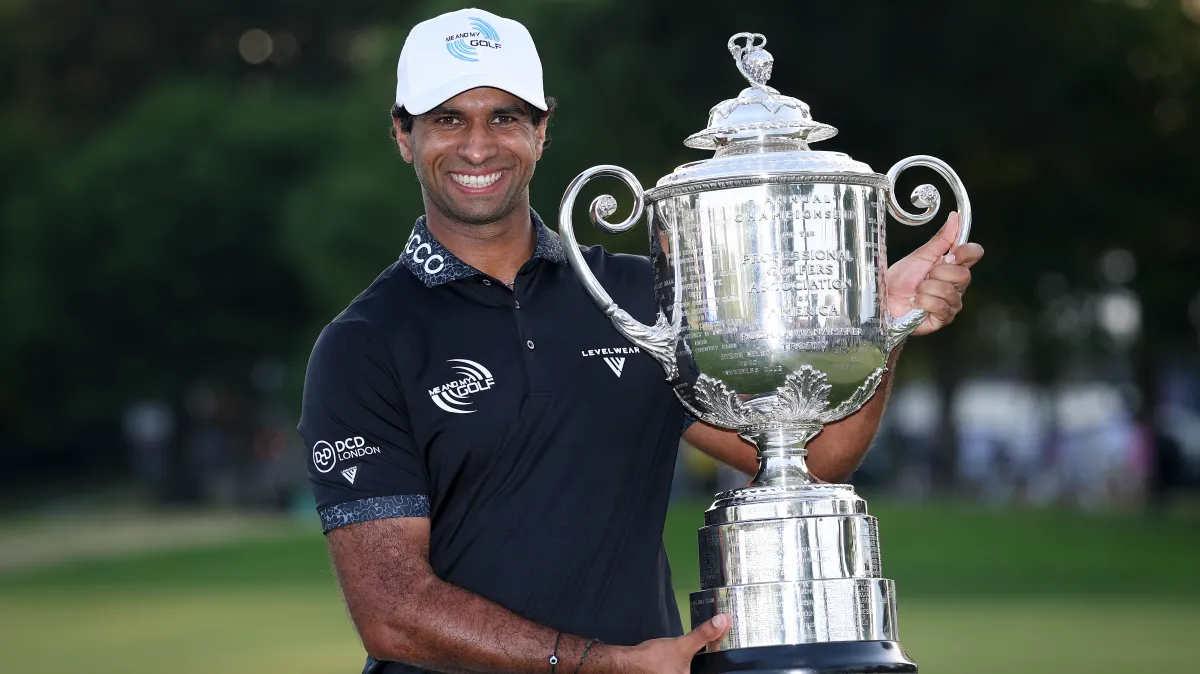
Aaron Rai has yet to receive the Wanamaker Trophy because the enormous 29-inch ornament is damaged. Did golf’s new nice guy actually indulge in some wild cup-juggling after winning the US PGA Championship? It seems highly unlikely. “I’m not sure what exactly happened,” he says. “But there was a bit of damage towards the top that they wanted to fix before the trophy went anywhere.”
Four days on and, unlike the trophy-makers, Rai, 31, is adamant that he will stick to his methodology of “if it ain’t broke, don’t fix it”. He is the antithesis of the tinkermen and fame junkies and adamant that he will not change, so there will be no lavish spending after landing a cheque for $3.69million (£2.74million).
“I haven’t thought about that,” the man from Wolverhampton says via Zoom from the United States. “I have a really nice house in Jacksonville [Florida] that I love. I imported my car from the UK three years ago and I wouldn’t change that for anything.
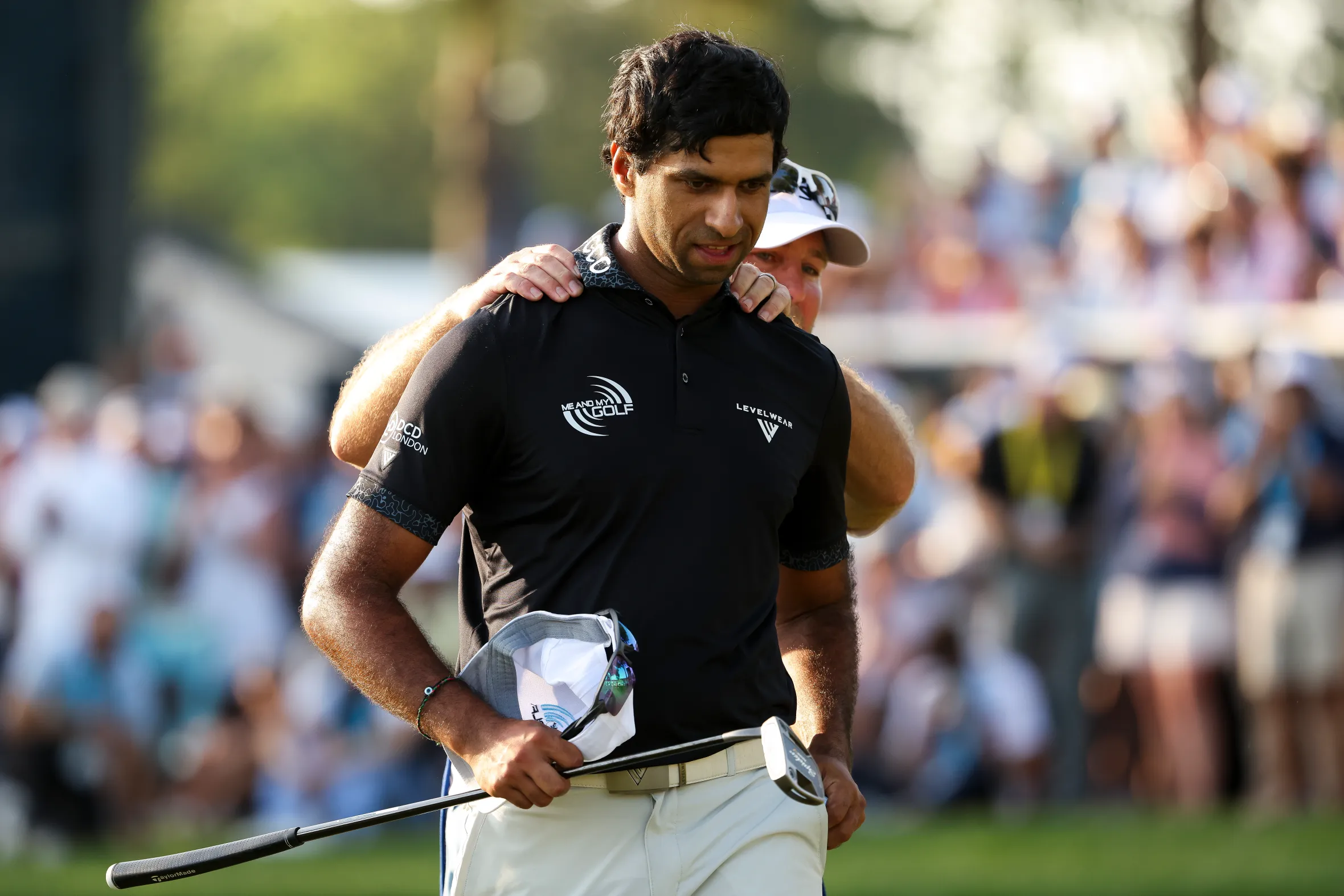 Rai gets a pat on the back from his caddie, Jason Timmis, after the biggest win of his lifeJamie Squire/Getty
“Nothing comes to mind for myself. I would like to get something for a couple of family members, but I want it to be thoughtful rather than something that is just worth X amount.”
His backstory has cut through the ropes into the mainstream this week. The story of him using covers for his irons, because he remembers his father cleaning club faces with a pin and baby oil, typifies a down-to-earth ethos that is not the norm in elite sport. So, too, are the two gloves he wears as a result of practising that way as a boy. In a sport where LIV Golf is trying to gain new investment after Saudi Arabia decided $6billion was the limit, here is a man who knows the true value of things.
He will be receiving plenty of offers now but will not be getting an agent, maintaining a stance that sets him apart from his peers.
“It was always a conscious effort, even since the early years of turning professional, to try to keep things quite simple, to try to keep things in a close circle,” he says. “And through the years, through different experiences, that’s something that feels like it’s continued to stay true for me.”
He again delved into his devoted family tree. His first call on Sunday was to his father, Amrik. He gets to about four events in the US every year but Rai says his mother, Dalvir, finds it harder to travel from the UK.
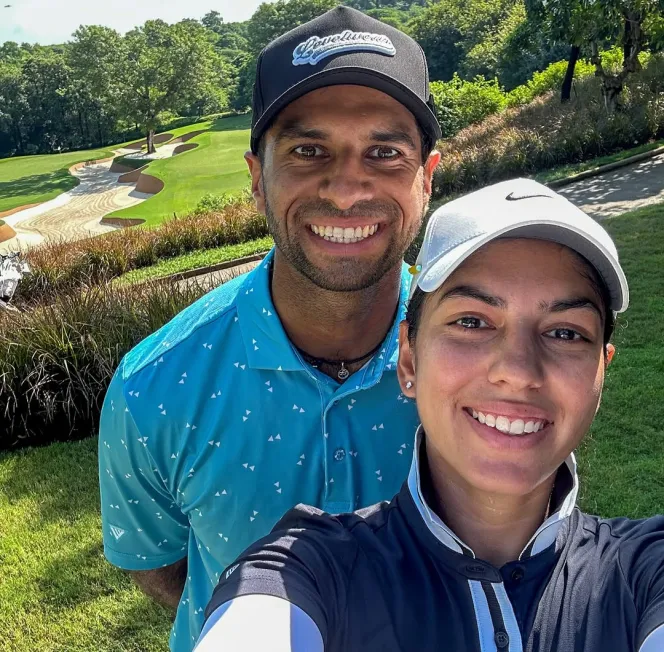 Rai with Gaurika, who kept her husband grounded going into the final round at AroniminkInstagram
The second call was to his coach, Piers, a friend since he was eight. His wife, Gaurika, was there with him and played a vital role in reining in spiralling thoughts on the Sunday morning at Aronimink. Intriguingly, the fears were not so much about whether he would be good enough to triumph, but how he would cope if he did.
“She’s extremely honest with me,” he says. “Through the positives that she sees, but sometimes through the areas in which maybe I’m lacking. I think the deeper consistent message is just honesty through the good and through the not so good. She was really reassuring on Saturday night and even on Sunday morning, saying, ‘You’re ready’ on a few occasions. That felt really powerful.”
The idea that a top sportsman needed reassurance of his readiness may be anathema to alpha-male tropes, but Rai elaborates. “During previous tournament wins I felt in the aftermath it was a lot of change. On the back of a lot of really cool successes it’s just felt it’s more to handle,” he says.
“There was a part of me that could only imagine some of the things that may change [after Sunday] and I didn’t want that to be a limiting factor in my mind towards the tournament and what was going to be required.”
There are also good golf reasons to like England’s first PGA Championship winner in 107 years. As well as money, the game has become obsessed with distance in recent times. The rollback of the ball remains a hot topic, but Rai is only 151st out of 161 in the PGA Tour’s rankings for driving distance this season. He averages only 291 yards, which is 35 yards down on Rory McIlroy. However, he also ranks fourth in driving accuracy. His strength is hitting fairways and making greens in regulation (two strokes below par).
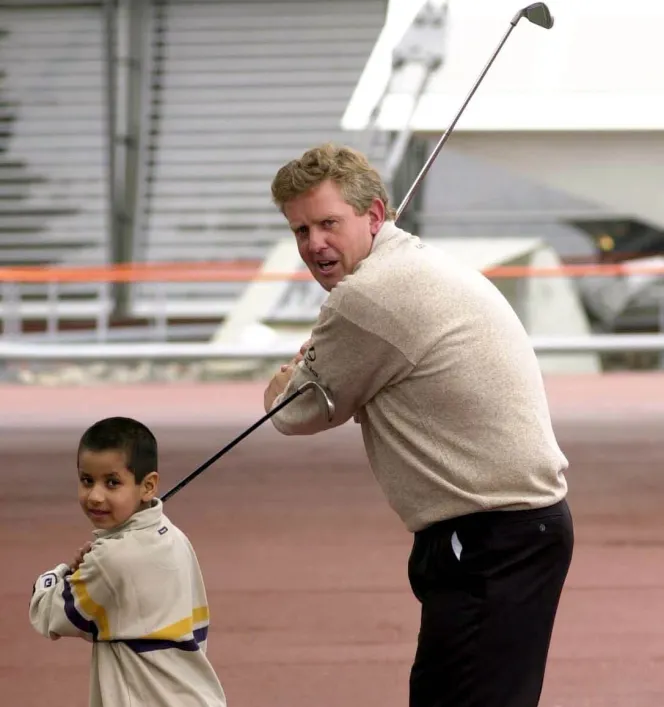 A five-year-old Rai learns from Colin Montgomerie in April 2000 Stefan Rousseau/Press Association
He had won some big events, including the Scottish Open and the Wyndham Championship, but had an unimpressive record at the majors before last week. So what does he need to do to turn this into an enduring run of form? He says being healthy after post-viral ear, neck and nerve issues has helped. “There doesn’t have to be anything big that has to change, just be a more efficient version of yourself really,” he says.
One of the best parts of Sunday’s win was the praise of his innate goodness from players such as McIlroy, Jon Rahm and Xander Schauffele. It cuts to his philosophy of life. “The path is bigger than just the tournament wins and the successes,” he says. “It is truly about the journey and hopefully just becoming better versions of yourself through the sport and away from the sport. It’s not about the destination.”
Nicely put, but amid all this positivity is there any vice or guilty pleasure that we don’t know about. He is not telling, but grins. “No one’s perfect.”